What Do Cats Think About?

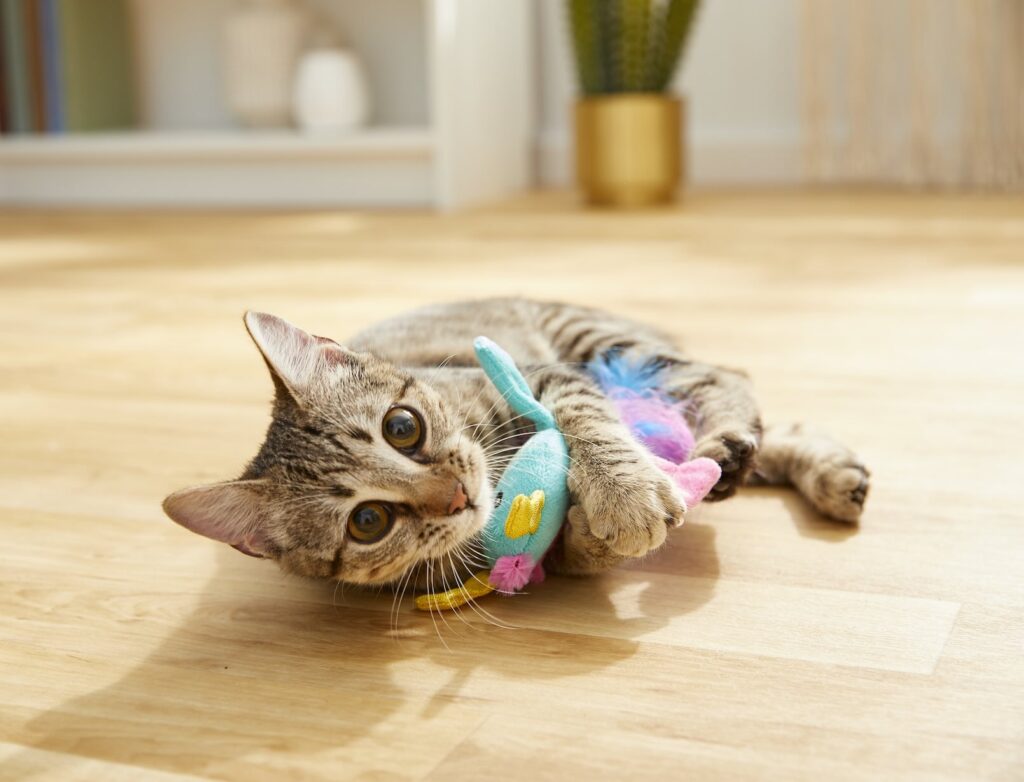
Photo by Chewy
While we can never know exactly what our cats are thinking, research into their behavior, cognition, and neurobiology offers some important insights. Here’s what science tells us about what cats think and what we can do to keep their brains healthy.
Key Takeaways
- Scientists can’t know exactly what cats think, but research shows cats have object permanence, memory, and problem-solving skills.
- Cats likely spend much of their time thinking about food, hunting, safety, territory, and social dynamics with other animals and humans.
- Keeping your cat mentally stimulated through play and enrichment helps support lifelong brain health.
Are Cats Smart?
Yes, cats are smart, even if it doesn’t always seem like they’re making the best decisions.
While some cats might be smarter than others, cat intelligence has developed over thousands of years to help solve the problems that felines face.
Cat cognition is a term used to describe the way cats take in information through their senses, process it, and then decide how to act. Cat cognition research has found that:
- Cats can remember and act on both “what” and “where” information from a single event.
- Cats quickly form associations between pictures and words.
- Cats can mentally map where their pet parents are based on where their voices are coming from.
- Cats have a partial understanding of object permanence. This means cats know that just because something is out of sight doesn’t mean it no longer exists.
- Cats can differentiate between different lengths of time.
- Cats understand human gestures.
What Do Cats Think About All Day?
There’s no way to know exactly what a cat is thinking about at any given moment, but their behavior can give us some clues:
- Food and water: Left to their own devices, cats tend to eat eight to 16 small meals a day. Wondering where their next meal is coming from probably takes up a lot of their time.
- Hunting and play: Even when cats are well-fed, they need an outlet for their innate instinct to hunt. When cats are playing, they are probably thinking about the best ways to stalk, attack, and “kill” their toys (or your feet).
- Safety and comfort: Cats aren’t just hunters—in the wild, they’re also hunted. They want to feel safe from real and perceived threats and always know where to find a good hiding spot. Once they feel safe, they can focus on their comfort, like finding a soft, warm place to sleep.
- Territory: Cats are territorial, so they frequently monitor their surroundings and will reinforce their scent markings through rubbing, scratching, and spraying. They will also keep an eye on their resources, including litter boxes, perches, and food bowls. They may chase away housemates they see as competitors.
- Social dynamics: Cats think about all the other individuals in their territory. They develop relationships with people and other animals and need to figure out how to get what they want from them.
- Emotions: Cats appear to experience emotions like contentment, fear, anxiety, frustration, and excitement, but it’s unclear how much they think about their feelings. This type of thinking about thinking (metacognition) has been observed in non-human animals including primates, dolphins, and crows, but no studies have involved cats.
What Do Cats Think About Their Humans?
Cats form real bonds with people in their lives.
One study found that around 65% of cats had a secure attachment to their pet parent, with the other 35% having an insecure attachment. This mirrors the percentages seen with human babies and their caretakers.
In short, cats look to their person for comfort and security, particularly in unfamiliar situations.
Anthrozoologist John Bradshaw has a slightly different view. He argues that cats think humans are other cats, in part because cats use the same body language with people (tail-up greetings and lying close by, for example) that are seen when cats are interacting with each other.
However, it’s also possible that cats are perfectly aware that we’re not big versions of cats, and they’re just using the same repertoire of behaviors to communicate with us because they work.
How To Care for Your Cat’s Brain
No matter what your cat is thinking, there’s a lot you can do to keep your cat’s brain as sharp as possible.
- Provide good nutrition. Feed your cat high-quality, life stage-appropriate cat food to support brain health.
Recommended Products


- Stay up to date on veterinary care. Brain health is linked to overall health, and some problems, like feline cognitive dysfunction, directly affect thinking.
- Satisfy your cat’s need to hunt with daily play sessions using plush toys, feather wands, and laser pointers. Rotate through a selection of toys every week so your cat doesn’t get bored.
Recommended Products



- Provide a safe, comfortable place for your cat to rest and recharge.
Recommended Products


- Use a puzzle feeder to provide mental enrichment when you’re out of the house.
Recommended Products


- Provide vertical space and a window perch to give your cat a new perspective.
Recommended Products


- Try clicker training or teaching your cat a few tricks.
Recommended Product

- Offer safe, supervised outdoor time through leashed walks, stroller walks, or a catio.
Recommended Products



Mental enrichment can help prevent behaviors, like overgrooming, that are related to stress and boredom. Giving your cat’s brain something to think about can go a long way to keeping it healthy.