Why Do Cats Sniff Each Other’s Butts?


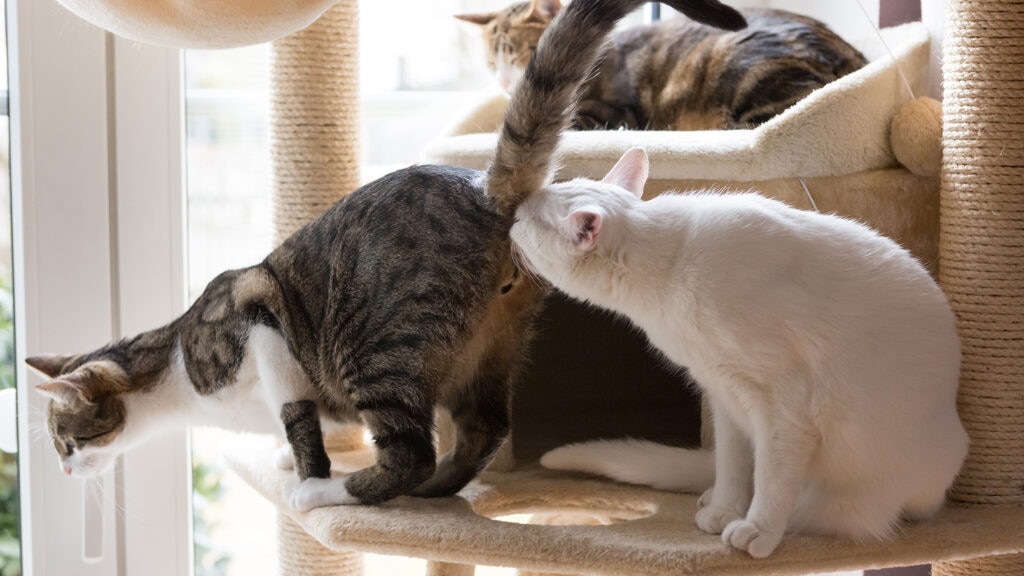
Photo by w-ings/iStock/Getty Images Plus via Getty Images
If you share your home with more than one cat, you’ve probably witnessed one cat sniffing another’s butt. As odd as it might look to us, this up-close greeting is a perfectly normal part of feline communication.
So, why do cats sniff each other’s butts? Cats rely heavily on scent to learn about one another, and a quick sniff can reveal everything from identity to emotional state.
Here’s what they’re learning with these curious sniffs—and when this common behavior could signal that something isn’t quite right.
Key Takeaways
- Cats sniff each other’s butts as a normal way to gather information through scent.
- This behavior is part of feline communication and social bonding.
- Scent glands near the tail carry important information about identity and health.
- Sudden changes in sniffing behavior or reactions may signal stress or illness.
Why Do Cats Sniff Each Other’s Butts?
Cats sniff each other’s butts because scent gives them important information about the other cat. A quick sniff can offer clues about who the other cat is, how they’re feeling, and even aspects of their health.
How Cats Use Scent To Communicate
“Cats get a lot of information about the world they live in and other cats through scent,” says Joey Lusvardi, an IAABC-certified cat behavior consultant and owner of Class Act Cats in Minneapolis, Minnesota.
And their noses are exceptionally well equipped for the job.
“Cats’ sense of smell is the strongest of their senses, being 14 times more sensitive than humans,” says Rachel Cocchiaro, DVM, at Bahama Veterinary Medical Center in Durham, North Carolina.
Cats also have another scent-detecting tool: the Jacobson’s organ, located in the roof of the mouth, which helps cats detect chemical messages called pheromones, Dr. Cocchiaro notes. You’ve probably seen it in action when your cat keeps their mouth slightly open after sniffing something, almost as if they’re making a “stinkface.”
So, why do cats sniff each other’s butts of all places? Simply put, there’s a lot to smell back there. Cats have two small anal glands (aka anal sacs) located just inside the anus that produce a super-stinky secretion containing pheromones and other chemical signals, Dr. Cocchiaro explains.
When one cat sniffs another’s rear end, they can pick up on these chemical signals and gather important information about the cat in front of them.
“It’s kind of like the cat is looking at a social media profile or reading the biography of the other cat,” Lusvardi says.
What Information Are Cats Getting?
So, what’s on that feline social media profile? According to Dr. Cocchiaro, here’s what cats may learn from a quick sniff.
- Whether they know each other: Scent can help a cat determine whether they’re greeting a familiar feline or meeting someone new.
- Reproductive status: Chemical cues can provide information about another cat’s sex and reproductive status, including whether an intact female is in heat.
- Emotional state: Changes in scent may offer clues about whether another cat is calm, stressed, or fearful.
- Health cues: Cats may be able to detect scent changes associated with illness or other changes in the body through hormonal and metabolic shifts that accompany those processes.
Taken together, all that information can help a cat decide how to proceed with the interaction, whether that means sticking around to socialize or giving the other cat space.
Is It Normal for Cats To Sniff Each Other?
“It’s very normal for cats to sniff each other’s butts as part of regular communication,” Lusvardi says. “Cats will often sniff each other when they approach for the first time after some separation or if the other cat is unfamiliar.”
“Some separation” doesn’t necessarily mean days apart, either, Lusvardi clarifies. Cats may sniff each other when they meet up in a room even if they were hanging out together not long before, he says.
The inspection is usually brief—often just a few seconds—before the cats move on.
When Should You Be Concerned?
So, how can you tell when a sniff deserves a closer look? Watch for:
- Aggression or distress: Hissing, growling, swatting, biting, or trying to escape
- Excessive or obsessive sniffing: One cat repeatedly sniffing or fixating on the other cat’s rear end
- Unusual odor or discharge: A strong or unusual smell, swelling, redness, or discharge around the rear
- Other signs of illness: Lethargy, decreased appetite, or changes in litter box habits alongside unusual sniffing behavior
- Changes in their usual relationship: Cats who normally get along suddenly reacting negatively after sniffing
While rare, some of these changes could be related to a medical issue, such as a urinary tract infection or an anal gland abscess, Dr. Cocchiaro says. In other cases, the cause may be behavioral.
The bottom line? Know what’s typical for your cats. If something seems off, check in with your vet.
How To Help Cats Interact Comfortably
Butt sniffing may be normal cat behavior, but that doesn’t mean every cat will appreciate an up-close inspection. Help keep feline interactions comfortable with these tips:
- Introduce new cats gradually. Give cats time to get used to each other’s scent before moving on to face-to-face meetings. Slow introductions can help reduce stress and give both cats time to adjust.
- Provide separate spaces and resources. Make sure each cat has access to their own essentials, including food and water bowls, litter boxes, beds, and hiding places, so they can get some space when they need it.
Recommended Products


- Keep an eye on body language. Relaxed bodies and curious sniffing are good signs. Hissing, growling, flattened ears, a tucked tail, or attempts to get away can signal that a cat has had enough.
- Don’t force an interaction. Let cats decide how close they want to get and when. If one cat tries to move away, don’t hold them in place or bring them back for a more thorough introduction.
- Give them an escape route. Make sure cats can easily move away from each other or retreat to a safe spot if the interaction becomes uncomfortable.
As long as both cats are comfortable, there’s no need to interfere with normal sniffing. Just make sure either cat can walk away whenever they want.
FAQs About Cats Sniffing Each Other
Why does my cat sniff my other cat and then hiss?
Your cat may have picked up a scent that’s unfamiliar or concerning to them, or they may be uncomfortable with the interaction. Hissing is a way to communicate that they want some space.
Do cats recognize each other by smell?
Yes. Scent plays an important role in how cats identify other cats. A quick sniff can help your cat determine if they recognize another cat or not.
Why does my cat sniff other animals’ butts?
Your cat may sniff another animal’s rear end for the same basic reason they sniff another cat: to gather information through scent. What they can learn may vary depending on the species.
Is it normal for cats to sniff humans?
Yes! Cats commonly sniff their humans to gather information and investigate interesting or unfamiliar scents you may have picked up throughout the day.
Attributions