Why Do Cats Like High Places?


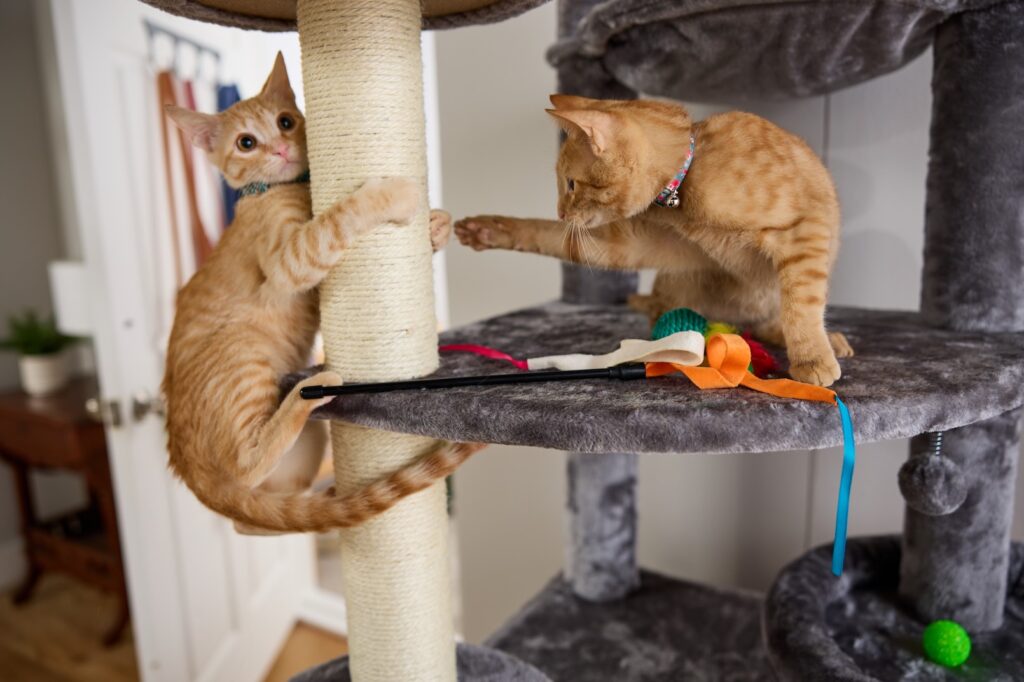
Photo by Chewy
The top of the fridge, the counter (which you swore was off-limits), the chair you were about to sit on. If there’s an elevated spot in your home, chances are your cat has claimed it.
So, why do cats like high places? It mostly comes down to biology: Cats are both predators and prey, and a high perch gives them a better vantage point.
Key Takeaways
- Cats like climbing to high places for many reasons, including surveying their surroundings, retreating from stressors, and exercising.
- Every cat is an individual, and not all cats like being up high.
- If your cat enjoys being high up, give them their own cat-safe areas to climb.
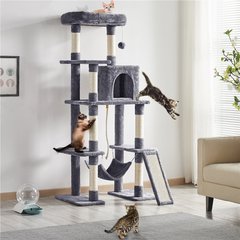
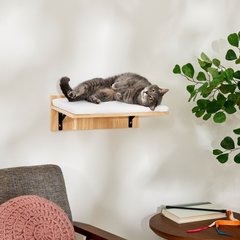
- Cat trees, window perches, and cat shelves are all great options for cats who like climbing.
7 Reasons Cats Climb High Places
Seeking out the highest spot in the house is a completely normal behavior that starts in kittenhood, and there are many reasons why cats love to climb to high places.
1. To Survey Their Surroundings
Cats are both predators and prey animals, and a high perch helps them keep an eye on their environment.
“Cats just feel safer when they are up higher and able to survey a room,” says Rachel Cocchiaro, DVM, a veterinarian and partner at Bahama Veterinary Medical Center in Durham, North Carolina.
2. To Retreat
Heading up high gives your cat an easy, safe escape if needed. Indoor cats often climb to get away from dogs or other pets who can’t follow them, Dr. Cocchiaro says.
And while your living room may be coyote-free, as Heather Alvey, certified cat behavior consultant (CCBC), says, “your cat always instinctively thinks that [running into a predator] is a possibility.”
3. To Stay in Control
From up high, your cat gets to decide when (and whether) to socialize, like a cat-only VIP section. A window perch, tall cat tree, or cat shelf lets your kitty choose when to engage with their people or other pets, explains Leen Clov, certified advanced feline training professional (CAFTP).
Recommended Products

4. To Expand Their Territory
Vertical space is the easiest way to give your cat more places to explore and call their own, Alvey says. That’s especially helpful in multi-cat homes, where extra levels give everyone more room to spread out.
5. To Satisfy Their Curiosity
Cats are naturally inquisitive, Clov says, and a higher vantage point means more to see. When you’re choosing a spot for a cat tree or perch, pick one with plenty going on, like near a window with a view of the bird feeder or a shelf overlooking your desk.
Recommended Product

6. To Play and Exercise
Cats may love a good nap, but they’re also natural athletes. It’s in their nature to climb, use their claws, and jump, Dr. Cocchiaro says. Without an outlet for that energy, they may slip into couch-potato habits—or create their own destructive fun around the house.
Climbing is a great way to burn off energy, Clov says, making it a go-to form of indoor enrichment.
7. To Find Warmth
Sometimes the reason is the sweetest one: to curl up in a warm sunbeam. Placing a perch or cat tree near a bright window gives them a cozy spot to soak it up.
Do All Cats Like Being Up High?
Most cats like being high up, but every cat is an individual. Where your cat feels safest usually comes down to their genetics and life story.
Celebrity cat behaviorist Jackson Galaxy popularized three terms to describe how cats seek out safety:
- Tree dwellers head straight for higher ground (shelves, fridges, top of the door) when stressed.
- Bush dwellers prefer to burrow under furniture, sheets, or blankets.
- Beach dwellers are perfectly happy sprawling out right in the middle of the living room floor.
“When I know which the cat prefers, I can help my client build an environment that helps support the cat feeling safest in their home,” Alvey says.
So, if your cat is primarily a bush or beach dweller, do they still need vertical space? Absolutely. Cats live in three dimensions, Alvey says, and “cats should be given the option to climb and perch safely if they choose to,” Clov adds. Safe perches give them room to explore—and keep them off the surfaces you’d rather keep cat-free.
How To Stop Your Cat From Climbing to Dangerous High Places
Cats are hardwired to scale vertical surfaces, so you’re never going to stop them from climbing (nor should you!). But when their chosen summits are slick cabinets, a crowded bookshelf, or a hot stove, your little daredevil is at risk of falling, getting tangled in cords, or getting burned.
With a few environmental hacks and a bit of redirection, you can encourage your kitty to climb here, not there:
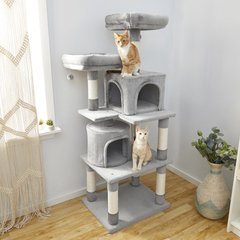
- Provide safe alternatives. Set up cat trees, wall shelves, and window perches in a mix of heights. Dedicated “cats-only” perches allow cats to relax without being disturbed by kids or other pets.
Recommended Products
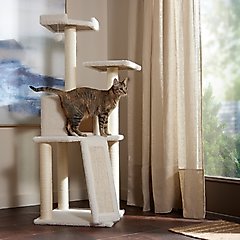
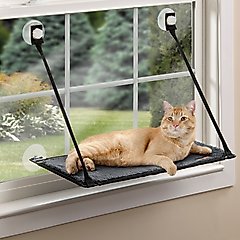
2. Make the new climbing spot more appealing. “You want to make the new option as attractive to them as possible, while limiting their access to the old location,” Alvey says. Clov suggests placing treats, catnip, toys, or soft bedding with your cat’s scent on the new perch, or using a wand toy to lure them up.
Recommended Products



3. Address the motivation. If your cat scales a bookshelf to see outside or jumps on the counter to watch you cook, provide a safe perch with the same view.
4. Reward, don’t punish. “Punishment does not work for cats,” Alvey says. “All you’re going to accomplish with punishment is to erode the bond you have with your cats.” Instead, use positive reinforcement (praise, play, and treats) to reward your cat when they use the spaces meant for climbing.
How To Create Safe Vertical Space for Cats
A healthy cat is typically agile enough to scale a bookshelf, counter, or fridge without a problem, Dr. Cocchiaro says.
That said, cats can still get hurt falling off a counter the wrong way, says Ellen Carozza, LVT, VTS (CP-Feline). Often, the bigger risks come from what’s on or around those surfaces.
Slippery shelves can lead to falls, Alvey explains, and items can get knocked off or pulled down onto your cat. Falls from windows and balconies pose an even bigger threat.
A few simple changes can keep your cat safe while still giving them the heights they love:
- Pet-proof the places your cat loves to explore. Put away human food, dishes, fragile knickknacks, and dangling cords. Add non-slip pads to slick shelves to give your cat better footing. Carozza also recommends keeping windows closed or making sure screens are secure enough that they can’t pop out.
- Keep balconies off-limits unless they’re cat-proofed. On a cat-safe balcony, your cat can’t squeeze between the bars, jump onto the railing, or break through any netting.
- Give your cat two ways down. “You don’t want your cat to be trapped at the top of a cat tree or cat wall by another cat,” Alvey says.
- Tailor heights for kittens and seniors:
- Kittens (under 5 pounds): Keep access to lower heights and place soft landing pads or rugs below cat trees while their coordination develops.
Recommended Product
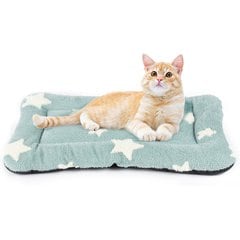
- Senior cats: Use pet stairs, ramps, and lower platforms to reduce strain on joints.
Recommended Products


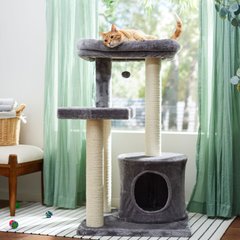
- Keep your cat at a healthy weight. Excess weight can make it harder for cats to land safely, Carozza says.
FAQs About Cats Climbing
Is a couch or chair high enough for my cat?
It depends on the cat. “For some cats a couch or chair is OK; others will want to go as high as they possibly can,” Alvey says.
Clov agrees, adding that offering several heights lets your cat choose what feels best.
What is high-rise syndrome in cats?
High-rise syndrome refers to injuries a cat sustains when falling from a height of two stories or more. High-rise falls can cause broken bones, jaw fractures, head injuries, and internal bleeding, Dr. Cocchiaro says.
At what age can kittens safely jump and climb?
Kittens start developing their righting reflex (the ability to twist midair and land on their feet) at 3–4 weeks old and typically master it by about 3 months of age, Carozza says.
But mastering the landing doesn’t mean they’re ready for every height. Limit their access to tall surfaces like fridges or high counters and place cushioned landing spots underneath perches.
Once a kitten is older than 6 months or weighs more than 5 pounds, they’re more agile and can handle climbing higher, Dr. Cocchiaro says.
Attributions