8 Common Cat Litter Box Issues—and What To Do About Them


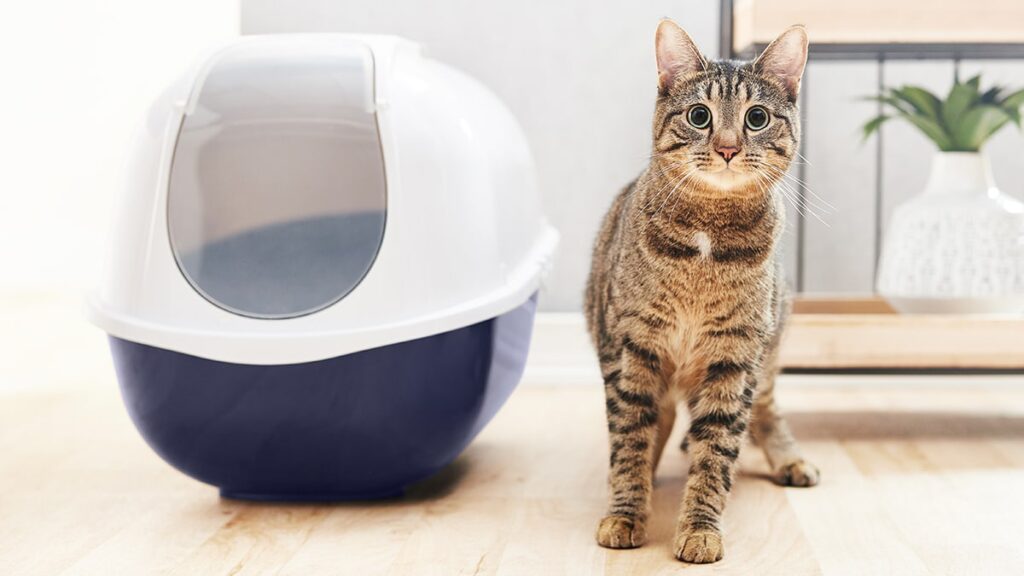
Photo by Chewy
Most felines use their litter box properly. Sometimes, however, cat litter box issues crop up.
Maybe you adopted a cat who doesn’t use the litter box. Or you discovered your usually well-trained cat pooping outside the litter box. The first step is to check with your veterinarian to ensure there are no health issues causing your feline friend to avoid the litter box.
If your veterinarian says there is no medical reason for your cat’s inappropriate litter box use, it may be a behavioral issue.
Most cat litter box issues fall into just a few common categories, and many have simple solutions.
Below are eight common cat litter box issues and possible solutions.
Key Takeaways
- Most cat litter box issues are caused by medical conditions, stress, litter box setup, or litter preferences.
- Always have your veterinarian rule out a medical cause before assuming a litter box problem is behavioral.
- Providing enough appropriately sized litter boxes and keeping them clean can prevent many litter box issues.
- Small changes—such as switching litter types, moving the litter box, or using a lower-sided box for senior cats—can often solve litter box problems.
What Are the Most Common Cat Litter Box Issues?
The most common cat litter box issues include avoiding the litter box, eliminating outside the box, spraying, kicking litter out of the box, and odor problems. Most issues can be resolved by addressing medical concerns, litter box setup, or your cat’s environment.
1. The cat never uses the litter box.
Some cats don’t take to the litter box right away. This usually happens if they didn’t have the chance to learn about the litter box from their mother.
Solution: Litter-train your cat.
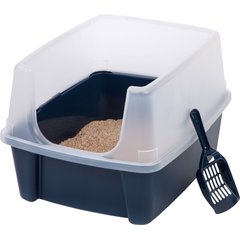
Place the litter box somewhere that is easy for your kitty to reach and offers a little privacy. Keep it as far as possible from your cat’s food and water. Most cats prefer a clumping litter, such as Dr. Elsey’s Precious Cat Attract cat litter.
Recommended Products

Take your cat to the litter box after they eat, drink, play, or wake up from a nap. You can even play with your cat near the litter box, so it’s easy to direct them to the right spot in a timely fashion.
When you aren’t around, shut your kitty in the room with the cat litter box to minimize accidents. Fortunately, most cats learn where to go potty very quickly.
2. The cat is pooping outside the litter box.
This is a fairly common problem. The cat stands in the litter box, but the actual pee or poop winds up just outside the box.
Solution: Provide a bigger litter box.
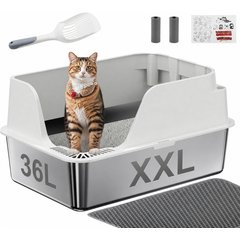
In many cases, you can resolve the problem of the cat pooping outside the litter box by switching to a larger cat litter box. Cats sometimes need more space to do their business than you might expect. A larger, high-sided box that can accommodate even a large breed cat may increase the chances that the pee and poop stay in the litter box.
Recommended Product
3. The cat is no longer using litter box at all.
In some cases, a cat who was using the litter box stops using it completely.
Solution: Consider recent changes.
Did you recently change the type of litter, the location of the litter box, or the box itself? Cats are sensitive to change and can be slow to adapt to upgrades that may seem minor to you. For instance, cats sometimes prefer a certain type of cat litter. Even using the same brand but a new texture or fragrance can put your cat off.
Returning your cat’s litter setup to the way it was may solve this issue. But as we mentioned before, take your cat in for a vet checkup before you assume they’re just being picky. Litter box problems are often symptoms of physical or medical issues that your vet can diagnose and help to treat.
For example, if you have an older cat, the issue may be that it’s harder now for them to get in and out of the litter box. Older cats can have a tougher time getting around, and some even develop arthritis.
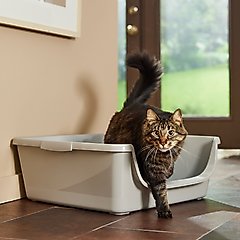
For older cats, try a litter box with lower sides, and make sure the cat litter box is placed in an area that’s easy to reach.
Recommended Product
4. One cat uses the litter box, the other cat does not.
In households with multiple cats, only one cat may not be using the litter box. And it can be hard to tell which cat it is.
Solution: Provide additional litter boxes.
The general rule for multi-cat households is to provide one cat litter box per kitty in your home, plus one extra. In other words, if you have one cat, you should have at least two litter boxes. If you have three cats, you should have at least four litter boxes.
This is to prevent one cat from restricting access to a litter box they consider to be “theirs,” leaving the other cat with no option but to choose another place to go.
Increasing the number of litter boxes can resolve litter box issues in households with multiple cats.
5. The cat is peeing or spraying outside the litter box.
Cats sometimes pee all over the house, instead of in the litter box.
Solution: Most cats who spray are doing so because they feel anxious or threatened. Make sure no animals—such as outdoor cats—are teasing your cat.
Cats often feel more secure in high places, so provide cat trees and shelves.
Recommended Products
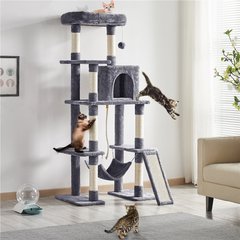
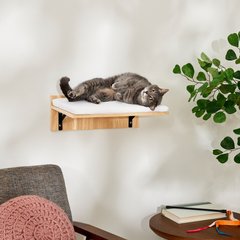
Play with your cat regularly, too—this can help them burn off extra energy that might otherwise fuel their anxiety.
If you have multiple cats in your home, make sure they all are getting along. Consult a certified cat behaviorist if you need additional help figuring out why your cat is anxious.
6. Your cat litter winds up outside the litter box.
Some cats are a little too enthusiastic about burying their pee and poop, and they wind up scattering litter all over the floor.
Solution: Try a litter box with higher sides.
Cats instinctively bury their waste, but that doesn’t mean you have to deal with litter all over your floor. A box with high sides, such as Frisco’s High Sided litter box, can help keep the litter contained.
Recommended Product
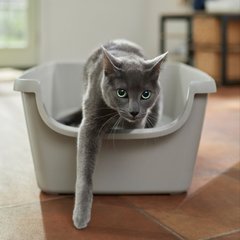
Also, experiment with the amount of litter you place in the box. Some cats kick up more litter when the litter level is low; others make more of a mess in deep litter.
Most cats like the litter to be about 2–4 inches deep, but each cat is different. Use trial-and-error to find the right level for your cat.
You also can place pee pads or newspapers under and around the litter box so that scattered litter is easy to pick up and throw away (or placed back into the box if it is dry).
Another option is to use a litter mat, like Fresh Kitty’s foam mat, which collects the scattered litter and prevents it from being tracked around the house.
Recommended Product

7. The cat litter box stinks.
A smelly cat litter box is unpleasant—both for you and your cat!
Solution: Clean the litter box.
Go back to basics! Scoop the litter box at least once daily—twice daily is even better.
Once a week, replace all the litter and wash the litter box.
You also can try a litter designed to keep odors at bay, such as Tidy Cats Glade Tough Odor Solutions cat litter, which is formulated to neutralize ammonia, urine, and fecal odors.
Another option is the Tidy Cats Breeze cat litter box system, which is a pellet litter-absorbent litter pad combo that offers great odor control.
Recommended Products

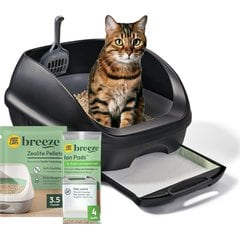
8. You hate dealing with the litter box.
Some people need to avoid soiled litter for health reasons, and others just find cleaning litter an unpleasant chore. And let’s face it: Litter can be icky!
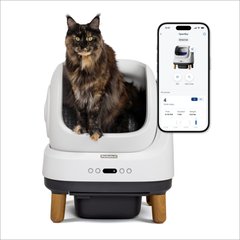
Solution: Use a self-cleaning cat litter box.
The PetSafe self-cleaning litter box does the scooping for you. Its disposable trays can last up to two weeks for a single cat, and they let you clean up without scooping or touching the litter at all.
Recommended Product
Most cats are happy to use a litter box, as long as you put it in a good location, use a litter they like, and scoop regularly. If your cat’s having issues with the litter box, check in with your veterinarian, then try the tips above.
Attributions