
Belgian Tervuren
Updated August 4, 2026
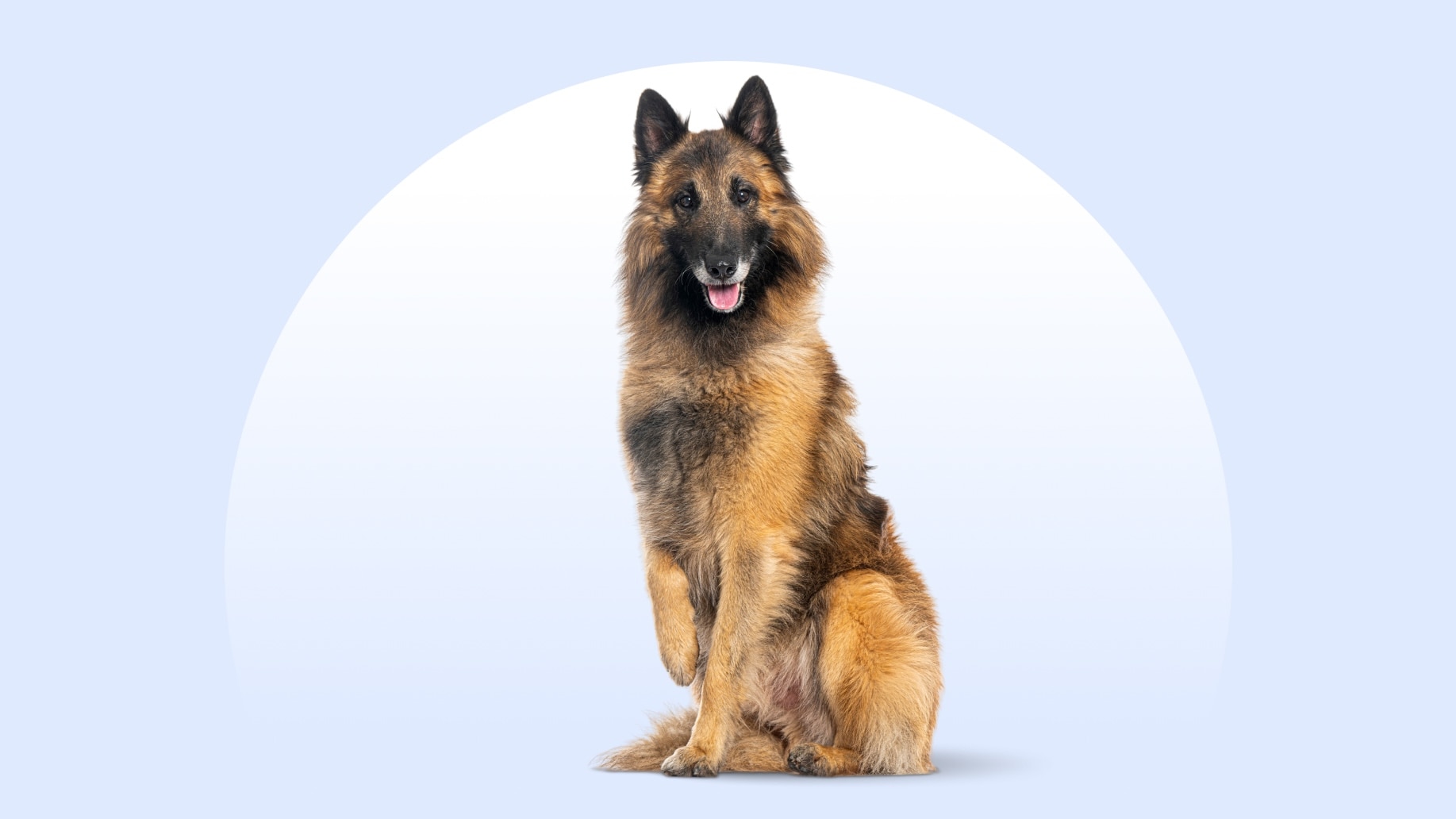
Belgian Tervuren
Updated August 4, 2026
The Belgian Tervuren has a herding dog heritage but is a family dog at heart—as long as their family can keep up with the high-energy activities the breed needs. These dogs are characterized by a quiet confidence and an affectionate nature.
Loyal, Poised, Affectionate
45–75 pounds
22–26 inches
12–14 years
Fawn and Black, Mahogany and Black
Always at your side, the Belgian Tervuren is the pinnacle of doggy devotion. This breed is known for bonding closely with their human pack, so you’ll have a loyal companion at home or on any adventure.
Make time for regular outings with your Tervuren: The physical exercise and mental enrichment that comes from joining you will keep this pup happy and healthy.
Belgian Tervuren Characteristics
Belgian Tervuren Appearance
The telltale look of a Belgian Tervuren dog is a thick, straight coat of fur in an eye-catching two-tone color combination. The fawn or mahogany base color is accented by black-tipped hairs that create a rich and unique coat.
These dogs are powerful but refined: They possess great stamina but have a moderate build and light gait that makes it seem as if they’re floating when they move.
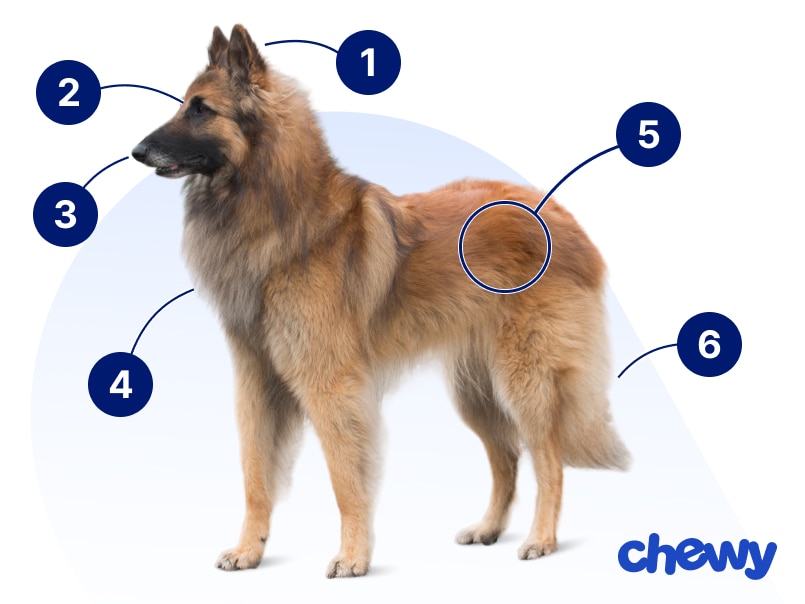
- Ears
Upright, triangular ears add to the Tervuren’s alert expression.
- Eyes
These dogs have dark, almond-shaped eyes.
- Nose
Tervurens have a long, slender muzzle with a black nose.
- Coat Length
This breed has a medium-length double coat that is thick and straight.
- Coat Color
A Belgian Tervuren has a two-tone coat that is either a light fawn color or a richer mahogany color, with a black mask over the face and ears. The coat also features black-tipped hairs that create an overlay on the shoulders, chest, back, and ribs.
- Tail
The long tail is carried low or slightly elevated, but it never curls above the body. It’s accented by a plume of thick hair.
Belgian Tervuren Temperament
As a working dog, your Terv needs a job to do—or these super smart canines will find their own way to stay occupied.
This breed wants nothing more than to be your plus-one for any activity, no matter how ordinary or routine. And whether it’s a long walk around the neighborhood or a strenuous hike, the Belgian Tervuren is ready to be your partner. This breed is notably affectionate, and many Tervurens prefer to be touching you whenever possible.
The total package, Belgian Tervurens are smart with a sense of humor, too, says Kate Basedow, a Tervuren breeder at Coyote Run. This dog needs a job to do—or they will find their own ways of keeping busy.
“If a Terv gets bored, she will create an activity for herself—for example, my youngest Terv likes to empty out drawers of clothes and relocate the hamper (full or not) when she feels I’ve been working too much,” says Basedow.
Related Breeds


How to Care for a Belgian Tervuren
The Tervuren’s plush and impressive coat is more manageable than it looks, saving you time on grooming.
But for a happy and healthy dog, invest that saved time in fulfilling this breed’s most important needs, which include daily exercise, training, and time spent bonding with you.
Grooming
Training
Diet
Exercise
Environment
Belgian Tervuren Health
Belgian Tervurens are sturdy working dogs with a lifespan of 12–14 years. Although the breed isn’t overly prone to health problems, there is a risk of certain health conditions.
- Stomach cancer: The Belgian Tervuren dog breed is more prone to gastric carcinoma than other dog breeds. It could be a genetic predisposition, but more research is needed. Known as adenocarcinoma, a malignant stomach tumor might cause symptoms like vomiting, loss of appetite, weight loss, dark feces or feces with bright red blood, or abdominal pain. If you notice these symptoms, contact your veterinarian right away.
- Epilepsy: Dogs who experience recurring seizures without an identifiable cause are diagnosed with idiopathic epilepsy. Studies have shown that up to 17% of Tervurens will be affected by the disorder. Genetics seem to play a role in the likelihood that a Tervuren will experience seizures, so it’s important to ask about seizure history for both parents of a Tervuren litter. There’s no cure for epilepsy, but medications can often be used to manage the frequency of seizures.
- Gastric dilatation-volvulus (GDV): Belgian Tervurens have a deep chest that increases their risk of bloat. If the stomach expands because of an excess intake of air or food, it’s at risk of twisting and cutting off blood supply—a life-threatening condition called GDV. If you notice your dog has abdominal swelling or pain, is dry-heaving, or shows signs of anxiety, pain, excessive drooling, or panting, seek veterinary care immediately.
Basedow encourages prospective pet parents to know the health history of the Tervuren puppy’s parents. “A breeder should be able to tell you potential risks behind their dogs so you can make an educated decision about what you are comfortable with.”
In addition, Basedow says all Tervurens should have clearances through the Orthopedic Foundation for Animals for their hips, elbows, eyes, and thyroid.
Belgian Tervuren History
The Belgian Tervuren traces its history back to early herding dogs used in Belgium. An essential part of the culture and working life, Belgian sheepdogs were used to protect and move livestock.
In the late 1800s, efforts were made to standardize the breed, but differences in coat type emerged among the dogs. This created four accepted varieties of the Belgian sheepdog: the Groenendael (known in the United States as the Belgian Sheepdog), the Malinois, the Laekenois, and the Tervuren.
Belgian sheepdogs were introduced to North America by soldiers returning from World Wars I and II, according to the Belgian Sheepdog Club of Canada. Although the breed struggled to become established after World War I, it gained popularity in Canada and the United States in the 1940s and ’50s. In 1959, the AKC recognized the Belgian Tervuren.