Dog Dementia: Signs, Stages, Treatment, and How To Help

Photo by Chewy
It’s normal for senior dogs to slow down, sleep more, and become creatures of habit. Dog dementia, though, is different. It can make a familiar hallway feel confusing, flip sleep schedules, and cause accidents in a once house-trained dog.
The medical term is canine cognitive dysfunction, or CCD, and it affects the aging brain’s ability to process familiar spaces, people, and routines—leading to pacing, getting stuck, or seeming unsure in once-familiar places.
If your senior dog seems confused, paces at night, has new accidents, acts anxious, or shows sudden behavior changes, contact your veterinarian.
Key Takeaways
- Dog dementia is an age-related brain condition that can cause confusion, sleep changes, accidents, anxiety, and changes in how a dog interacts with their family.
- Early signs can be subtle, so tracking any new behavior can help your vet spot patterns.
- There’s no cure for dog dementia, but medication, diet, mental enrichment, a regular routine, and home changes often help support quality of life.
- A vet visit is important because pain, vision or hearing loss, urinary issues, and other medical conditions can look like dementia.
Can Dogs Get Dementia?
Yes, dogs can get dementia.
Dog dementia, also called canine cognitive dysfunction (CCD), is an age-related brain condition that can affect memory, awareness, sleep, house-training, activity, and behavior. These changes may look similar to Alzheimer’s disease in people.
The condition is almost exclusively seen in senior dogs, often ages 9 years or older.
Signs of Dementia in Dogs
Early signs of CCD can be subtle and often show up as changes in your dog’s daily habits.
Vets sometimes group these changes using the acronym DISHAA:
- Disorientation
- Interaction changes
- Sleep-wake changes
- House soiling
- Activity changes
- Anxiety
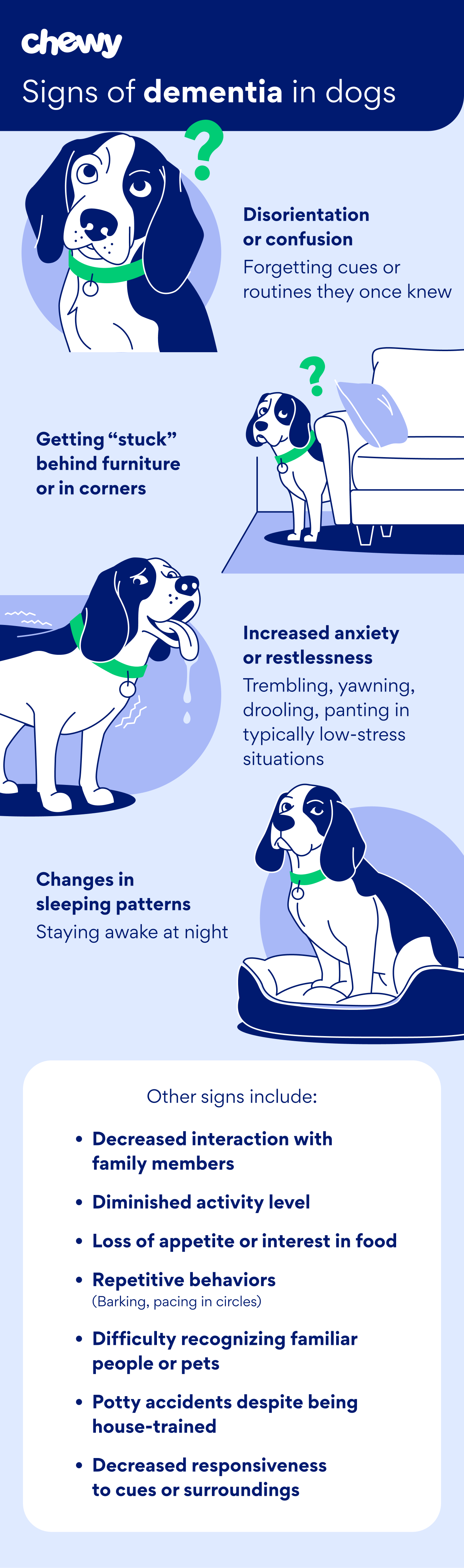
Signs of dementia in dogs include:
- Disorientation or confusion, like getting lost in familiar places
- Changes in sleeping patterns, especially staying awake, pacing, or barking at night
- Increased anxiety or restlessness for no clear reason
- Trembling, yawning, drooling, or panting in situations that used to not bother them
- Decreased interaction with family members
- Forgetting previously learned cues or routines
- Potty accidents despite being house-trained
- Repetitive behaviors, such as barking, pacing, or walking in circles
- Diminished activity level
- Getting stuck behind furniture or in corners
- Difficulty recognizing familiar people or pets
- Loss of appetite or interest in food
- Decreased responsiveness to cues or surroundings
Many of these signs can overlap with other senior-dog problems, like:
- A dog who “won’t listen” may not hear well.
- A dog who has accidents may have a urinary tract infection, kidney disease, diabetes, arthritis, or trouble getting outside in time.
- A dog who paces at night may be in pain or anxious from hormonal conditions.
This is why guessing at home can often send you down the wrong road. If you notice behavior changes, get help from your vet.
Infographic by Chewy
Dog Dementia Stages
Dog dementia can look different from dog to dog, but symptoms often become more noticeable as the condition progresses. The stages below are an easy way to describe what pet parents commonly see at home in a dog with CCD.
| Stage | What Pet Parents May Notice |
|---|---|
| Early | Subtle confusion, mild sleep changes, occasional anxiety, less interest in play, or needing more reminders for routines |
| Moderate | More frequent pacing, nighttime restlessness, house-soiling accidents, getting stuck, vocalizing, or changes in family interactions |
| Advanced | Severe disorientation, frequent accidents, major sleep disruption, difficulty settling, loss of familiar routines, or quality-of-life concerns |
Early dementia can be easy to miss because it can be as subtle as your dog pausing in the hallway or staring at the hinge side of the door instead of the side that opens.
Moderate dementia is usually when pet parents start noticing something is off. Nighttime pacing, barking, accidents, anxiety, and getting stuck are hard on the dog and hard on the people caring for them.
Advanced dementia is more severe, with progressive loss of function. At this point, the big question becomes comfort, safety, and quality of life. Is your dog eating? Can they rest? Do they still seem to enjoy familiar touch, food, walks, or being near you? This can be hard to process in the moment, which is why quality of life scoring tools can help.
What Causes Dog Dementia?
Dog dementia is linked to age-related changes in the brain. Common contributing factors include:
- Oxidative stress
- Changes in brain proteins
- Reduced brain function
- Other degenerative changes
Risk increases with age, but not every behavior change is dementia. Pain, vision or hearing loss, urinary issues, or stress can look similar.
A 2025 study describes canine cognitive dysfunction as a common neurodegenerative disorder in older dogs and notes that there is no single test to diagnose it.
How Do Vets Diagnose Dog Dementia?
CCD is what vets call a “diagnosis of exclusion.” Basically, vets diagnose dog dementia by looking at behavior changes and ruling out other medical problems that can cause similar signs. To do this, your vet may recommend:
- A physical exam
- A neurologic exam
- Blood work and urinalysis
- Pain or mobility assessment
- Vision and hearing evaluation
- A review of medications and supplements
- Behavior questionnaires or symptom checklists
- Tracking videos or notes from home
Home videos help more than people think. A 20-second video of your dog pacing, getting stuck, or seeming confused at night can give your vet a lot of useful information.
When your vet is testing and examining your dog, they’re looking for treatable problems. Arthritis, urinary tract disease, kidney disease, endocrine disease, dental pain, vision loss, and hearing loss can all change how a senior dog acts. If those are present, treating them often makes a dog more comfortable, even if dementia is also part of the picture.
Dog Dementia Treatment
Dog dementia can’t be cured, but treatment can help manage symptoms and support your dog’s quality of life.
Treatment usually combines vet-guided medical care and home support, including:
- Medication, when appropriate (for example, selegiline is the only medication currently labeled to treat signs of CCD)
Recommended Product

- Antioxidant-rich diets and supplements that support brain health (when recommended by a vet)
- Anxiety support
- Pain management, if needed
- Routine, enrichment, and environmental changes
Before starting supplements, calming products, or medications, talk to your vet. Some over-the-counter options may help, but others may not be safe or could interact with medications your dog is already taking.
How To Help a Dog With Dementia at Home
A predictable routine and a safer home setup can make daily life easier—boring (in a good way) often feels safest to an aging brain.
Try these home care modifications:
- Keep meals, walks, and bedtime consistent.
- Use night-lights for dogs who pace or seem lost after dark.
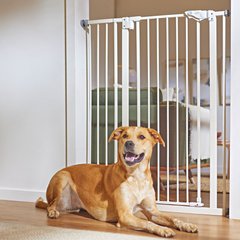
- Block stairs, pools, decks, and unsafe areas with dog gates.
Recommended Product
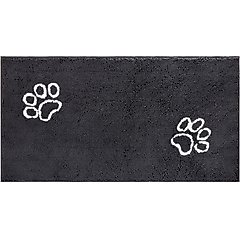
- Add traction with rugs or mats on slippery floors.
Recommended Product
- Keep the furniture layout the same.
- Use washable bedding and cleanup supplies for accidents.
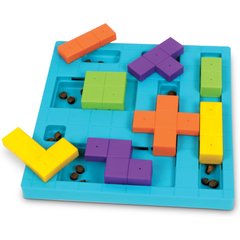
- Offer gentle enrichment, such as sniff walks, food puzzles, or easy training games.
Recommended Product
- Keep greetings calm, especially if your dog startles easily.
- Avoid scolding accidents. Your dog is not doing this on purpose.
- Use pee pads, washable diapers, or belly bands to prevent accidents.
Recommended Products



- If an accident occurs, clean with an enzymatic cleanser.
Recommended Product

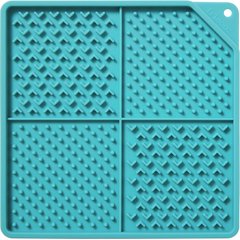
- For enrichment and exercise, keep it easy and winnable: short sniff walks, a simple “find it” game, a lick mat or snuffle mat, or a few treats scattered in the grass.
Recommended Products

If your dog seems frustrated or walks away, make it easier next time. Aim for short, frequent movement that helps them feel successful, interested, and safe.
When To Talk to Your Vet About Quality of Life
If dementia symptoms are disrupting your dog’s sleep, safety, appetite, comfort, or connection with family, it’s time to talk with your vet about quality of life. This doesn’t mean you need to make a decision that day—it means you need support and a plan.
Your vet may ask you to watch for:
- More bad days than good days
- Severe anxiety or panic
- Frequent, distressing accidents
- Inability to settle or sleep
- Getting stuck, falling, or becoming injured
- Loss of interest in food, walks, affection, or routines
- Caregiver exhaustion
Caring for a dog with dementia can be physically and emotionally draining, and your well-being matters too. Your vet can help you think through comfort, safety, medications, home care, and what a good day still looks like for your dog. You can also use a quality of life scoring tool to track changes and guide decisions.
FAQs About Dog Dementia
What are the first signs of dog dementia?
The first signs of dog dementia are often subtle. You may notice mild confusion, changes in sleep, less interest in play, new anxiety, forgetting routines, or getting stuck in familiar spaces.
At what age do dogs get dementia?
Dogs may start developing cognitive dysfunction around 9 years of age or older, though signs are often more noticeable as dogs get older. Large and giant breed dogs age faster in general.
Is dog dementia worse at night?
Yes, dog dementia can seem worse at night. Many dogs with cognitive dysfunction have sleep-wake cycle changes, which can lead to pacing, barking, restlessness, or seeming lost after dark. Low light can make vision problems more obvious, and a quiet house can make anxiety feel scarier.
Night-lights, a predictable bedtime routine, pain control if needed, and vet-guided anxiety support may help.
How long can a dog live with dementia?
There is no single timeline. Some dogs live with mild signs for a long time, while others progress faster. It depends on the dog’s overall health, severity of signs, response to treatment, and quality of life.
The best next step is to track symptoms and work with your veterinarian. Dog dementia is not curable, but many dogs can still have good days with the right support.
Attributions