Excessive Drooling in Dogs: Why Is My Dog Drooling So Much?

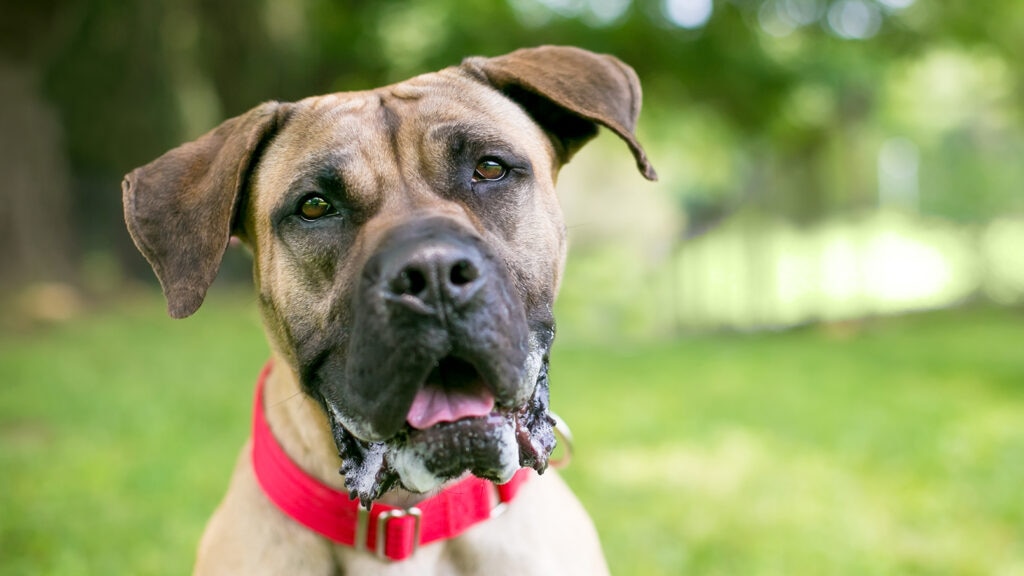
Photo by Mary Swift/Adobe
Most dogs drool occasionally, especially when they’re excited, expecting a yummy treat, or if they’re a “slobbery” breed. Excessive drooling in dogs, however, occurs when a dog produces more saliva than normal or suddenly starts drooling more than usual, which can sometimes signal an underlying health issue.
If you’re concerned about your dog’s drooling or if your dog is acting sick, contact your veterinarian right away.
Key Takeaways
- Excessive drooling in dogs can have many causes.
- Sudden drooling accompanied by vomiting, swelling in the mouth, breathing trouble, or repeated retching can be an emergency.
- Common causes include mouth problems, nausea, toxins or irritants, heat stress, and pain.
- When in doubt, call your veterinarian—and go to an ER vet for red-flag symptoms.
What Is Excessive Drooling in Dogs?
Excessive drooling in dogs, also called hypersalivation or ptyalism, occurs when a dog produces more saliva than normal or begins drooling significantly more than usual. You might notice your dog drooling constantly, with drool soaking their fur or leaving puddles on the floor.
Excessive drooling in dogs is a symptom, not a diagnosis. Drooling is a sign that your dog may be experiencing an underlying health issue. If your dog develops sudden or persistent drooling, especially if they have other symptoms, contact your veterinarian to find out what’s going on.
Why Is My Dog Drooling So Much?
Excessive drooling in dogs can be caused by many issues, ranging from excitement to more serious medical conditions.
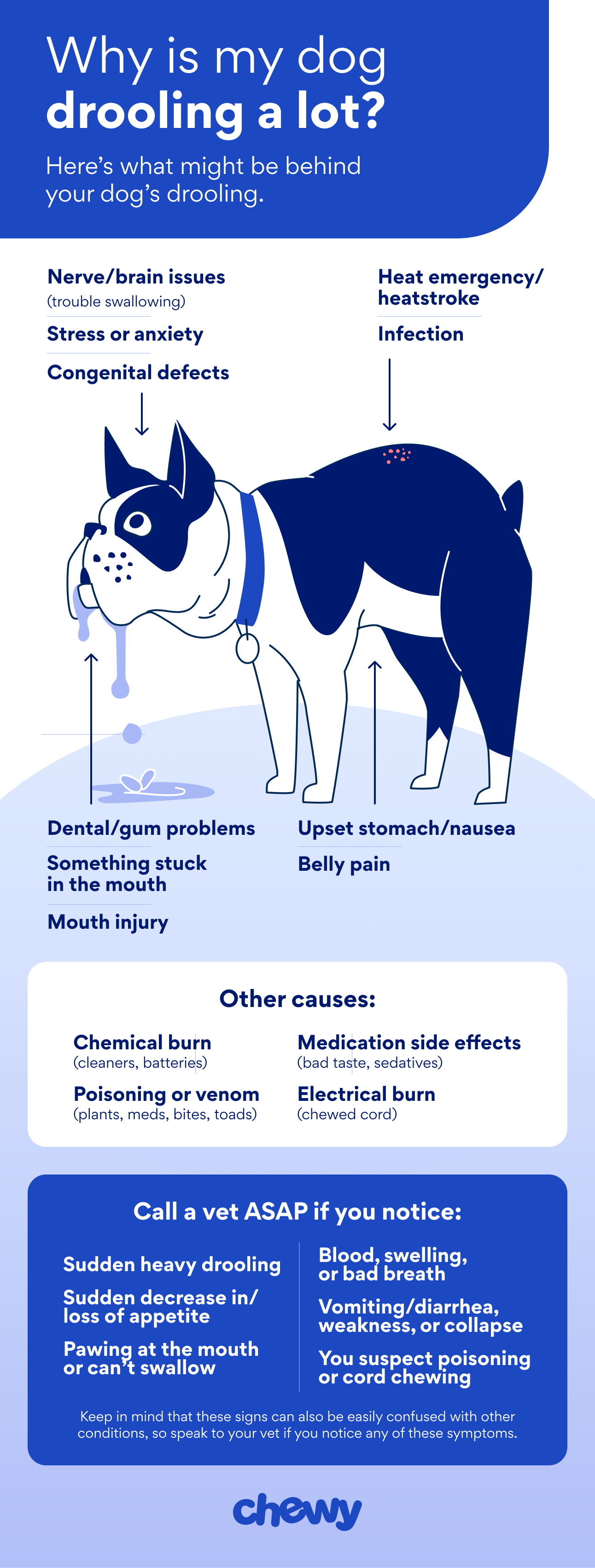
Photo by Chewy
Here are some reasons your dog may be excessively drooling:
- Mouth or throat issues: Problems in your dog’s mouth or throat, such as dental disease, an injury, oral tumors, or something stuck between their teeth, can trigger drooling. Your dog might also paw at their mouth to let you know it’s causing them discomfort.
- Digestive upset: Dogs may drool when they feel nauseous. Upset stomach, eating something they shouldn’t, motion sickness, and gastrointestinal (GI) disease can trigger excessive salivation, often along with lip licking, swallowing, or vomiting.
- Overheating: Dogs may drool heavily when they get too hot. Excessive drooling with other signs, such as heavy panting, weakness, bright red gums, or collapse, can indicate heatstroke, a medical emergency requiring immediate veterinary care.
- Toxin exposure: Many toxins can cause sudden excessive drooling. Common culprits include certain plants, household chemicals, medications, insecticides, and foods that are toxic to dogs. If your dog is drooling a lot and you think they ate something harmful, contact your vet right away.
- Anxiety or excitement: Some dogs drool more when they’re nervous, stressed, or really excited. Car rides, vet visits, thunderstorms, fireworks, or anticipation of food can trigger a temporary increase in salivation.
- Breed-related drooling: Some dogs drool more than others due to the shape of their lips and facial structure. Breeds like Saint Bernards, Bloodhounds, Mastiffs, and Newfoundlands often drool more than other dogs.
What Should I Do About My Dog’s Excessive Drooling?
If your dog suddenly starts drooling more than usual, look for other signs that may help explain the cause. Here are steps you can take:
- Check their mouth. If you can safely look in your dog’s mouth, check for problems like a stuck object, bleeding, swelling, or a broken tooth.
- Look for other symptoms. Watch for other symptoms, such as vomiting, diarrhea, difficulty breathing, lethargy, or trouble swallowing. These clues can help your vet figure out what’s going on.
- Consider recent activities. Think about whether your dog recently ate something unusual, chewed on a plant, went on a car ride, or spent time outside in hot weather. Your dog’s environment and recent activities can provide important clues about what’scausing their excessive drooling.
- Contact your veterinarian. Because excessive drooling can be associated with a wide range of conditions, it’s always safest to consult your vet if you’re unsure about the cause.
When Is Excessive Drooling in Dogs Considered an Emergency?
Excessive drooling in dogs can be an emergency when it:
- Occurs suddenly
- Is severe
- Is accompanied by other worrying signs
Sudden-onset drooling is especially concerning because it can signal toxin exposure, heatstroke, or another serious problem.
Red-flag signs include:
- Difficulty breathing or rapid breathing
- Suspected or known toxin ingestion
- Heatstroke signs (i.e., extreme panting, weakness, bright red gums, disorientation)
- Collapse or seizure
- Difficulty swallowing
- Pawing at the mouth
- Vomiting or diarrhea
- Repeated retching without vomiting
- Abdominal distension
- Blood in the drool
How Do Veterinarians Treat Excessive Drooling in Dogs?
Treatment for excessive drooling in dogs depends on the underlying cause. Possible treatments include:
- Dental treatment: If dental disease, an oral infection, or a broken tooth is the culprit, treatment may include a professional dental cleaning, tooth extractions, antibiotics, or pain relief medications to reduce inflammation and discomfort.
- Foreign object removal: If something is stuck in your dog’s mouth, throat, or esophagus, your veterinarian may need to sedate or anesthetize your pup to safely remove the object. X-rays may be needed to locate hard-to-see objects.
- Anti-nausea treatments: If drooling is related to nausea or GI illness, your vet may prescribe medications for nausea or vomiting, or a special diet to help settle their stomach.
- Treatment for toxin exposure: If your dog ate something toxic, treatment may include inducing vomiting, giving activated charcoal or intravenous (IV) fluids, and providing supportive care.
- Heatstroke management: Dogs with heatstroke require immediate emergency care, such as IV fluids, oxygen support, and close monitoring in a veterinary hospital.
How Can I Help My Drooling Dog at Home?
Dogs with excessive drooling can be worrying, but here are some simple things you can do at home to help keep your pup comfortable while you monitor the situation.
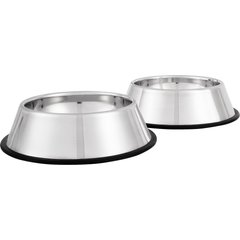
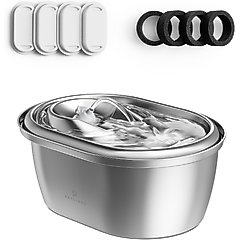
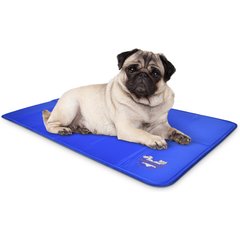
- Provide water and cooling options. Ensure your dog always has access to fresh, clean water, either in a bowl or dog water fountain. On warm days, consider providing a dog cooling mat.
Recommended Products
- Clean their mouth and chin. Use soft pet-safe wipes or a damp washcloth to gently clean saliva from your dog’s mouth, chin, and chest to help prevent skin irritation and odor.
Recommended Product

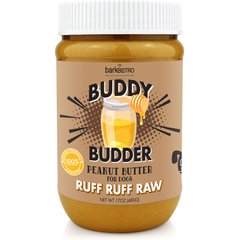
- Offer a calm environment. If excitement or anxiety seems to trigger drooling, try giving your dog a quiet space to settle. A calming chew or a KONG toy filled with xylitol-free peanut butter can help redirect nervous energy.
Recommended Products


- Don’t delay vet care. At-home care is helpful, but persistent or sudden excessive drooling may signal an underlying medical issue. If you’re unsure, check with your vet for guidance.
How Do I Prevent Excessive Drooling in My Dog?
Not all causes of excessive drooling can be prevented, but you can take steps to reduce your pup’s risk and help catch problems early.
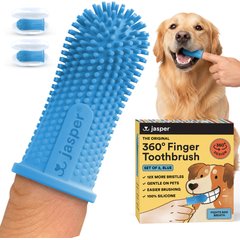
- Provide routine dental care. Regular brushing, dental chews, and professional cleanings help prevent dental disease. You can also do quick weekly checks for bad breath, redness, bleeding, or broken teeth.
Recommended Products
- Supervise chewing. Don’t give your dog unsafe items to chew on, such as cooked bones, sticks, or toys that break easily. Stick with durable, vet-approved options and supervise them during play.
- Feed a consistent diet. Keeping your dog on a consistent, well-balanced diet can help reduce GI upset that may trigger nausea-related drooling. Avoid feeding table scraps and ensure your dog can’t steal items from the trash.
- Manage heat exposure. Prevent overheating by limiting exercise during peak heat, providing shade, and ensuring constant access to clean, fresh water.
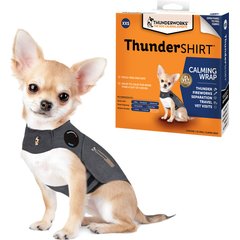
- Reduce stress triggers. If anxiety or car rides trigger drooling, gradual desensitization, calming routines, or vet-recommended calming aids—like the ThunderEase Calming Diffuser or ThunderShirt Calming Vest—may help.
Recommended Products

FAQs About Dogs and Excessive Drooling
Why is my puppy drooling so much?
Puppies are especially prone to mouth irritation, which may cause short-term drooling because they explore the world with their mouth. Puppies also tend to drool more while they’re teething.
Can teething cause drooling in puppies?
Yes. Teething commonly causes drooling. Very young puppies may drool as their baby teeth emerge, and then again between 3 and 6 months of age as their adult teeth come in.
Why is my old dog suddenly drooling a lot but acting fine?
Senior dogs are often affected by dental disease, which can cause drooling. Although dental issues can cause pain, dogs often hide their discomfort and continue acting normally.
When should I take my dog to the vet for excessive drooling?
You should take your dog to the vet for excessive drooling if you’re unsure of the cause, especially if they are exhibiting other signs, such as vomiting, diarrhea, difficulty breathing or swallowing, weakness, excessive panting, seizures, or if you suspect they ate something toxic.
What do I give my dog for excessive drooling?
Never give your dog any medication without asking your veterinarian for guidance.
Attributions