Signs of Poisoning in Dogs—and What To Do Next


Photo by Chewy
Dogs are clever and curious. Those traits are great, but they can also lead dogs to get into things they shouldn’t.
That’s why it’s important for pet parents to recognize items that are toxic to dogs and know the common signs of poisoning so you’re prepared to act quickly.
If you think your dog has eaten something toxic or is showing signs of poisoning, contact your veterinarian or Pet Poison Helpline (855-764-7661; a fee applies) immediately.
Key Takeaways
- Poisoning in dogs is when a toxin causes your pet to become sick; it most commonly happens through ingestion of a toxic substance.
- Common signs of poisoning include vomiting, drooling, weakness, tremors, trouble walking, and changes in breathing or behavior.
- If you suspect your dog has been poisoned, contact your veterinarian or Pet Poison Helpline immediately—don’t wait for symptoms to appear.
- Treatment depends on the toxin and how quickly your dog receives care, but early intervention gives dogs the best chance of recovery.
- Help prevent poisoning by keeping toxic foods, medications, household products, and poisonous plants out of your dog’s reach.
What Is Poisoning in Dogs?
Poisoning is when a substance—for example, a medication, food, plant, chemical, or gas—causes your dog to become sick.
It can occur through:
- Ingestion
- Inhalation
- Injection
- Via the skin or eyes
Dogs are curious and often investigate with their mouths, making ingestion a very common way for dogs to be poisoned.
What Are the Signs of Poisoning in Dogs?
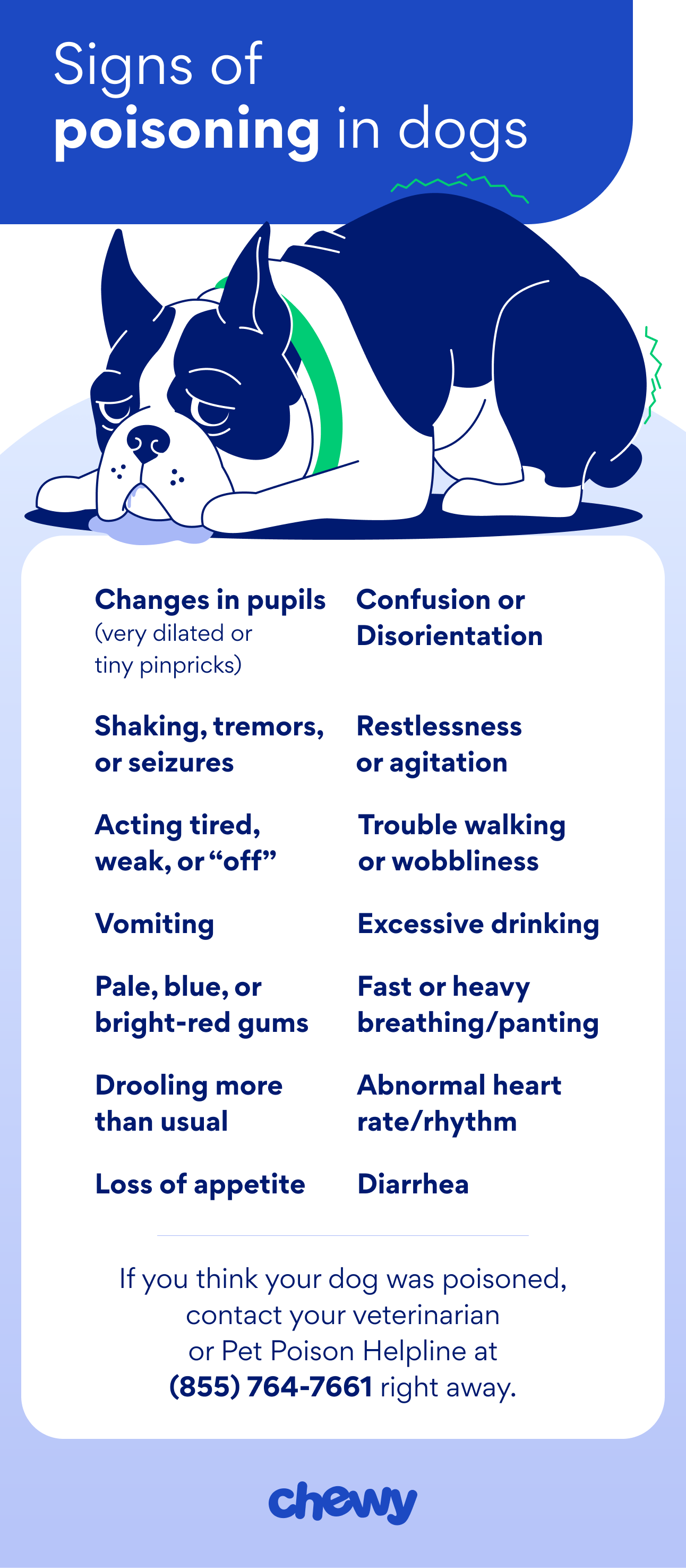
Photo by Chewy
Toxins can affect every system in the body.
Common signs of poisoning in dogs include:
- Vomiting or diarrhea
- Drooling more than usual
- Acting tired, weak, or “off”
- Trouble walking or wobbliness
- Shaking, tremors, or seizures
- Restlessness or unusual agitation
- Confusion or disorientation
- Fast or heavy breathing or panting
- Abnormal heart rate or rhythm that is too slow or too fast
- Pale, blue, or bright-red gums
- Drinking more than usual
- Loss of appetite
- Changes in pupils (very dilated or tiny pinpricks)
In some cases, a dog may appear mildly lethargic for several days—or have no symptoms at all—while internal damage is starting to occur.
Call your vet or the Pet Poison Helpline (855-764-7661; a fee applies) immediately if you suspect your dog has eaten something dangerous.
What Causes Poisoning in Dogs?
Everyday items found around your yard or house, whether in the kitchen, garage, or somewhere else, can be toxic.
Depending on the toxin, a dog may experience immediate effects or may not show any abnormal effects for several days.
Here are some common toxic items that should be kept away from your pup:
- Foods: Toxic foods for dogs include chocolate, xylitol (found in some peanut butters and sugar-free products), grapes and raisins, onions and garlic, macadamia nuts, raw bread dough, and alcohol.
- Human medications: Pain relievers, antidepressants, ADHD medications, sleep aids, blood pressure medications, vitamins, and medicated creams are all toxic to dogs.
- Household products: Household items toxic to dogs include cleaning supplies, antifreeze, batteries, essential oils, drain openers, and sunscreen.
- Yard and garden products: These include rodenticides, slug/snail bait, fertilizers, and insecticides.
- Plants: Toxic plants for dogs include oleander, lily of the valley, yew, azalea, rhododendron, sago palm, and shamrock.
How Quickly Do Signs of Poisoning in Dogs Appear?
Depending on the toxin, signs of poisoning in dogs may appear within a few minutes or be delayed by several hours or days.
Timing can be influenced by:
- The amount your dog ingested
- The type of product
- Your dog’s age
- Your dog’s size
- Your dog’s health
Never wait for signs to develop if you know your dog has been poisoned. Contact your veterinarian or Pet Poison Helpline immediately.
What To Do If Your Dog Has Been Poisoned
First, remain calm—but act quickly.
Follow these steps:
- Remove your dog from the toxin.
- Gather information—how much, when, and where the exposure happened—and any packaging available.
- Contact your veterinarian or Pet Poison Helpline at 855-764-7661 and follow their advice.
- Depending on their advice, you may need to head to the vet for treatment, monitor your dog at home, or provide minor home care.
- Do not attempt treatments without guidance, as this can worsen your dog’s outcome.
In some cases, you may be able to start treatment early with a product like ReadyRESCUE. This use-at-home solution relies on activated charcoal to neutralize many common organic poisons. It can be given in food or a treat. Even with ReadyRESCUE, it’s still best to contact your vet immediately if you suspect poisoning to confirm your best next steps. Your vet may recommend giving your pet ReadyRESCUE immediately before bringing your pet in for evaluation.
Recommended Product

How Do Veterinarians Diagnose Poisoning in Dogs?
Here’s how your vet will likely evaluate your dog:
- Physical examination: This looks at heart rate, body temperature, hydration status, and any other factors your vet deems important.
- Blood work: Many toxins alter electrolytes or cause organ damage and these changes are often found in blood work.
- Urinalysis: This test looks for current or developing kidney damage.
- X-rays: Certain toxic objects can be seen on an X-ray, making these helpful to determine if an ingestion occurred and where the object is located.
How Is Poisoning Treated in Dogs?
Treatment for a dog who’s been poisoned depends on:
- How recently the exposure occurred
- The health of the dog
- The dog’s current symptoms
If the exposure was recent and the dog is not showing any abnormal signs, your vet may choose to:
- Induce vomiting
- Bathe your dog if their skin was exposed
- Give dog medical-grade charcoal
- Offer your dog fluid therapy to increase removal of the toxin, support the kidneys, and help with hydration
Never treat your dog at home without speaking to a veterinarian first.
Can Dogs Recover From Poisoning?
Yes, dogs can recover from poisoning. The likelihood of a full recovery increases when treatment is started early.
In cases where treatment has been delayed, kidney and liver damage may remain and ongoing management may be necessary. If your dog needs long-term care, your veterinarian will work with you on determining what medications and treatments can be given at home.
Unfortunately, some toxins, such as xylitol or sago palm, may be fatal even with aggressive veterinary care, especially if large amounts are ingested.
How To Prevent Poisoning in Dogs
Follow the tips below to help keep your house safe for your dog.
- Store human medication and pet medication separately to avoid mixing them up, and keep them out of reach of your pet.
- Buy cabinet doors and locks to prevent your pet getting into potentially toxic items—especially in the garage, bathroom, and kitchen.
Recommended Products



- Avoid feeding your dog people food so that you don’t accidentally offer them something dangerous. Try a dog-safe snack instead.
Recommended Products

- Avoid toxic plants inside and outside the home.
FAQs About Poisoning in Dogs
What should I do if my dog ate something toxic?
Remove the toxin and call your veterinarian or Pet Poison Helpline (855-764-7661) right away.
Can a dog survive poisoning?
Yes, a dog can survive poisoning. It’s important to get immediate care from a veterinarian, but most dogs will recover with help.
Should I make my dog throw up if I think they ate poison?
No. Never make a dog vomit without the guidance of a veterinarian or toxicology expert. It’s not safe to vomit certain toxins, and not all dogs can safely vomit.
Attributions