What Is Gymkhana on Horses?


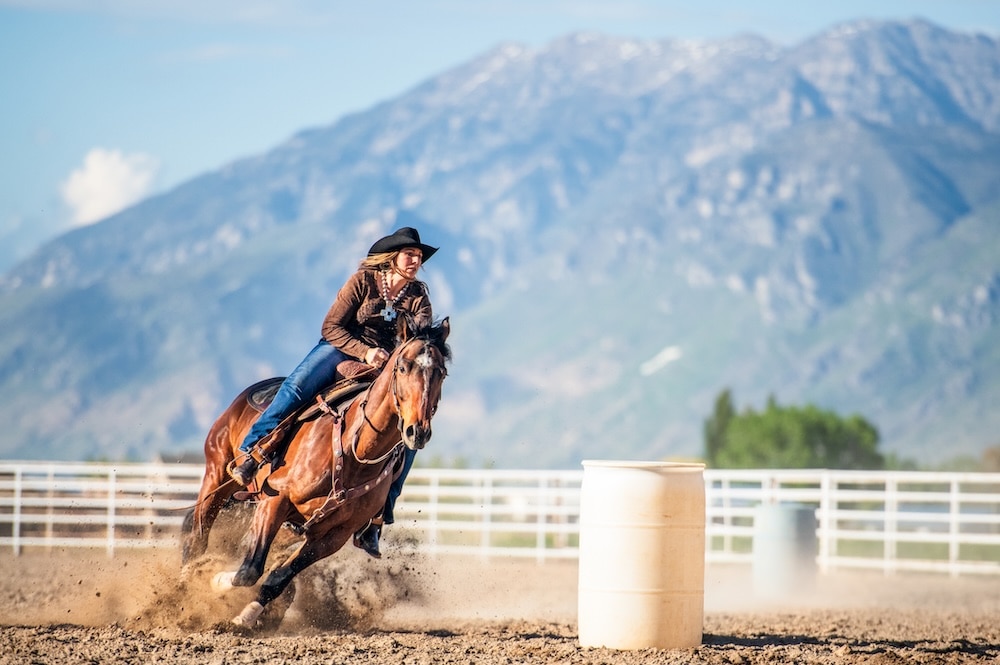
Photo by georgeclerk/E+
Gymkhana is an equestrian competition involving timed speed and agility games performed on horseback. These events are intended to test the relationship between horse and rider by demanding accuracy and responsiveness while competing at speed.
Gymkhanas with horses are often hosted in collaboration with educational organizations like Pony Clubs, 4-H groups, and local riding clubs. Depending on where you live, gymkhana competitions may also be referred to by regional terms like “O-Mok-See horse events” or “mounted playday.”
Key Takeaways
- Gymkhana consists of timed races and pattern-based games on horseback.
- Events may include pole bending, barrel racing, keyhole races, and flag races.
- Riders need a responsive, well-trained horse and strong control at speed.
- Participants should follow the rules of their specific organization or show.
- Safety, horsemanship, and accuracy are just as important as speed.
What Is Gymkhana?
The word “gymkhana” is believed to have come from the Hindi word “gedkhana,” describing a ball court. The first recorded equestrian events described as “gymkhanas” were horse races held in South Asia during the British colonial period.
Modern-day gymkhanas on horses typically include timed events where riders either race against the clock to complete patterns, or race against each other. Unlike traditional horse shows where riders and horses are judged, speed is central to most events at a gymkhana. Exact rules, events included, tack requirements, and age divisions vary by host organization.
Common Gymkhana Events
Here are some of the most common gymkhana events, along with what you and your horse will be expected to do in each:
- Pole bending: Weave through a line of poles and return through the pattern.
- Barrel racing: Race around three barrels in a cloverleaf pattern.
- Keyhole race: Enter and exit a marked area as quickly and accurately as possible.
- Flag race: Rider carries or places a flag while completing a timed course on horseback.
- Egg-and-spoon, “bareback ride a buck,” or other mounted games: Riders balance, carry, or retrieve objects while mounted.
Check in with the host organization for a list of events and a rulebook before entering.
What Gymkhana Horses and Riders Need
Horse Requirements
Before entering your first gymkhana, make sure your horse has these characteristics:
- Sound, responsive, and comfortable in a busy environment
- Experienced with steering, stopping, turning, and transitions
- Able to remain calm around other horses
- Conditioned for speed work and repeated turns
- Comfortable with flags, barrels, cones, and other potentially spooky objects in an arena
Rider Skills
In order to safely ride at a gymkhana, you’ll need these skills:
- A balanced, secure seat
- Effective use of rein and leg aids
- Ability to follow a pattern accurately
- Good control at all gaits that you plan to use in the gymkhana
- Knowledge of how to safely pass, stop, and enter in a crowded arena
- Confidence when riding an excited or nervous horse
- Ability to halt your horse immediately in an emergency
Tack and Clothing
Tack and clothing requirements vary by host organization, but tend to be less formal and restrictive than in traditional horse shows. You’ll probably need the following for your horse:
- Well-fitted saddle and bridle that won’t catch on poles or barrels
- Sweat-absorbing, comfortable saddle pad
- Protective boots if your horse tends to forge or interfere
- Breastcollar to help stabilize your saddle
And for yourself, make sure to pack:
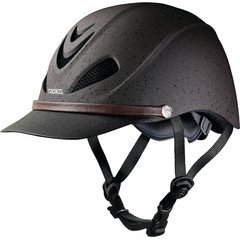
- Your ASTM-certified, properly fitted riding helmet
Recommended Product
- Riding pants with enough stretch to move in the saddle
Recommended Product
- Riding boots with a heel to keep your foot from going through the stirrup
Recommended Product
- Fitted clothing that won’t get caught on your tack or equipment in the ring
- Any fun “bling” you want to wear, like a trophy belt buckle!
How To Prepare for a Gymkhana
A fit, well-schooled horse and rider pair can generally get ready for their first gymkhana in a few weeks. Try these tips:
- Practice each pattern at the walk and trot before adding speed.
- Focus on accurate turns, straight lines, and smooth transitions.
- Condition the horse gradually rather than sprinting or drilling repeatedly.
- Practice riding in an arena with cones, poles, barrels, or other obstacles.
- Expose the horse to crowds, loud sounds, waiting areas, and nearby horses.
- Practice downward transitions and halting from the canter and gallop.
On gymkhana day, there are a few more preparation steps to take care of before your first run:
- Feed and hydrate your horse properly for a day of high-intensity work.
- Walk the course and review the rules before competing.
- Warm up before your first event with plenty of trot and walk before speedwork.
- Remember your arena etiquette in the warm-up ring—call out what you’re doing and always pass left shoulder to left shoulder when riding in opposite directions.
- Plan to cool down properly between events and at the end of your day.
Gymkhana Safety Tips
Gymkhana events are fun and exciting but, like all horse sports, they can be dangerous. Safety best practices for gymkhana include:
- Never prioritize speed over control or soundness.
- Keep a safe distance from other horses, especially those who threaten to bite or kick.
- Check your tack before entering the arena.
- Insist on appropriate footing. If you arrive to find that the ground is slippery, uneven, or too hard, go home and find a different gymkhana to enter.
- Stop if the horse becomes distressed, fatigued, or unsafe.
- Follow directions from your instructor, show officials, and event organizers.
- Be aware that fast turns can increase the risk of falls and strain; work within your horse’s capabilities.
- Don’t work your horse harder or faster than you do when practicing at home.
Is Gymkhana Right for Your Horse?
Some horses seem to thrive on gymkhana games. Other horses find gymkhanas overwhelming, causing them to act out.
Horses who enjoy variety, speed, and precision pattern work tend to be well-suited for gymkhana games. And practicing for a gymkhana can help you remember to work on responsiveness, confidence, and arena riding skills, which are important for all horse-rider teams.
Horses who struggle with lameness, have ulcers, are recovering from an injury, or are unfit should not be ridden at gymkhanas until and unless they are cleared for that use by an equine veterinarian.
Most “green” (inexperienced under saddle) horses are not suitable for gymkhana events at speed, but some gymkhanas have walk/trot divisions for inexperienced horses and riders.
If you’re new to riding, take lessons and get your trainer’s approval before entering a gymkhana.
Gymkhana games are a great way to show off your precision and speed in the saddle, but they’re not right for every horse or every rider. Start by reviewing the patterns at home and taking some lessons, as well as learning your local gymkhana organization’s rules.
Remember, every successful gymkhana run is built on a foundation of trust, communication, practice, and control—relying on speed alone is a recipe for disaster. A personal best is also a win, no matter where you finish in the event!
Gymkhana for Horses FAQs
Is gymkhana the same as barrel racing?
No. Barrel racing is one possible gymkhana event, but gymkhana includes multiple timed games and patterns.
What age can riders be to compete in gymkhana?
Age divisions vary by organization. Many events offer separate classes for children, youth, and adults.
Do gymkhana horses need to be a specific breed?
No. Horses and ponies of many breeds can participate if they are sound, trained, and suitable for the event.
Is gymkhana safe for beginners?
It can be, when beginners receive instruction and start slowly. Riders should master control and pattern accuracy before attempting speed.
Attributions