Girths for Horses: Types, Materials, and How To Measure



Photo by Azaliya/iStock/Getty Images Plus
The girth secures an English saddle, helping to keep it stable while you ride. There are many different types of girths for horses, and it’s important to choose not only the right girth style, but also the right material, size, and fit for your horse.
An improperly fitted girth can cause discomfort and rubs, and it can also make a saddle unstable. A well-fitted girth can help maximize your horse’s comfort and, by keeping your saddle securely fastened. it plays a role in your safety while you ride.
Key Takeaways
- English girths come in different styles for various saddles, disciplines, and horse body shapes.
- A girth should be snug enough to hold the saddle securely without restricting breathing or movement.
- Measure your horse carefully and check the fit before and after riding.
- Anatomical and padded designs may help improve comfort for some horses.
- Clean and inspect the girth regularly to help prevent irritation and equipment failure.
What Is a Horse Girth?
A horse girth is a wide strap that attaches to your saddle’s billets and holds the saddle securely in place. An English girth features two buckles on each end that you can buckle onto the billets. In contrast, a Western cinch features one large ring or buckle on each end that attaches to your Western saddle’s latigo. This article focuses primarily on English girths.
English girths are typically made from leather, synthetic materials, fleece, neoprene, or combinations of materials. The materials are selected for their durability, ease of cleaning, and comfort for your horse.
Types of Horse Girths
Standard or Straight Girths
Standard or straight girths have a simple but versatile design. Girths like the Equinavia Saga Chafeless Hunter Girth have a slight contour to avoid interfering with the horse’s elbow area, but they otherwise make a straight line that tends to work well for many horses.
Recommended Product
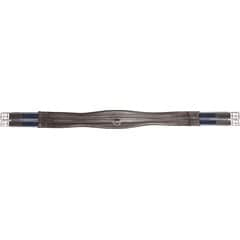
These standard girths are often used with general-purpose and all-purpose saddles.
Dressage Girths
Since dressage saddles often have longer billets, they typically require a shorter girth. Dressage girths are designed to fasten below the long saddle flap, rather than underneath the flap as many traditional girths do.
For example, the Stubben Coolmax Neoprene Horse Short Girth is designed to work with dressage saddles or with saddles with similarly long billets.
Recommended Product
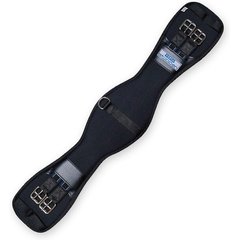
It’s available in lengths from 18–32 inches and features elastic on both ends for maximum comfort and adjustability.
Jumping and Forward-Cut Girths
Some jumping girths feature a contour to provide extra room around the horse’s elbows. For example, the Professional’s Choice Contoured Horse Jump Girth’s design helps avoid interference when horses extend their stride or bring their front legs deep under their bodies as they push off over a jump.
Recommended Product
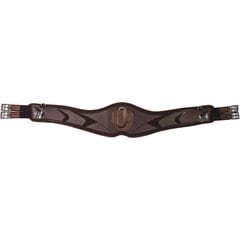
Since many jumper horses wear studs in their shoes for extra traction, some protective or stud girths may include a central padded panel to help protect the horse’s belly. The panel keeps the studs from making contact with the horse’s skin when the horse tucks their front legs tightly underneath their belly over a jump.
Anatomical Girths
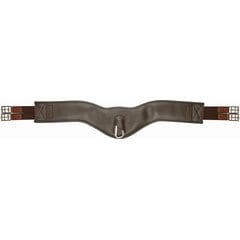
Anatomical girths are shaped to help reduce pressure behind the horse’s elbows and allow greater freedom of movement. These girths are especially popular in jumping and dressage disciplines where every extra inch of free movement can be a competitive advantage. For example, the Collegiate Anatomic Horse Girth features a contoured design that provides extra room behind the elbows while still keeping the saddle stable.
Recommended Product
Girths With Padding or Fleece
Many girths feature padding or lining to help maximize the horse’s comfort.
- Fleece is a soft option often ideal for horses with sensitive skin. Fleece liners are sometimes removable for easy cleaning.
- Neoprene is durable and easy to clean, and since it’s grippy, it tends to add security.
- Memory foam may also be used for padding and extra cushion. These girths may be helpful for horses prone to rubbing or sensitivity, but they still need to properly fit the horse and be cleaned regularly.
The Ovation Coolmax Equalizer All-Purpose Girth is an example of a fleece-lined girth.
Recommended Product
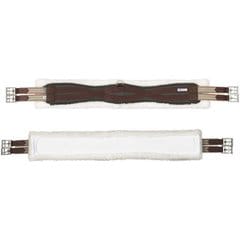
In addition to the soft fleece edging, the girth features Coolmax technology to help wick away moisture to keep a horse dry and comfortable during a ride.
How To Choose a Girth for Your Horse
It’s important to choose a girth that’s right for your horse. Here are some factors to consider.
- Saddle type: Make sure you match the girth to the length of the billets on your saddle and your saddle’s overall design. For example, if you’re riding in a dressage saddle with long billets, you’ll need a short girth designed for that style saddle.
- Horse’s shape: Consider your horse’s overall shape, including their barrel size, rib cage shape, elbow clearance, and body condition, to choose a girth that’s the right shape and size for your horse’s body.
- Discipline: Dressage, jumping, trail riding, and general riding may call for different girth designs. Consider the discipline you ride most often and the type of girth it requires.
- Material: Girths are available in many different materials. Think about the material’s durability and maintenance needs. Also consider the comfort it provides to your horse. If your horse has very sensitive skin, they may benefit from a fleece or sheepskin lining.
- Features: Girths come with many different features. Elastic ends help improve adjustability and comfort, while roller buckles may make it easier to tighten a girth, especially once you’re in the saddle. Padding can help maximize your horse’s comfort, and removable liners can make for easy cleaning. If you’ll be using training equipment, consider whether the girth has a center ring where you can attach the equipment.
- Horse comfort: Watch for rubbing, pinching, restricted movement, or behavioral changes from your horse when you tighten the girth. These issues might indicate that the girth is the wrong style or size for your horse.
How To Measure a Horse for a Girth
You can measure your horse to determine the right girth size:
- Begin with your horse standing squarely on level ground.
- Place your saddle and saddle pad on your horse’s back to determine where the billets sit. Otherwise, estimate where the billets would sit on your horse.
- Use a fabric measuring tape to measure from the billets on one side, underneath your horse’s barrel, and up to the matching point on the other side.
- Compare your measurement with the girth manufacturer’s sizing chart.
Girth sizing can vary by brand. Different horses need different girth sizes, and your horse may need different size girths when you ride them in different saddles.
Consider confirming your girth size with a trainer or tack professional when possible.
How Should a Horse Girth Fit?
A properly fitted girth should be snug enough to keep your saddle secure when you’re mounted. However, it shouldn’t be excessively tight. The girth should lie flat against your horse’s side without twisting, pinching, or pressing into their elbows.
Once you’ve girthed up your saddle, confirm that the girth buckles are even on both sides. If one side is much higher than the other, it can create uneven pressure and cause your saddle to shift.
Gradually tighten your girth, then recheck it after walking your horse and before you mount up. Once you’ve tightened your girth, a properly fitting saddle should remain stable without sliding or rocking.
Avoid using the highest billet hole or pulling the girth excessively tight. If your girth is so tight that it’s difficult to adjust it, chances are it’s too tight for your horse. You may need a different style girth, or your saddle might not fit your horse.
Girth Safety and Comfort Tips
Choosing a girth that fits your horse and is the right style for their body and your saddle is the first step in keeping your horse comfortable, but there are several other important precautions to take.
Before you tack up, thoroughly groom the girth area and check for any hair loss, swelling, heat, or sores. Those issues might indicate poor girth fit. Don’t put your girth over an existing sore or irritated area and wait for it to heal before you ride again.
Make sure your girth is clean and dry before every ride. If you buy two girths, you can thoroughly clean and dry one while using the other.
Watch your horse for signs of pain, girthiness, or resistance. If you notice these issues, stop and reassess your girth and saddle fit. If your horse has persistent saddle or girth problems, have a saddle fitter or trainer help evaluate those problems.
How To Clean and Maintain a Horse Girth
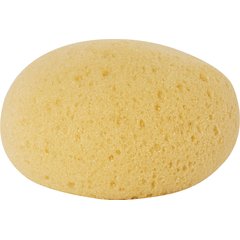
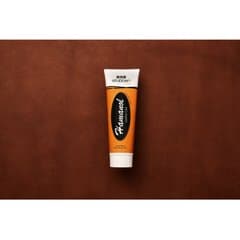
Properly caring for your girth can help preserve its lifespan and keep your horse comfortable. After each use, wipe down the girth to remove sweat, dirt, and hair. Use an appropriate leather cleaner and conditioner to maintain a leather girth, and follow the manufacturer’s cleaning instructions.
Recommended Products


Regularly wash removable fleece or synthetic covers.
Keep a close eye on your girth’s condition. Frequently inspect the stitching, elastic, buckles, and billets for wear, and replace or repair a girth that shows signs of damage or wear. If your girth is cracked, stretched, damaged, or no longer fits correctly, replace it.
FAQs About Horse Girths
What is the difference between an English girth and a Western cinch?
An English girth has buckles on each end and is designed to attach to the billets of English saddles. A Western cinch features a single large ring or roller buckle on each end that attaches to a latigo on a Western saddle.
How do I measure my horse for a girth?
You can measure your horse with a fabric tape measure. Measure from where the girth would attach to your saddle on one side, underneath your horse’s barrel, and to the same point on the other side of your horse.
How tight should a horse’s girth be?
A girth should be tight enough to keep your saddle secure, but it shouldn’t be excessively tight. You should be able to easily fit two to four fingers underneath the girth along your horse’s sternum.
What is the best girth for a sensitive horse?
Sensitive horses often respond well to girths with soft fleece or sheepskin linings.
How can I prevent girth galls and chafing?
To prevent girth galls and chafing, make sure that you thoroughly groom your horse before tacking up. Frequently clean your girth and make sure no wrinkles form under the girth when you tighten it.
How do I know if my horse’s girth fits correctly?
A well-fitting girth should lie flat against your horse’s side. It should reach your billets well without you having to use the very top billets to get it tight enough, and the girth shouldn’t interfere with your horse’s elbow.
Can I use the same girth for different saddles?
If your saddles have billets of similar length that are in a similar position, you may be able to use the same girth on multiple saddles. If your saddle billets differ in length or your saddles are entirely different styles, like a dressage saddle and a jumping saddle, you may need to buy a separate girth for different saddles.
When should I replace my horse’s girth?
You should replace your horse’s girth if the leather begins to crack, if the elastic becomes so worn that it loses elasticity, if it no longer fits your horse, or if the lining becomes overly worn, damaged, hard, or uneven.
Attributions