Sulcata Tortoise Care Sheet



Photo by Eko Sariwijayanto/iStock/Getty Images Plus
Sulcata tortoises, also known as African spurred tortoises, are native to semi-arid grasslands of areas of sub-Saharan Africa. They are one of the largest turtles in the world and may even outlive their pet owners.
If you’re considering adopting a sulcata tortoise, make sure you have everything you need to care for these long-lived giants properly.
Sulcata Tortoise Overview
- Sulcatas can grow 24–30+ inches long and weigh 80–150+ pounds.
- Curious and friendly, sulcata tortoises thrive on interaction with their owners.
- Adult African spurred tortoises need large outdoor enclosures.
Fun Facts About Sulcata Tortoises
- Unlike desert tortoises, sulcata tortoises don’t brumate, which is a state of dormancy activated by some reptiles to survive cold temperature.
- Sulcata tortoises are nature’s bulldozers—if they can see through it, they can go through it—so escape-proofing matters.
- Males have hard, protective outer scales called gular scutes that extend from the front of their plastron (belly part of the shell) and are used for flipping rivals when competing for females.
Sulcata Tortoise Enclosure
Your sulcata tortoise enclosure should be durable enough that they can’t break out of it and big enough for them to explore.
For a single baby or small tortoise, an indoor enclosure should measure at least 36 inches long by 18 inches wide by 16 inches high. Secure the habitat with a screened lid to prevent escape, and always provide the largest enclosure your space allows.
In warm, dry climates, arid tortoises can live outdoors in a secure, escape- and predator-proof enclosure when weather permits.
For one tortoise, the habitat should measure at least 48 inches long by 48 inches wide, with walls at least 24 inches high to prevent climbing and escape. The enclosure should be dug into the ground enough so a tortoise cannot dig their way out. Cover the enclosure with a sturdy mesh lid that keeps predators out while allowing natural sunlight to enter.
Recommended Products
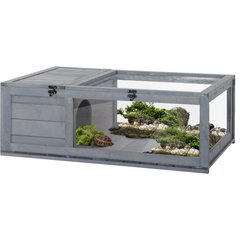

As they grow, their enclosure also needs to grow—many tortoise owners choose a large livestock water tank or turtle tub because of the space and durability they offer.
Set up low-angled, sturdy stone or concrete ramps, make hides from straw bales or plastic bins, and give enough substrate for them to dig. Avoid steep embankments because they can flip over if they fall.
Lighting
Proper lighting is essential because UV exposure helps a sulcata tortoise absorb calcium and produce vitamin D, which is critical to building strong bones and a healthy shell, while also helping to prevent metabolic bone disease. If your tortoise doesn’t have access to direct sunlight, set up appropriate UV lighting.
Recommended Products

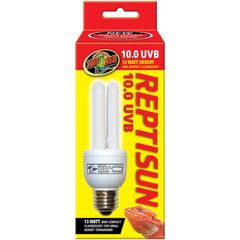
Replace UV bulbs according to manufacturer recommendations because the UV coating wears out before the bulb burns out.
Heat and Humidity
Indoor sulcata tortoises need a basking area of 95–100 F, a warm zone of 85–95 F, and cool zone of 75–85 F. These tortoises need humidity of 40–60%. If it’s too high or too low for too long, they can develop respiratory diseases.
Recommended Products


Use thermometers and a humidity gauge to check your tortoise’s enclosure daily.
Sulcatas need a warm area to live in when outdoor temperatures drop below 70 F. In areas with extended cold seasons, they may only live outdoors part of the year or not at all. Consistently low temperatures can increase the risk of illness.
Sulcata Tortoise Food
The ideal sulcata diet is high-fiber, low-protein, and includes a variety of grasses, greens, or pelleted tortoise food with occasional tortoise-safe fruits.
Recommended Products
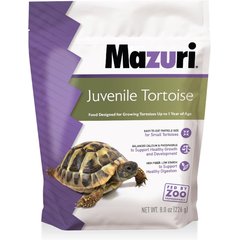
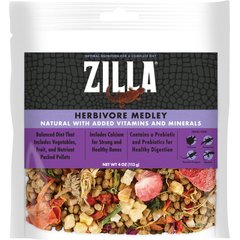
Food can be placed in a shallow food dish. Provide a shallow water dish as well.
Discuss any supplements with your exotic veterinarian before adding them.
Diet staples include a variety of the following:
- Timothy hay
- Orchard grass
- Curly mesquite
- Blue grama
- Dandelion greens and flowers
- Turnip greens
- Prickly pear cactus pads
- Spring mix
- Kale
Note: Avoid foods high in oxalates like alfalfa hay, parsley, spinach, rhubarb, beet greens, and collard greens; they can cause formation of kidney stones.
Occasional vegetable treats:
- Broccoli
- Alfalfa sprouts
- Cabbage
- Celery
- Cucumbers
- Pumpkin
- Cauliflower
- Corn
- Peas
Occasional fruit treats:
- Apples
- Apricots
- Cantaloupe
- Berries
- Bananas with skin
- Grapes
- Oranges
- Peaches
- Pears
- Watermelon
Tortoise Handling and Grooming
Gently handle your sulcata tortoise a few times a week. Build trust with them by sitting nearby, offering food, and waiting patiently while they take it from you. They become docile, friendly companions who may even follow you around, but don’t handle them constantly, as they can become stressed.
Their grooming needs are simple; with a good habitat setup and proper diet, they’ll take care of most of it themselves.
Beaks
Tortoises don’t have teeth; instead, they have a hard beak for tearing up their food. Their normal diet should wear the beak down naturally, maintaining a nice curve that stops at the jaw. However, if your tortoise’s beak is showing signs of a problem, always take them to the vet to address any issues, including trimming needs.
Claws
If necessary you can clip their claws, but if their habitat has a stone ramp or two, the claws should wear down on their own.
Shedding
Tortoises shed their skin and scutes, the shield-shaped sections of their shells. Make it easier for them with a cool-side humid hide lined with moist sphagnum moss, and if skin or scutes appear to be stuck, let your tortoise soak in a shallow water dish to help loosen them.
Sulcata Tortoise Health
A healthy sulcata tortoise has bright, clear eyes and a beak that closes properly and is active, if slow-moving. They’re most active during the morning and evening (crepuscular), and typically rest during the heat of the day.
Although sulcata tortoises are robust they can still get sick. If you notice anything off with your tortoise, schedule an appointment with your exotic vet.
Metabolic Bone Disease
Caused by dietary problems and lack of UV light (unfiltered sun or artificial), MBD is a debilitating disease that causes weak bones. In sulcata tortoises, it shows up as a soft shell and deformed legs, and can also cause eating problems such as loss of appetite.
Shell Rot
Sulcata tortoises can be vulnerable to shell rot. It’s usually caused by environmental problems, such as incorrect humidity levels or excessive exposure to saturated ground.
Watch for the following:
- Pitting on their shell, especially the belly
- Whitish patches
- Abnormal discoloration
- Lifting of the scutes
There’s also a type of shell rot called septicemic cutaneous ulcerative disease (SCUD), which causes additional symptoms including:
- Lethargy
- Redness on the shell and skin
- Loss of appetite
Shell Pyramiding
Shell pyramiding seems to be caused by a combination of improper diet and poor environment, and is more common in younger tortoises and those kept as pets. The shell scutes of tortoises with this condition look like mini pyramids.
You can help prevent shell pyramiding by:
- Ensuring your sulcata tortoise’s habitat has appropriate light, heat, and humidity
- Sticking to a low-protein, high-fiber diet
Dehydration
Look for sunken or closed eyes and sudden, significant weight loss. Other signs include:
- Dry, flaky, or wrinkled skin
- Lethargy
- Loss of appetite
- Thickened, chalky urate (critical)
- Dry, hard feces (critical)
Respiratory Infections
Call your vet if you notice breathing changes, lethargy, or nasal discharge. Respiratory infections in tortoises can be fatal because they don’t have a diaphragm or cilia (hair-like structures) to help expel mucus.
Supply Checklist for Sulcata Tortoises
- Enclosure that’s appropriately sized for their life stage
- Sturdy, escape-proof fencing/walls
- Substrate for digging and comfort
- Low-angle sandstone ramps
- Hides on each end of enclosure
- Sphagnum moss
- UV bulb and fixture
- Basking/heat lamp
- Ceramic heat emitter or space heater during cool weather
- Thermostat
- Thermometers
- Hygrometer
- Timer
- Shallow food and water dishes
- Low-sided water dish for soaking
- Hay, grasses, vegetables, fruits, pelleted food
- Multivitamin and calcium supplements, if suggested by vet
- Reptile nail clippers
- Soaking dish
FAQs About Sulcata Tortoises
Where do sulcata tortoises live?
Wild sulcata tortoises live in semi-arid sub-Saharan Africa, with grasslands, cactus, and lots of burrows to dig.
How long do sulcata tortoises live?
Most pet tortoises live into their 70s, and some naturalists say they can live over 100 years.
How big do sulcata tortoises get?
The biggest sulcata on record was a male who lived in the Giza Zoological Gardens of Egypt. He weighed 232 pounds and his carapace measured 41.6 inches. Most sulcata tortoises average 24–30 inches long and 80–110 pounds, with some growing larger.
How fast do sulcata tortoises grow?
Relatively quickly. During their first two years, they’ll double or triple their hatchling size. By age 5, they can weigh up to 30 pounds and measure 6–10 inches long. By age 15, most have reached their full length and weigh 80–150 pounds.
Do sulcata tortoises hibernate?
No. This species does not brumate (the reptile version of hibernation). They may slow down at different points in the year, depending on the climate, but won’t take a months-long nap.
Are sulcata tortoises good for beginners?
Not generally. They have a long lifespan and can be one of the most difficult species to keep healthy because of their large habitat needs and the costs to maintain that habitat.
Attributions