Sort
Filter
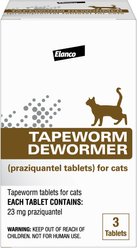


$18.92 Chewy Price
($6.31/ea) Price per Unit
$19.99 List Price
Autoship Price


$17.99 Chewy Price
$21.99 List Price
Autoship Price
$5.75 Chewy Price
($5.75/ea) Price per Unit
Autoship Price
- Prescription Item
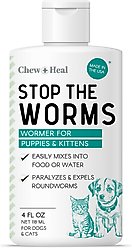

$12.99 Chewy Price
($3.25/fl oz) Price per Unit
Autoship Price

$17.99 Chewy Price
$19.99 List Price
Autoship Price
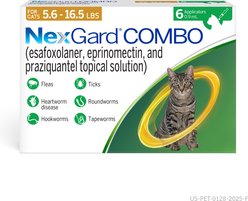
$182.69 Chewy Price
($30.45/ea) Price per Unit
Autoship Price
- Prescription Item
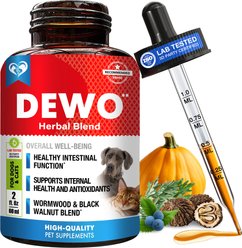
$17.99 Chewy Price
($9.00/fl oz) Price per Unit
$19.99 List Price
Autoship Price
$13.49 Chewy Price
($1.69/fl oz) Price per Unit
Autoship Price
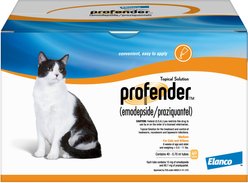
$19.19 Chewy Price
($19.19/ea) Price per Unit
Autoship Price
- Prescription Item
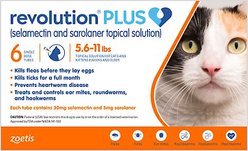
$165.24 Chewy Price
($27.54/ea) Price per Unit
$156.98 Autoship Price
- Prescription Item
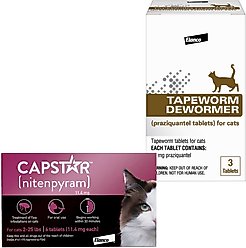
Bundle and Save 5%
$58.79 Chewy Price
$61.89 List Price
Autoship Price
$221.99 Chewy Price
($4.44/ea) Price per Unit
Autoship Price
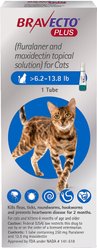
$52.99 Chewy Price
($52.99/ea) Price per Unit
Autoship Price
- Prescription Item
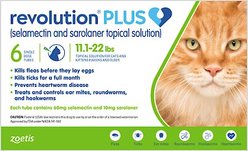
$170.34 Chewy Price
($28.39/ea) Price per Unit
$161.82 Autoship Price
- Prescription Item
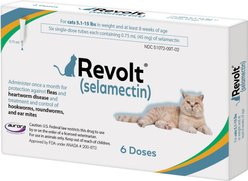
$65.94 Chewy Price
($10.99/ea) Price per Unit
Autoship Price
- Prescription Item
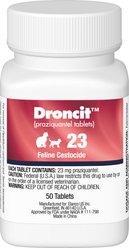
$5.23 Chewy Price
($5.23/ea) Price per Unit
Autoship Price
- Prescription Item

$67.99 Chewy Price
($11.34/ea) Price per Unit
Autoship Price
- Prescription Item
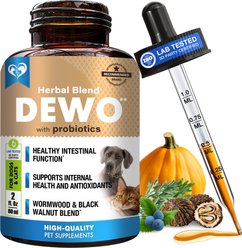
$19.99 Chewy Price
($10.00/fl oz) Price per Unit
Autoship Price
$21.49 Chewy Price
($21.49/ea) Price per Unit
Autoship Price
- Prescription Item
$68.49 Chewy Price
($11.42/ea) Price per Unit
Autoship Price
- Prescription Item

Bundle and Save 5%
$83.51 Chewy Price
$87.91 List Price
Autoship Price
$49.34 Chewy Price
($16.45/ea) Price per Unit
$52.69 List Price
Autoship Price
- Prescription Item
$208.11 Chewy Price
($34.69/ea) Price per Unit
$197.70 Autoship Price
- Prescription Item
$52.99 Chewy Price
($52.99/ea) Price per Unit
Autoship Price
- Prescription Item
$35.98 Chewy Price
Autoship Price

$129.79 Chewy Price
($21.64/ea) Price per Unit
Autoship Price
- Prescription Item
$27.33 Chewy Price
($27.33/ea) Price per Unit
Autoship Price
- Prescription Item

$56.49 Chewy Price
($9.42/ea) Price per Unit
Autoship Price
- Prescription Item
$31.39 Chewy Price
($31.39/ea) Price per Unit
Autoship Price
- Prescription Item
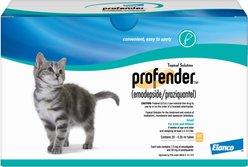
$16.09 Chewy Price
($16.09/ea) Price per Unit
Autoship Price
- Prescription Item
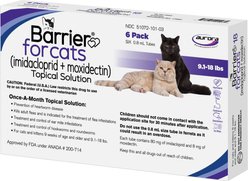
$54.99 Chewy Price
($9.17/ea) Price per Unit
Autoship Price
- Prescription Item

Bundle and Save 5%
$84.44 Chewy Price
$88.89 List Price
Autoship Price

$78.49 Chewy Price
($13.09/ea) Price per Unit
Autoship Price
- Prescription Item
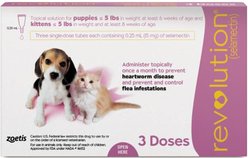
$76.30 Chewy Price
($25.44/ea) Price per Unit
$72.48 Autoship Price
- Prescription Item
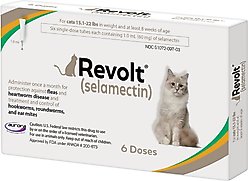
$65.94 Chewy Price
($10.99/ea) Price per Unit
Autoship Price
- Prescription Item
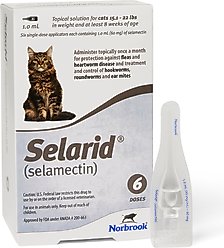
$69.99 Chewy Price
($11.67/ea) Price per Unit
Autoship Price
- Prescription Item
Heartworm Prevention & Dewormers for Cats
Reviewed by Dr. Hannah Hart, DVM
Left untreated, parasite infections can weaken your cat’s immune system and wreak havoc on their digestion. Parasites can also cause symptoms such as a dull hair coat, low appetite, and belly bloating. Fortunately, cat dewormers are designed to target specific parasites and eradicate them so your cat can heal. Obtaining a proper diagnosis is key, however, so consult your veterinarian at the first sign of a parasite problem. Common symptoms include diarrhea, vomiting, bloody stool, weight loss, and constipation. Cat dewormers come in several forms, including the following:
- Tablets: Taken orally, these treatments usually contain anti-parasitic medications to control active infections
- Topical solution: Applied to the skin, these offer preventive benefits as well as treatment
- Oral solution: Offered orally or administered in food or water
- Herbal remedies: Homeopathic products can be used for general support or in conjunction with medical treatments
While some cat dewormers don’t require a prescription, it’s wise to consult your veterinarian before treating your cat for parasites. Identifying the parasite is crucial, and your vet is the best person to recommend a course of treatment. Whether you’re dealing with an active infestation or trying to prevent one, a broad-spectrum preventive could be your cat’s best friend. Use Chewy’s Autoship to ensure your cat never misses a dose.
Frequently Asked Questions about Heartworm Prevention & Dewormers for Cats
Do cats need dewormers?
Most cats need dewormers when they are kittens—vets usually recommend treatments every 2–3 weeks until 6 months of age. Whether adult cats need deworming depends on their exposure and the use of preventive medications.
Do I need a prescription for cat dewormers?
Many cat dewormers, including herbal remedies, are available over the counter, but some preventive medications require a prescription. Always consult your veterinarian before using any dewormer on your cat.
Do over-the-counter dewormers work for cats?
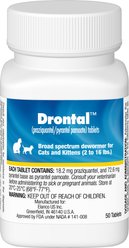
Over-the-counter dewormers can be effective for cats, depending on the active ingredient and the type of parasite. Cat dewormers that contain praziquantel (brand name Drontal) may be effective against tapeworms, hookworms, and large roundworms. Your vet can guide you on choosing the best dewormer for your cat.
Are liquid dewormers good for cats?
Liquid dewormers can be good for cats who don’t like taking pills or who react poorly to topical treatments. Consult your vet before using a liquid dewormer, as some formulas may not be effective against certain types of parasites.
Save 5% on repeat deliveries
Medication Type
Kills or Treats
Repels or Prevents
Product Form
Lifestage
Health Feature
Brand
7 Brands are shown below