Cornish Rex
Updated August 4, 2026
Cornish Rex
Updated August 4, 2026
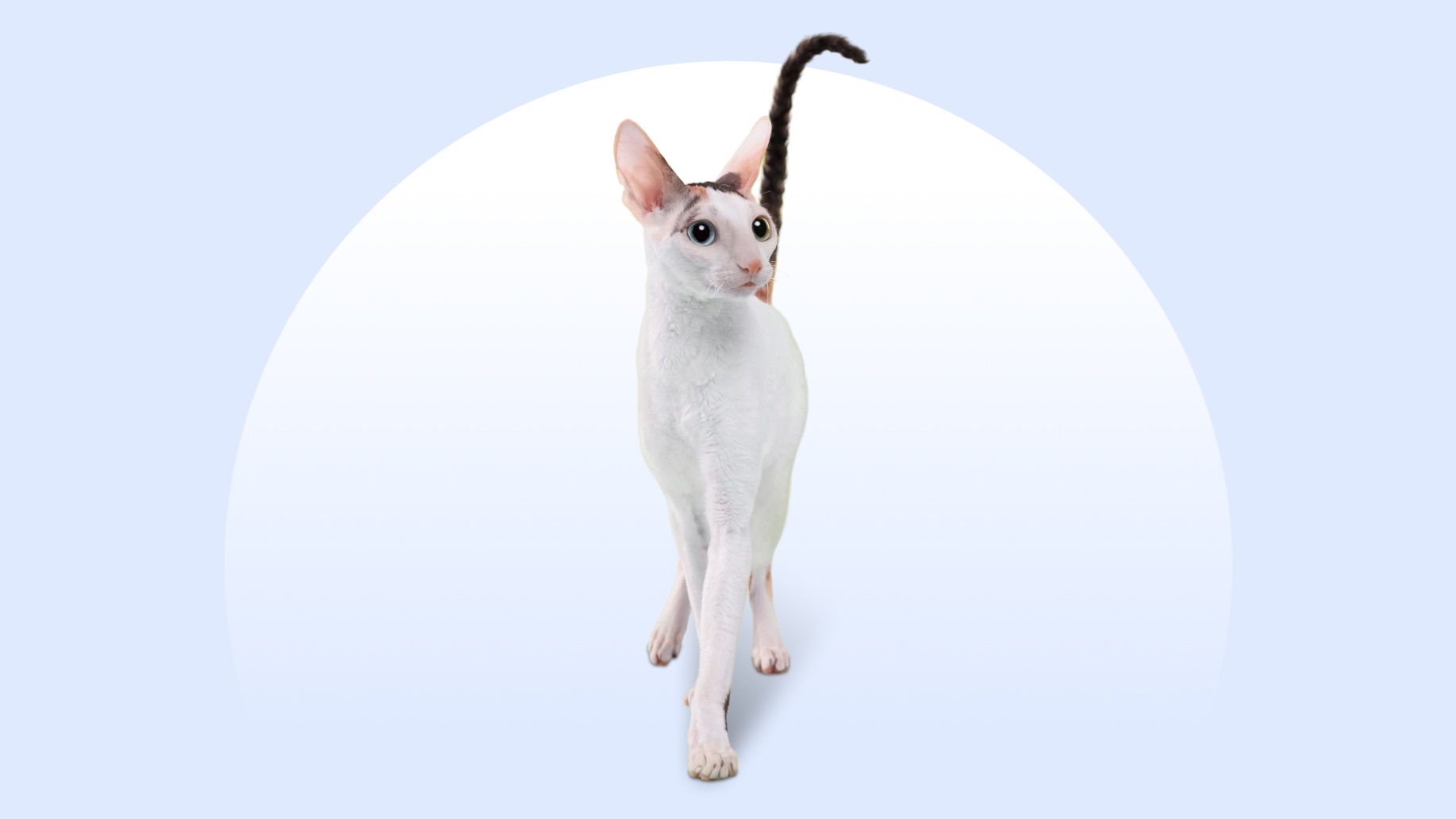
If you’re looking for a companion cat, the Cornish Rex is a solid choice: They’ll be by your side all the time, whether you like it or not! Their batlike ears and huge, glowing eyes may make them seem like they’re judging you, but they’re probably just looking to get involved in whatever you’re doing.
Playful, Social, Athletic
5–10 pounds
9–13 years
Once you’ve met a Cornish Rex, you’ll likely never forget the experience. These unique cats are known for their soft, curly coat that feels like crushed velvet. They also have friendly personalities that make them great family cats, so not only will you find a new best friend, but so will your kids, your neighbors, your houseguests, and all your other pets.
Cornish Rex Characteristics
Cornish Rex Appearance
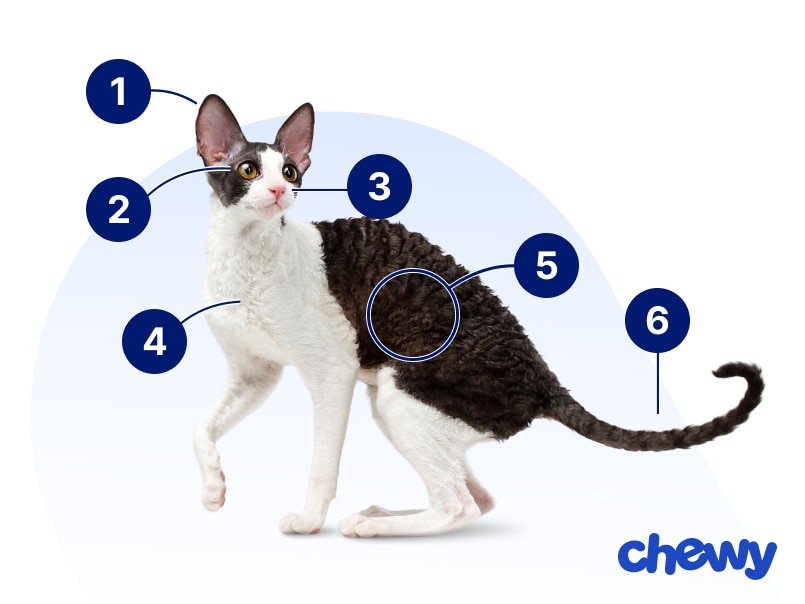
- Ears
They have large, tall ears that stand up straight on top of their egg-shaped head.
- Eyes
Their eyes are big and oval, giving them an alert expression.
- Nose
Cornish Rexes have a Roman nose—a nose with a prominent, curved bump on the bridge—which just a few other cat breeds have (such as the Birman).
- Coat Length
Their short coat is not just curly but also dense, soft, and perfectly pettable.
- Coat Color
Their curly coat can come in almost every color and pattern.
- Tail
They have a slender, rope-like, tapering tail with no fluff.
Cornish Rex Temperament
Cornish Rex cats are sweet, intelligent, and social kitties, says Bob Baratto of Barmont Cat, a member of the Cat Fanciers’ Association Cornish Rex Breed Council. “They make excellent family pets, and are great with children and other pets,” he says. However, as with any cat breed, it’s important to socialize your kitten from the start to get them used to being around family members (both furry and not).
If you’re adding a Cornish Rex cat to your family, make sure you have plenty of time and attention to dedicate to them. “They should not be left alone for a great length of time, and they thrive on interaction with family members,” Baratto says.
Related Breeds





How to Care for a Cornish Rex
This breed is generally easy to care for, needing a standard cat diet, regular grooming, and exercise. They also typically develop few serious health conditions. Given love and attention, these cats can thrive in a variety of home environments and family dynamics.
Grooming
Diet
Exercise
Environment
Cornish Rex Health
These cats typically live 9–13 years, though some can live longer depending on their general health and care. There are no major health conditions specific to this breed, says Leslie Lyons, Ph.D., feline genetics expert and professor of comparative medicine and surgery at the University of Missouri College of Veterinary Medicine.
However, despite being a healthy breed, it is wise to watch for a few health issues that may occur in many types of cats, including:
- Patellar luxation: Any fine-boned cat breed should be monitored for this condition, Dr. Lyons says. Patellar luxation occurs when the kneecap slips out of its normal groove in the thigh bone. This orthopedic condition can lead to difficulty walking and jumping, lameness, limping, and arthritis. Patellar luxation is rare, but it can be caused by genetics or injury. Anti-inflammatory medication, joint supplements, and sometimes surgery may be required to treat patellar luxation.
- Hypertrophic cardiomyopathy (HCM): The most common heart disease in cats, this condition causes the heart’s muscular walls to thicken, making it less able to pump blood effectively. HCM is not curable and the cause is unknown, but it is suspected that genetics may play a role.
- Skin problems: Because of their lack of guard hairs (the coarse, protective outer hairs found in most cats’ coats), this breed can be sensitive to cold temperatures. Color also matters: “Any cat that has white, especially on the edge of its nose where the fur line comes to the skin line of the nose,” Dr. Lyons says, “that’s often where melanoma can form.”
Cornish Rex History
The Cornish Rex breed originated in Cornwall, England, in 1950. The original Cornish Rex cat was a kitten born with a spontaneous genetic mutation to two short-haired pet barn cats. The breed made its debut in North America seven years later in California, in 1957.
The Devon Rex, originating in Devon, England, near Cornwall, is a similar breed to the Cornish Rex, Dr. Lyons says. “Early geneticist Roy Robinson actually bred those cats together to make sure that it wasn’t actually the same mutation,” she says, “and he found that they were different DNA mutations, both causing the loss of some top hair.”
However, she adds, the Cornish Rex has more of the Marcel wave—when a cat’s fur ripples in tight, washboard-like curls—to their coat, and the Devon Rex often has missing patches of hair. “It’s caused by two different genes and different mutations in each gene,” she says.