Oriental Shorthair
Updated June 8, 2026
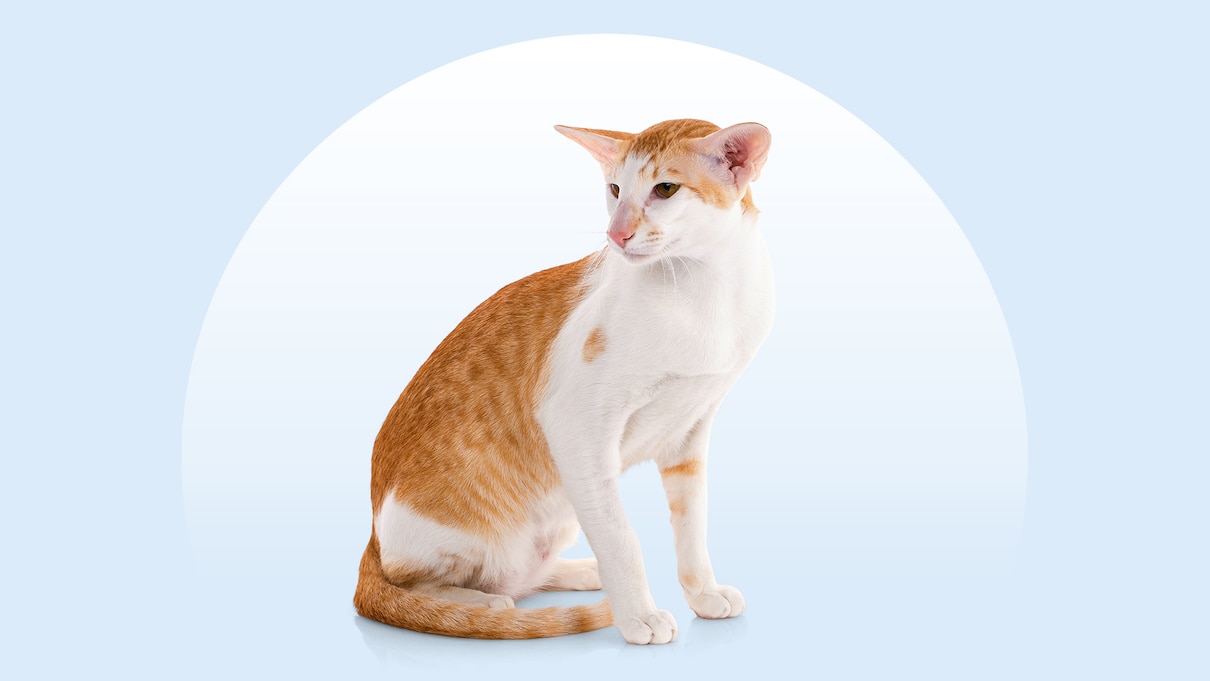
Oriental Shorthair
Updated June 8, 2026
With big personalities and even bigger ears, Oriental Shorthair cats are as entertaining as they are adorable. These chatterboxes love being the center of attention and may “honk” if they feel ignored. Athletic, affectionate, and loyal, they’ll bring lots of love and laughter to any home.
Vocal, Devoted, Athletic
5–12 pounds
12–15 years
You’ll know an Oriental Shorthair when you see (and hear) one. These cats are famous for their extra-large ears and honk-like meow, but their personality is the real showstopper: Think cat, dog, and mischievous monkey all rolled into one. They might be on your lap one minute and at the top of your kitchen cabinets the next.
Loving and a little loud, they’ll follow you from room to room and offer running commentary on everything you do. As social, curious, and affectionate cats, they do well in homes with kids and other pets—as long as there’s enough attention to go around.
Recommended Products

Oriental Shorthair Characteristics
Oriental Shorthair Appearance
As a relative of the Siamese cat, Oriental Shorthairs inherited a lean, elegant build—but those big ears and long noses are unmistakably theirs.
They also come in more than 300 coat colors and patterns, the widest range of any cat breed. That’s why you might hear them called “ornamentals” or “rainbow cats.”
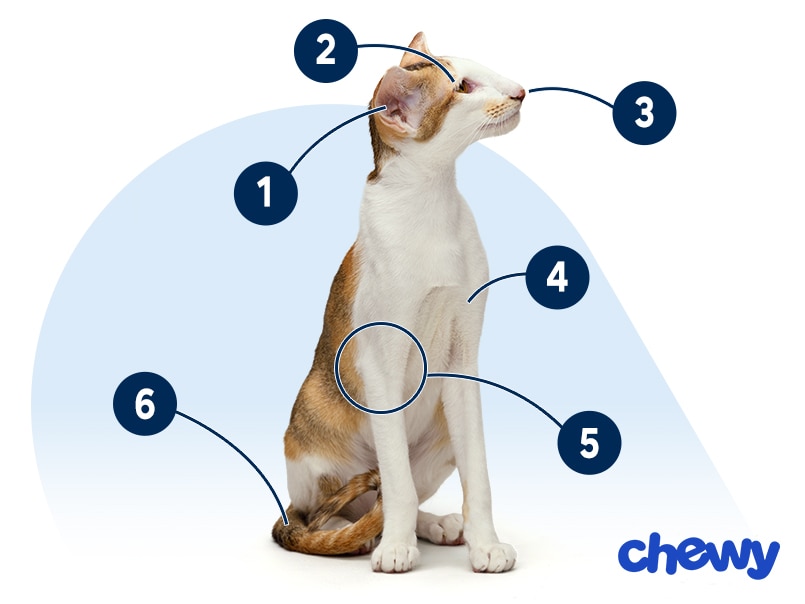
- Ears
Oriental Shorthairs have extra-large, pointed ears that flare outward. They’re often lovingly compared to bat ears and even satellite dishes.
- Eyes
Their almond-shaped eyes are typically a vibrant shade of green, yellow, or orange. White Oriental Shorthairs often have blue or odd-colored eyes (one blue, one green).
- Nose
Their long, straight nose typically matches or complements their coat color, which means it can be any number of colors or patterns, including pink, gray, chocolate, lavender, and mottled.
- Coat Length
Oriental Shorthairs have an ultra-short, glossy coat that lies so close to the body it has a “painted-on” look.
- Coat Color
The coats come in hundreds of color and pattern combinations, including solid, tabby, smoke, shaded, tortoiseshell, and bicolor, with shades ranging from ebony and chestnut to lavender, cinnamon, and fawn.
- Tail
Their long, thin tail tapers to a fine point and matches their slender frame.
Oriental Shorthair Temperament
Oriental Shorthair cats have zero interest in personal space. They’ll shadow your every move and “help” with every task, whether invited or not.
Don’t be surprised if they join you for your morning coffee, snuggle on your lap while you work, and dive under the covers with you at bedtime. These kitties crave companionship and welcome plenty of pets and cuddles.
They’re also expert conversationalists, a trait inherited from their Siamese roots. While they’re best known for their honk-like meow, they have a wide range of vocalizations, says Katherine Pankratz, DVM, DACVB, a veterinarian at Animal Behavior Clinic in Portland, Oregon.
Expect trills, chirps, and chatters, alongside some high-pitched honks, throughout each day. They’ve even been known to sound like a crying baby when they really want something.
All this social and vocal energy means Oriental Shorthairs need (and expect) lots of interaction. They can be demanding and even get a little grumpy if they feel neglected.
But their outgoing and affectionate nature is also what makes them so adaptable. Oriental Shorthairs typically do well with respectful children and other pets when introductions are handled properly, says Megan Petroff, DVM, FFCP, director of the clinical behavioral medicine service at Gold Coast Center for Veterinary Care in Huntington, New York.
Related Breeds



How to Care for a Oriental Shorthair
When it comes to grooming, Oriental Shorthairs are pretty low-maintenance. Their need for attention? That’s another story.
Dr. Petroff says these cats need a high level of interaction and mental stimulation, but their short coat won’t add much to your to-do list.
Grooming
Diet
Exercise
Environment
Oriental Shorthair Health
The average Oriental Shorthair lifespan is 12–15 years, but these big-eared chatterboxes can live well into their late teens (and sometimes even their 20s) with proper care. While generally healthy, the breed has a few health concerns that trace back to its Siamese ancestry, says Dr. Pankratz.
Here are the most common health issues to keep on your radar:
- Amyloidosis: This inherited condition causes abnormal proteins to accumulate in organs such as the liver and kidneys, which can eventually lead to organ failure. There’s no cure, but Dr. Petroff says responsible Oriental Shorthair breeders screen their lines to help prevent it.
- Asthma and bronchial disease: Oriental Shorthairs are prone to feline asthma and other airway problems. Prevent issues by keeping your home free of smoke and heavy fragrances. If you notice coughing, wheezing, or any difficulty breathing, schedule a vet visit right away.
- Pica: Some Oriental Shorthairs develop a habit of eating non-food items, such as fabric, plastic, or string, which can lead to dangerous digestive blockages. Keep small items off floors and counters, and consider using cabinet locks to keep these smart kitties from opening doors.
- Eye issues: Like Siamese, some Oriental Shorthairs are born with crossed eyes, but this typically doesn’t affect their vision or quality of life. Progressive retinal atrophy (PRA) is a more serious condition. This genetic disease slowly damages the retina and can cause blindness. The only way to prevent it is through breeder screenings.
- Heart conditions: Several inherited heart conditions run in the breed, including dilated cardiomyopathy, endocardial fibroelastosis, and aortic stenosis, says Dr. Pankratz. Annual checkups with cardiac screening are the best way to catch problems early.
Oriental Shorthair History
We have a handful of mid-century English breeders to thank for the Oriental Shorthair. After World War II, the Siamese gene pool in Europe had shrunk dramatically, and rebuilding it took a bit of creativity.
Breeders decided to cross Siamese cats with other breeds, including Russian Blues, British Shorthairs, Abyssinians, and everyday domestic shorthairs. The resulting kittens came in two varieties: pointed (with the classic Siamese color pattern) and non-pointed.
The pointed kittens went back into Siamese breeding programs, while the non-pointed ones laid the groundwork for a brand-new, big-eared breed. Because these cats came in such a wide range of coat colors, each was initially registered as its own breed: the Havana, Foreign White, Oriental Spotted Tabby, and so on.
The list grew so fast that it became unmanageable. Eventually, breeders agreed to group all non-pointed, Siamese-type cats into a single breed: the Oriental Shorthair.
The breed made its way to the United States in the 1970s and was accepted for registration by the Cat Fanciers’ Association (CFA) in 1974, earning championship status three years later. Today, they’re also recognized by The International Cat Association (TICA) and other major cat registries around the world.