Russian Blue
Updated May 15, 2026
Russian Blue
Updated May 15, 2026
The Russian Blue is a sweet, emotionally attuned cat who bonds deeply with their people. Equally suited to single-person households or family life, they do best in calm environments with consistent routines, clear boundaries, and plenty of quiet time to observe the world on their own terms.
Intelligent, Loyal, Poised
5–10 pounds
15–20 years
Your day has a flow—a quiet, steady rhythm—and that’s just the way you like it. Could a cat really fit into that? We think so. Meet the Russian Blue, an even-tempered creature of habit who thrives on routine and consistency.
Spontaneous dinner parties? Hard pass. They prefer a cozy night in, familiar faces, and predictable routines. They form deep bonds with the people they love through a quiet, understated devotion.
Recommended Products




Russian Blue Characteristics
Russian Blue Appearance
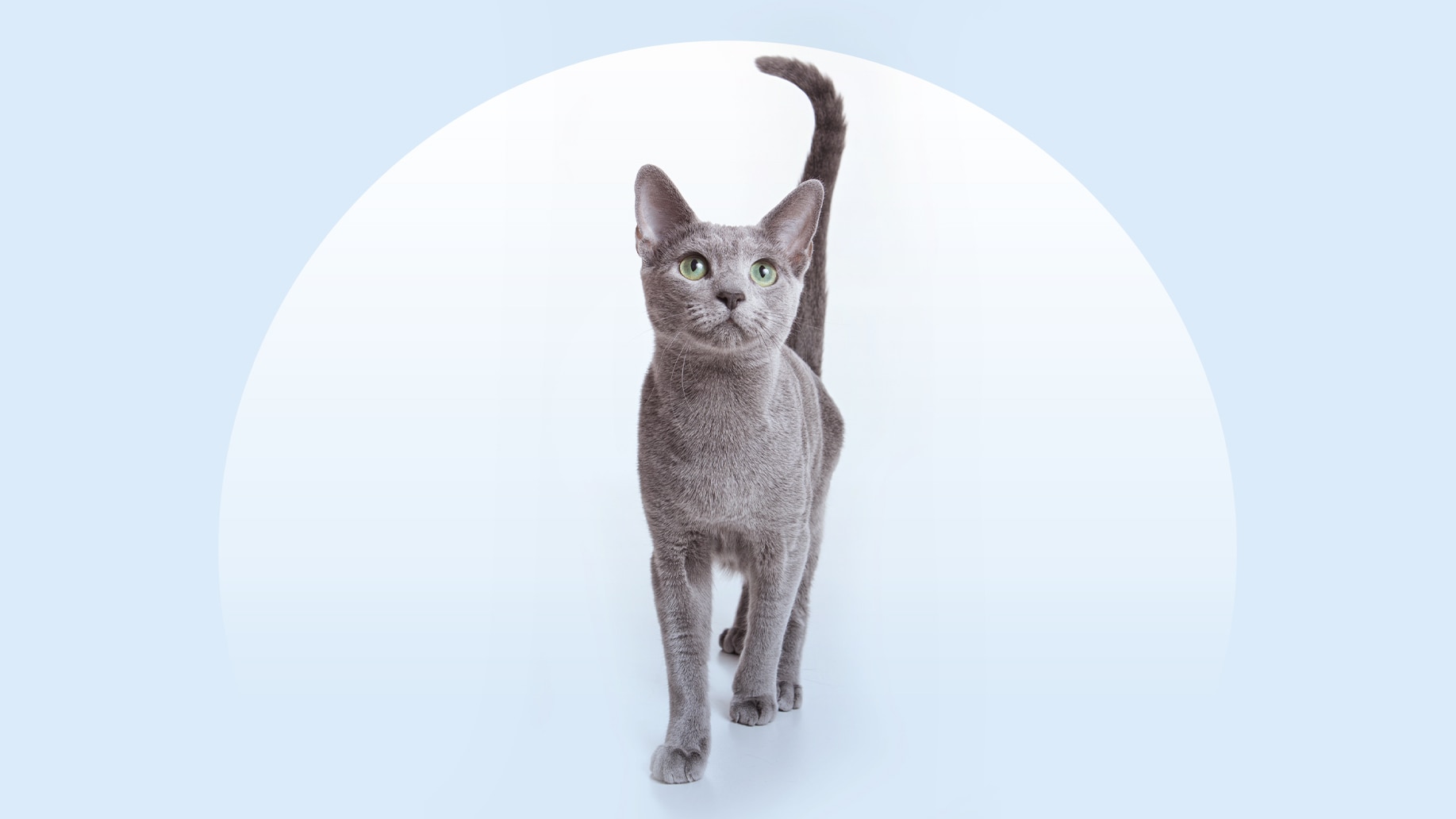
If there’s one word for the Russian Blue’s looks, it’s plush. “The coat tends to stand slightly off the body due to the density of the undercoat, giving it a velvety feel that’s unique among shorthaired breeds,” says Marissa Tribble, co-owner of Cat Fanciers’ Association-registered Archangel Cat Russian Blue Cattery.
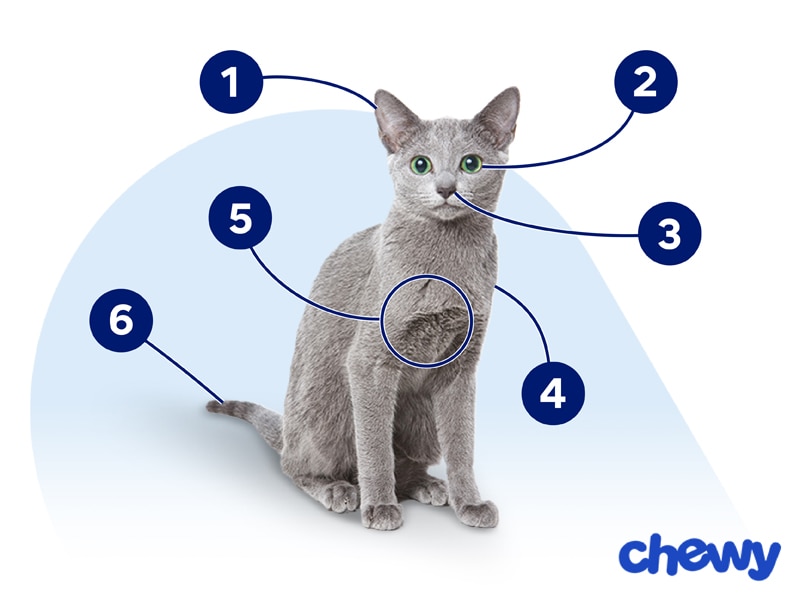
- Ears
Russian Blues have relatively large ears set toward the sides of the head, with fine hairs covering the outer and inner ears and a slightly rounded tip.
- Eyes
Russian Blues have large, almost entirely round eyes with a slight oval slant. While Russian Blue kittens are born with blue eyes, they always transition to a vivid green before adulthood.
- Nose
Their nose leather is always slate gray.
- Coat Length
Russian Blues have a dense double coat that Tribble describes as “soft and plush, with a distinctive silky but resilient texture.”
- Coat Color
Russian Blues are famous for their blue coat with silver-tipped guard hairs (the outer layer of protective hairs that sit on top of the undercoat). Russian Blue kittens may have faint ghost tabby markings—a subtle striped pattern and an “M” on the forehead, most visible in bright light—but these typically fade before adulthood.
- Tail
They have a long tail that tapers to a slender tip.
Russian Blue Temperament
While most cats appreciate routine, Russian Blues take it to heart. Consistency is the key to their world—think set mealtimes, predictable schedules, and familiar faces.
These cats are quiet observers by nature—reserved around strangers at first, but deeply devoted once trust is established. They are remarkably attuned to the people they love, picking up on your tone of voice, and reading the room with an almost uncanny accuracy. Though not big lap cats, they’ll quietly position themselves nearby to keep you company.
“They bond in a way that feels intentional rather than chaotic, and that stability is what really sets them apart,” Tribble says. As long as interaction is gentle and respectful of their boundaries, Russian Blues can live in harmony with individuals, couples, or families.
Their emotional sensitivity is one of their most endearing traits, but it also means they don’t tend to take change in stride: Big life disruptions like a new baby, a move, or the addition of a new pet can be difficult for a Russian Blue, potentially leading to stress-related behavior changes such as hiding, changes in appetite, or litter box avoidance.
If you know a major life change is coming, consider waiting until life has settled before bringing a Russian Blue home.
Related Breeds



How to Care for a Russian Blue
Russian Blues aren’t high maintenance: A consistent routine, minimal grooming, and steady companionship will reward you both. “If you’re looking for a highly dramatic or constantly attention-seeking cat, this probably isn’t the right breed,” Tribble adds.
Grooming
Diet
Exercise
Environment
Russian Blue Health
Russian Blues are generally a healthy cat breed with an average lifespan of 15–20 years. Purchasing your kitten from a reputable breeder can improve the chances of a healthy cat, as responsible breeding programs prioritize genetic diversity, longevity, and immune strength, says Tribble.
While there are no breed-specific health conditions that affect Russian Blues, caregivers should be aware of these common feline health conditions:
- Obesity: Russian Blues, like many cat breeds, tend to overeat if given the chance. Combined with an indoor lifestyle, this can easily lead to weight gain. The best way to prevent obesity in cats is to serve small, portioned meals throughout the day. Your vet can help determine your cat’s ideal weight and daily calorie needs. Treats are an important part of bonding and positive reinforcement training, but they should be limited to no more than 10% of your cat’s daily calories.
- Dental disease: Dental disease is one of the most common health conditions among cats. Brushing your cat’s teeth at home can help prevent it, but your vet will still assess teeth and gum health at routine visits, and recommend professional dental cleanings under anesthesia as needed.
- Parasites: Parasites don’t just cause discomfort; they can carry disease. Mosquitoes, for instance, transmit heartworm, for which there is no cure in cats. Even if your cat is indoors only, veterinarians recommend monthly full-spectrum parasite prevention like Revolution Plus, which protects against fleas, ticks, and heartworm, all of which can make their way inside.
Russian Blue History
The Russian Blue is believed to have originated in the Archangel Isles of northern Russia, where subarctic winters are long, cold, and snowy—which would explain the need for their famously plush double coat.
Not much literature exists to document their early origins, but they begin appearing in written history in the late 1800s. Russian folklore tells stories of these cats as good-luck charms and healers, while other accounts place them as beloved pets of Russian royalty, possibly descended from the cats of the Czars.
Russian Blues attended their first cat show in the 1880s under the moniker “Archangel cats,” and were imported to the United States in the early 20th century. Today, the breed has earned its place as one of the most beloved house cats.