Can Cats Eat Raspberries?


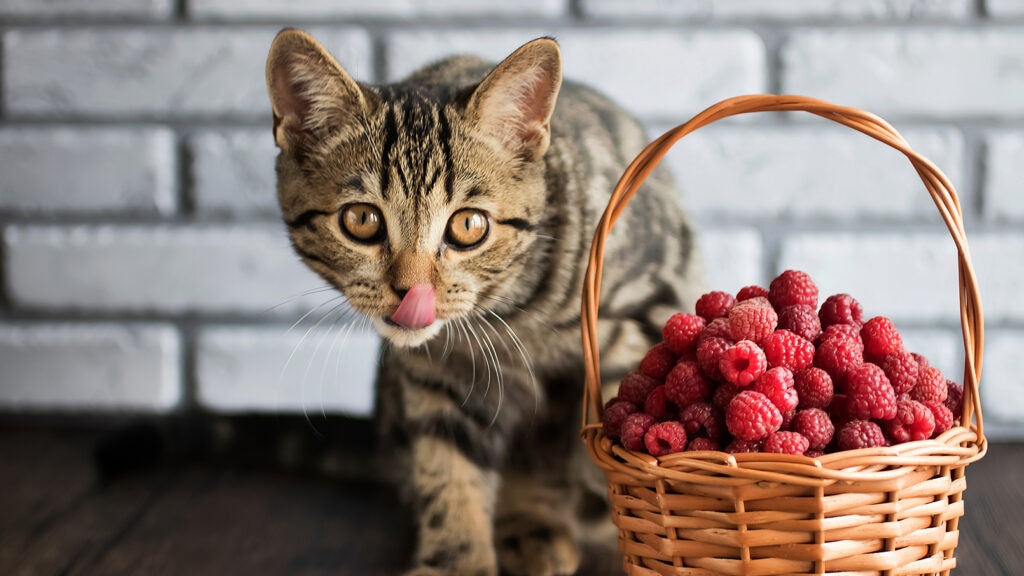
Photo by zhannaz/Adobe
One dropped raspberry can turn into a full-blown kitchen soccer match for a curious cat. But can cats eat raspberries?
Yes, a small amount of fresh raspberry is generally safe for cats. That doesn’t make raspberries a must-have snack, though.
Plant-based foods don’t do much for cats nutritionally, so they don’t need fruit to stay healthy. Because of that, raspberries should be just an occasional treat and never replace a complete and balanced cat food.
Before introducing any new food into your cat’s diet, always check with your veterinarian.
Key Takeaways
- Yes, cats can eat a small amount of fresh raspberries.
- Raspberries aren't toxic, but it’s still best to think of them as occasional treats only.
- Avoid raspberry jams, syrups, and raspberry-flavored desserts.
- Too many raspberries can lead to vomiting, diarrhea, or stomach upset.
Can Cats Have Raspberries?
Yes, cats can have a small number of fresh raspberries, if they’re plain and washed thoroughly.
Avoid jams, syrups, yogurt-covered raspberries, and raspberry desserts. These versions are high in sugar, which cats don’t need and can’t even taste anyway, since they lack the sweet taste receptors that humans have.
If you’d rather play it safe with a store-bought treat instead, here are a few options made with different types of berries:
Recommended Products



Are Raspberries Good for Cats?
No, raspberries aren’t especially good for cats.
Cats are obligate carnivores, which means they thrive on a mostly meat diet, and they don’t need fruit or other carbohydrate-based foods to meet their nutritional needs. That said, raspberries can provide some small health benefits when given alongside a complete and balanced cat food.
- Water content: Raspberries contain a lot of moisture, which can add a little extra water to your cat’s day. This can be beneficial for cats who don’t drink a lot or get most of their nutrition from dry food.
- Fiber: Raspberries contain a small amount of fiber, which may help support normal digestion and healthy bowel movements.
- Antioxidants: Raspberries contain antioxidants that can help support overall health.
Are Raspberries Bad for Cats?
In small amounts, raspberries are generally harmless, but they can be bad for cats if the portion is too large or they have added ingredients.
These are the biggest potential downsides:
- Too much fiber: Too much fiber at once can move through a cat’s digestive system too quickly. This may lead to vomiting, diarrhea, gas, or an upset stomach.
- Extra sugar and calories: Jams, syrups, and desserts have extra sugar, which can add unnecessary calories and be an especially bad idea for cats with diabetes.
- Not much nutritional payoff: Cats don’t need fruit to stay healthy, so raspberries can take up space in the diet without offering much that a properly formulated cat food doesn’t already provide.
How Many Raspberries Can My Cat Eat?
All treats, including raspberries, should make up no more than 10% of a cat’s daily diet. For most healthy adult cats, that means one or two fresh raspberries once or twice a week is plenty.
Start with part of one berry first and see how your cat reacts before giving them more—even safe fruits can still upset some cats’ stomachs.
If your cat has diabetes, obesity, or a sensitive stomach, it’s best to skip raspberries altogether.
How To Safely Feed Raspberries to Your Cat
If you want to share a little raspberry, here are some tips to make the experience safe and enjoyable:
- Use fresh raspberries only.
- Wash them well.
- Cut them into bite-size pieces or mash them.
My Cat Ate Too Many Raspberries—What Do I Do?
If your cat managed to snack on more raspberries than they should have, try not to panic. In many cases, the biggest issue is mild stomach upset.
Watch for signs such as:
- Vomiting
- Diarrhea
- Gas
- Low appetite
- Belly discomfort
- Lethargy
Symptoms usually resolve quickly—within 24 hours in most cases—but call your veterinarian if:
- Symptoms seem severe or last longer than 24 hours.
- The raspberries were in a sugary dessert or syrup.
- The raspberries were combined with potentially toxic ingredients, like chocolate.
- Your cat has diabetes or another medical condition.
If you can’t reach your veterinarian right away, you can also call the Pet Poison Helpline (855-764-7661). They have experts available 24 hours a day to advise on whether you need to bring your cat in for emergency care.
FAQs About Raspberries for Cats
Are raspberries safe for cats?
Fresh raspberries aren’t toxic to cats, so a small bite here and there is usually OK for most healthy cats. Still, raspberries should only be a very occasional treat since cats don’t need fruit in their diet.
Can cats eat fresh raspberries?
Yes. In fact, plain, fresh raspberries are the safest to share because they don’t have sugar, syrups, or other ingredients that can upset your cat’s stomach.
Can cats eat raspberry jam?
No, raspberry jam isn’t a good choice for cats. Jam is packed with added sugar and doesn’t offer any nutritional value for cats. Plus, some jams may contain artificial sweeteners or other ingredients cats shouldn’t have.
Can kittens eat raspberries?
No, kittens shouldn’t eat raspberries until they’re at least a year old. Growing kittens need a balanced kitten food to support healthy development, and fruit can fill them up without providing the nutrients they need most.
What other fruits can cats eat?
There are many other cat-safe fruits, including apples, bananas, mango, and strawberries. But like raspberries, these don’t provide cats with much nutrition and should only be given to them as an occasional treat.
Attributions
This article was created with assistance from AI tools. The content has been reviewed for accuracy and edited by a human.