Can Cats Eat Yogurt?


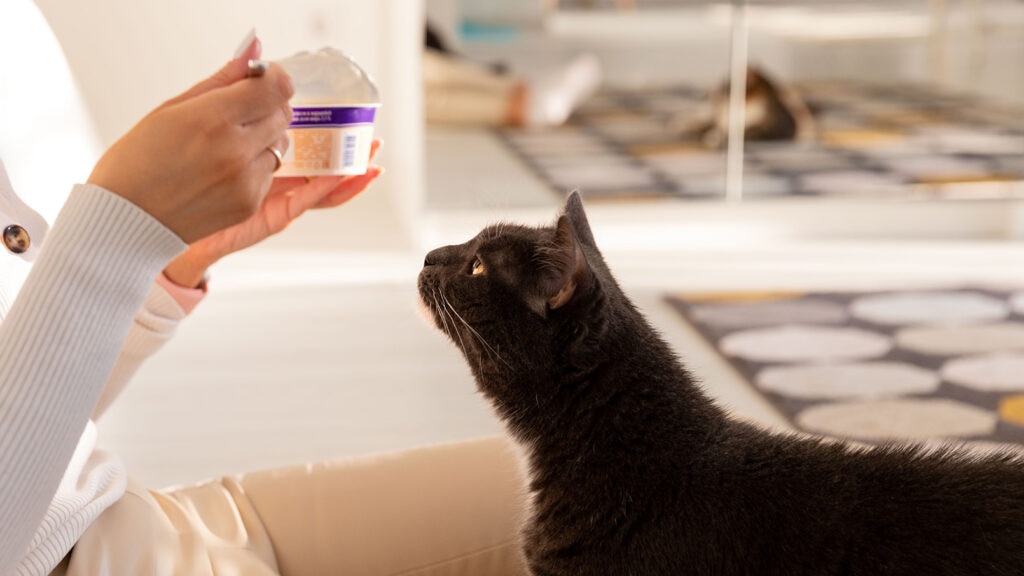
Photo by DimaBerlin/Adobe Stock
If your cat tries to sneak a taste every time yogurt appears, you might be wondering whether it’s safe to share. So can cats eat yogurt? Yes, cats can eat a small amount of plain yogurt, but it’s still not a particularly good treat.
Many adult cats don’t handle dairy products very well, so even a food that seems harmless can lead to stomach trouble. And like any treat, yogurt shouldn’t push aside a complete and balanced cat food.
Before introducing any new food into your cat’s diet, always check with your veterinarian.
Key Takeaways
- Yes, cats can eat a small amount of plain yogurt.
- Yogurt isn’t toxic, but dairy products can still be hard for some cats to digest.
- Avoid sweetened yogurts, flavored yogurts, and frozen yogurt.
- Too much yogurt can lead to vomiting, diarrhea, or stomach upset in cats.
Can Cats Have Yogurt?
Yes, cats can have a small amount of plain, unsweetened yogurt.
Avoid yogurt with fruit, flavored yogurt, frozen yogurt, and dessert-style yogurt products. They often have added sugar, and because cats lack sweet taste receptors, they don’t get extra enjoyment from them.
Some flavored yogurts may also contain ingredients that are toxic to cats, such as chocolate, raisins, or artificial sweeteners like xylitol, which is sometimes found in sugar-free yogurt.
Because yogurt can be iffy for kitties, it’s not typically added to cat treats, but if your cat enjoys creamy snacks, these lickable treats offer a similar experience:
Recommended Products



Is Yogurt Good for Cats?
Yogurt does have some nutrients cats can benefit from, but it’s still not a necessary part of a balanced diet for cats. And because yogurt should only be fed in very small amounts as a treat, any benefits will be fairly limited.
A few potential benefits include:
- Protein: Yogurt contains protein, which helps support your cat’s muscles, skin, coat, and overall body function.
- Water content: Yogurt contains moisture, which can add a little extra water to your cat’s diet.
- Probiotics: Some yogurts contain live probiotic cultures that may help support healthy digestion and gut bacteria.
- Vitamins and minerals: Yogurt contains nutrients like calcium and B vitamins that help support normal body functions (although cats get what they need from a balanced cat food).
Is Yogurt Bad for Cats?
Yes, yogurt can be bad for cats if they get too much or if the yogurt has extra ingredients that aren’t cat-friendly.
Here are some of the biggest concerns:
- Dairy sensitivity: Some yogurts fall into a tricky category with other dairy foods. Some cats tolerate a little dairy just fine, while others end up with digestive issues because many adult cats don’t tolerate the lactose in milk products well. While lactose levels are relatively low in certain types of yogurt (Greek yogurt, for example), there may still be enough to cause problems for some cats, who can end up with vomiting, diarrhea, or stomach upset.
- Added sugar: Flavored yogurts and frozen yogurt often contain added sugar, which is a poor fit for cats with diabetes and can also add extra calories that healthy cats don’t need or even enjoy. Too much sugar may increase the risk of weight gain over time.
- Mix-ins: Extras like chocolate chips, raisins, granola, and sugar-free sweeteners can make yogurt much less cat-friendly and may expose your cat to ingredients that are unsafe or toxic.
How Much Yogurt Can My Cat Eat?
For most healthy adult cats, a lick or two of plain yogurt once or twice a week is plenty. Yogurt should be an occasional treat, not something your cat gets every day. And all treats combined, including yogurt, should make up no more than 10% of a cat’s overall diet.
If your cat has a sensitive stomach or diabetes or is on a veterinary diet, it’s best to skip yogurt altogether unless your veterinarian recommends otherwise.
How To Safely Feed Yogurt to Your Cat
Because some cats are more sensitive to dairy than others, introduce yogurt slowly and keep an eye on how your cat reacts.
If you decide to share a little yogurt:
- Use plain, unsweetened yogurt only.
- Skip flavored, fruity, or dessert-style yogurts.
- Offer only a small lick at first.
- Stop if your cat shows any digestive issues.
My Cat Ate Too Much Yogurt—What Do I Do?
If your cat ate too much yogurt, their stomach may not be very happy afterward.
Watch for signs like:
- Vomiting
- Diarrhea
- Low appetite
- Belly discomfort
- Lethargy
Call your veterinarian if:
- Any symptoms don’t resolve within 24 hours.
- The yogurt contained chocolate, raisins, or other harmful add-ins.
- Your cat has diabetes or another medical condition.
If you’re worried that your cat got into yogurt with potentially toxic ingredients and you can’t reach your veterinarian right away, you can also call Pet Poison Helpline (855-764-7661) for advice.
FAQs About Yogurt for Cats
Can cats eat Greek yogurt?
Yes, cats can eat a very small amount of plain Greek yogurt. It’s lower in lactose than other yogurts, which may make it easier for some cats to digest.
Is yogurt safe for cats?
A small amount of yogurt can be safe for cats if it is plain and unsweetened. That said, some cats will still end up with digestive upset from even a small amount of dairy food.
Can cats eat vanilla yogurt?
No, cats shouldn’t eat vanilla yogurt. Flavored yogurts usually have added sugar and other ingredients that cats don’t need or that can be harmful.
Can kittens eat yogurt?
Treats like yogurt can wait until your kitten is at least 1 year old. Before then, kittens should be given a balanced kitten food and treats designed for cats and kittens.
Attributions
This article was created with assistance from AI tools. The content has been reviewed for accuracy and edited by a human.