
Bedlington Terrier
Updated August 3, 2026

Bedlington Terrier
Updated August 3, 2026
The Bedlington Terrier may look like a shy little lamb, but these unique-looking dogs prefer to be the boisterous center of attention. Affectionate and friendly, they adore making new friends and are a lively addition to active families.
Bouncy, Clever, Social
17–23 pounds
15–17.5 inches
11–16 years
Blue, Sandy, Liver, Sandy and Tan, Liver and Tan, Blue and Tan
Wait, is that a lamb on a leash? Nope—it’s probably just a Bedlington Terrier. These dogs’ fluffy, curly coat could easily be mistaken for wool, and their long face also lends to their sheepish vibe.
And like sheep, Bedlington Terrier dogs are curious and inquisitive—but that’s where the sheepishness ends. Beddies, as they’re known, are outgoing and quick-witted, living to entertain themselves and make you laugh. What could be more fun?
Bedlington Terrier Characteristics
Bedlington Terrier Appearance
With their arched back, thin tail, and one-of-a-kind haircut, Bedlington Terriers have a striking appearance and come in a range of colors. They have expressive, almond-shaped eyes and soft, flappy ears.
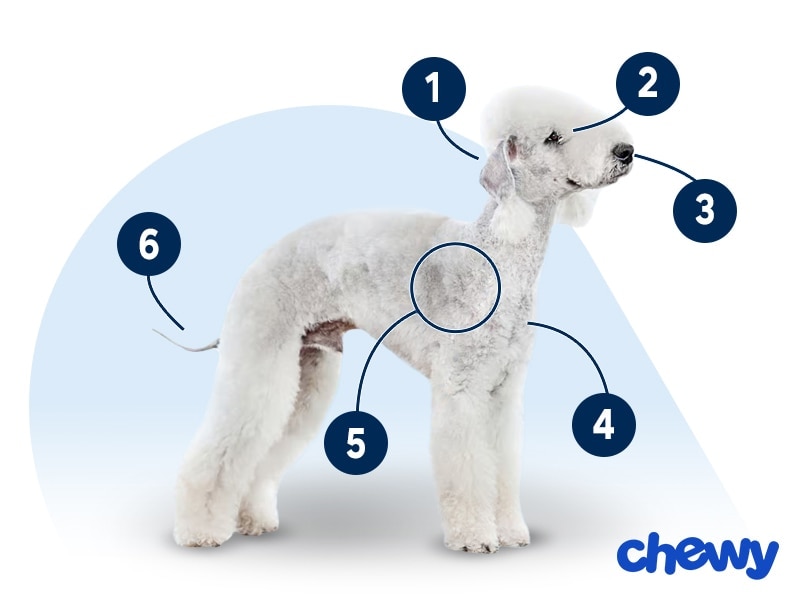
- Ears
The Bedlington Terrier's ears are thin, fuzzy flaps that are often curly. They hang close to the head with a soft, rounded bottom of fringe that reaches their jaw or hangs slightly past it.
- Eyes
A Bedlington Terrier's eyes may be dark (if they have a blue coat); amber (blue and tan coat); hazel (liver, or liver and tan coats); or light hazel (sandy, or sandy and tan coats). Their eyes are also rimmed in black or brown, depending on their coloring.
- Nose
A Bedlington Terrier’s nose coloring also depends on coat color. It's either black (in blue and tan dogs), or brown in sandy, liver, and bicolored tan dogs.
- Coat Length
The Bedlington Terrier’s double coat is thick, curly, and medium in length—about 1 inch on the body and slightly longer on the legs. Their undercoat is dense, more "woolly" and regulates body temperature, while the topcoat is longer and repels dirt and water.
- Coat Color
The Bedlington Terrier's coat can be tan, blue, sandy, liver (a grayish brown), or combos like blue and tan or sandy and tan.
- Tail
The Bedlington's tail is low-set and thin. It’s long and comes to a point at the tip.
Bedlington Terrier Temperament
The Bedlington Terrier dog breed has a playful personality and a confident, springy gait.
Beddies are the class clowns; they adore showing off tricks they’ve learned, and they’ll keep you smiling with pranks like peek-a-boo around a corner or hiding under blankets until you find them.
The Bedlington Terrier loves to be the center of attention and does particularly well with active pet parents or a busy family with kids. This smart, inquisitive, and typically easy-to-train breed will pay you back with kisses and cuddles after every outing.
Related Breeds






How to Care for a Bedlington Terrier
The Bedlington Terrier’s coat requires a lot of maintenance, but their exercise and training needs are pretty moderate. Plan to spend about an hour every day exercising and playing with your dog. And because these pups are eager to please you, training is usually a cinch.
Grooming
Training
Diet
Exercise
Environment
Bedlington Terrier Health
The typical Bedlington Terrier life expectancy is 11–16 years. Here are some health issues to be aware of.
- Copper storage disease: Copper storage disease is a common medical emergency. When copper builds up in the liver (instead of breaking down), it causes a host of internal problems. Physical symptoms may include fatigue, weight loss, diarrhea, vomiting, and increased thirst. This treatable condition will need lifelong management and may include medication, a low-copper diet, or a zinc supplement, depending on your veterinarian’s recommendations.
- Distichiasis: Bedlington Terriers are susceptible to distichiasis, in which an eyelash grows abnormally, scratching the eye. Treatments range from eye lubricants to surgery.
- Elbow and hip dysplasia: Elbow and hip dysplasia are genetic conditions that develop during puppyhood when the joints don’t align well and become looser than normal. Signs include limping, and treatment might involve weight loss, reduced activity, joint supplements, physical therapy, pain medication, or surgery.
- Immune-mediated thrombocytopenia (ITP): ITP is a blood disease where the dog’s immune system attacks the body’s platelets. This affects clotting and can result in internal or spontaneous bleeding, so it is a medical emergency. Symptoms include abnormal bleeding or bruising; weakness or fatigue; a fever; enlarged lymph nodes; lack of appetite; anemia; and difficulty breathing. Treatment likely includes a blood transfusion and immunosuppressive medications.
- Luxating patella: Bedlington Terriers can develop a luxating patella, where the kneecap slips out of place. A bunny hop, skip, or limp could be a symptom. It may be treated with supplements and meds, if mild, though surgery may be necessary.
- Progressive retinal atrophy (PRA): PRA leads to blindness in dogs, and while there is no cure, pups who lose their eyesight tend to adapt well and can still live full, happy lives.
- Von Willebrand disease: Beddies are susceptible to von Willebrand disease, a bleeding disorder where the blood doesn’t clot properly. Your veterinarian can test your dog for this. There’s no cure, so your vet may recommend a stress-free lifestyle that avoidsplaces where your dog may get bruised or scratched, such as hikes or the dog park. Your vet may also advise you to avoid medications that interfere with clotting.
Bedlington Terrier History
The Bedlington Terrier originated in the town of Bedlington in Northumberland, England. They were originally bred to hunt weasels, as well as to flush rats from coal mines. Heartbreakingly, they were also used as bait in dog fights until the practice was outlawed.
A man known as the Lord of Rothbury became fond of the little lamb-like breed, and they later became known as the Rothbury’s Lamb or Rothbury’s Terrier. The breed was recognized by the American Kennel Club in 1886.
Bedlington Terrier puppies can cost thousands of dollars. If you choose this route, pick a responsible breeder.
You can also adopt a Bedlington Terrier, as there are lots of these patient pups already waiting for their forever homes. Keep an eye out at local rescues or animal shelters, or search Chewy’s network of adoptable dogs in your area.