Frenchton
Updated September 28, 2026

Frenchton
Updated September 28, 2026
The Frenchton blends the playful charm of the French Bulldog with the bright, affectionate energy of the Boston Terrier. These compact companions love being close to their people and thrive on routine, attention, and gentle play.
Affectionate, Alert, Playful
15–35 pounds
11–16 inches
12–15 years
Black and White, Black Brindle and White, Brindle, Brindle and White, Cream, Fawn, Fawn and White, Fawn Brindle, White, White and Brindle, Fawn Brindle and White, White and Fawn, Seal and White, Seal Brindle and White
If you’re looking for a small dog with a big personality, the Frenchton might just be your match. Part French Bulldog and part Boston Terrier, this designer breed is known for being affectionate, expressive, and very connected to their people.
Expect them to follow you around the house, keep you company on the couch, and happily join you for short play sessions or neighborhood strolls. They’re not built for intense workouts, but they are built for togetherness—and that’s where they truly shine.
Frenchton Characteristics
Frenchton Appearance
What is a Frenchton dog supposed to look like? Well, because the breed is not yet recognized by the American Kennel Club, there’s no official standard. But most Frenchtons resemble French Bulldogs with slightly longer legs.
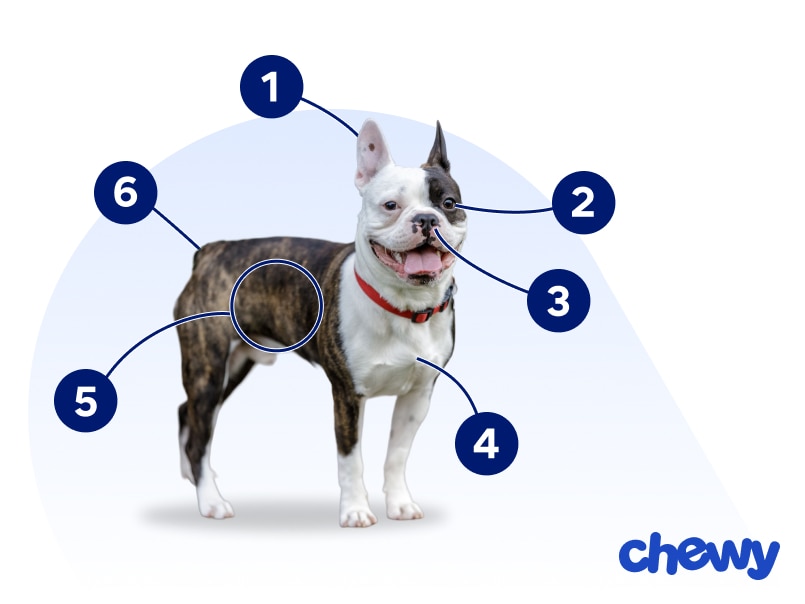
- Ears
Many Frenchtons have large ears that are either pointy or rounded at the tip.
- Eyes
Frenchtons typically have round, expressive eyes. Eye color often correlates with coat color, similar to French Bulldogs.
- Nose
Their muzzle is generally shorter than most breeds.
- Coat Length
Their coats are typically short and smooth.
- Coat Color
Frenchtons can come in many shades seen in both parent breeds, including brindle, fawn, black, white, and cream.
- Tail
Their tail is short, often straight or slightly curled.
Frenchton Temperament
Frenchtons are affectionate, social dogs who want to be part of everything. They’re liable to follow you from room to room and pick up on your daily habits.
“They absolutely love to be by their human,” says Suzanne Swift, a Frenchton breeder based in Michigan. “They crave routine and knowing what’s coming next.”
The Frenchton’s smarts and love of routine can make them relatively easy to train. Frenchton puppies and adults alike are generally great with kids and other pets when properly socialized.
“They enjoy interaction, short bursts of play, walks, and games that challenge their minds as much as their muscles,” says Janis Huskey, a Tennessee-based Frenchton breeder who has raised Frenchtons for over a decade. But their real calling? “Their greatest ‘job’ is companionship, and they take it seriously,” she adds.
Related Breeds







How to Care for a Frenchton
Frenchtons are fairly easy to care for, especially when their social needs are met. They don’t require extensive grooming or high-energy exercise, but they do need daily engagement, gentle training, and consistent attention to their respiratory comfort. A thoughtful routine and balanced lifestyle help them thrive.
Grooming
Training
Diet
Exercise
Environment
Frenchton Health
The French Bulldog-Boston Terrier mix has an average lifespan of 12–15 years. They can inherit a few health conditions from both French Bulldogs and Boston Terriers.
“Keeping them at a healthy weight and following a thoughtful wellness plan helps reduce many of these risks,” Huskey says.
When choosing a puppy, ask the breeder about health testing for airway function, eye health, and patellar stability. Some of the most common health conditions Frenchtons face are:
- Brachycephalic obstructive airway syndrome (BOAS): Because Frenchtons inherit short-muzzle traits from both their parent breeds, they can experience airway challenges such as a narrowed trachea, stenotic nares (narrow nostrils) or an elongated soft palate. This may lead to snoring, snorting, or tiring quickly in heat or during exercise. It can even lead to respiratory distress. Many dogs do well with simple lifestyle adjustments, but your vet may recommend surgical correction in more severe cases or in young dogs to avoid breathing issues later in life.
- Luxating patella: This condition causes the kneecap to temporarily slip out of place, often seen as skipping steps or brief or intermittent lameness. Weight management and controlled exercise help, while advanced cases may require surgery.
- Juvenile hereditary cataracts (JHC): This inherited eye condition can cause early cataracts in dogs. Responsible breeders typically screen for JHC to avoid passing it on. Treatment varies depending on severity, and some cases may be eligible for cataract surgery.
- Spinal issues: Because of their compact build, some Frenchtons may be prone to spinal discomfort or disc issues (such as IVDD). Avoid repetitive jumping and keep your Frenchton at a lean, healthy weight to reduce strain on the back.
- Allergies: Food or environmental allergies are not uncommon in Frenchtons. Signs may include itching, recurring ear infections, or digestive upset. Many Frenchtons do well on limited-ingredient or fish- or lamb-based diets to help manage sensitivities, along with veterinary guidance.
Frenchton History
The Frenchton emerged in the U.S. in the early 2000s, when breeders sought to blend the most desirable traits of the Frenchie with those of the Boston. The goal was to create a companion dog who was sturdy, affectionate, playful and relaxed, with fewer breathing challenges than some French Bulldogs.
The result? “The perfect balance of the Boston’s intelligence and athleticism with the Frenchie’s charming comedic personality,” Huskey says.
While the Frenchton is not yet recognized as a breed by the AKC, many breeders continue to focus on structure, health, and predictable temperament to strengthen consistency across generations.