Pomchi
Updated August 25, 2026
Pomchi
Updated August 25, 2026
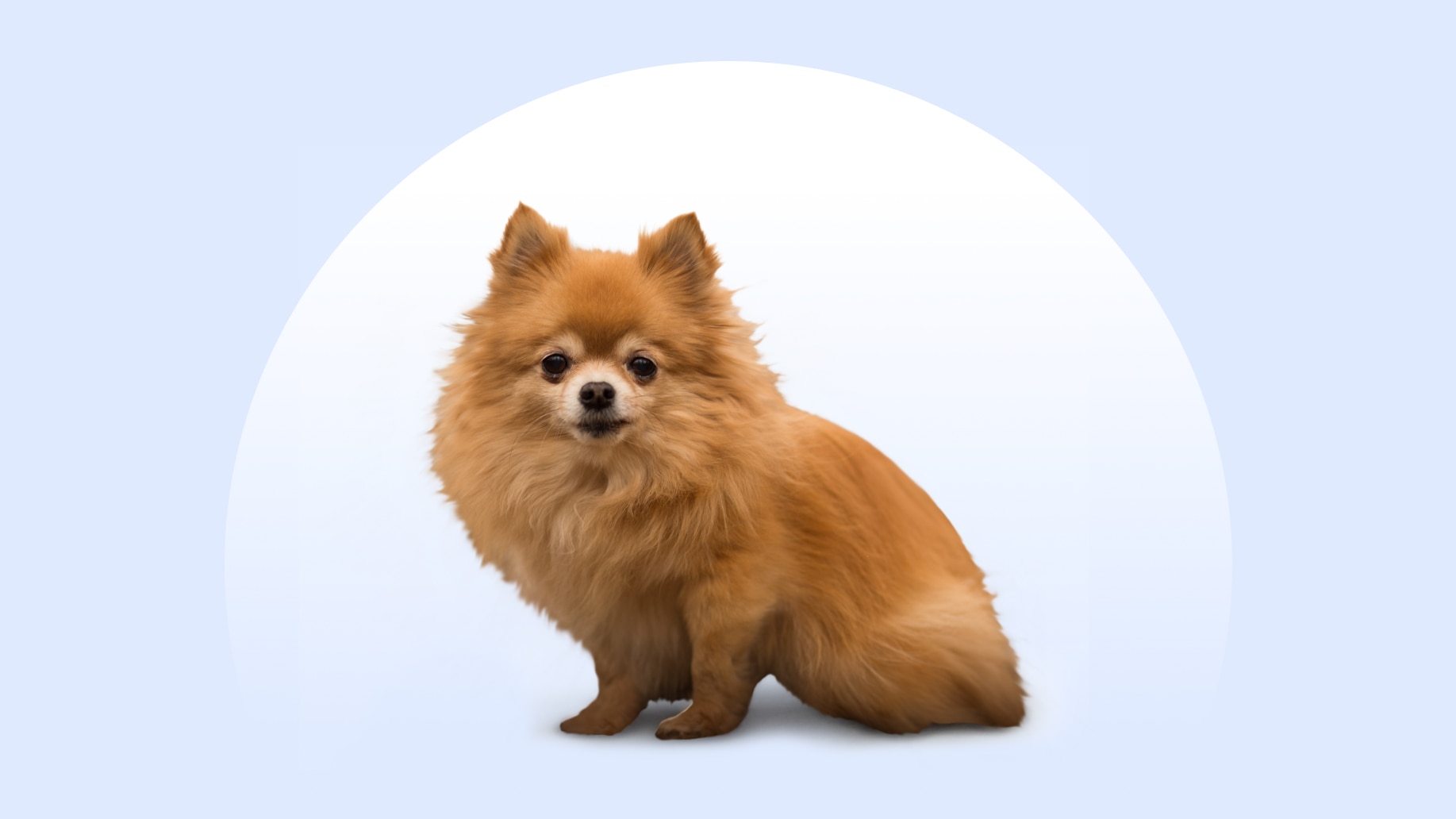
The Pomchi is the bright, brash offspring of two popular toy breeds: the plucky Pomeranian and the charming Chihuahua. With stamina and sassiness to spare, this hybrid breed isn’t afraid to speak their mind. Prepare to be entertained.
Bold, Cheeky, Chatty
3–7 pounds
6–9 inches
12–16 years
Blue, Black, Bicolor, Chocolate, Cream, Sable, Merle, Orange, Red, Beaver, White, Tricolor, Fawn
What Pomchis lack in stature, they make up for in spirit. A Pomeranian–Chihuahua mix, Pomchi dogs weigh about the same as a house cat, but their confidence is amusingly lion-like.
If Pomchis were to answer the question, “Would you rather be feared or loved?” the answer would be, “Why not both?” Both parent breeds have watchful tendencies and some serious barking chops, yet they’re also affectionate companions who love to be around their people. With a size and personality that’s ideal for tagging along, a Pomchi will be both your friend and defender wherever you go.
Pomchi Characteristics
Pomchi Appearance
Pomchis are a relatively recent mix and aren’t yet recognized as an official American Kennel Club breed. Aside from their small size, the Pomchi’s parent breeds look very different, and their offspring’s physical traits can vary widely.
However, the breed standards for both the Pomeranian and the Chihuahua are helpful in making educated predictions for what a Pomchi might look like.
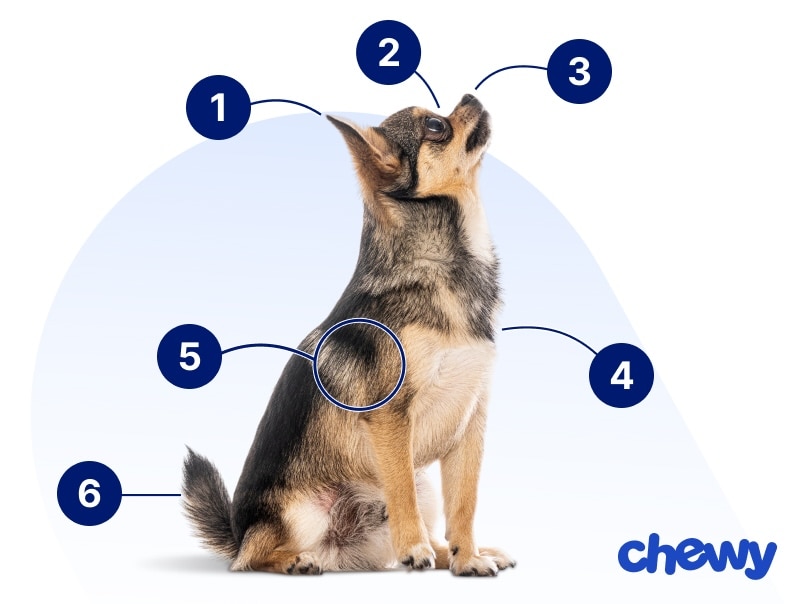
- Ears
Whether a Pomchi inherits the small ears of its Pom parent, the large ears of its Chihuahua parent, or something in between, both parents have ears that are set high and erect.
- Eyes
Pomchis have bright eyes that range from round to almond in shape, and can be dark ruby, chocolate, or blue.
- Nose
Pomchis have a small nose that comes in various shades of black, brown, blue, and pink.
- Coat Length
Pomeranians characteristically have a long, puffy, cloudlike coat, while Chihuahuas have a coat that is short to medium in length. Pomchis can thus have a short, medium-length, or long coat.
- Coat Color
The list of possible Pomchi coat colors is long. Coats can be blue, blue merle, blue sable, blue and tan, black, black and tan, chocolate, chocolate and tan, cream, cream sable, orange, orange sable, red, red sable, beaver, white, wolf sable, tricolor, fawn, or fawn and white.
- Tail
Pom tails are high-set, plumed, and straight. Chihuahua tails are long and held in a sickle or loop shape. Pomchis can inherit any of these tail traits.
Pomchi Temperament
Like their appearance, without a breed standard, it’s difficult to make confident temperament predictions for the Pomchi. Mixed breeds can be a mixed bag—however, there are many areas of overlap between the parent breeds’ temperaments.
First and foremost, like many pint-size pups, both Pomchi parents have larger-than-life personalities. Pomchis are social, sassy, and spirited companions who are quick to express themselves through barking.
But for all their confidence, Pomchis aren’t too cool to snuggle. They are affectionate dogs who are happiest when they’re with their favorite people. Whether your lap needs to be warmed or your walk needs a plus one, the Pomchi is the perfect pup for the job.
Related Breeds






How to Care for a Pomchi
Adding a Pomchi to your family will bring fun and spunk into your life, but it will also bring a to-do list. You’ll need to be prepared to provide your Pomchi with regular grooming, early training and socialization, daily mental stimulation and physical exercise, and a safe and loving environment.
Grooming
Training
Diet
Exercise
Environment
Pomchi Health
Pomchis have a lifespan of 12–16 years. As a Pomeranian-Chihuahua mix, they are prone to developing health conditions that are prevalent in their parents. It’s important to partner with an ethical breeder who prioritizes health and genetic testing.
The following health conditions are more common in both of the Pomchi’s parent breeds:
- Patellar luxation: A luxating patella (kneecap) is one that moves outside of its normal groove in the femur (thigh bone). Signs of patellar luxation include limping, clicking or popping sounds coming from the knee joint, and a reluctance to join in normal exercise. Not all cases need to be treated, but some dogs may need surgery to return to normal activity.
- Periodontal disease: Toy breeds are especially prone to developing periodontal disease, in which bacteria build up in a dog’s mouth to the point that it causes harm. Commonly referred to as dental disease, the condition can also damage teeth, jawbones, and other tissues. Signs of disease include irritated gums, foul breath, root exposure, and teeth that are discolored, loose, or missing. Minor cases may need a professional cleaning, but severely affected teeth may need to be pulled by your veterinarian. Brushing every day with a dog-friendly toothpaste is the best way to prevent the condition.
- Patent ductus arteriosus: Patent ductus arteriosus (PDA) is a congenital heart defect in which the ductus arteriosus, a blood vessel that’s important in the developing fetus, doesn’t close as it’s supposed to after birth. Dogs with PDA experience abnormal circulation that, if not treated surgically, can lead to congestive heart failure.
- Tracheal collapse: Tracheal collapse describes a condition in which the cartilage rings of a dog’s trachea (windpipe) weaken to the point that the trachea flattens. Dogs with this condition typically exhibit a goose honk-like cough that worsens with exercise, heat, excitement, and other activities. Medication can help most dogs, but some may require surgery.
Pomchi History
As a relatively recent mixed breed that has not yet been recognized by the AKC, the Pomchi’s exact origins are a bit murky. However, both of the Pomchi’s parent breeds are well established members of the AKC, and Pomchis carry the history of both parents.
Pomeranians are descendants of much larger and heartier Arctic Spitz sled dogs. They are named after the area of northeastern Europe where the breed began to take shape: Pomerania.
Poms eventually gained the attention of Queen Victoria, who became a Pomeranian breeder and exhibitor. She helped popularize smaller Pomeranians through selective breeding, and the breed gained AKC recognition in 1888.
Chihuahuas were recognized by the AKC in 1904, but their origins go back at least 1,000 years to a breed called the Techichi, which was highly prized by the Toltecs in Mexico. After conquering the Toltecs in the 12th century, the Aztecs refined the Techichi into a smaller dog, and it became a mainstay of Aztec culture. It wasn’t until the mid-19th century that Americans took an interest.