Wirehaired Pointing Griffon
Updated May 20, 2026
Wirehaired Pointing Griffon
Updated May 20, 2026
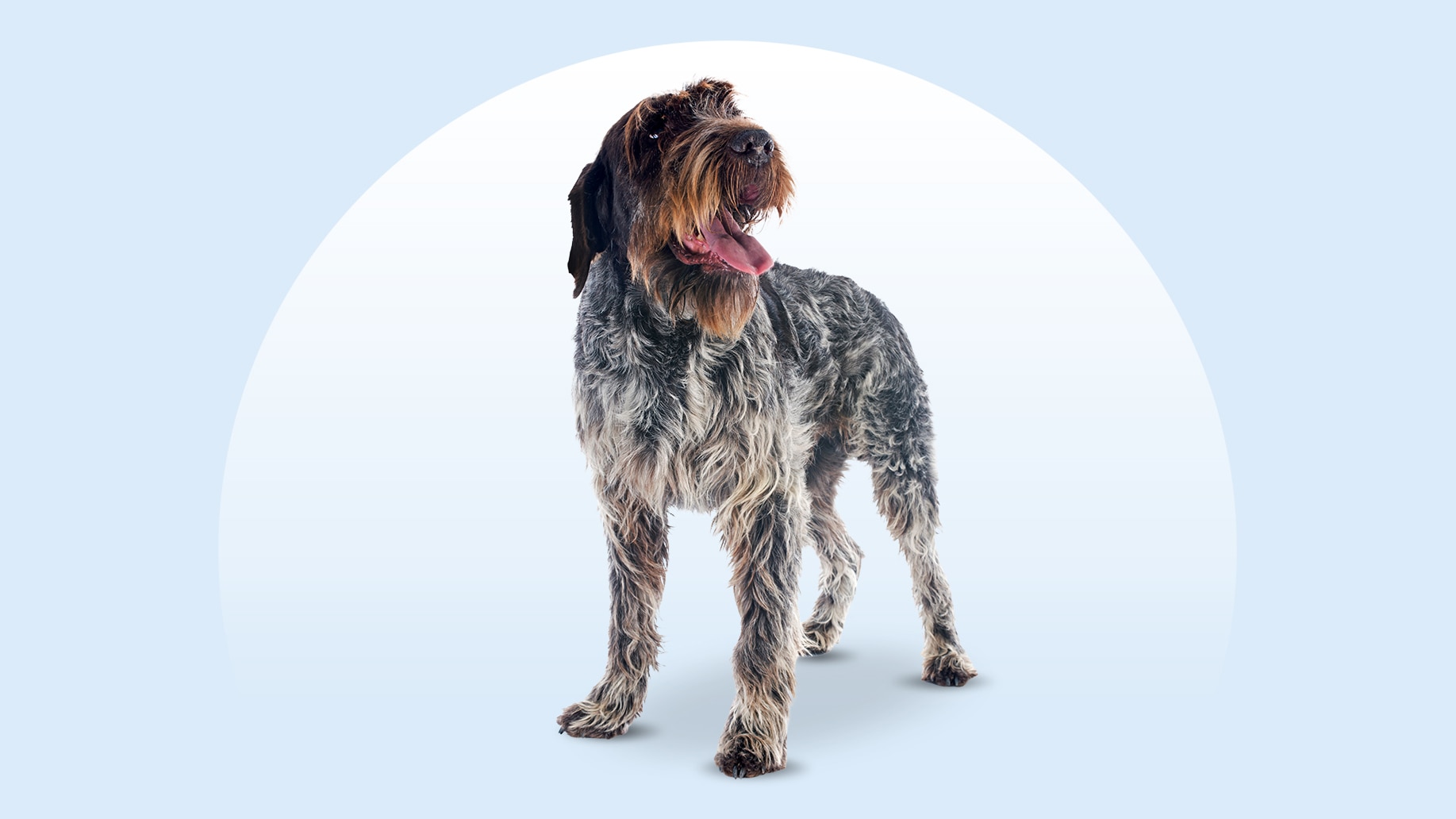
The Wirehaired Pointing Griffon is a capable sporting dog dressed up in a wiry fur coat. These mustached dogs have a long hunting history, but their affable nature and adaptability for nearly any canine sport makes them a popular pick for anyone who has the time and energy to exercise and train them.
True-Blue Companion, Hardworking, Goofy
35–70 pounds
20–24 inches
12–15 years
Brown and Gray, Chestnut and Gray
Ready for anything, the rugged Wirehaired Pointing Griffon is more than a canine companion. These dogs love to be an active partner to their pet parents’ pursuits. These can be as varied as exploring new terrain, taking a hunting trip, or crushing it in popular dog sports.
The breed’s energy and need for expeditions will keep you on your feet—but you’ll also get plenty of comic relief from the Griffon’s silly antics. These smart, hardworking pups don’t take life too seriously and will be happy to take it easy with you on the sofa after your adventures.
Wirehaired Pointing Griffon Characteristics
Wirehaired Pointing Griffon Appearance
The Wirehaired Pointing Griffon is frequently described as sturdy, and that’s fitting for a hunting dog bred to go just about anywhere in pursuit of game.
These dogs have a medium build; they don’t appear overly stocky or particularly dainty. The breed’s characteristically wiry coat covers the body and protects it from the elements and rough terrain.

- Ears
Griffons have folded ears that hang next to the head.
- Eyes
These dogs have large, round eyes that can range from light yellow to dark brown.
- Nose
A Wirehaired Pointing Griffon has a long, square muzzle with a brown nose.
- Coat Length
The Griffon’s coat is medium in length, with abundant furnishings on the face and muzzle.
- Coat Color
These dogs typically have a coat that is a combination of brown and gray or chestnut and gray. A brown and white coat or orange and white coat is also possible.
- Tail
The tail is naturally long but is typically docked short for hunting purposes. However, the American Veterinary Medical Association opposes tail docking, and some countries and U.S. states have made the procedure illegal.
Wirehaired Pointing Griffon Temperament
A Wirehaired Pointing Griffon is a sociable and smart companion who enjoys the hustle-bustle of family life. These dogs have earned a reputation as capable hunting companions because of their intelligence and drive—but they’re not all about work.
“They tend to form very strong bonds with their families and generally have a gentle, sensitive nature compared to some other versatile hunting breeds,” says Jedediah Magnusson, breeder and owner of Northwoods Wirehaired Griffons. They have a lighthearted side and are known to be playful at home.
The breed’s sociable nature extends to strangers and other dogs, as long as they’re socialized from an early age, and properly introduced to new people or pets. However, the breed’s strong prey drive means you need to exercise more caution around smaller animals.
“You have to train them if you want to keep chickens, livestock, or cats since they tend to be mischievous about critters,” says Charity Upchurch of Bluestem Kennels.
Related Breeds



How to Care for a Wirehaired Pointing Griffon
Life with a Wirehaired Griffon is rewarding thanks to the breed’s comical, warm disposition. However, they’re not a low-maintenance breed: You’ll rack up the miles while exercising with your four-legged friend, and you’ll need to be ready to invest time and effort into daily training exercises.
However, there’s no shortage of fun activities you can do with the athletic and energetic Wirehaired Pointing Griffon.
Grooming
Training
Diet
Exercise
Environment
Wirehaired Pointing Griffon Health
Wirehaired Pointing Griffons have a reputation as hardy dogs with relatively few health problems. These dogs usually have a lifespan of 12–15 years.
Some inherited conditions—joint problems, eye conditions, and thyroid issues—have been noted in the breed but can be screened for with genetic testing.
“Purchasing a puppy from a reputable breeder with breeding stock who are health-screened decreases the chance that you will have a puppy with these diseases,” Upchurch says.
- Hip and elbow dysplasia: Joint problems like hip dysplasia and elbow dysplasia are known to affect Wirehaired Pointing Griffons. They might cause your dog to limp or have trouble jumping or standing. Dysplasia is often managed with physical therapy, medications, and joint supplements, surgery might be recommended in severe cases.
- Eye conditions: Some Wirehaired Pointing Griffons are prone to a hereditary condition where the eyelid rolls inward, known as entropion. Signs include squinting, discharge, excess tears, or holding the eye shut. Entropion can be corrected with surgery. Other eye conditions that sometimes affect Wirehaired Pointing Griffons include cataracts and progressive retinal atrophy (PRA). Both conditions can lead to blindness. Cataracts are often removable, but there is no cure for PRA.
- Hypothyroidism: Wirehaired Pointing Griffons are more at risk for having an under-functioning thyroid gland than some other dog breeds. Dogs with hypothyroidism might experience weight gain, low energy levels, frequent ear and/or skin infections, or a thinning coat. Lifelong hormone replacement medication can help treat the condition, but there is no cure.
Wirehaired Pointing Griffon History
The development of the Wirehaired Pointing Griffon is credited to a hunting enthusiast and Dutchman named Eduard Karel Korthals.
According to the American Wirehaired Pointing Griffon Association, Korthals set out to create a versatile hunting dog and started breeding in the Netherlands in the late 1800s using Griffon-type dogs (with wiry coats and facial furnishings). The exact origin of Korthals’s breeding stock can’t be tracked, but it’s believed that dogs like the German Shorthaired Pointer, or other types of retrievers and setters, contributed to the development of the Wirehaired Pointing Griffon.
Later, Korthals moved his breeding kennel to France, which is why Griffons’ heritage is often associated with French dog breeds.
By the early 1900s, these talented sporting dogs were known throughout Europe and the United States. In 1887, the Wirehaired Pointing Griffon received recognition from the American Kennel Club.