Bone Broth Powder for Dogs: What You Should Know


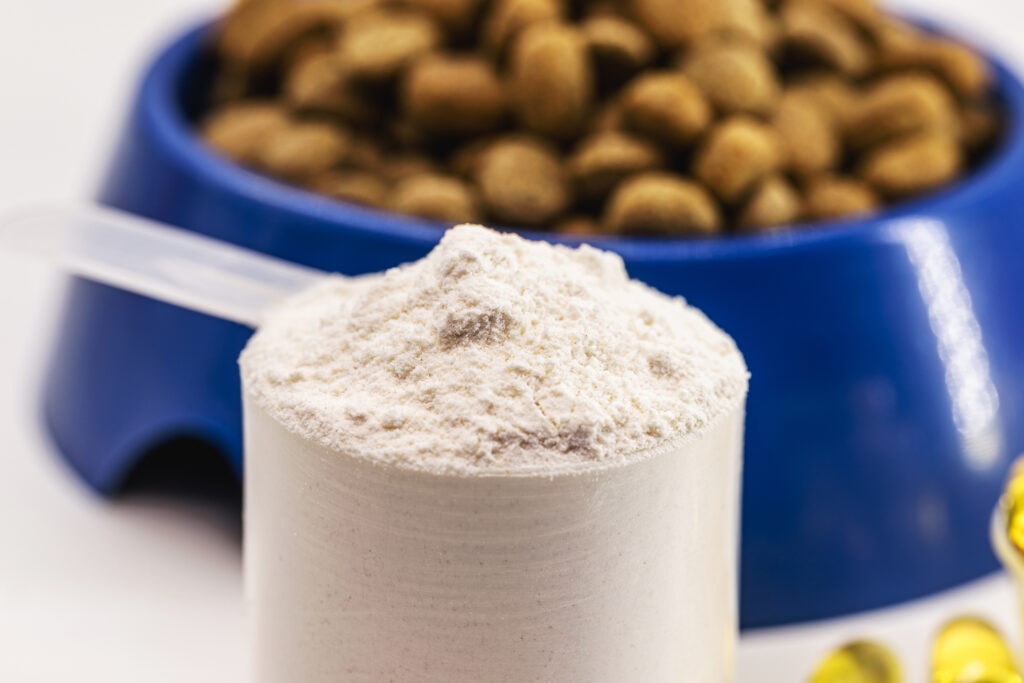
Photo by Chewy
Bone broth powder is a concentrated, dehydrated powder made from simmered and ground animal bones. It’s often used as a food topper to make a dog’s meal smell and taste more appealing. Bone broth powder is also rich in vitamins and minerals, amino acids, and collagen, which is an important component of your dog’s healthy coat and skin.
Key Takeaways
- Bone broth powder can be used as a topper to make dog food more appealing, but it should not be used as a meal replacement.
- Bone broth powder is highly palatable and more shelf-stable than liquid bone broth.
- Check the ingredient list closely to ensure the product you choose doesn’t contain salt, onion, garlic, chives, or leeks, which can be dangerous for dogs.
- Ask your veterinarian before giving bone broth powder if your dog is on a prescription diet, takes medication, or needs to limit sodium.
Can Dogs Be Given Bone Broth Powder?
Dogs can be given bone broth powder as long as you choose a dog-specific product. Bone broth powder typically has a pleasing odor and taste that will make your dog’s food even more appealing.
If your dog is on a prescription diet or has a medical condition, check with your veterinarian before adding bone broth powder to their food.
How Does Bone Broth Powder Work in Dogs?
Adding bone broth powder to your dog’s food can encourage the dog to eat, which is especially helpful if you have a picky eater or a dog that is avoiding food.
When it comes to health benefits, however, there isn’t much direct data supporting it. Bone broth powder is typically marketed as rich in minerals and vitamins that support general health, amino acids that support liver health, and collagen for skin and coat support. These claims are based on the components in bone broth powder, rather than rigorous studies of bone broth powder itself.
Because formulas vary, it’s always a good idea to check with your vet and research the product you’re buying.
Benefits of Bone Broth Powder in Dogs
The main benefit to bone broth powder is that most dogs like the flavor and smell of bone broth powder. That can make it a useful topper for pet parents who want an easy way to occasionally change up their dog’s mealtime or encourage a picky eater.
Beyond that, most of the benefits attributed to bone broth powder are because of what it contains, rather than direct studies of bone broth. These include vitamins and minerals like calcium and magnesium, amino acids such as glycine that promote healthy inflammatory pathways, and glucosamine and chondroitin to support healthy joints.
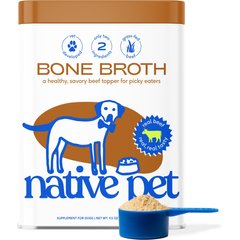
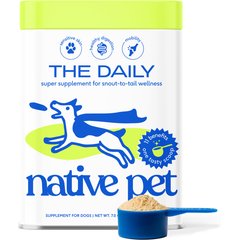
Recommended Products

Potential Side Effects of Bone Broth Powder in Dogs
Bone broth powder can pose a risk if it includes ingredients dogs shouldn’t eat. Products with a high salt content can be unhealthy, and those with onion, garlic, chives, or leeks can be dangerous, since these ingredients are toxic to dogs.
For this reason, it is important to use a product made specifically for dogs rather than a human bone broth product.
How to Give Your Dog Bone Broth Powder
Choose a product made for dogs and read the label carefully. Use it as the package directs and as an add-on to a complete and balanced diet. Bone broth powder can be sprinkled on top of your dog’s food or mixed with water to form a broth that you can pour over the food.
If you choose to make bone broth for your dog, leave out salt, onion, garlic, and seasoning blends. Although these ingredients are commonly used in human food, they are not safe for dogs.
Giving whole bones to your dog is also not a good idea as this can lead to mouth and tooth injuries.
What to Do If Your Dog Eats Too Much Bone Broth Powder
If your dog gets into a container of bone broth powder or you accidentally give them too much, call your veterinarian or an emergency clinic right away, especially if the product contains salt, onion, garlic, or other seasonings. Have the product packaging available so you can explain exactly what your dog ate and let them know what ingredients the product contains.
FAQs about Supplement in Species
Does bone broth powder replace a meal?
No, bone broth powder should not replace a complete and balanced diet. It should only be used as a topper to make a dog’s food more flavorful.
Does bone broth powder have proven health benefits?
Not really. While it may be a palatable topper, broad health claims are not well supported.
Can I use a human bone broth powder?
Human products should only be used if your veterinarian says it is okay and the ingredient list is dog-friendly. Skip products that contain salt, onion, garlic, or other seasonings.
Is homemade bone broth safer?
Not necessarily. Homemade recipes can be harder to standardize, and many seasonings that are safe for people can be toxic for dogs.
Attributions
This article was created with assistance from AI tools. The content has been reviewed for accuracy and edited by a human.
References
- 9 Health Benefits of Bone Broth for Dogs. Chewy. Accessed April 14, 2026. https://www.chewy.com/education/dog/food-and-nutrition/bone-broth-for-dogs
- U.S. Food and Drug Administration. Complete and Balanced Pet Food. Accessed April 14, 2026. https://www.fda.gov/animal-veterinary/animal-health-literacy/complete-and-balanced-pet-food
- Alcock RD, Shaw GC, Burke LM. Bone Broth Unlikely to Provide Reliable Concentrations of Collagen Precursors Compared With Supplemental Sources of Collagen Used in Collagen Research. Int J Sport Nutr Exerc Metab. 2019;29(3):265-272. doi:10.1123/ijsnem.2018-0139. https://pubmed.ncbi.nlm.nih.gov/29893587/
- Animal Food Feeds. Accessed April 14, 2026. https://www.fda.gov/animal-veterinary/products/animal-food-feeds
- U.S. Food and Drug Administration. Potentially Dangerous Items for Your Pet. Accessed April 14, 2026. https://www.fda.gov/animal-veterinary/animal-health-literacy/potentially-dangerous-items-your-pet
- Merck Veterinary Manual. Garlic and Onion (Allium spp) Toxicosis in Animals. Accessed April 14, 2026. https://www.merckvetmanual.com/toxicology/food-hazards/garlic-and-onion-allium-spp-toxicosis-in-animals
- Merck Veterinary Manual. Salt Toxicosis in Animals. Accessed April 14, 2026. https://www.merckvetmanual.com/toxicology/salt-toxicosis/salt-toxicosis-in-animals
- U.S. Food and Drug Administration. Pet Food. Accessed April 14, 2026. https://www.fda.gov/animal-veterinary/animal-foods-feeds/pet-food
- U.S. Food and Drug Administration. Animal Food Ingredients. Accessed April 14, 2026. https://www.fda.gov/animal-veterinary/animal-foods-feeds/animal-food-ingredients
- U.S. Food and Drug Administration. Proper Storage of Pet Food and Treats. Accessed April 14, 2026. https://www.fda.gov/animal-veterinary/animal-health-literacy/proper-storage-pet-food-treats