Why Do Dogs Sniff Butts? Is This Normal?


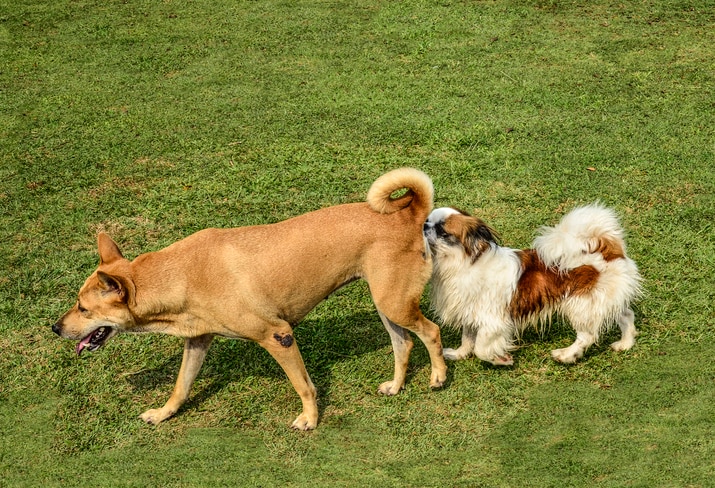
Photo by CampPhoto/iStock/Getty Images Plus via Getty Images.
Q: Whenever my dog meets another dog, their first order of business is usually sniffing the other dog’s bum! It’s a little embarrassing as a pet parent—but is it normal behavior for my dog?
A: Yes! While this behavior may seem a little rude to humans, it’s perfectly polite in the eyes of our canine friends. In fact, it’s one of the primary ways dogs gather information about one another—and it’s almost always totally normal.
Key Takeaways
- Butt sniffing is a normal way dogs say hello and learn about each other.
- A quick sniff can reveal a dog’s identity, mood, and health.
- Most dogs need only a few seconds to gather all the information they need.
- There’s usually no need to stop polite butt sniffing if both dogs seem relaxed.
- If sniffing suddenly becomes excessive or is paired with other behaviors, check in with your veterinarian.
Why Do Dogs Sniff Butts?
It turns out there’s a very good reason your dog has a unique communication style.
“Brief butt sniffing is a normal part of canine communication and can help dogs gather information in a way that feels natural to them,” says Colleen Guilfoyle, DVM, a veterinarian at Best Friends Animal Society in Kanab, Utah.
During a typical greeting, each dog briefly sniffs the other’s rear end, usually for just a few seconds. Think of this butt-sniffing ritual as a handshake, quick small talk, and a background check all rolled into one.
So, why exactly do dogs do this? There are a few key reasons.
Dogs Use Scent to Investigate the World
Dogs rely heavily on scent to gather information about the world around them. And it’s no wonder—while humans have about six million scent receptors, dogs can have up to 300 million, giving them an extraordinary ability to detect and interpret smells.
Dogs also have a specialized scent-detecting structure inside their nasal cavity called Jacobson’s organ, which helps them detect chemical signals, particularly pheromones. These chemical messages provide dogs with important social information and cues about other dogs, explains Vanessa Spano, DVM, DACVB, a board-certified veterinary behaviorist at Schwarzman Animal Medical Center in New York City.
So while a butt sniff may seem like an awkward introduction by human standards, for dogs, it’s the fastest and most effective way to learn about another pup.
The Rear End Is Packed With Scent Information
Why do dogs sniff butts in particular? Why not the ears or paws? Simply put, the rear end is one of the most information-rich—and yes, stinkiest—parts of the body.
Dogs have two small anal glands (aka anal sacs) located just inside the anus. The walls of these sacs are lined with sweat and oil glands that produce a strong-smelling secretion containing pheromones and other chemical signals, Dr. Spano explains. This scent is unique to each dog and plays an important role in canine communication.
Because so much scent information is concentrated around the rear end, dogs often head straight there when meeting another dog. In just a few seconds, they can gather far more information than they could by sniffing another part of the body.
It Helps Dogs Decide What to Do Next
Once a dog has gathered all that scent information, they can decide how they feel about their new friend.
The response generally falls into one of three categories: “I like this dog,” “I don’t care about this dog,” or “I don’t like this dog,” Dr. Spano notes.
A dog who likes what they smell may display friendly body language, such as:
- A wagging tail
- A play bow
- Bouncy, excited movements
If they’re indifferent, they may simply lose interest and move on.
And if they don’t like what they smell, they might:
- Create distance
- Show signs of stress
- In some cases, react defensively
What Info Does a Dog Get From Sniffing Another Dog’s Butt?
Here are the top things dogs may learn from a quick sniff.
Identity and Social Information
Just as humans recognize familiar faces, dogs recognize familiar scents. A quick butt sniff can help them identify another dog and determine whether they’re greeting an old friend or meeting a new pup for the first time.
This ability also helps dogs keep track of the other dogs in their area, including those they regularly encounter in the neighborhood, on their favorite walking routes, or at the local dog park.
Gender and Reproductive Status
A butt sniff can help a dog determine whether another dog is male or female and if they’ve been spayed or neutered.
Emotional State
Because emotions can influence the chemical signals that animals release, dogs can pick up on scent cues that hint at another dog’s mood. A few whiffs may help a dog determine whether another dog is feeling calm, stressed, or excited.
General Health Information
While a butt sniff won’t provide a full medical history, it may alert a dog that something is different or unusual, such as a health issue or increased stress levels.
Why Do Some Dogs Sniff Butts More Than Others?
Butt sniffing is a normal canine behavior. However, some dogs may be content with a quick sniff, while others seem determined to conduct a full background check.
Here are a few types of dogs that may be especially interested in gathering the details:
Dogs Who Aren’t Spayed or Neutered
They’re gathering information about reproductive status and whether the other dog could be a potential mate. This behavior may be particularly noticeable in males when female dogs are nearby. (Friendly reminder that it’s in your dog’s best interest to be spayed or neutered.)
Confident Dogs
Confident, social dogs may be more likely to approach and investigate unfamiliar dogs.
On the other hand, dogs who are fearful or anxious may be less interested in social interactions and more likely to avoid close contact, Dr. Spano notes.
Young Dogs
Puppies and other young dogs are still learning canine etiquette and exploring their environment, so they may be more fixated on sniffing than senior dogs.
Should I Stop My Dog From Sniffing Other Dogs’ Butts?
In most situations, Dr. Guilfoyle says there’s no reason to stop the behavior, as long as the interaction appears relaxed and mutual.
“Allowing appropriate sniffing opportunities can support confidence, reduce frustration, and help dogs interact more comfortably with their environment,” she explains.
However, not every dog enjoys being approached by unfamiliar dogs, so pet parents should pay attention to the body language of both dogs. If either dog seems uncomfortable, such as repeatedly moving away, tucking their tail, growling, or showing other signs of stress, it’s a good idea to create some space.
Pro tip: Keep your pup on a properly fitted harness and leash when meeting unfamiliar dogs so you can guide them away if the greeting stops feeling friendly.
Recommended Products


And carry treats so that you can redirect your dog’s behavior when necessary.
Recommended Products


When Butt-Sniffing Might Signal a Health Issue
“The behavior itself is rarely abnormal,” Dr. Guilfoyle says. However, if a dog suddenly develops an intense interest in sniffing or licking other dogs’ rear ends—or if other dogs seem unusually interested in your dog’s rear end—it may be worth checking in with your vet.
Dr. Guilfoyle also recommends contacting your vet if your dog:
- Has ongoing diarrhea
- Scoots their rear end along the ground
- Excessively licks their rear end
- Has swelling or a stinky odor around the butt
- Experiences weight loss or changes in appetite
These symptoms may indicate an underlying health issue that needs veterinary attention.
FAQs About Dogs Sniffing Butts
My dog doesn’t sniff other dogs’ butts. Should I worry?
Probably not. While butt sniffing is common, not every dog is interested in investigating unfamiliar dogs. If your dog is otherwise healthy and behaving normally, there’s usually no reason for concern.
Do dogs have to sniff another dog’s butt every time they see them?
Not necessarily. Dogs can use visual cues and also recognize familiar scents, so they may already have information about a dog they’ve met before. That said, because scent information can change over time, many dogs still perform a quick “refresh”sniff.
Is butt sniffing a health risk?
Not for most dogs. There is a small theoretical risk of exposure to intestinal parasites, gastrointestinal pathogens, or bacteria. However, the risk is low, especially when dogs are healthy, vaccinated, and receiving routine preventive care.
Is it rude to let dogs sniff butts?
Nope. Butt sniffing is a normal and polite form of canine communication. As long as both dogs appear relaxed, there’s no need to interrupt the interaction.
Attributions