Why Do Dogs Chase Their Tails? Is This Normal?



Photo by Mike Watson Images/moodboard/Getty Images Plus
Q: Sometimes my dog gets super excited and decides to spin in circles and chase her tail. She looks super happy and entertained doing it, but is it OK? Is this normal?
A: Yes, tail chasing can be normal for dogs—especially curious puppies. But if the spinning is frequent, difficult to interrupt, or tied to biting, it’s worth seeing a vet. Here are all the reasons your dog might chase their tail and how to redirect their attention to healthier activities.
Key Takeaways
- Tail chasing is often just playful fun—especially for curious puppies.
- Dogs who are bored or bursting with energy may spin to entertain themselves.
- If tail chasing gets your attention, your pup might keep doing it for the spotlight.
- Fleas, anal gland issues, or itchiness can make dogs chase their tails for relief.
- Frequent, intense, or distressed spinning isn’t typical—check in with your vet.
Why Do Dogs Chase Their Tails?
If you’ve watched your dog spin in circles trying to catch their own tail, you’ve probably wondered what’s going on.
Usually it’s a harmless behavior and it’s pretty common—like when your dog’s chasing their tail for fun.
However, there are times when tail-chasing could be something to bring up with your veterinarian, so it’s important to know what to look out for.
Here are the most common reasons why your pup might be running after their own behind:
They’re Playing and Curious
For puppies especially, a wagging tail is basically a built-in toy. Young dogs are still figuring out their own bodies, and that wiggly thing behind them is fun to chase. As puppies mature, most grow out of it on their own.
They’re Bored or Understimulated
A dog who isn’t getting enough physical exercise or mental enrichment will find ways to entertain themselves—and tail chasing can be one of them.
Think about how to curb boredom and what fun activities you can give your dog instead, says Nicole Kohanski, CTC, CDBC, CBCC-KA, a certified dog behavior consultant at Wiggle Butt Academy in Dallas. “Many times, we get unwanted behaviors from dogs who need a little bit more brain work,” she says.
If your dog’s active, a new activity like lure coursing or treibball could be a good option.
They’d Like Your Attention
Dogs learn quickly that certain behaviors get a reaction from their humans. If tail chasing has earned your dog laughs, pets, or even a “Hey, stop that!” in the past, they may keep doing it.
It’s Actually a Health Issue
Itchiness, pain, or discomfort can send a dog spinning in search of relief.
Fleas are a common issue, says Emily Gamm, DVM, associate veterinarian at South Sioux Animal Hospital in South Sioux City, Nebraska.
“[Fleas] especially like to congregate on the lower back, near the base of the tail, and on the backs of the thighs,” she explains. “This can make a dog incredibly itchy in this area, and they’ll try to reach that source of itch any way they can.”
Anal gland issues are another common culprit. When those small sacs don’t empty properly, the resulting discomfort can send a dog chasing their tail and scooting.
Intestinal parasites can also cause itching in that area. Worms will often lead to itchy butts and a dog may whip around and try to lick or chew at their rear end, which may look like tail chasing.
Your Dog’s Engaging in a Compulsive Behavior
In some cases, tail chasing isn’t about play, boredom, or a physical itch at all—it’s a sign of canine compulsive disorder (CCD), a condition that Dr. Gamm compares to OCD in humans. Dogs with CCD engage in repetitive behaviors that they have trouble controlling.
Is It Normal for Dogs To Chase Their Tails?
Yes, it’s usually normal. Occasional, brief tail chasing is common dog behavior, but some dogs are more likely to do it than others, including:
- Puppies and younger dogs: They’re still exploring their world (and themselves).
- High-energy breeds or dogs who aren’t getting the exercise they need: They may also be more likely to spin. Even some toy breed dogs may not get enough physical exercise, because their short legs limit long walks. Without enough exercise, they may turn to tail chasing for energy release.
- Certain breeds: Bull Terriers, German Shepherds, Jack Russell Terriers, Shiba Inus, and Dachshunds, for example, may have a genetic predisposition to compulsive behaviors like tail chasing, Dr. Gamm says.
- Senior dogs: Senior dogs aren’t necessarily more likely to chase their tail—but they may develop chronic pain or joint issues, which can lead to attempting to lick or chew at the back end. This behavior may be confused with tail chasing. Your vet may recommend pain medication or joint supplements to help alleviate issues that stem from arthritis, muscle loss, and reduced flexibility.
When Is Tail Chasing Not Normal?
Sometimes, tail chasing may have crossed from being a quirky habit into something worth addressing with your veterinarian. See a vet if your dog’s tail-chasing:
- Regularly lasts longer than a few seconds
- Is happening more than a few times a week
- Seems linked to stress, anxiety, or specific triggers (like loud noises or being left alone)
- Involves biting or chewing at the tail
- Includes scooting or excessive licking
- Produces visible skin issues, such as redness, scabs, or hair loss near the tail
- Seems tied to pain or distress in any way
What To Do If Your Dog Is Chasing Their Tail
- Boost enrichment. If your dog’s lacking in fun toys, give them some puzzles or games to solve. Even a short game of hide-and-seek can give your dog’s brain and body a boost.
Recommended Products

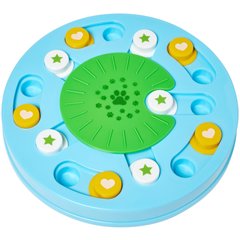

2. Redirect the behavior. “Start with a tug rope or a flirt pole, swinging it in very large circles,” Kohanski says. “After your dog is engaged and having fun, change the patterns around to zig zags and straight lines.” A flirt pole or interactive tug toy gives dogs a similar spinning-and-chasing outlet without reinforcing tail-chasing behavior.
Recommended Products


3. Head to the vet. If enrichment or redirection don’t seem to help, it’s best to seek expert advice. Your vet can check for any health issues that might be causing your dog to spin themselves silly. If CCD is suspected, your vet may refer you to a veterinary behaviorist or recommend a trial of anti-anxiety medication alongside behavior modification training.
Recommended Product

FAQs About Dogs and Tail Chasing
Why do dogs bite their tails?
Tail biting in dogs is usually a sign of physical discomfort, meaning your dog is trying to reach something that itches or hurts. See a vet if your dog is biting their tail.
Why does a puppy chase his tail?
Puppies are pretty curious about everything—including themselves. It’s pretty normal for them to chase their tails just because it’s fun!
Is it OK to stop a dog from chasing their tail?
Yes, but calmly redirect your dog to another activity, like a toy, a training exercise, or a game of fetch. Never use negative reinforcement or raise your voice to get your dog to stop.
Which dog breeds chase their tails the most?
Bull Terriers, German Shepherds, Jack Russell Terriers, Shiba Inus, and Dachshunds are known to be fans of tail-chasing.
Attributions