How To Care for GloFish: A Complete Beginner’s Guide


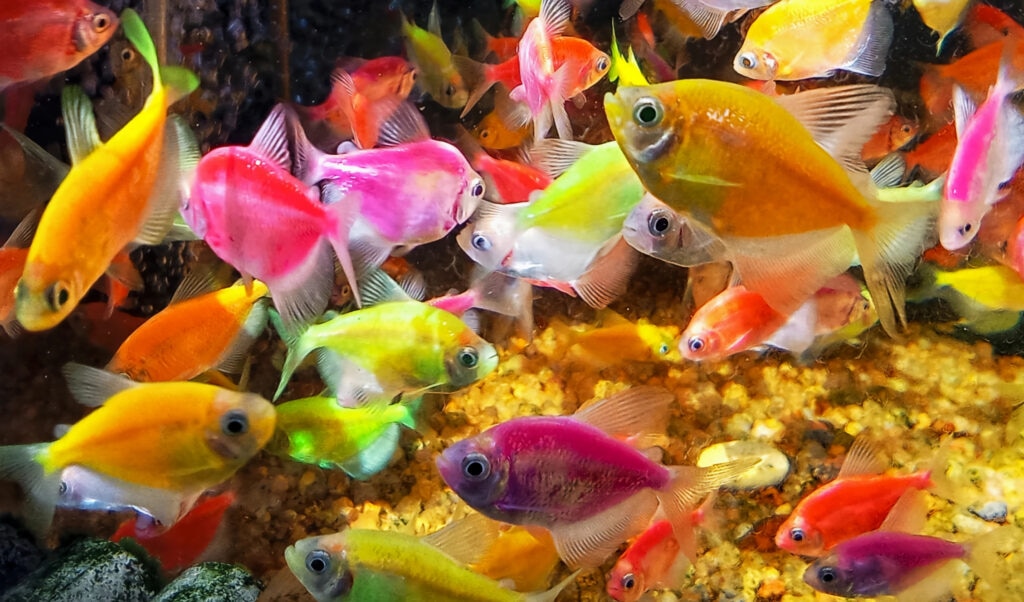
Photo by SUMAR TOYO/iStock/Getty Images Plus
GloFish is a term used to describe seven species of freshwater fish that are genetically modified to produce colors originally found in marine corals and jellyfish. These fish are popular due to their bright colors and peaceful nature.
The GloFish’s natural behaviors make them great options for beginner fish keepers. GloFish care is easy and, as long as you maintain their homes, they will be around for several years to provide you joy.
Key Takeaways
- GloFish are born bright. They are not injected or dyed.
- GloFish will fluoresce brightest under blue light, but they are still colorful under standard aquarium lights.
- Most GloFish species are peaceful community fish that school together in a group and do well with multiple members of their species.
- GloFish need a healthy, varied diet and a regularly maintained aquarium.
What Are GloFish?
- GloFish get their bright glow from a protein in their genes. They are not bioluminescent (they don’t “glow in the dark”), but under blue lights, they are brightly fluorescent. Fluorescence is a naturally occurring trait that can be seen in many species, from jellyfish to sharks.
- Current GloFish on the market have naturally occurring fluorescent genes that were passed down from their parents. The genetics of the original GloFish were modified using fluorescent genes from marine organisms.
- The only difference between GloFish and their non-fluorescent counterparts is that a GloFish will have brighter coloring and will fluoresce.
- There are seven species of GloFish:
- Skirt tetras (normal and longfin)
- Pristella tetras
- Danios
- Rainbow sharks
- Barbs
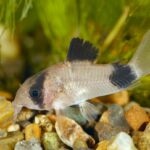
- Cory cats
- Angelfish
- Each of these species come in multiple colors, including :
- Starfire Red
- Electric Green
- Cosmic Blue
- Sunburst Orange
- Moonrise Pink
- Galactic Purple
- Celestial Yellow
GloFish Tank Setup Requirements
When setting up your freshwater tank, it’s important to consider which types of fish you’re planning to keep.
Ideal Tank Size for GloFish Species
The minimum tank sizes for different species of GloFish are:
- Skirt tetras and barbs in schools of six or more in at least 15 gallons
- Danios and pristellas in schools of six or more in at least 10 gallons
Recommended Product
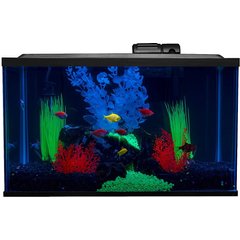
- Cory cats in a school of six or more, in at least 10 gallons
- Angelfish as singles or pairs in 30 gallons, or in a larger group if given more space
- Sharks as a single fish in at least 20 gallons, or in small groups if given much more room (they are territorial)
Most of these species will live together in a bigger community tank, although the tiger barbs tend to be nippy especially with longfin tetras.
GloFish tank sizes are important for their overall health. The sizes listed above are the minimums needed for these species. In order for these schooling fish (sharks not included) to thrive, they need plenty of space to swim, as they are active.
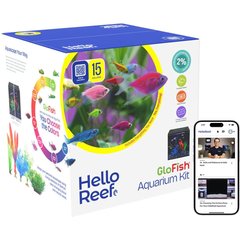
HelloReef makes a great GloFish tank setup for beginner fish owners that includes everything you need for learning how to care for GloFish.
Recommended Product
Water Parameters for GloFish
The ideal water parameters for GloFish are:
- Temperature: 72–80 F
- pH: 6.5–7.5
Keep your GloFish water temperature and other water parameters stable to ensure they stay healthy and don’t get stressed out. Just because they can handle ranges doesn’t mean you shouldn’t aim for stability.
Filtration and Aeration
There are a few options you can consider for filtering and aerating your tank. For example:
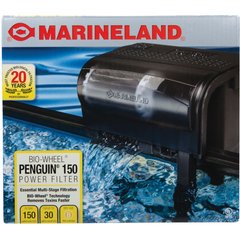
- Marineland Bio-Wheel hang-on-back filters are great for community fish tanks and come in a variety of sizes.
Recommended Product
- Internal and external canister filters are another good option. Like the hang-on-back filters, they provide biological, mechanical, and chemical filtration.
Recommended Product
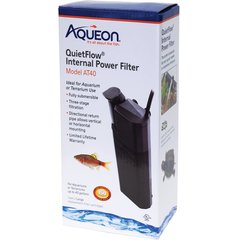
Water flow is important in tanks with active fish. Consider the following when setting the water flow outputs on your filters. Select a filter that will turn over the tank water about five times an hour.
Lighting for GloFish
While GloFish are bright and vibrant under any lighting, they will show their best color under a blue light, as this causes them to fluoresce more than under white light.
If you’re using a blue light, you can keep it on at least eight hours a day. If using a white light or full-spectrum bulb, you may need to reduce the hours slightly, as eight hours daily can lead to algae growth.
Consider adding live plants, which will utilize nutrients that otherwise feed algae.
GloFish Tank Mates and Compatibility
GloFish tank mates should include other peaceful fish species to ensure everyone gets along. Also, tetras, danios, barbs, and cory cats are known for schooling (swimming together as a group) when you keep several of them together.
Sharks shouldn’t be kept with other sharks. They can coexist in community tanks with other peaceful fish or semi-aggressive fish, so check compatibility first. Note that sharks need bigger tank mates than other GloFish, which can only reach 6 inches in length.
What Do GloFish Eat?
GloFish need a balanced die, and can be fed commercial pellets, wafers, and flakes. You can even feed them food that helps enhance their bright colors.
Best Food for GloFish
Consider the following foods for general maintenance of most GloFish species:
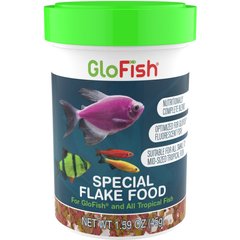
- GloFish Special Flakes Fish Food will enhance your fish’s natural colors.
Recommended Product
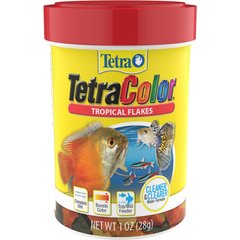
- Tetra Color Flakes or granules are another color-enhancing option for GloFish.
Recommended Products

Some types of GloFish may need different types of food:
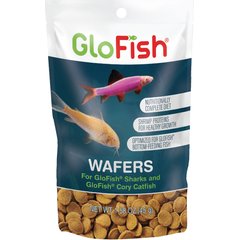
- Sharks and cory cats are bottom dwellers, so offer them sinking pellets or wafers.
Recommended Product
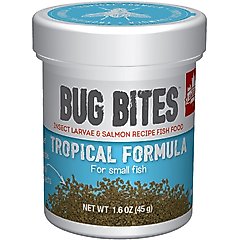
- Many fish species consume insects in the wild, so including an insect-based food helps add variety while mimicking natural diets.
Recommended Product
Feeding Schedule and Portion Control
GloFish care includes feeding them once per day. Feed only what they will eat within one to two minutes, so food isn’t potentially wasted.
If you notice the following, cut back on what you’re offering:
- Food waste on the bottom of the tank
- Overweight fish
If you notice these signs that your GloFish might be underfed, offer more food without adding waste:
- Pinched stomach
- Pinched forehead
GloFish Care and Maintenance
In addition to regular maintenance for your GloFish tank, you should also keep tabs on your GloFish’s health in order to spot any potential issues quickly.
Tank Cleaning and Water Changes
Clean your fish tank regularly by doing the following:
- Change 10–25% of your GloFish water every other week
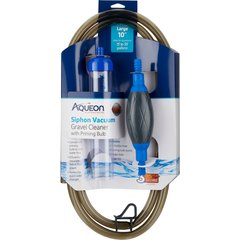
- Gravel-vacuum the substrate every time you do a water change.
Recommended Product
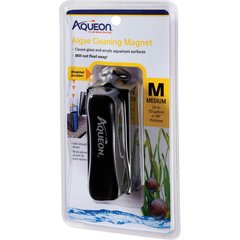
- Use a magnetic cleaner to scrape algae from the glass once a week or as it gets dirty.
Recommended Product
Monitoring GloFish Health
If you notice any of the following signs of stress or illness on your fish, contact your fish veterinarian or expert:
- White spots or fuzz
- Bloating
- Raised scales
- Ulcers
- Missing, tattered, or torn fins
- Bulging eye
With proper care, your GloFish can live for 3–5 years.
Common GloFish Problems and Solutions
Follow these tips to troubleshoot any problems that may arise over your fish-keeping journey:
- Cloudy water can be caused by bacterial blooms. The bloom, which is normal when first setting up a tank, should clear after a few days. Adding beneficial filtration bacteria to your tank tends to reduce this type of bacteria bloom, and ensures that your tank cycles correctly.
- Fading color of your fish can be caused by stress or poor diet. Test your water parameters and do a water change. You can also consider adding color-enhancing food to your fish’s diet.
- Aggression or fin nipping can be solved by adding more decorations to the tank, moving existing ones around, or moving the aggressor to a new tank. Reconsider the fish species in the tank and whether they’recompatible. If one or more fish are the aggressors, they need to be removed. Alternatively, barbs and skirt tetras are likely to be nippier when they are in small groups. Increasing the number of fish in their school often reduces fin-nipping.
- Diseases can be prevented by maintaining good water parameters and ensuring your fish have a stress-free home.
FAQs About GloFish
How long do GloFish live?
If they’re well taken care of, GloFish can live for 3–5 years.
Can GloFish live in bowls?
No. Fish should never live in bowls.
Do GloFish glow in the dark?
No, GloFish do not glow in the dark; they fluoresce best under blue lights.
Attributions