Marine vs. Reef Tank: What’s the Difference?


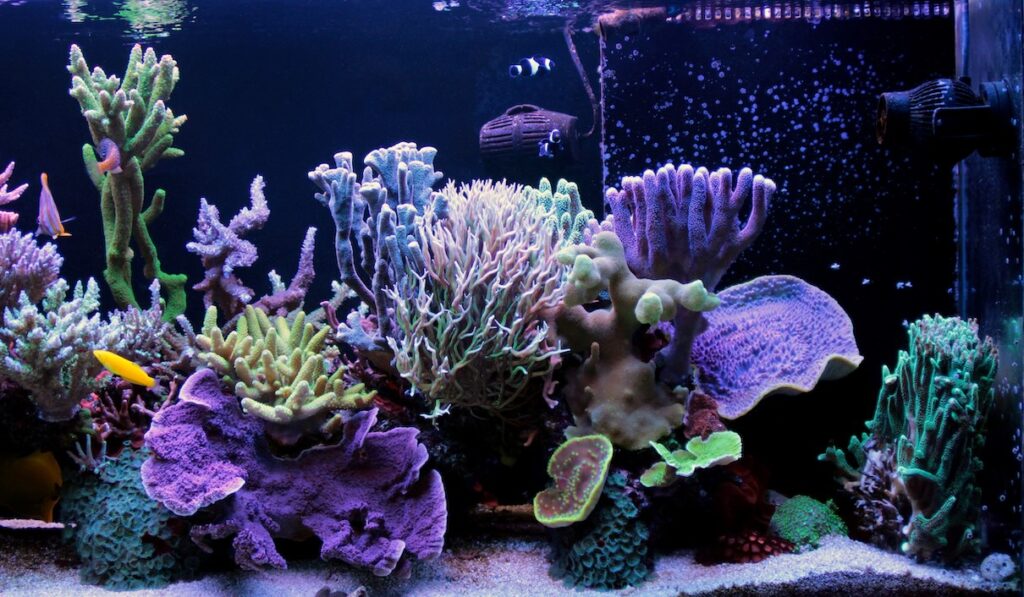
Photo by vojce/iStock /Getty Images Plus via Getty Images
Marine tanks and reef tanks are two common types of saltwater aquariums. While all reef tanks are marine tanks, here we refer to marine tanks specifically as saltwater tanks without live coral.
A marine tank typically includes only fish and basic equipment, whereas a reef tank includes corals, fish, and invertebrates (inverts), along with specialized equipment. There are also intermediate steps, such as fish-only with live rock, and marine tanks that may have invertebrates such as starfish.
Marine tanks are great for beginners, while reef tanks are more complex ecosystems that require an advanced skill set and specialized care.
Key Takeaways
- A marine tank is a saltwater aquarium focused on fish (sometimes with live rock and select invertebrates), while a reef tank includes corals, fish, and invertebrates.
- Both setups need stable water quality, strong filtration, and a fully cycled tank before adding any fish or others.
- Reef tanks usually require stronger lighting and more precise monitoring because corals are sensitive to water parameter fluctuations.
- Marine tanks are often easier for beginners, while reef tanks are better for intermediate to advanced aquarists.
Marine vs. Reef Tanks: At a Glance
| Marine Tanks | Reef Tanks | |
|---|---|---|
| Species | Fish only (sometimes live rock and invertebrates) | Fish, corals, and invertebrates |
| Difficulty | Beginner to intermediate difficulty | Intermediate to advanced difficulty |
| Equipment | Filtration and lighting equipment | Advanced lighting, filtration, and dosing equipment |
| Maintenance | Simple maintenance | Intermediate to advanced maintenance |
| Cost | Lower cost | Higher cost |
What Is a Marine Tank?
A marine tank is a saltwater aquarium designed primarily for fish, without corals. Simply put: The focus of a marine tank is the fish.
A fish-only marine tank may be home to a variety of peaceful, semi-aggressive, or aggressive species. Some common marine community fish include clownfish, chromis damsels, gobies, blennies, and dwarf angels. Aggressive or predator tanks may include groupers, puffers, triggerfish, and larger angelfish. Be sure that the species you keep together have similar temperaments.
A special type of marine tank is a FOWLR tank (Fish Only With Live Rock). These tanks are great for beginning to intermediate aquarium hobbyists since they’re more forgiving and easier to care for than reef tanks. They are a great way to gradually transition from a fish tank to a full reef tank.
What Goes in a Marine Tank?
There’s no shortage of species and items that can go in a saltwater aquarium. Below are the most common.
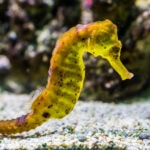
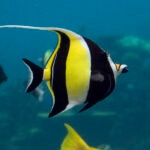
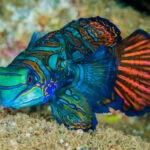
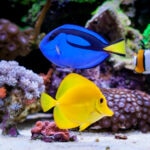
- Saltwater fish species: Popular choices include angelfish, clownfish, eels, pufferfish, triggerfish, and lionfish.
- Aquatic landscaping (aquascape): Dry or live rock can be used to build a rockscape home for your saltwater fish. Artificial corals can also be used as décor.
- Inverts: A basic rule of thumb with any fish is that if a fish, shrimp, or any other type of invertebrate can fit in their mouth, then that’s probably where it will end up. Some inverts, like starfish or urchins, can work in a fish tank, but ornamental shrimp will likely get eaten.
What Supplies Do You Need for a Marine Tank?
A successful saltwater fish tank needs the following things:
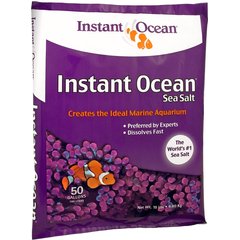
- Salt mix to mimic natural ocean water
Recommended Product
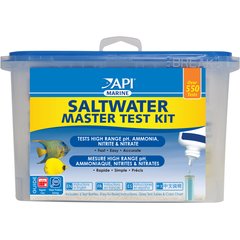
- Marine water test kit (pH, KH, Nitrate, Nitrite, Ammonia)
Recommended Products

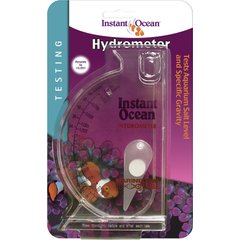
- Refractometer or hydrometer to measure salinity
Recommended Products

- Filter that turns over the tank between five and ten times per hour and incorporates mechanical, biological, and chemical filtration. A sump-based filter, a large hang-on-back filter, or a canister filter is a good option.
Recommended Products
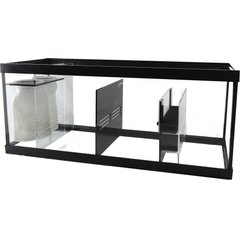
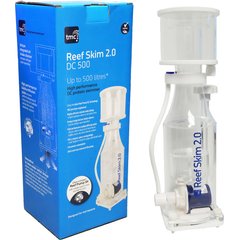
- Safe heater to keep your marine tank between 78 and 82 degrees F. Choose a heater (or combination of heaters) that provides about 3-5 watts per gallon.
Recommended Product

- Moderate lighting, like water-resistant LEDs, to illuminate the tank
Recommended Product

What Is a Reef Tank?
A reef tank is a saltwater aquarium with live corals, and it requires more advanced care and equipment.
These tanks, especially those with stony (hard) corals, do best under the care of an intermediate to advanced aquarist. Due to the sensitivity of the corals, precision and consistency are essential.
Meanwhile, reef tanks with soft corals are much more forgiving and could be considered for a beginning reef aquarist.
What Goes in a Reef Tank?
The main stars of a reef tank are corals. These brightly colored, delicate organisms require special care. There are four main types:
- Soft corals: Sinularia, Discosoma, Zoanthids, Mushroom Corals (Rhodactis)
- Large Polyp Stony (LPS) corals: Euphyllia, Trachyphyllia, Acanthastrea
- Small Polyp Stony (SPS) corals: Acropora, Montipora, Cyphastrea
- Non-Photosynthetic (NPS) corals: Tubastraea (sun corals), Gorgonia
Invertebrates, including the clean-up crew, are an essential part of any reef tank and help keep it clean. Some common invertebrates found in reef tanks include:
- Cleaner shrimp
- Lysmata wurdemanni (Peppermint shrimp)
- Nassarius
- Trochus
- Red or blue leg hermit crabs
- Emerald crabs
But don’t forget the fish. Fish in a reef tank need to be “reef safe,” meaning they pose little to no risk of eating the corals, the clean-up crew, or ornamental shrimp.
What Supplies Do You Need for a Reef Tank?
A reef tank requires many of the same supplies as a marine tank, but it also has some additional needs and recommendations.
- High-quality aquarium lighting for corals
Recommended Product

- Filtration systems that incorporate biological, chemical, and mechanical filtration.
- Powerheads, gyres, or wavemakers to help the return pump keep the flow in the tank strong for corals
Recommended Products
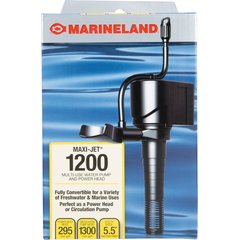
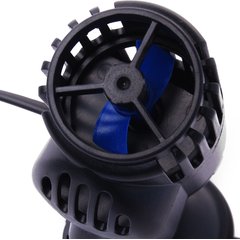
- Regular supply of reverse-osmosis/deionized or distilled fresh water, typically achieved through filtering water with a RODI unit.
How to Care for a Reef or Marine Saltwater Fish Tank
Marine and reef tanks require consistent maintenance and stable water conditions to keep fish and corals healthy. Care for these tanks (and the fish within them) can be broken down into:
Water Quality Management
Keeping your tank’s water stable is critical to ensuring healthy saltwater ecosystems. Regularly test the following to ensure they are in the safe range:
- Salinity
- Temperature
- pH
- Alkalinity
- Ammonia & Nitrites
- Nitrates
- Calcium
- Magnesium
- Phosphate
Routine Maintenance
Maintaining your tank is more than just feeding fish and topping off the water. Instead, routine maintenance for marine or reef tanks usually includes:
- Removing algae from the glass
- Topping water off
- Regularly testing the water
- Changing water
- Checking equipment
- Cleaning pumps
Tank Health Monitoring
Spend some time each day observing the behavior of your fish and coral. Monitor what and how often your fish eat, their social interactions, swimming patterns, and physical appearance. Additionally, check that your corals are bright and vibrant.
Choosing the Right Saltwater Aquarium
A marine or FOWLR tank is a good place to start if you have:
- No prior experience with a saltwater tank
- A limited budget
- Little to no time for maintenance
- Limited knowledge of water chemistry
Meanwhile, a reef tank might be the right fit for you if you have:
- Lots of patience and are attentive to detail
- Interested in soft and hard corals
- Financially able to invest regular time and money into the tank
A good understanding of water chemistry and its impacts on a coral reef ecosystem
How To Transition From a Marine Tank to a Reef Tank
It’s common for saltwater aquarium hobbyists to upgrade from a marine tank to a reef tank, and it is relatively easy to do.
When progressing to a more advanced saltwater system, gradually upgrade the tank’s equipment to include high-quality lights for optimal coral growth and additional filtration components, such as dosing pumps and media reactors.
Marine vs. Reef Tank FAQs
What is the difference between a marine tank and a reef tank?
A marine tank is limited to fish, and sometimes live rock, while a reef tank has a larger variety of fish and corals. Both require powerful filtration, but reef tanks will also include more specialized equipment, especially powerful lights to maintain photosynthetic corals.
Is a reef tank harder to maintain than a marine tank?
A marine tank and a reef tank will require similar water change and cleaning schedules, but a reef tank will also require monitoring additional water parameters and making adjustments as needed. A reef tank with soft corals is easier to maintain than one with LPS and SPS.
Can a marine tank become a reef tank?
A marine tank can easily become a reef tank with a few equipment upgrades.
Do reef tanks need special lighting?
Reef tanks need high-quality lighting to help provide a coral’s basic needs.
Are marine tanks good for beginners?
Marine tanks are good for beginners, especially those interested in reef tanks in the future.
What are some common mistakes to avoid with a marine or reef tank?
The most common mistakes aquarium hobbyists make when creating their saltwater aquarium include:
- Getting too small a tank
- Impulse purchases
- Underestimating cost, time, and maintenance requirements
- Not cycling the tank
- Using incorrect equipment
Attributions