Ferret Body Language: What Is Your Ferret Telling You?


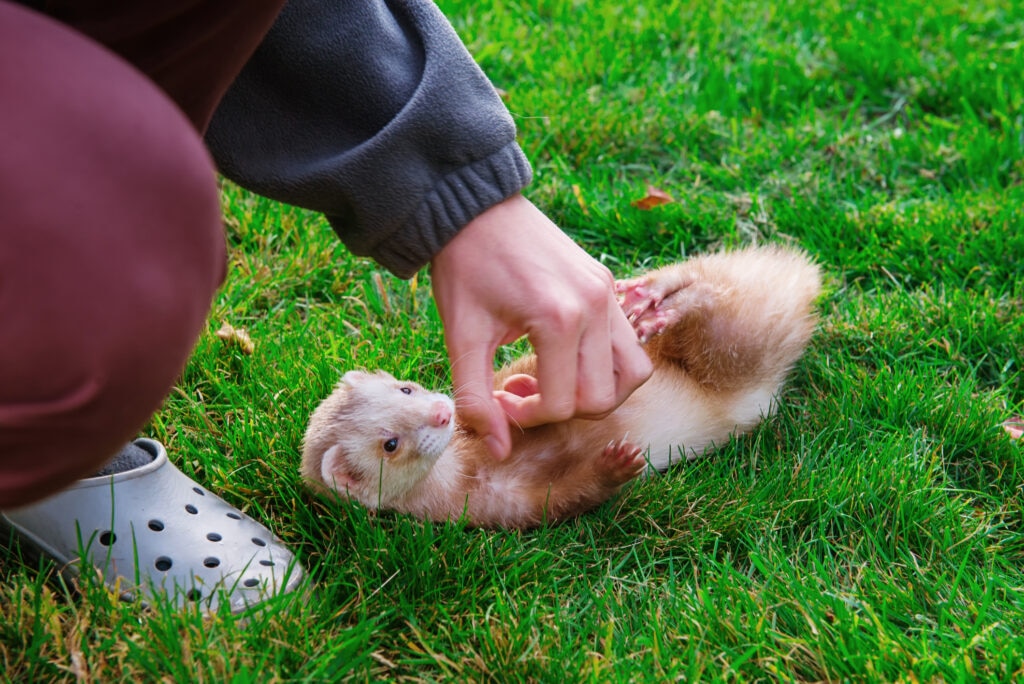
Photo by OKrasyuk/iStock/Getty Images Plus
Ferret body language can tell you whether your ferret is happy, scared, stressed, playful, or even sick.
Learning to recognize common behaviors—such as the playful “war dance,” “dooking,” tail puffing, hissing, and hiding—can help you better understand your ferret’s needs, strengthen your bond, and spot potential health problems early.
This guide explains what your ferret’s body language means, when certain behaviors are normal, and when changes in behavior may signal it’s time to contact your veterinarian.
Key Takeaways
- Ferret body language—such as posture, tail position, and vocalizations—helps you understand whether your ferret is happy, playful, stressed, or scared.
- Common behaviors like the “war dance,” “dooking,” tail puffing, and hissing each have specific meanings, and recognizing them can help you respond appropriately to your ferret’s needs.
- Sudden changes in behavior, including lethargy, hiding, or aggression, may signal illness or pain and should prompt a call to your veterinarian.
Why Understanding Ferret Body Language Matters
Being aware of your ferret’s body language can help you figure out when they are relaxed and playful, but it can also help you tell when they are scared or sick. By reading the behavior of your ferret, you can not only keep your ferret happy, you can also help protect them.
Common ways your ferret may communicate with you include:
- Body posture
- Tail position
- Facial expressions
- Vocalizations
- Play behavior
- Energy levels
Signs of a Happy and Playful Ferret
The Ferret “War Dance”
Despite the name, the war dance is a playful behavior and a sign your ferret is excited! When a ferret does this behavior, you may notice a sudden burst of energy in your pet. You will also notice your ferret hopping, twisting their back, and making dooking sounds.
Dooking
During times of play or excitement, you may hear what sounds like a chuckle come from your ferret. This is a common noise made by ferrets known as dooking. Dooking may also sound like a clucking noise.
Relaxed Body Posture
A relaxed body posture and loose body movements can be signs of a happy and comfortable ferret. Ferrets who feel at ease in their environment may be more curious and seek interaction with their pet parents. When sleeping, they may be stretched out rather than hiding.
Signs your ferret feels comfortable may include:
- Confidence while exploring
- Play hopping or bowing
- A relaxed tail posture
- Gentle vocalizations
- Sleeping out in the open
Signs of a Stressed or Scared Ferret
Puffing the Tail
If your ferret is angry or even scared, you may notice their tail becomes puffy or looks like a pipe cleaner. This is a behavior that ferrets use as a defensive posture. If your ferret is overstimulated, you may also notice this movement. Even though puffing of the tail is typically a significant indicator of pain or distress, you may sometimes see it in combination with your ferret’s excited behaviors.
Hissing
Hissing in ferrets can be a reaction to fear, discomfort, or annoyance. Ferrets may also use hissing as a warning tactic. Alternatively, you may hear your ferret hiss while playing!
If you are unsure of what your ferret is trying to tell you through hissing, look for other body language patterns. In these cases, it is better to treat the hissing behavior as if your ferret is upset to avoid possibly making the situation worse.
Freezing or Hiding
If your ferret feels threatened or scared, they may try to hide to get away. Alternatively, they may also freeze where they are standing, almost like pretending to be a statue. Ferrets who are scared may also run away from people and other pets.
Biting or Lunging
Ferrets are very friendly and are known to show affection to their pet parents. However, like many other pets, ferrets may bite when frightened or in pain. Being aware of your ferret’s body language is the best way to avoid this. If you notice your ferret lunging at something or someone, it may be a warning sign that your ferret is angry.
However, like hissing, sometimes ferrets lunge because they’re just being playful. It is still best to err on the side of caution if you are unsure if the lunge is angry or playful, to protect both your ferret and you.
| Relaxed tail | Calm, comfortable, happy |
| Puffed tail | Excited, scared, stressed, painful |
| Tail twitching fast | Stimulated, alert, excited |
| Tail tucked low | Nervous, scared, uncomfortable |
| Dooking | Playful, excited |
| Hissing | Irritated, scared, overstimulated, playful |
| Screaming | Scared, in pain, distressed |
| Whimpering | Scared, anxious, uncomfortable, in pain |
| Quiet chirping/clucking | Comfortable, relaxed, happy |
Signs Your Ferret May Be Sick or in Pain
Changes in body language can also be signs that your ferret may be sick or in pain. Hiding more than normal, being suddenly aggressive, and having a lack of energy are behaviors that can be signs of pain or illness.
Other signs your ferret may be ill or in pain include:
- Lethargy
- Weakness
- Reduced appetite
- Grinding teeth
- Pawing at the mouth/drooling
- Trouble moving
- Hunched posture
- Facial expressions
- The “Ferret Grimace Scale”
- Half-closed eyelids
- Nose/cheek bulging
- Ears pulled back or folded
Contact your veterinarian if your ferret suddenly becomes lethargic, stops eating, has trouble breathing, collapses, or shows big behavior changes.
How To Build Trust With Your Ferret
Building trust can be a bit easier when you understand your ferret’s body language. To best respect their boundaries, it is important to understand when your ferret is starting to become upset or scared.
It is important to give your ferret space when they need it, but also to be consistent while handling and socializing with your ferret. You can even use positive reinforcement and give your ferret a treat at the end of your play session.
Ferrets are naturally playful and curious. They typically enjoy enrichment that allows them to burrow, dig, forage, and climb, because these activities stimulate and satisfy some of their natural instincts.
Enrichment is an important part of your ferret’s daily life and provides great opportunities to bond.
Recommended Products

The most important way to build trust with your ferret is to make sure they feel comfortable and safe in their environment. In addition to proper care and daily enrichment, you can also help your ferret feel safe by:
- Offering hiding spots
- Keeping routines predictable
- Avoiding sudden, loud noises
- Having daily supervised playtime
- Using treats for positive associations and reinforcement
Recommended Products



FAQs About Ferret Body Language
Why does my ferret puff their tail?
Ferrets may puff their tails when overstimulated, frightened, or stressed. They may also puff their tails as a sign of excitement, but if you aren’t sure, it’s best to treat it as a fear response.
What is a ferret war dance?
A ferret war dance is a playful movement that is typically caused by joy and excitement. The hopping movement may be seen with sudden energy and dooking sounds.
Why is my ferret hissing at me?
Hissing is typically a sign your ferret is angry, startled, overstimulated, uncomfortable, or even in pain.
How do I know if my ferret is happy?
Happy ferrets generally are playful and energetic, explore with confidence, and have an overall relaxed body posture.
Can ferret behavior changes mean illness?
Yes. Sudden changes in behavior, lethargy, hiding more than normal, appetite loss, refusal to drink, and weakness are all signs of illness and should be checked by a veterinarian.
Attributions
Sources:
- Fisher PG. Ferret Behavior. In: Bradley Bays T, Lightfoot T, Mayer J, eds. Exotic Pet Behavior. W.B. Saunders; 2006:163–205.
- 2. Sirois M. Laboratory Animal and Exotic Pet Medicine – Third Edition. Elsevier Health Sciences; 2022.