Can Guinea Pigs Eat Bananas?


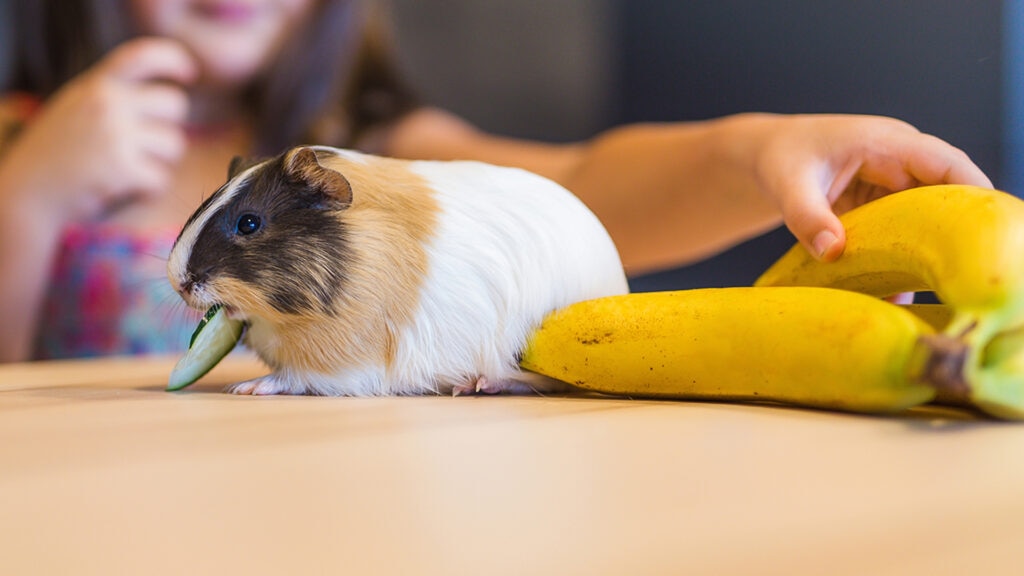
Photo by FluxFactory/iStock/Getty Images Plus via Getty Images
If you have a guinea pig who comes running—or starts wheeking at full volume—the second they hear you peel a banana, you may be tempted to share. But can guinea pigs eat bananas?
Yes, they can, but don’t let those enthusiastic squeaks talk you into handing over a whole chunk. Banana has quite a bit of natural sugar, so a tiny bite every once in a while is plenty.
Your guinea pig should still fill up on grass hay, along with guinea pig pellets, fresh water, and vitamin C-rich veggies. Think of banana as a little bonus, not something they need in their everyday diet.
Here’s what to know about feeding banana safely.
Always check with your veterinarian before introducing any new food into your guinea pig’s diet.
Key Takeaways
- Adult guinea pigs can eat banana, but keep portions tiny and save it for an occasional treat.
- Banana contains quite a bit of natural sugar, so too much can upset your guinea pig’s stomach and add unnecessary calories that can contribute to weight gain.
- Fresh, ripe banana is the best choice. Skip dried banana, banana chips, smoothies, baked goods, and other sweetened or prepared versions.
- Don’t feed banana to baby guinea pigs unless your veterinarian recommends otherwise.
Can Guinea Pigs Have Bananas?
Yes, guinea pigs can have fresh, ripe banana. Just remember that “a little” really does mean a little here—a guinea pig-size serving is much smaller than the chunk a person might normally break off.
Stick with plain banana rather than foods made with banana. Banana bread, muffins, smoothies, dried banana, banana chips, and yogurt-covered banana all contain extra ingredients—or a much more concentrated dose of sugar—that guinea pigs don’t need.
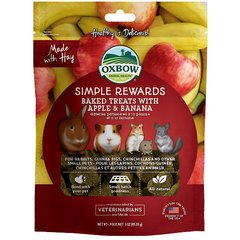
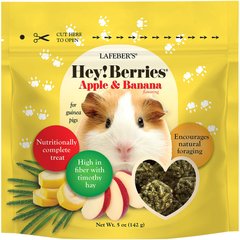
The simplest option is to peel a fresh banana and cut off one tiny piece. If you want something made specifically for guinea pigs instead, these banana-flavored treats are worth keeping on hand:
Recommended Products
Are Bananas Good for Guinea Pigs?
Bananas have plenty of nutrients, but that doesn’t automatically make them a health food for guinea pigs. The serving is so small that it’s best to think of banana as a fun treat, rather than an important source of nutrition.
Still, a tiny bite has a few things going for it:
- It makes treat time a little more exciting. Banana’s sweet smell, flavor, and soft texture are a big change from the hay and leafy greens guinea pigs spend most of their time munching. Offering different foods can also provide enrichment by encouraging natural behaviors like exploring and foraging.
- It provides a little fiber. Bananas contain some fiber, although nowhere near enough to compete with hay. Unlimited grass hay should still do most of the work when it comes to keeping the digestive system moving normally.
- It contains potassium. Bananas provide potassium, a mineral that helps with normal muscle, nerve, and heart function. But with such a small serving, banana shouldn’t be counted on as a major source.
One nutrient guinea pigs do need to get from their diet is vitamin C. Unlike rabbits, guinea pigs can’t make their own, so vitamin C-rich vegetables and fortified guinea pig pellets are much more important nutritionally than a bite of banana.
Are Bananas Bad for Guinea Pigs?
Bananas aren’t necessarily bad for guinea pigs, but it’s easy to overdo them. A tiny bite is one thing; letting those excited squeaks talk you into a bigger serving every day can mean a lot more sugar than a guinea pig needs.
The biggest concerns with banana are:
- Too much sugar: Banana contains quite a bit of natural sugar. Large or frequent servings can throw off the balance of bacteria in the gut, potentially leading to soft stool, diarrhea, gas, bloating, or a drop in appetite.
- Less appetite for hay: A guinea pig who fills up on fruit may not eat as much hay. That’s a problem because hay provides the fiber needed to keep the digestive tract moving and also helps wear down their teeth, which never stop growing.
- Too many calories: Banana is more calorie-dense than the leafy greens guinea pigs typically eat. Regularly handing out oversized portions can contribute to unwanted weight gain over time.
- Prepared versions: Banana bread, muffins, smoothies, banana chips, and other prepared foods may contain added sugar, oil, dairy, or other ingredients that can be bad for guinea pigs. Fresh, plain banana is the better choice.
How Much Banana Can My Guinea Pig Eat?
For most adult guinea pigs, a thin slice about the size of a dime once every two to four weeks is plenty.
If your guinea pig has never tried banana before, start with an even smaller nibble, then keep an eye on your guinea pig’s appetite and poop over the next day. If everything looks normal, you can work up to that dime-size piece next time.
How To Safely Feed Bananas to Guinea Pigs
There’s not much prep involved with banana, which is part of what makes it such an easy treat to share. Follow these simple steps:
- Choose a fresh, ripe banana. A few brown spots are fine, but skip fruit that’s moldy, fermented, slimy, or smells off.
- Peel it.
- Cut off one tiny piece.
- Serve it plain. Don’t add toppings, yogurt, nut butter, or anything else.
- Remove uneaten banana within a few hours. Banana gets mushy quickly, so remove anything your guinea pig leaves behind before it starts to spoil.
- Keep fresh hay and water available at all times.
My Guinea Pig Ate Too Much Banana—What Do I Do?
If your guinea pig helped themselves to more banana than planned, take away the rest and skip any other fruit or sugary treats for now. Make sure plenty of fresh hay and water are available, and pay attention to whether they’re eating, pooping, and acting like their usual self.
Call your veterinarian if you notice:
- Soft stool or diarrhea
- Gas or a bloated belly
- Reduced appetite
- Fewer droppings
- Unusual tiredness or hiding
- Signs of pain, such as hunching or teeth grinding
If your guinea pig stops eating or pooping altogether, don’t wait to see if things improve on their own. Guinea pigs need food moving through their digestive system continuously, and a complete loss of appetite or droppings can signal a serious problem that needs prompt veterinary care.
If your guinea pig ate banana paired with potentially harmful ingredients, you can contact your veterinarian or the Pet Poison Helpline (855-764-7661) for guidance.
What Other Fruits Can Guinea Pigs Eat?
Banana isn’t the only fruit that can get the wheeks going. If your guinea pig enjoys an occasional sweet bite, there are several other fruits that can be offered in small amounts, including:
- Apples
- Blueberries
- Cantaloupe
- Grapes
- Kiwi
- Mango
- Peaches
- Pears
- Pineapple
- Strawberries
- Watermelon
Even if your guinea pig has a serious sweet tooth, fruit shouldn’t be an everyday snack. Save it for an occasional treat and fill most of the fresh-food bowl with hay and veggies—especially vitamin C-rich ones.
Recommended Products


FAQs About Bananas for Guinea Pigs
Can baby guinea pigs eat bananas?
It’s best to wait on banana for baby guinea pigs. Their growing bodies need hay, age-appropriate pellets, and vitamin C-rich veggies much more than they need sugary fruit. Ask your veterinarian when it’s OK to start giving a baby guinea pig fruit.
Can guinea pigs eat banana peels?
Guinea pigs should skip banana peels. The peels aren’t toxic, but they’re tough and fibrous, can be harder to chew, and may have pesticide residue on the outside. It’s simpler to peel the banana and offer a tiny piece of the soft fruit instead.
Can guinea pigs eat dried bananas?
Skip dried bananas. Removing the water concentrates the fruit’s sugar, which makes it even easier to give your guinea pig more sugar than intended.
Can guinea pigs eat banana chips?
Banana chips are best left to people. Many are made with added sugar or oil, and even unsweetened versions pack more sugar into a small serving than fresh banana. Stick with a tiny piece of the fresh fruit instead.
Attributions
This article was created with assistance from AI tools. The content has been reviewed for accuracy and edited by a human.