Can Guinea Pigs Have Cucumbers?


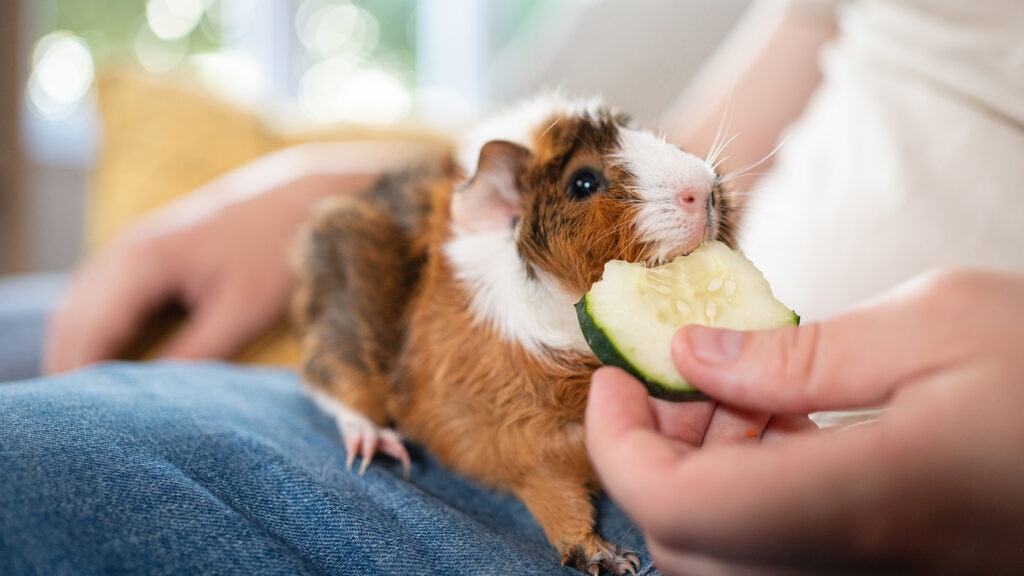
Photo by FluxFactory/E+ via Getty Images
Guinea pigs tend to get pretty excited about fresh veggies, so you may be tempted to pass over a slice of crisp, cool cucumber. But can guinea pigs have cucumbers?
Yes, guinea pigs can eat cucumber. It’s a refreshing, water-rich veggie that can add some variety to their usual lineup, but it’s more of a supporting player than a nutritional standout. Cucumber should complement—not crowd out—hay, vitamin C-rich vegetables, measured guinea pig pellets, and fresh water.
Here’s how cucumber can fit into the rotation without taking over the bowl.
Always check with your veterinarian before introducing any new food into your guinea pig’s diet.
Key Takeaways
- Yes, guinea pigs can eat fresh, plain cucumber as part of a balanced diet.
- Cucumber is mostly water and relatively low in vitamin C, so think of it as a refreshing extra rather than a nutritional heavy hitter.
- Stick with raw cucumber and skip pickles, salads, dips, and other preparations containing cucumber that may have added salt, oil, seasonings, garlic, or onion.
Can Guinea Pigs Eat Cucumber?
Yes, guinea pigs can eat fresh, raw cucumber, including the skin and soft seeds. It can be an regular addition to their usual fresh veggies, though it shouldn’t replace more nutrient-dense options.
Keep it simple: Plain cucumber gets the green light, while pickles, relish, cucumber salads, dips, and anything prepared with salt, oil, dressing, garlic, onion, or other seasonings should stay off your guinea pig’s plate.
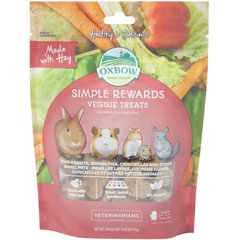
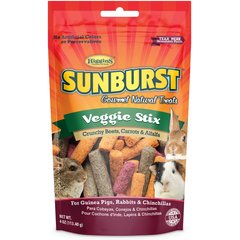
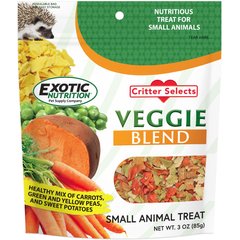
If you’d rather serve something made specifically for guinea pigs, you can try one of these veggie-rich guinea pig treats instead:
Recommended Products
Are Cucumbers Good for Guinea Pigs?
Cucumber has a few perks for guinea pigs, but it’s not exactly the MVP of the veggie drawer. Its biggest claim to fame is its high water content, so it works best alongside more nutrient-dense vegetables.
The main benefits are:
- Plenty of water: Cucumber is about 95% water, making it an easy way to add a little extra moisture to your guinea pig’s fresh foods. It doesn’t replace their usual supply of clean drinking water, though.
- A lower-sugar snack: Cucumber contains much less sugar than fruits commonly offered as treats, making it a good option when you want to change things up without overdoing the sweet stuff.
- Something different to munch: Its cool, crisp texture can add some sensory variety to the fresh foods your guinea pig eats. This type of food-based enrichment can help keep guinea pigs engaged and encourage positive behaviors.
Where cucumber comes up short is vitamin C—and that’s one nutrient guinea pigs can’t afford to skimp on. Because their bodies can’t make vitamin C, guinea pigs need to get it from their diet every day. So let cucumber bring the crunch, while vitamin C-rich veggies like bell peppers, broccoli, and leafy greens handle more of the nutritional heavy lifting.
Are Cucumbers Bad for Guinea Pigs?
Cucumber itself isn’t bad for guinea pigs, but it’s definitely possible to have too much of a good thing. Reasons to keep portions on the smaller side include:
- Tummy trouble: A big helping of cucumber—especially if your guinea pig isn’t used to eating it—may lead to soft stool or other digestive upset. Introduce it gradually and scale back if you notice any changes in their poop.
- Less room for hay: If your guinea pig fills up on cucumber and other extras, they may eat less hay. That’s a problem because hay should make up the bulk of their diet—it helps keep their gut bacteria balanced and digestive system healthy, and allows them to grind down their constantly growing teeth.
- Human add-ons: Once cucumber becomes a pickle, salad, or dressed-up side dish, it’s no longer guinea pig fare. Stick with the plain stuff and skip preparations containing salt, oil, dressings, garlic, onion, or other seasonings.
How Much Cucumber Can My Guinea Pig Eat?
One or two thin slices of cucumber mixed with other fresh produce three or four times a week is a good goal.
If it’s your guinea pig’s first time trying cucumber, start with an even smaller amount. Introduce it gradually and keep an eye on their poop and appetite afterward—two good clues about how their digestive system is handling the new addition.
How To Safely Feed Cucumber to Guinea Pigs
Cucumber doesn’t require much prep before it’s guinea pig-ready. A quick wash and a little chopping will do the trick:
- Start with fresh cucumber. Skip anything pickled, seasoned, dressed, or otherwise prepared for humans.
- Give it a good wash to remove any dirt and other residue from the skin.
- Cut it down to size. Slice the cucumber into thin rounds or small, easy-to-eat pieces.
- Serve it raw and plain.
- Clear away leftovers within a few hours so the cucumber doesn’t spoil.
- Rotate cucumber with other safe vegetables rather than serving the same produce every time.
My Guinea Pig Ate Too Much Cucumber—What Do I Do?
If you gave your guinea pig a bit too much at snack time, remove any leftovers and watch for changes in their appetite, poop, or behavior. A few extra bites may not cause any trouble, but eating a large amount at once could lead to digestive upset.
Call your veterinarian if you notice:
- Soft stool or diarrhea
- Gas or bloating
- Reduced appetite
- Fewer or smaller droppings
- Low energy
- Signs of belly pain, such as hunching or reluctance to move
If your guinea pig stops eating or pooping altogether, don’t wait to see if things improve. Contact your veterinarian right away, as these can be signs of GI stasis, a potentially life-threatening condition in guinea pigs.
If your guinea pig ate cucumber prepared with a potentially harmful ingredient such as garlic or onion and you can’t reach your veterinarian, call the Pet Poison Helpline (855-764-7661) for guidance.
What Other Vegetables Can Guinea Pigs Eat?
Cucumber doesn’t have to be the only fresh veggie getting some attention. Other guinea pig-safe options include:
- Bell peppers
- Celery
- Green beans
- Green leaf lettuce
- Parsley
- Romaine lettuce
- Zucchini
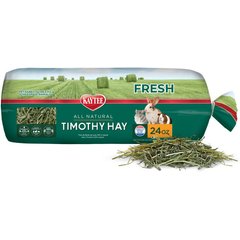
Rotate guinea pig-safe vegetables throughout the week to give your guinea pig different flavors, textures, and nutrients to explore. Just remember that fresh produce is only one piece of the menu: Hay should make up most of an adult guinea pig’s diet.
Recommended Products

FAQs About Cucumber for Guinea Pigs
Can baby guinea pigs eat cucumber?
Once a young guinea pig is around 12 weeks old, you can introduce a small amount of cucumber along with other appropriate fresh vegetables. Start with a tiny piece and add new foods gradually so you can watch for digestive changes. Because growing guinea pigs have different nutritional needs than adults, ask your veterinarian about the best diet for your baby guinea pig.
Can guinea pigs eat cucumber skin?
Yes, guinea pigs can eat cucumber skin as long as you wash the veggie thoroughly first. Simply slice the cucumber into manageable pieces and serve it as is.
Can guinea pigs eat cucumber seeds?
Yes, those soft seeds can stay put, too. Unlike the hard seeds or pits found in some other produce, cucumber seeds are soft and edible for guinea pigs.
Can guinea pigs eat pickles?
No, guinea pigs shouldn’t eat pickles. They’re typically loaded with salt and vinegar and may contain seasonings such as garlic or onion, which can be toxic to guinea pigs. Fresh, plain cucumber is the better choice.
Attributions
This article was created with assistance from AI tools. The content has been reviewed for accuracy and edited by a human.