Can Quaker Parrots Talk?


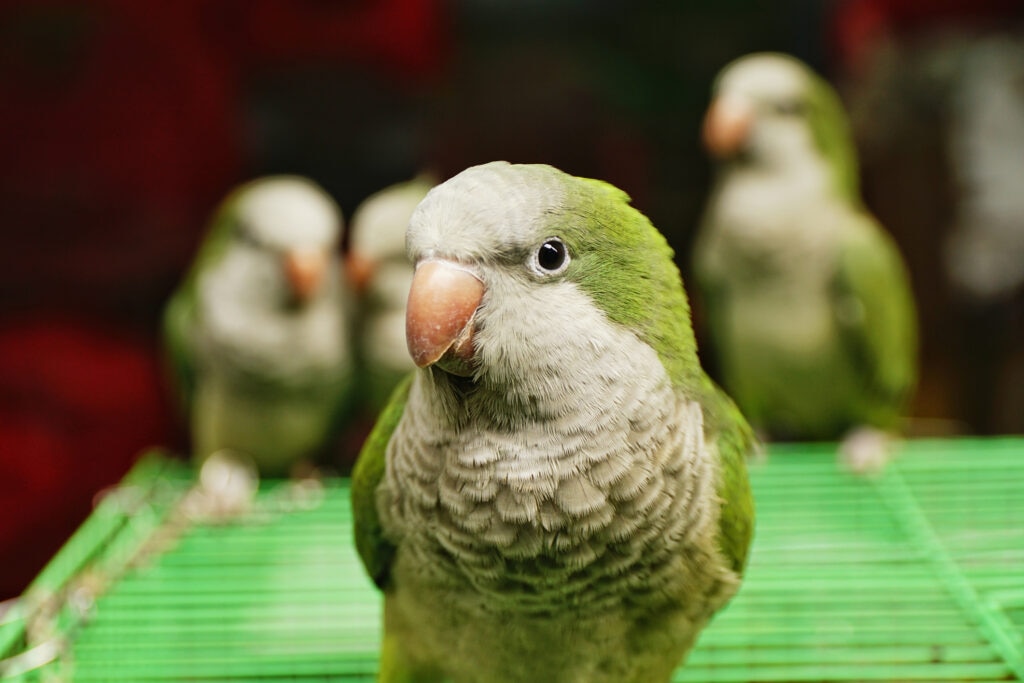
Photo by Yoyochow23/iStock/Getty Images Plus
Talking is just one piece of a Quaker parrot’s communication toolkit. Body language, calls, and everyday behavior can tell you plenty, too.
Yes, Quaker parrots can talk—or, more precisely, they can learn to imitate human speech. Also called monk parakeets, Quaker parrots are vocal learners. They can learn and modify sounds, including those they hear from the people and environment around them.
Hand-reared monk parakeets are generally fairly good talkers, but that does not mean each one will become a chatterbox. While one bird may pick up recognizable words and phrases, another may prefer whistles, calls, or other parrot sounds. A bird who never talks is not necessarily doing anything wrong.
Key Takeaways
- Quaker parrots can learn to imitate human words and other sounds, but talking ability varies from bird to bird.
- Some Quaker parrots may mimic recognizable words or phrases, while others mostly chatter, call, whistle, or mimic household sounds.
- Positive, consistent interaction can encourage vocal learning, but a bird should never be punished or pressured for not talking.
- A sudden change in your bird’s usual vocal behavior can be a reason to contact an avian veterinarian.
How Well Can Quaker Parrots Talk?
Quaker parrots have the physical and learning abilities needed to imitate speech-like sounds. In homes, some birds learn words, short phrases, whistles, and noises. Their clarity and vocabulary can vary widely, and there is no single word count that applies to every Quaker parrot.
It’s also important not to rank an individual bird by how many words they can say. Speech mimicry is a behavior, not a test of intelligence, health, or the strength of your bond. Some birds simply use other sounds more often.
How Do Quaker Parrots Make Speech-Like Sounds?
Birds do not have vocal cords like humans. Instead, they create sound with an organ called the syrinx, which sits where the windpipe branches toward the lungs. Parrots shape a sound with movements of the mouth and vocal tract.
Tongue height, beak opening, and changes in the length of the trachea all help modify the sound. Changing tongue position can also alter sound frequencies.
Why Do Quaker Parrots Mimic Human Speech?
Parrots are social vocal learners. In the wild, vocalizations help birds interact with other members of their group. In a home, human voices can become a major part of a Quaker parrot’s everyday soundscape.
Frequently heard words, whistles, door sounds, ringtones, and other noises are potential material for imitation. A Quaker parrot may repeat sounds and words they are often exposed to, but this does not mean the bird understands a word the same way a person does.
When Do Quaker Parrots Start Talking?
There is no scientifically established age when every Quaker parrot should begin talking. Some birds may experiment with speech-like sounds while young, while others develop recognizable words later. Some may never clearly imitate human speech at all.
Instead of watching the calendar, get to know your bird’s normal communication style. Young birds may practice a mix of chatter, calls, whistles, and indistinct sounds before you recognize anything that resembles a word.
How To Teach a Quaker Parrot To Talk
If your Quaker parrot seems interested in copying sounds, you can encourage their curiosity with short, positive interactions. Ensure training is always fun and voluntary. The goal is enrichment and communication rather than making your bird perform on cue.
Use Short, Consistent Words
Start with one or two simple words or brief phrases. Greetings such as “hello” can work well because you can use them naturally and often. Consistency matters more than repeating a long list of words.
Pair Words With Everyday Context
Say the same word during the same routine. For example, use a greeting when you enter the room or a simple phrase when you uncover the cage in the morning. This gives the sound a predictable context instead of turning practice into random repetition.
Reward Interest and Attempts
Use positive reinforcement when your bird participates. Examples include calm praise, attention, or another reward your bird enjoys, like a treat or toy.
Recommended Products
Do not yell, punish, or use negative training methods if your bird does not repeat a sound.
Keep Practice Short
A few upbeat repetitions can be plenty. If your Quaker parrot turns away, moves off, starts focusing on something else, or otherwise disengages, end the interaction and try another time. Everyday conversation can provide useful exposure without turning your bird’s day into one long speech lesson.
Respond to More Than Words
Don’t make human speech the only behavior that earns your attention. Respond to appropriate natural calls, play, body language, and other forms of communication too. Your Quaker parrot doesn’t need a human vocabulary to have meaningful interactions with you.
What Words Are Easiest for Quaker Parrots To Learn?
A practical place to start is with sounds you can repeat naturally and consistently, such as:
- Short greetings used every day
- A bird’s name, if it is easy to say consistently
- Brief phrases connected with a familiar routine
- Simple whistles or household sounds, especially if your bird shows more interest in those than in words
Choose words you will not mind hearing again and again. Parrots can be excellent students of repetition, including the annoying kind.
Why Isn’t My Quaker Parrot Talking?
Not every Quaker parrot will imitate human speech, and a bird who does not talk is not automatically unhealthy or unhappy. Individual preference and learning history matter.
A Quaker parrot may use fewer human words because of factors such as:
- Individual variation in vocal behavior
- Previous social and training experiences
- The types of sounds heard most often in the environment
- A preference for natural calls, whistles, or other noises
- Limited interest in a particular training session or sound
What matters most is any change in your bird’s usual behavior. If a normally vocal Quaker parrot suddenly becomes much quieter, contact an avian veterinarian, especially if there are also changes in appetite, droppings, breathing, energy, posture, or other behavior. Birds can hide signs of illness, so an abrupt change is worth taking seriously.
Are Quaker Parrots Loud?
They can be. Talking is only one piece of their vocal repertoire, so pet parents should expect natural parrot calls and chatter, whether or not their bird learns words.
Monk parakeets are naturally vocal, so if noise level is an important factor for your household, spend time learning about normal Quaker parrot vocal behavior before bringing one home.
Do Quaker Parrots Understand What They Say?
Hearing a Quaker parrot repeat a word does not by itself prove that the bird understands it the way a human does. Speech imitation and language comprehension are different abilities.
A companion bird may learn that a particular sound is associated with a person, routine, object, or outcome. However, research specifically showing human-like word comprehension in Quaker parrots is limited. It’s safest to describe their behavior as vocal learning and speech mimicry rather than assuming every repeated phrase carries human-like meaning.
Quaker Parrot Talking vs. Normal Vocalizations
A talking Quaker parrot is still a parrot first. Their normal communication may include many sounds besides recognizable words, like:
- Chatter
- Contact calls
- Alarm or excitement calls
- Whistles
- Mimicked household sounds
- Speech-like words or phrases
Body language adds another layer. Watch posture, feather position, movement, and the situation around a sound to understand your individual bird more fully. If you are unsure whether a vocal or behavior change is normal, an avian veterinarian or qualified avian behavior professional can help.
Frequently Asked Questions About Quaker Parrots Talking
Can Quaker parrots really talk?
Yes. Quaker parrots can learn to imitate human speech, and hand-reared birds are usually fairly good talkers. Still, talking ability varies widely, so no individual bird is guaranteed to speak.
Are Quaker parrots good talkers?
Some Quaker parrots can become clear and enthusiastic mimics. Others may use few recognizable words or none at all. Speech is only one part of normal parrot communication.
How many words can a Quaker parrot learn?
There is no well-established scientific vocabulary limit that applies to Quaker parrots as a species. Claims that every Quaker parrot can learn a specific number of words should be treated cautiously because individual ability and experience vary.
At what age do Quaker parrots start talking?
There is no single age when all Quaker parrots begin talking. Some may imitate speech-like sounds when young, some might start later, and others may never use clear human words.
Who talks more — male or female Quaker parrots?
There is not enough reliable evidence to say that one sex consistently talks more or better than the other. For an individual bird, training history, social environment, and personal preference are more useful considerations.
Can you teach an older Quaker parrot to talk?
Parrots are capable vocal learners, and monk parakeets show flexible vocal behavior. An older bird may still learn new sounds, but there is no guarantee that a particular bird will choose to imitate human speech.
Why did my Quaker parrot suddenly stop talking?
A sudden decrease in a normally vocal bird’s sounds can occur for multiple reasons, and health problems need to be considered. If the change is new or comes with changes in appetite, breathing, droppings, activity, posture, or other behavior, contact an avian veterinarian promptly.
Attributions
This article was created with assistance from AI tools. The content has been reviewed for accuracy and edited by a human.