Parrot Cage Size Guide for Different Species


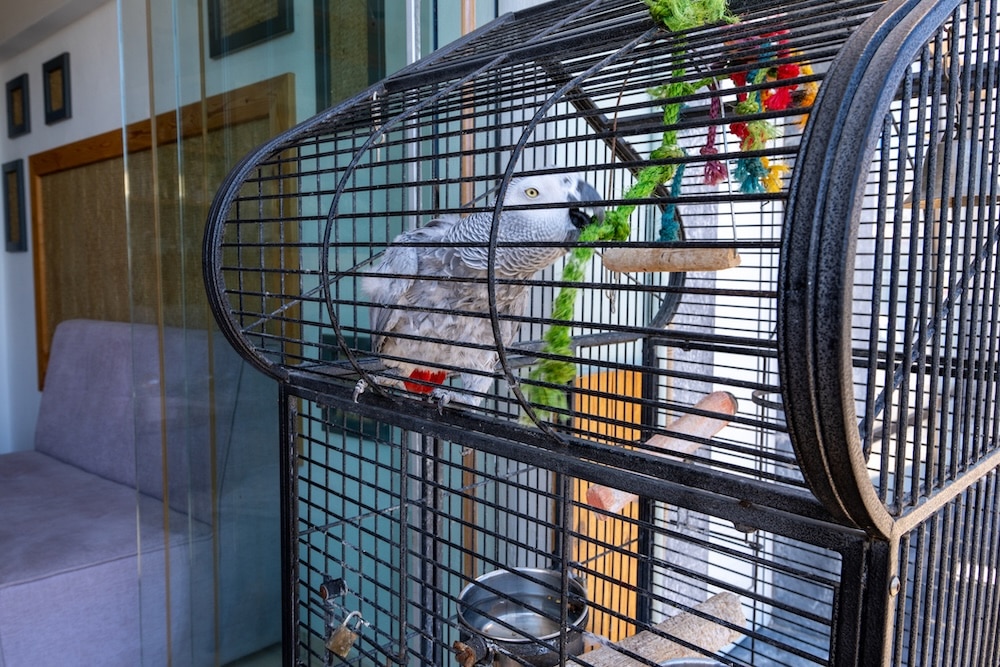
Photo by SkyBengal/iStock/Getty Images Plus
A parrot cage is more than a place to sleep, and there’s no one-size-fits-all cage for parrots—a budgie needs very different dimensions and bar spacing than a macaw. The numbers below are minimum starting points for your feathered friend’s enclosure, but bigger is generally better when the cage is safe and appropriate for your bird.
Key Takeaways
- Choose the largest practical cage for your parrot rather than treating a minimum size as the ideal.
- Your parrot should be able to fully stretch their wings and move around without hitting cage walls, toys, or perches.
- Safe bar spacing is just as important as cage size because gaps that are too wide or too narrow can create an escape or entrapment risk.
- Ask an avian veterinarian for personalized guidance, especially for multiple birds or birds with mobility concerns.
Parrot Cage Size Chart by Species
Use these minimum dimensions as a starting point when shopping. Measure the cage itself, not the overall height including a stand or play top.
| Bird Species | Minimum Cage Size (Length x Width x Height) | Bar Spacing |
|---|---|---|
| Budgie | 20 x 20 x 30 inches | 0.5 inch |
| Cockatiel | 20 x 20 x 30 inches | 0.5 inch |
| Lovebird | 20 x 20 x 30 inches | 0.5 inch |
| Parrotlet | 20 x 20 x 30 inches | 0.5 inch |
| Conure | 36 x 24 x 48 inches | 0.75 inch |
| Poicephalus parrot | 36 x 24 x 48 inches | 0.75 inch |
| Caique | 36 x 24 x 48 inches | 0.75 inch |
| Miniature macaw | 36 x 24 x 48 inches | 0.75 inch |
| African grey | 40 x 30 x 60 inches | 0.75 inch |
| Amazon parrot | 40 x 30 x 60 inches | 0.75 inch |
| Small cockatoo | 40 x 30 x 60 inches | 0.75 inch |
| Macaw | 48 x 36 x 66 inches | 1.5 inches |
| Large cockatoo | 48 x 36 x 66 inches | 1.5 inches |
These are minimum recommendations, not a reason to stop shopping when you find the first cage that checks the box. Always try to give your birds as much space as possible.
Why Parrot Cage Size Matters
Your parrot needs enough room to fully extend their wings and move without bumping into the bars. A cage also has to be roomy after you add perches, food and water bowls, and enrichment toys.
Remember, size is only one part of the equation. The materials, bars, doors, and overall setup must also be safe for your bird.
Small Parrot Cage Sizes
Small parrots need enough room to move comfortably and use several perches and toys. A minimum cage size of 20 x 20 x 30 inches is needed for budgies, lovebirds, and parrotlets, with 1/2-inch bar spacing.
Recommended Product
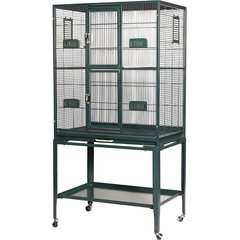
A small bird can make surprisingly good use of extra space. Going larger will give you more room to add enrichment without creating a cluttered setup, and can give your bird the ability to fly short distances inside the cage.
Medium Parrot Cage Sizes
Medium-sized parrots such as conures, caiques, and Poicephalus parrots, including Senegals, need a noticeable step up in space. At least 36 x 24 x 48 inches is recommended for this group, with 3/4-inch bar spacing.
Recommended Product
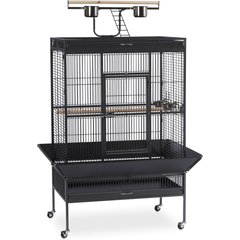
Keep your individual bird in mind, too. Birds within the same general group can vary in body size and tail length, so make sure your parrot has enough room to stretch and move after the cage is furnished.
Large and Extra-Large Parrot Cage Sizes
For African greys, Amazon parrots, and small cockatoos, try to find an enclosure that’s at least 40 x 30 x 60 inches, with 3/4-inch bar spacing.
Recommended Product
For macaws and large cockatoos, the minimum increases to 48 x 36 x 66 inches, with 1 1/2-inch bar spacing.
Recommended Product
Large parrots also need sturdy cage construction and enough interior room for larger perches, toys, and food bowls. Avoid turning every open spot into toy storage. Enrichment is important, but so is space to move.
How To Tell Whether a Parrot Cage Is Big Enough
Numbers on a product page are helpful, but the finished cage tells the real story. A cage that technically meets a minimum measurement can still feel cramped once it’s filled with accessories, so look at the usable space your bird will actually have.
Once the cage is set up, check that your parrot can:
- Fully extend both wings without touching the bars or cage contents
- Move comfortably between perches
- Sit without their tail rubbing against the cage
- Reach food and water easily
- Use toys without losing movement space
Also remember that the phrase “parrot cage” covers a lot of ground. Parrots range from tiny parrotlets to huge macaws, so a cage marketed for parrots may not be suitable for every species.
Why Parrot Cage Bar Spacing Matters
A bigger cage is not safer if the bar spacing is wrong. Proper spacing prevents a bird from fitting their head between the cage bars, and allows a bird to grip the bars comfortably for climbing.
For example, a roomy macaw cage is not appropriate for a budgie, as the larger gaps between the bars are unsafe for a much smaller bird. So always check both the cage dimensions and bar spacing before buying.
Is a Wider or Taller Parrot Cage Better?
Usable space matters more than height or width alone. Width gives birds room to stretch, fly, and hop between perches, but long-tailed parrots also need enough height and depth to keep their feathers clear of the walls.
Look at all three interior dimensions (length, width, height) rather than being dazzled by a towering cage. A tall, narrow cage can still leave a parrot short on practical movement space.
What Size Cage Do Two Parrots Need?
Two parrots need more space than one, and compatibility matters as much as dimensions. Each bird should have room to move away from the other whenever they want, and should have easy access to their resources (food, water, toys) without feeling crowded.
Do not assume two parrots should share a cage simply because they are the same species. Individual birds may not be comfortable living together, and introductions should be handled carefully.
An avian veterinarian can help you decide whether cage sharing is appropriate, and can recommend a setup based on the birds’ species, behaviors, and individual needs.
FAQs About Parrot Cage Size
How big should a parrot cage be?
At minimum, a cage should let your parrot fully extend their wings without touching the sides.
Is a bigger cage always better for a parrot?
More usable space is generally beneficial, but the cage must still have safe bar spacing, secure construction, and an appropriate setup. Adequate size does not cancel out a safety problem.
What size cage does a budgie need?
Budgies need a minimum of 20 x 20 x 30 inches with 1/2-inch bar spacing. A larger cage can provide more room for movement and enrichment.
What size cage does an African grey need?
African greys need at least 40 x 30 x 60 inches with 3/4-inch bar spacing. Your bird should still have plenty of open space after perches and toys are added.
What size cage does a macaw need?
Macaws need 48 x 36 x 66 inches at a minimum, with 1 1/2-inch bar spacing. Because different types of macaws vary in size, talk with an avian veterinarian if you are unsure about the type of cage that’s appropriate for your macaw species.
Attributions
This article was created with assistance from AI tools. The content has been reviewed for accuracy and edited by a human.