Can Dogs Eat Chocolate?


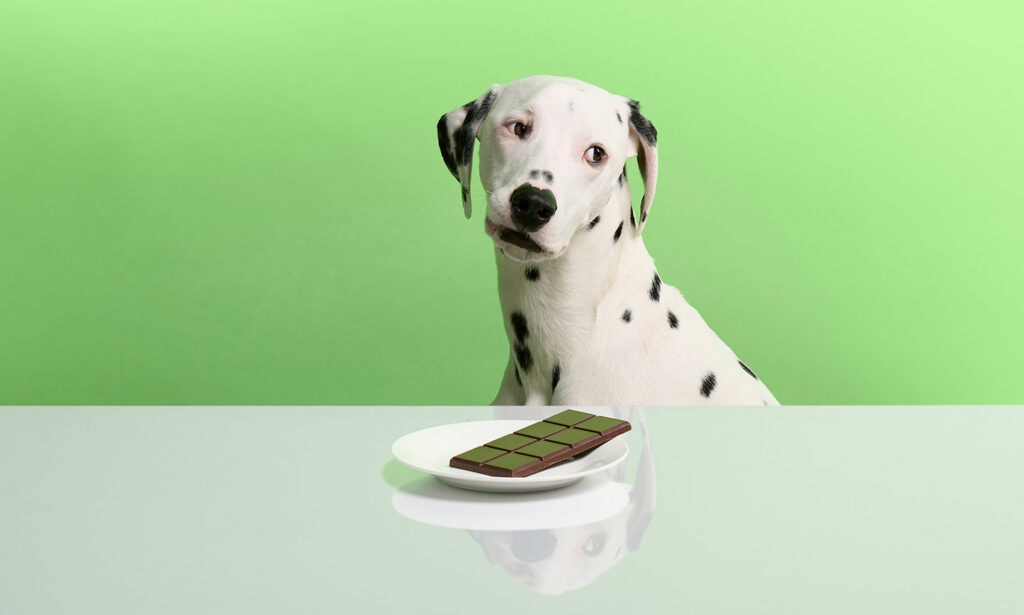
Photo by Chewy
From individually wrapped chocolates and chocolate bars to ice cream and lava cakes, there are countless options to satisfy our sweet tooth. But can dogs eat chocolate too?
Nope, the answer is never. Dogs and chocolate don’t mix.
Key Takeaways
- Chocolate is toxic to dogs, and no type—including dark, milk, or white chocolate—is considered safe.
- Darker chocolate contains more theobromine and caffeine, making even small amounts especially dangerous.
- Signs of chocolate poisoning include vomiting, diarrhea, restlessness, a fast heart rate, and, in severe cases, seizures.
- If your dog eats any amount of chocolate, contact your veterinarian or Pet Poison Helpline (855-764-7661) right away for guidance.

Can Dogs Eat Chocolate?
No, dogs can’t eat any kind of chocolate—whether it’s dark chocolate, milk chocolate, white chocolate, ruby chocolate, or any other variation.
As tasty as this treat is to people, chocolate is toxic to dogs and can cause mild- to life-threatening symptoms if ingested.
Why Is Chocolate Bad for Dogs?
This cacao-crafted confection is known as one of the most toxic substances to our furry friends. But why can’t dogs eat chocolate?
Chocolate poses a threat to dogs for two main reasons: caffeine and theobromine, says Katie Osekavage, DVM, DACVECC, at the Veterinary Emergency Group (VEG) in Greenville, South Carolina.
Dogs’ bodies are unable to metabolize caffeine and theobromine as quickly as ours, which can lead to danger:
- Caffeine content: Chocolate contains caffeine, which can cause increased heart rate and serious health issues in dogs. Like coffee, caffeine in chocolate can cause rapid heartbeat, posing risks to your pet’s well-being.
- Theobromine toxicity: Another harmful component in chocolate is theobromine. Theobromine acts as a diuretic, similar to caffeine, and may cause dehydration in dogs and subsequent health complications.
How Much Chocolate Can a Dog Eat Before Getting Sick?
The amount of chocolate a dog can eat before getting sick depends on the type of chocolate, says Renee Schmid, DVM, DABT, DABVT, senior veterinary toxicologist and director of veterinary medicine at Pet Poison Helpline in Bloomington, Minnesota.
The darker and purer the chocolate, the higher the levels of theobromine and caffeine—thus, a smaller amount would be needed for a dog to get sick, she explains.
Examples of dark, pure chocolate include:
- Pure cacao
- Cocoa powder
- Baking chocolate
- Semi-sweet chocolate
Milk chocolate and white chocolate, on the other hand, have less theobromine and caffeine, so more would be needed for a dog to get sick, Dr. Schmid adds.
If a dog eats chocolate of any kind, they may show the following symptoms:
Other signs include:
- Agitation or restlessness
- High heart rate (tachycardia)
- Elevated blood pressure (hypertension)
“Remember, chocolate’s bitterness correlates with its toxicity level,” Dr. Osekavage says.
“While dark baking chocolate is highly toxic, even milder forms, like white chocolate, can pose risks,” she adds. “It’s crucial to avoid feeding any type of chocolate to dogs, as all varieties can harm their health.”
How Much Chocolate Is Considered Toxic for Dogs?
How much chocolate is considered toxic for dogs also depends on their size.
According to the Merck Veterinary Manual, 1 ounce of milk chocolate per pound of a dog’s body weight can be a potentially lethal dose. And though a small amount of chocolate may not present severe health risks to a big dog, like a Doberman Pinscher for instance, it can be extremely dangerous to a small dog, like a Pomeranian.
However, chocolate is toxic to all dogs, and symptoms can vary from one dog to another.
No matter your pooch’s size, the best course of action is to stash any chocolate out of paw’s reach to keep them safe.
Signs of Chocolate Poisoning in Dogs
Chocolate toxicity occurs when a dog has consumed an excessive amount of methylxanthines. This can result from eating large quantities of chocolate or eating chocolate with a high concentration of theobromine and caffeine.
Signs of chocolate poisoning in dogs include:
- Vomiting and diarrhea
- Excessive thirst and urination
- Restlessness
- Elevated and/or abnormal heart rate
- Seizures
“Seizures indicate extreme chocolate toxicity and can be fatal without veterinary intervention,” Dr. Osekavage says.
A chocolate toxicity calculator can estimate a dog’s potential risk of poisoning. However, every instance of a dog eating chocolate should be treated as a potentially life-threatening emergency.
What If a Dog Eats Chocolate? Steps To Take
If you’ve discovered that your dog has eaten chocolate, call your vet or the Pet Poison Helpline (855-764-7661, a fee may apply) right away. This can determine whether the amount ingested is enough to be a problem or if they can be monitored at home.
“Ideally, having the [chocolate] packaging is very helpful to know what the product was and how much could have been eaten,” Dr. Schmid says.
Treating Chocolate Toxicity in Dogs
Treatment for chocolate toxicity in dogs depends on the symptoms, type of chocolate, and amount of chocolate ingested, Dr. Osekavage says.
Though there isn’t an antidote for chocolate poisoning, vets can treat the symptoms.
Treatment for chocolate toxicity may consist of the following:
- Inducing vomiting: If symptoms haven’t developed after a dog has ingested chocolate, vets may make a dog throw up to expel their stomach contents—aka the chocolate. Vets may also give activated charcoal to prevent further absorption through the GI tract.
- Administering intravenous (IV) fluids: IV fluids may be recommended to help a dog get the caffeine and theobromine out of their body by urinating. Because these compounds can be reabsorbed through the urinary bladder, frequent walking and urination can help limit this.
“If there are signs of agitation, sedatives may be used to help calm the dog down,” Dr. Osekavage adds. “Medication can also be given to control blood pressure, heart rate, or heart rhythm. In severe cases, anti-seizure medications may be needed as well.”
How To Prevent Your Dog From Eating Chocolate
Considering all types of chocolate are dangerous to dogs, it’s important to take precautions to reduce (and ideally, eliminate) the risk of them possibly ingesting it.
To keep your inquisitive canine safe from sniffing out and eating chocolate, Dr. Schmid shares these tips:
- Keep chocolate up high and out of reach. The best secured spots include behind a closed door, like a pantry or cabinet. You can also add cabinet locks to further pet-proof your home, or place chocolate in the fridge.
- Keep your dog behind a pet gate or in a dog crate when they’re unsupervised. If your pup is prone to getting into things they shouldn’t, keeping them away from the area you store your chocolate is a good second line of defense for when you’renot watching them.
- Keep any gifts wrapped that contain chocolate high out of reach. If someone gifted you chocolate, place it somewhere your dog can’t access, as our super smart pups can easily unwrap gifts.
- Remove chocolate from your luggage. Bring back some premium chocolate from your international trip? Remove it from your luggage, Dr. Schmid says, so your pup doesn’t try it before you do.
It’s also a good idea to not eat chocolate around dogs, especially because our personal four-legged vacuum cleaners might be quick to lick up whatever falls on the floor—or hastily take a bite, thinking our sweet treat is for them.
Teaching children that chocolate is a big no-no for our canine companions can be helpful as well.
Instead, give your pooch dog treats with carob, a cocoa alternative that’s safe for pups to enjoy. A couple favorites include Pooch Creamery Carob Ice Cream and Three Dog Bakery Lick’n Crunch Carob & Peanut Butter Sandwich Cookies.
You can also try our recipe for homemade carob-mint cookies to treat your pooch—perfect for any occasion, and baked only with the safest, wag-worthy ingredients. (And, of course, lots of love!)
FAQs About Dogs and Chocolate
Can chocolate kill dogs?
Yes, chocolate can kill dogs if eaten in large amounts. However, any amount of chocolate should be avoided.
Can dogs eat white chocolate? Can dogs eat milk chocolate?
No, dogs can’t eat white chocolate or milk chocolate. Although these kinds of chocolate are less of a concern compared with darker, purer forms of chocolate, they should still be avoided.
What should I do if my dog ate chocolate but is acting fine?
If you suspect your dog has eaten chocolate, always contact your veterinarian or an emergency vet for guidance. If you know your dog ate a lot of chocolate, heading to the emergency vet is the best idea.
What do I do if my dog ate a chocolate chip cookie?
If your dog is exhibiting symptoms after eating a chocolate chip cookie, call your vet or head to the emergency vet.
Should I make my dog throw up after eating chocolate?
No, inducing vomiting can be dangerous if done at home. Instead, seek emergency veterinary care.
Attributions