Abyssinian
Updated July 7, 2026
Abyssinian
Updated July 7, 2026
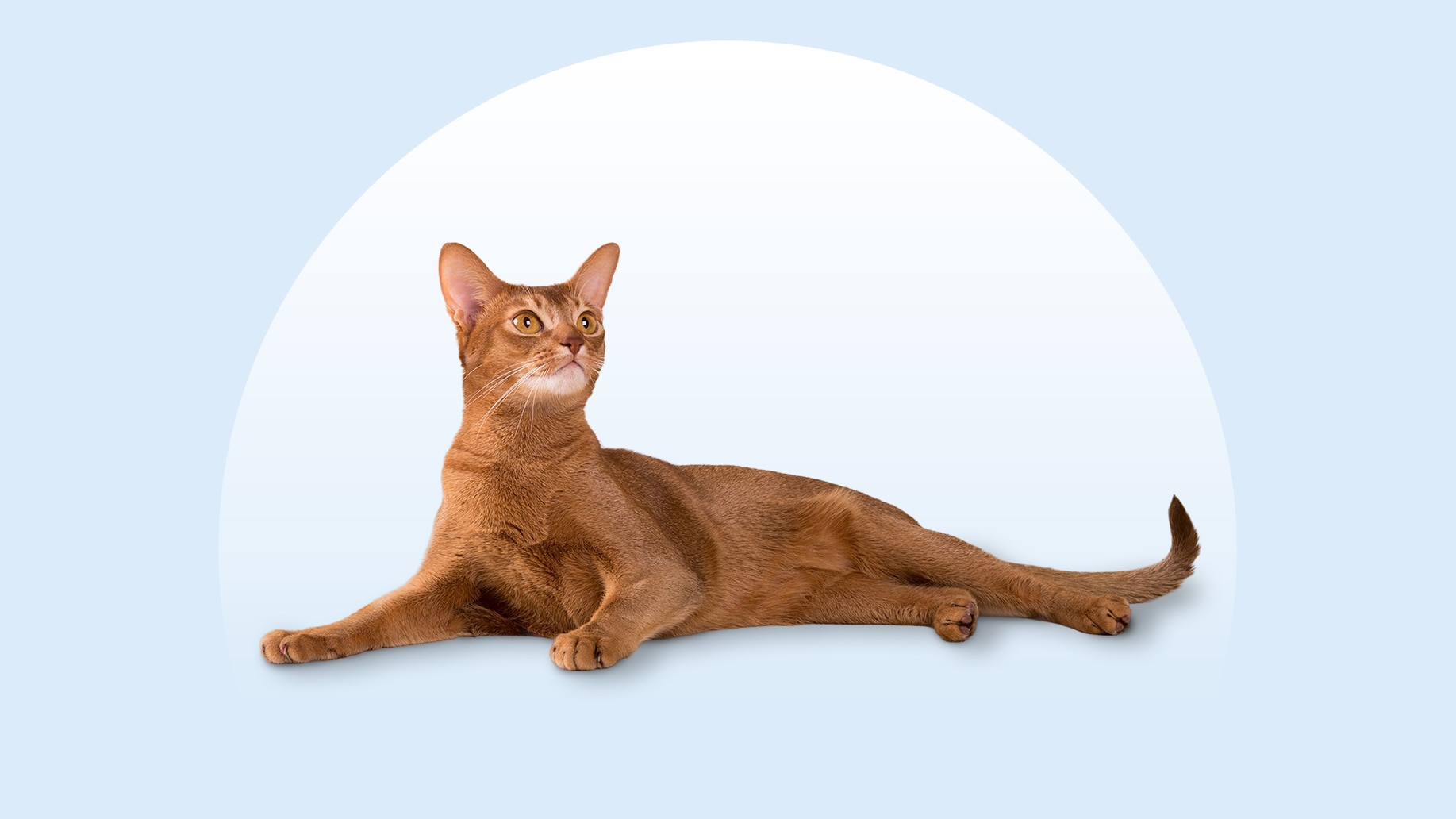
Abyssinians may look like mini mountain lions, but they’re actually social butterflies who want to be part of everything you do. Active, curious, and affectionate, they’re a natural fit for busy households with kids and other pets—as long as playtime is on the daily agenda.
Energetic, Playful, Affectionate
6–12 pounds
14–17 years or more
An Abyssinian cat—Aby for short—doesn’t do idle. Everyone is a potential playmate, and everything is a potential toy. They do best with pet parents who can keep up with their need for attention and enrichment (and who don’t mind a cougar lookalike trailing them from room to room).
Abys are happiest when they’re busy, whether that means claiming the highest perch in the house, playing fetch, or turning up wherever the action is. If you want a loyal, lively companion who keeps life interesting, an Aby is hard to beat.
Abyssinian Characteristics
Abyssinian Appearance
Abyssinian cats are medium-sized, lean, and muscular, with long legs that make them look like they’re standing on their tiptoes. Their claim to fame is their exotic ticked coat, which features alternating bands of light and dark colors and gives their fur a distinct glowing appearance.
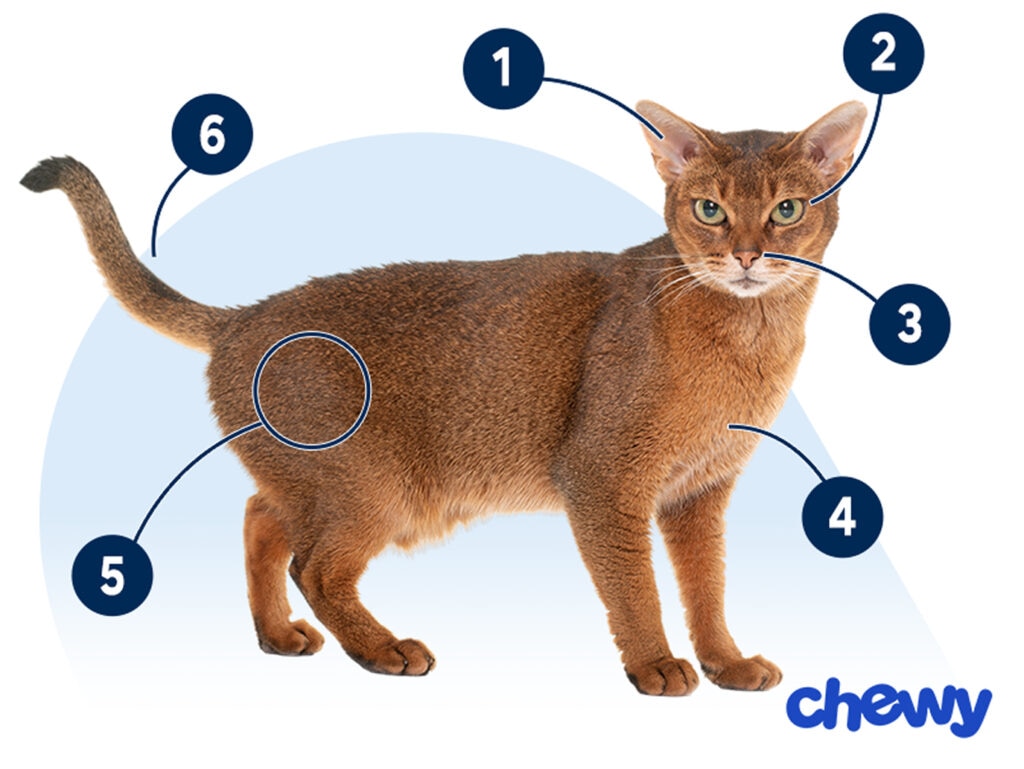
- Ears
Abyssinian cats have large, alert ears that are broad at the base and moderately pointed.
- Eyes
Large and almond-shaped, Abyssinian cats’ eyes are typically gold, amber, or green and are outlined by a fine dark line (like natural eyeliner).
- Nose
Their nose color complements their coat color. For example, a blue Abyssinian’s nose is typically pink with a blue outline, while a cinnamon Abyssinian’s nose is rosy pink.
- Coat Length
They have a short, silky, low-shed coat that is easy to maintain.
- Coat Color
These cats are known for their ticked (also called “agouti”) coat, where each hair is banded with several colors. The Cat Fanciers’ Association (CFA) recognizes four primary Abyssinian colors: ruddy, red (cinnamon), blue, and fawn.
- Tail
Their tail is thick at the base with a fine tip and features the same ticked pattern as their coat.
Abyssinian Temperament
Playing and people-watching are an Abyssinian’s favorite pastimes, which is why they thrive in active households, says Wailani Sung, DVM, DACVB, a board-certified veterinary behaviorist and owner of Bay Area Vet Behavior in Walnut Creek, California.
Their outgoing and inquisitive nature means they tend to get along with children and other pets when introductions are handled properly, says Megan Petroff, DVM, FFCP, director of the clinical behavioral medicine service at Gold Coast Center for Veterinary Care in Huntington, New York.
While Abys crave companionship and want to be near you 24/7, they aren’t lap cats. Once they have their fill of attention, they’ll “move on to the next activity on their list,” says Dr. Sung. Whether perched on top of your kitchen cabinets or chasing a toy across the room, these energetic and athletic cats are always up to something.
They’re also known to be both dog-like and clown-like. Many Abys come when called, love to play fetch, and can be leash-trained. They’ve also earned the nicknames “Aby-silly-ans” and “Aby-grabbys” for their entertaining antics and habit of swiping things that catch their eye.
When an Aby wants something, they’re not especially loud about it. You might hear a soft meow, trill, or chirp to get your attention.
Since these intelligent cats like to stay busy, they may exhibit some destructive behaviors if understimulated or left alone too long, such as scratching furniture and knocking items off counters.
Related Breeds


How to Care for a Abyssinian
That showstopping coat is pretty low-maintenance, says Dr. Petroff. But keeping your Aby’s mind busy is the bigger job. These clever, high-energy cats need daily enrichment to stay healthy and happy—and out of mischief.
Grooming
Diet
Exercise
Environment
Abyssinian Health
The Abyssinian cat lifespan is 14–17 years, though some cats may live into their 20s with proper care. For an Aby, that means the typical preventive care like vet checkups and a healthy diet, but mental stimulation and enrichment are also vital.
While generally healthy, Abys are predisposed to a few health conditions worth knowing about:
- Progressive retinal atrophy (PRA): A hereditary eye disease that degenerates the retina and causes blindness. There’s no treatment, but genetic testing is available.
- Renal amyloidosis: Abyssinian cats are prone to this disease, which causes a buildup of abnormal protein (amyloid) in the kidneys and can lead to kidney failure. Regular blood work and urinalysis are the best ways to catch it early.
- Pyruvate kinase (PK) deficiency: An inherited enzyme deficiency that makes red blood cells break down too soon, leading to anemia. Abys are genetically prone to it, so responsible breeders screen for PK before breeding.
- Luxating patella: Abys may be more prone to luxating patella than some other breeds, says Dr. Sung. This condition occurs when the kneecap slips out of place, leading to limping or an unusual gait. Obesity can worsen it, so keeping your Aby at a healthy weight is important.
Abyssinian History
It’s hard to separate fact from fiction when it comes to the Abyssinian’s origins. Some people believe they’re from Egypt because of their resemblance to the felines depicted in Ancient Egyptian murals and tombs.
Their name only adds to the misconception. Abyssinia is the historical name for Ethiopia, so it’s easy to assume this breed comes from Africa.
However, a genetic study found that Abyssinians carry DNA markers from both Southeast Asian and Western European cats, suggesting that maritime trade routes through the Arabian Sea were the more likely birthplace.
While their true origin story remains a bit murky, Abyssinians were recognized as a breed in Britain in the late 1800s and were among the first cats shown competitively. They reached North America in the early 1900s, and these adorable couch cougars have been a family favorite ever since.