8 Best Kitten Foods in 2026, Vet Recommended

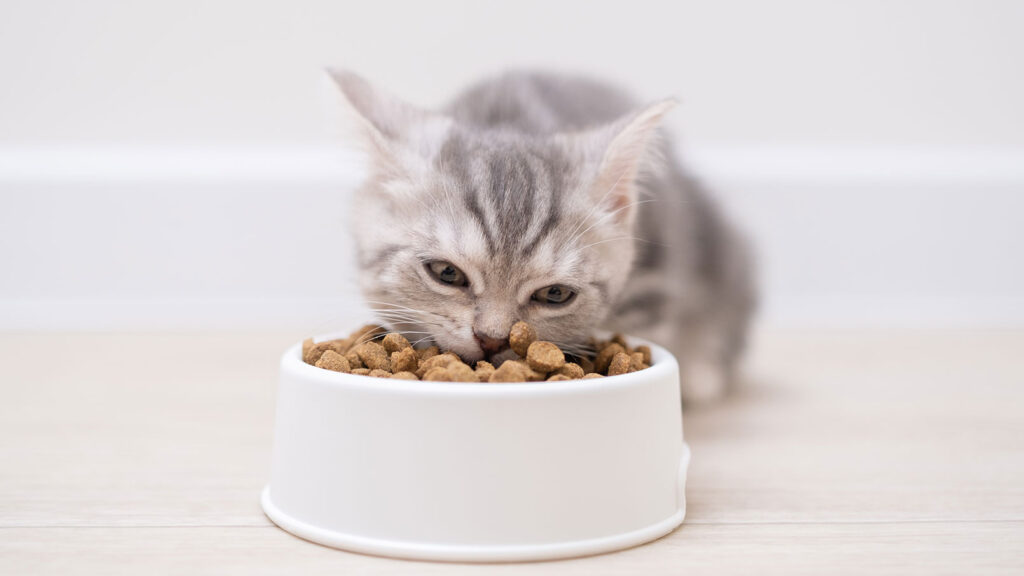
Photo by Chewy
Kittens grow at a remarkable pace. One minute you’re cuddling a fuzzball the size of your palm; the next, they’re leaping after cat toys and scaling cat trees. All that growing means kittens have different nutritional needs than adult cats, and with so many kitten food options, sorting through what to feed kittens can feel like its own adventure.
The best kitten food is complete and balanced for growth, comes from a reputable brand backed by research, meets your kitten’s individual nutritional needs, and has a taste and texture they’ll reliably eat.
Our veterinary panel reviewed Chewy’s best-selling, top-rated kitten foods to pick the best of the best, based on their research and years of experience. Below, our panel shares their top picks across eight categories, from everyday feeding to more specific needs like sensitive stomachs and weaning.

What To Consider When Buying Kitten Food
When choosing kitten food, look for a complete and balanced formula from a reputable brand that’s specifically made for growth, matches your kitten’s individual needs, and comes in a taste and texture they’ll reliably eat—all within a budget you can sustain.
Brand Reputation
Pet food labels and ingredient lists aren’t always easy to decode, so leaning on brand reputation is a smart place to start. Look for companies that conduct clinical trials, back their formulas with science and research, and have qualified nutrition experts involved in the formulation of their diets. The more a brand backs up its nutrition claims with data, the more confidence you can have in the bag or can you’re scooping from.
Balanced Nutrition Formulated for Growth
Kittens aren’t just small cats—their nutrient needs are different from an adult’s. During the first year, kittens need higher levels of protein and calories to fuel rapid growth, including muscle and bone development. They also need specific nutrients like DHA (an omega-3 fatty acid) to support rapid brain and eye development, along with an appropriate calcium-to-phosphorus ratio for healthy bones.
Look for an Association of American Feed Control Officials (AAFCO) nutritional adequacy statement on the label confirming the food is complete and balanced for either growth or all life stages—that’s your sign the nutrients are there in the right proportions. Avoid food labeled only for adult maintenance.
Kitten’s Individual Needs
Age and health status all play into what your kitten needs from their food. For example, a very young kitten who isn’t yet weaned will likely need a milk replacer, while an older kitten transitioning to solid food may do best on a soft or mousse-style diet. A kitten with a health issue may need something more specific, too, such as an easily digestible food for digestive sensitivities or a diet recommended by their veterinarian for a particular health or growth concern.
Taste and Texture
Good nutrition doesn’t do much good if your kitten won’t eat it. Luckily, there’s no shortage of options—crunchy kibble, soft loaves, pates, meaty chunks, and mousses, in a range of flavors. Wet food adds moisture to the diet, which supports hydration, while dry food offers convenience and can double as an enrichment tool in a puzzle feeder. As you learn your new family member’s preferences, always switch kitten food gradually to avoid digestive upset.
Budget
You’ll be purchasing kitten food for up to a year, so cost matters—but it’s worth weighing that against the nutritional value you’re getting. The good news is, some lower-priced diets still provide complete, balanced nutrition from reputable, research-backed brands. Just check the label for how much to feed your kitten, since fast-growing kittens often need more food than pet parents expect.
Best Overall Kitten Food
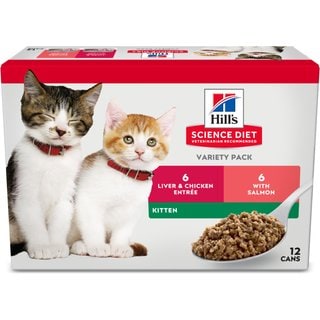
Best for: Everyday feeding for kittens who prefer wet food and pet parents who want to introduce different flavors early on
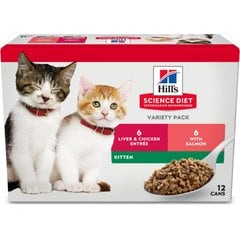
Our panel’s overall pick is this variety pack from Hill’s Science Diet, a top brand among veterinarians for its research-driven formulas.
“Kittens have very specific nutritional needs during their first year, so I like that this food is complete and balanced specifically for growth,” says Chewy veterinarian Veronica Higgs, DVM. “It provides high-quality protein along with DHA and appropriately balanced vitamins and minerals to support developing muscles, bones, brain, and eyes.”
Because this variety pack includes liver and chicken as well as salmon recipes, it’s also a good opportunity to introduce a kitten to different flavors early on, which Dr. Higgs says can help them become more accepting of different foods as they grow.
Chewy veterinarian Stephanie Howe, DVM, adds that the canned formula includes prebiotics like beet pulp to support healthy digestion. Dr. Howe also says, “If you are feeding both canned and dry food, make sure to combine the amounts to ensure that you meet—and don’t exceed—their daily calorie allotment.”
What Our Experts Like:
- Complete and balanced nutrition formulated specifically for growth
- High-quality protein to support developing muscles
- DHA, vitamins, and minerals support brain, bone, and eye development
- Two flavors help introduce variety early in life
- Contains prebiotics to support digestive health
- Moisture supports kittens’ overall hydration
Potential Drawbacks:
- If combining with dry food, measure carefully to avoid overfeeding
Best Dry Kitten Food
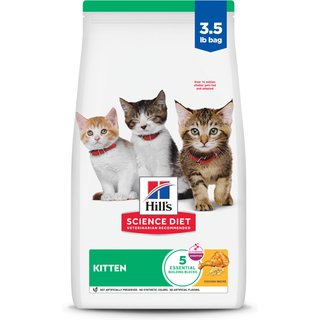
Best for: Kittens who prefer kibble or pet parents who want an easy, versatile feeding option
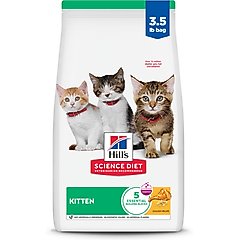
Kibble fans, this one’s for you. This Hill’s formula is our panel’s top pick among dry kitten foods because it combines growth-focused nutrition from a science-backed brand.
“I really like Hill’s for kittens because I know I’m getting a diet that was specifically formulated for all the growing they have to do that first year,” says Dr. Higgs. “It has the protein they need to build muscle, DHA for brain and eye development, and the right balance of minerals for growing bones and teeth.”
Dr. Howe also likes Hill’s proprietary ActivBiome+ blend of prebiotic fibers, which she says supports digestive health, while added antioxidants support the developing immune system.
Our panel notes that kibble, in general, is easy to measure out into precise portions and is versatile enough to use beyond the food bowl, either as a reward during training or served in a puzzle feeder for a little extra enrichment during the day.
What Our Experts Like:
- Complete and balanced nutrition formulated specifically for growth
- ActivBiome+ prebiotic blend supports digestive and immune health
- DHA supports brain, eye, and nervous system health
- Balanced minerals support developing bones and teeth
- Easy to use for training or add to a puzzle feeder
Potential Drawbacks:
- Dry formula contains less moisture than wet food
Best Wet Kitten Food
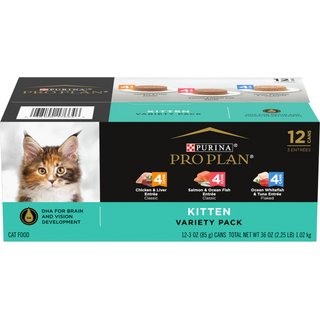
Best for: Kittens who need extra hydration, or pet parents who want to introduce a variety of flavors and textures
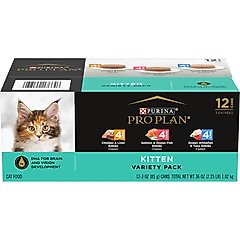
This variety pack from Purina Pro Plan wins our panel over as the best wet kitten food thanks to its nutritional profile and variety of flavors and textures.
“High-quality protein supports growing muscles, while DHA supports brain and eye development,” says Chewy veterinarian Tiffany Tupler, DVM. “With up to 76.5% moisture, it also helps increase daily water intake. Three flavors and two textures can help kittens explore different foods, which is good for preventing picky eaters.”
Dr. Higgs agrees that a variety pack is a smart choice at this age. “This is the perfect age to introduce kittens to different flavors and textures,” she says. “Cats can become pretty particular about food as they get older, so giving them some variety early on can help keep their options open.”
Chewy veterinary technician Katherine Kast, LVT, adds that the formula also includes antioxidants to help support a kitten’s developing immune system.
Our panel notes that growing kittens need a lot of calories for their size, so pet parents may be surprised by how much, or how often, their kitten needs to eat. Wet food tends to be more expensive than dry, so the cost of an exclusively wet-food diet may add up quickly.
What Our Experts Like:
- Complete and balanced nutrition formulated specifically for growth
- DHA supports brain and eye development
- Up to 76.5% moisture helps increase daily water intake
- Three flavors and two textures introduce variety early
- Contains antioxidants to support immune health
Potential Drawbacks:
- Feeding amounts—and therefore cost—can add up quickly with wet food
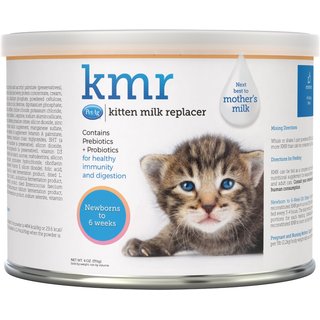
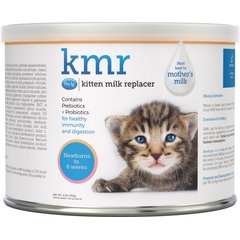
Best for: Kittens up to 6 weeks old who can’t nurse from their mother
For kittens who can’t nurse from mom, KMR is our panel’s go-to for its complete and balanced nutrition.
“KMR is a staple in veterinary prenatal kitten care,” says Kast. “This formula is complete, balanced nutrition, plus has prebiotics and probiotics to support healthy immunity and digestion.”
According to Dr. Tupler, the powdered formula provides protein, fat, and other key nutrients in proportions similar to a mother cat’s milk, and it meets AAFCO standards for complete and balanced nutrition for newborns to 6-week-old kittens.
Pet parents have to mix the powder with warm water and feed it in a bottle. Because precise preparation matters, Dr. Tupler cautions pet parents to follow the directions exactly. “Incorrect concentration can cause digestive upset or inadequate nutrition, and prepared formula must be refrigerated and discarded after 24 hours.”
Our panel recommends pet parents stay in close contact with their veterinarian when feeding a newborn kitten to ensure proper nutrition is being provided.
What Our Experts Like:
- Provides key nutrients in proportions similar to a mother cat’s milk
- Complete and balanced nutrition formulated specifically for growth
- Contains prebiotics and probiotics for immunity and digestion
- Powder can be stored and prepared as needed
Potential Drawbacks:
- Does not replace the antibodies kittens receive from their mother’s milk
- Prepared formula must be refrigerated and discarded after 24 hours
Best High Protein Kitten Food
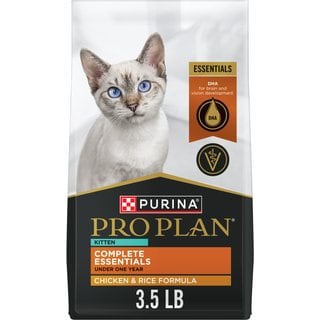
Best for: Kittens who need protein-rich, calorie-dense food that’s complete and balanced
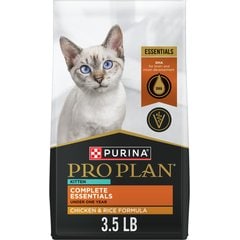
Growing kittens burn through nutrients fast, and this formula from Purina Pro Plan is our panel’s pick for pet parents who want a protein-forward diet done right.
As Dr. Higgs explains, kittens have naturally high protein requirements because they’re building muscle and new tissue quickly. This diet contains 42% crude protein, well above the 30% minimum required by AAFCO for growing kittens.
“I like this formula because it gives them a protein-rich diet while still being complete and balanced specifically for growth, so we aren’t focusing on protein at the expense of all the other nutrients a growing kitten needs,” she says.
However, our panel cautions that more protein isn’t automatically better. Dr. Higgs advises against choosing a high-protein diet just because a kitten is small, very active, or seems hungry all the time. If a kitten isn’t growing well or is frequently ravenous, she recommends a veterinarian evaluation before increasing protein. And because the food is calorie-dense, Dr. Tupler recommends measuring portions and adjusting them based on the kitten’s body condition.
In addition to being high in protein, the formula includes DHA to support brain and vision development, omega-6 fatty acids and vitamin A to nourish skin and coat, and live probiotics for digestive and immune support. Dr. Howe notes the kibble comes in varying sizes and shapes to help hold a kitten’s interest.
What Our Experts Like:
- High-protein formula to support growing muscle
- Complete and balanced nutrition formulated specifically for growth
- Contains live probiotics for digestive health and immune support
- Varying kibble sizes and shapes help hold a kitten’s interest
Potential Drawbacks:
- Calorie-dense; requires careful measuring to avoid overfeeding
- Not a catchall; poor growth requires a vet evaluation
Best Kitten Food for Sensitive Stomachs
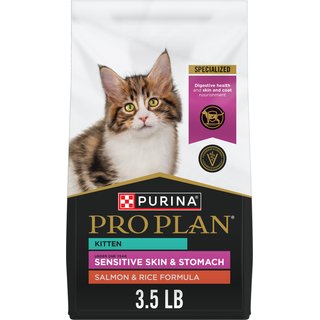
Best for: Kittens with mild digestive issues or skin sensitivities
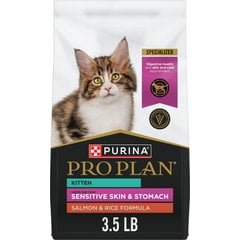
For kittens with a delicate digestive system, our panel recommends this Purina Pro Plan formula because it combines highly digestible ingredients with probiotics and prebiotic fiber to support digestive health.
It’s made with salmon and rice, which Kast says are both highly digestible. Combined with probiotics, it “can be a gentle, healthy diet for kittens who don’t tolerate other formulas well,” she says.
Dr. Tupler notes that prebiotic fiber from chicory root helps nourish beneficial gut bacteria. She considers the formula a reasonable over-the-counter option for kittens with mild, food-responsive digestive or skin sensitivities once parasites and other medical causes have been ruled out.
DHA and other omega-fatty acids round out the diet to support brain and eye development as well as skin and coat health.
It isn’t a limited-ingredient or hypoallergenic diet, however. If you suspect a true food allergy, talk to your veterinarian rather than relying on this food alone.
What Our Experts Like:
- Highly digestible salmon and rice formula
- Prebiotic fiber and probiotics further support digestion
- Complete and balanced nutrition formulated specifically for growth
- DHA supports brain and eye development
- Omega fatty acids support skin and coat health
- Reasonable option for mild, food-responsive digestive or skin sensitivities
Potential Drawbacks:
- Not a limited-ingredient or hypoallergenic diet for true food-allergy trials
- Best used after a vet rules out other causes
Best Food for Weaning Kittens
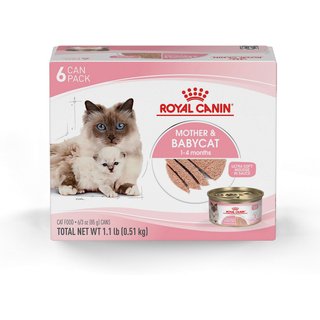
Best for: Kittens roughly 1–4 months old, transitioning from nursing or milk replacer to solid food
This Royal Canin food is our panel’s pick to ease the transition to solid foods because of its soft texture and tailored nutrition for young kittens.
“It’s a wet cat food with a fluffy mousse texture in sauce that makes it easy to eat and helps kittens transition from milk to solid food,” says Kast, who adds that the highly digestible proteins and prebiotics help support digestion, along with DHA for brain development.
Formulated for kittens approximately 1–4 months old, this kitten food should initially complement, not replace, nursing or milk replacer; after 4 months, kittens should transition to a food formulated for their next stage of growth.
“You can easily mix it with warm water or kitten milk replacer to make a gruel at the beginning of weaning, then gradually make it thicker as the kitten becomes more comfortable eating solid food,” says Dr. Higgs. “This is my go-to weaning diet in practice.”
What Our Experts Like:
- Ultra-soft mousse texture is easy for kittens learning to eat solids
- Mix with water or milk replacer to adjust texture
- Complete and balanced nutrition formulated specifically for growth
- Highly digestible proteins and prebiotics support digestion
- Contains antioxidants to support immune health
- Contains DHA to support brain development
- Highly palatable, which helps encourage kittens to eat
Potential Drawbacks:
- Meant for the weaning window only
- Should complement, not replace, nursing or milk replacer
Best Budget Kitten Food
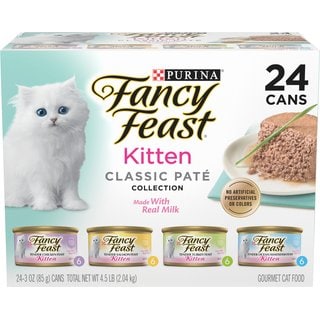
Best for: Pet parents who want complete, balanced nutrition at a lower price point
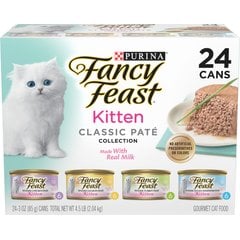
Budget-friendly doesn’t have to mean bare-bones. This variety pack from Fancy Feast is our panel’s pick for best budget kitten food because it offers quality nutrition at a lower price point.
“While this is a lower price point food that doesn’t contain some of the extras found in more premium offerings, this is still a complete and balanced diet from a reputable, industry leader, comprised of quality ingredients,” says Kast.
Dr. Howe points out that Fancy Feast is made by Purina, which also produces more premium lines like Pro Plan and veterinary diets, giving the brand access to Purina’s broader nutrition research and expertise.
The panel also appreciates the pate texture, which is easy for small kittens to eat, and the poultry and fish flavors, which allow pet parents to introduce variety early, helping kittens more readily accept different foods as they grow.
As Dr. Higgs notes, growing kittens need a surprising number of calories for their size, and wet food can require several cans a day to meet those needs. Even with a budget-friendly food, it’s worth checking the feeding guidelines and calculating the daily cost based on your kitten’s individual needs.
What Our Experts Like:
- Complete and balanced nutrition formulated for growth at a lower price point
- Made by Purina, drawing on the same science as premium products
- Pate texture is easy for small kittens to eat
- Four poultry and fish flavors help introduce variety early on
- Moisture-rich formula supports hydration
Potential Drawbacks:
- Skips some premium extras
- Growing kittens may need several cans a day
How We Selected the Best Kitten Food
This list of the best kitten foods was carefully selected by a group of veterinarians and veterinary technicians employed by Chewy.
They reviewed Chewy’s top-selling, top-rated kitten foods that pet parents like you love, then shared their honest recommendations based on the following criteria:
- Life stage appropriateness
- Complete and balanced nutrition to support healthy growth
- Brand reputation
- Clinical trials and science-backed research
- High-quality protein as main ingredient
All opinions and product picks in this guide come directly from our panel of veterinary professionals. Chewy’s manufacturers and vendors cannot buy placement in this buying guide or exert influence on our panelists as they evaluate products.
Our goal is simple: to help pet parents confidently choose the right kitten food for their pet’s health and happiness.
Attributions