Pudelpointer
Updated August 4, 2026
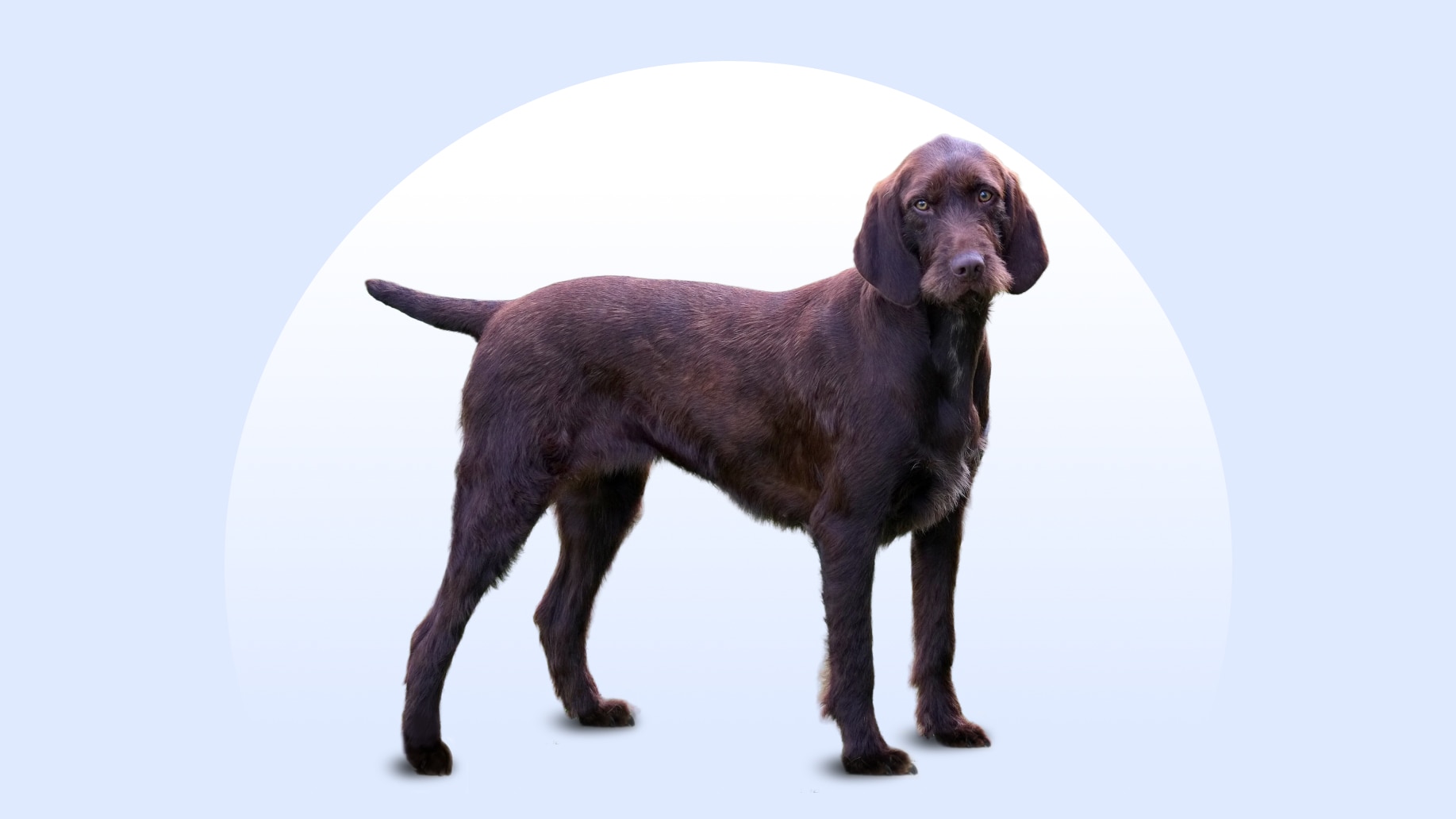
Pudelpointer
Updated August 4, 2026
Pudelpointers are energetic, intelligent hunting dogs who love having a job to do. While focused and determined in the field, they’re affectionate family companions at home. These bushy-eyebrowed, bearded dogs are a great match for active, outdoorsy pet parents who love spending time outside.
Intelligent, Driven, Affectionate
45–70 pounds
22–26 inches
14 years
Black, Liver
If your dream dog is equal parts athlete, adventurer, and love bug, the Pudelpointer may be your soul pup. Be ready to lace up your hiking boots, because you’ll spend plenty of time outdoors together, exploring trails and tackling whatever adventure comes next.
Originally bred as versatile hunting dogs, Pudelpointers are smart, driven, and eager to put their sharp minds and energetic bodies to use. But once the day’s adventures are over, they’re happy to curl up with their favorite person (you), and soak up some family time.
Pudelpointer Characteristics
Pudelpointer Appearance
Built for adventure, the Pudelpointer looks every bit the rugged outdoorsman. With a scruffy beard, bushy eyebrows, and a weather-resistant coat, these dogs have a charming “just got back from the woods” look.
Their athletic, powerful bodies are built for long days of hunting, hiking, swimming, and exploring alongside their favorite humans.
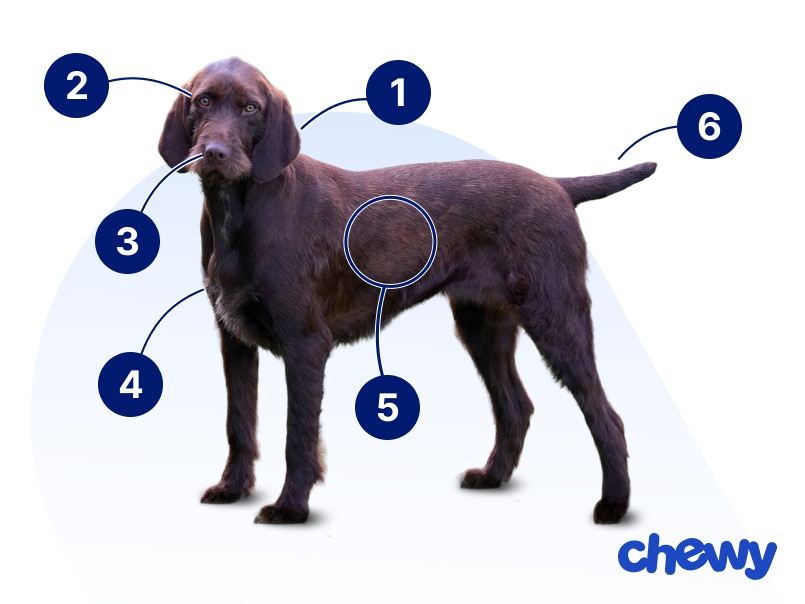
- Ears
Their large, floppy ears are rounded at the bottom and hang close to the head.
- Eyes
Their oval-shaped, amber-brown eyes peek out beneath prominent bushy brows.
- Nose
Pudelpointers have large, brown noses with wide nostrils.
- Coat Length
They have a short coat with two layers (double coat): a soft, insulating undercoat and a thick, water-resistant outer coat. Their short coat can be wiry, rough, or smooth, depending on the dog.
- Coat Color
The Pudelpointer’s coat color can be liver (medium to dark brown) or black, sometimes with small white markings.
- Tail
The Pudelpointer has a straight, strong tail that breeders traditionally dock to about two-thirds of its original length to prevent injuries while running through heavy brush. However, the American Veterinary Medical Association opposes tail docking, and some countries and U.S. states have banned the procedure. If left natural, the Pudelpointer’s tail reaches the hocks, and is carried straight or in a gentle curve.
Pudelpointer Temperament
With their warm, people-oriented personality and sharp intellect, it’s easy to see why people are drawn to the Pudelpointer. But make no mistake—being a homebody is not on this breed’s to-do list.
Pudelpointers are a working breed through and through, bred to spend long days hunting across fields, forests, and wetlands. Their ideal pet parent is a hunter who can put their pup’s natural talents to work in the field.
While active nonhunting homes can sometimes be successful, prospective pet parents should understand that these dogs have strong hunting instincts and a deep drive to use them. Activities such as nose work, tracking, dock diving, retrieving sports, hiking, and advanced training can help provide an outlet for those instincts, but they aren’t guaranteed to satisfy every Pudelpointer.
Give them a day filled with activity, adventure, and, ideally, the chance to put their hunting skills to use, and they’ll reward you with plenty of affection and surprisingly laid-back energy when it’s time to unwind.
Pudelpointers generally get along well with other dogs when properly introduced and can sometimes do well with cats when raised together and socialized from a young age. Other small animals should steer clear, though: These dogs were bred to track, point, and retrieve, so a squirrel, rabbit, duck, or other furry or feathered critter may quickly go from yard visitor to prey.
While friendly with their families, Pudelpointers aren’t usually the type of dog who greets every stranger like a long-lost friend (we’re looking at you, Golden Retrievers). Many prefer a brief getting-to-know-you period before welcoming someone into their inner circle. Even so, they’re typically polite good boys and girls who know how to mind their manners.
Related Breeds





How to Care for a Pudelpointer
Pudelpointers may be fairly low-maintenance when it comes to grooming, but don’t expect a low-maintenance lifestyle overall.
These energetic dogs need plenty of daily exercise and mental challenges to keep them (and you) happy. A tired Pudelpointer is often a well-behaved Pudelpointer, so plan on keeping their bodies and brains busy.
Grooming
Training
Diet
Exercise
Environment
Pudelpointer Health
The typical Pudelpointer lifespan is 14 years. Thanks to careful breeding practices, Pudelpointers are generally healthy dogs. However, there are a few health conditions pet parents should be aware of.
- Bloat and gastric dilatation-volvulus (GDV): As a deep-chested breed, Pudelpointers are at increased risk for bloat and a life-threatening condition called gastric dilatation-volvulus (GDV) that requires immediate veterinary care. Bloat occurs when the stomach fills with gas, food, or fluid, while GDV happens when the stomach twists on itself, cutting off blood flow. Signs include a swollen abdomen, restlessness, excessive drooling, and dry heaving.
- Epilepsy: Pudelpointers can be affected by primary epilepsy, a seizure disorder with no identifiable underlying cause. Symptoms often appear between 1 and 4 years of age and may include loss of consciousness, full-body tremors, vocalization, dilated pupils, and involuntary urination or defecation. While epilepsy cannot be cured, it can often be managed with long-term antiseizure medications.
- Elbow and hip dysplasia: Elbow and hip dysplasia are genetic conditions when the joints don’t align well and become looser than normal. Over time, they can lead to pain, decreased mobility, and arthritis. Signs may include limping; difficulty standing up; reluctance to run or jump; and a hopping gait when running. Treatment may involve weight management, joint supplements, physical therapy, pain medications, or, in severe cases, surgery.
Pudelpointer History
The Pudelpointer originated in Germany in the late 1800s. The breed was developed by crossing the German Hunting Poodle (or “Pudel,” as the Germans say) with the English Pointer to create a versatile hunting dog with strong tracking, pointing, and retrieving abilities.
Rather than specializing in a single type of game or terrain, Pudelpointers were bred to be all-around hunting companions capable of working on both land and in water.
The Pudelpointer was introduced to North America in the 1950s by Sigbot “Bodo” Winterhelt, a German native who played a major role in establishing breeding standards.
Today, the Pudelpointer has a relatively small but dedicated fan club in the U.S. Unlike some breed clubs that pursue full American Kennel Club (AKC) recognition, many Pudelpointer enthusiasts have preferred to keep the focus on working ability rather than show-ring success.
While the Pudelpointer is not fully recognized by the AKC, the breed is included in the AKC’s Foundation Stock Service (FSS), which is a registry for rare breeds that are still developing.