Toy Fox Terrier
Updated September 4, 2026

Toy Fox Terrier
Updated September 4, 2026
Tiny but mighty, the Toy Fox Terrier packs a lot of personality into a pint-size frame. These smart, athletic dogs love being part of the action and thrive with families who can keep up with their playful energy, training sessions, and desire to be close to their people.
Alert, Intelligent, Playful
4–9 pounds
8.5–11.5 inches
13–15 years
White and black; white and tan; white, black, and tan; white, chocolate, and tan; white and chocolate
Don’t let their size fool you: Living with a Toy Fox Terrier means sharing your home with a dog who believes they’re much bigger than they are. These clever little athletes are always ready for a game, training session, or adventure around the neighborhood. They thrive on interaction and tend to form close bonds with their families, often wanting to be involved in whatever’s happening around the house.
Equal parts entertainer, cuddle buddy, and watchful companion, the Toy Fox Terrier combines a playful personality with the alertness and confidence that made terriers such effective working dogs.
Toy Fox Terrier Characteristics
Toy Fox Terrier Appearance
Toy Fox Terriers combine a compact frame with elegant, refined features. Their smooth coat, alert expression, and distinctive upright ears make them easy to recognize.
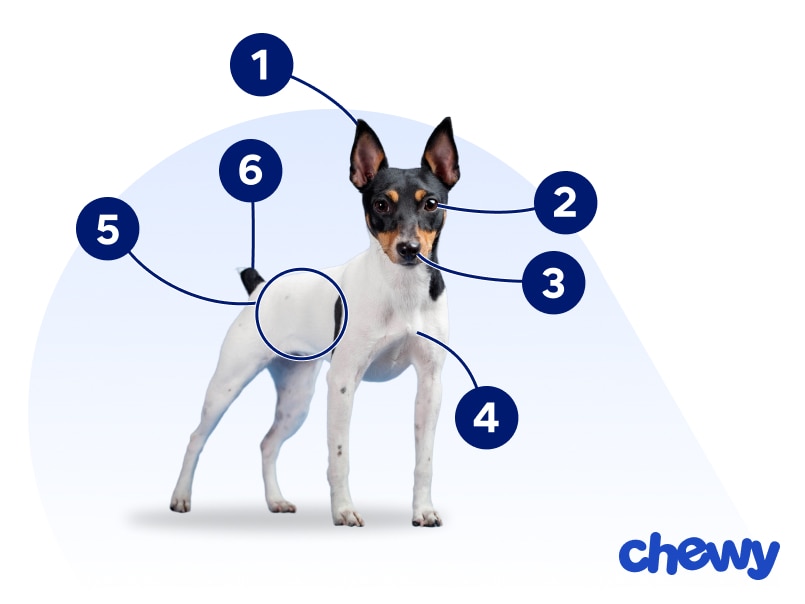
- Ears
Toy Fox Terriers have large, upright, V-shaped ears that stand high on their head and are set close together. Their ears are one of the breed's most recognizable features and help give them their alert, curious expression.
- Eyes
Toy Fox Terriers have dark, round eyes that are set well apart and are full of expression.
- Nose
Their noses are typically black. Toy Fox Terriers with nonstandard chocolate coloring may have a brown nose that matches their coat.
- Coat Length
Toy Fox Terriers have a short, smooth, glossy coat that lies close to the body, but is slightly longer around the neck and chest (the “ruff”). Their coat is easy to care for and highlights their athletic build.
- Coat Color
The coat can be white and black; white and tan; white, black, and tan; and white, chocolate, and tan. White is the dominant body color, with darker markings most commonly appearing on the head and around the face.
- Tail
The tail is set high and carried erect, contributing to the Toy Fox Terrier's alert, confident appearance. Traditionally, the tail was docked to the third or fourth joint, but undocked tails are becoming increasingly common in companion dogs. Many veterinary organizations, including the American Veterinary Medical Association, oppose tail docking, and several countries and U.S. states have banned the cosmetic procedure.
Toy Fox Terrier Temperament
Life with a Toy Fox Terrier is rarely boring. These little dogs combine confidence and determination, creating a personality that’s much larger than their size suggests. They’re often a great fit for people looking for a companion who is affectionate, trainable, and always ready for the next activity.
Toy Fox Terriers are deeply devoted to their people and often form strong bonds with their families. Don’t be surprised if yours follows you from room to room, supervises household chores, and claims the best seat on the couch the moment you stand up. They love being involved in daily life and generally prefer spending time with their humans over being left alone for long stretches.
While they’re affectionate, they’re also bright and energetic. Toy Fox Terriers enjoy learning new skills, and excel in activities that challenge both their minds and bodies. Many participate in obedience, agility, rally, and trick training.
Most Toy Fox Terriers are friendly and outgoing when properly socialized. Early exposure to new people, animals, sounds, and environments helps them grow into confident adults. Because they were developed from small terriers, they may still have a strong prey drive and instinct to chase small animals, so introductions to other pets should always be supervised. They should be kept on leash or in a securely fenced area when outdoors.
Related Breeds






How to Care for a Toy Fox Terrier
The Toy Fox Terrier’s care needs are fairly straightforward. Their grooming routine is simple, but they’ll need consistent training, daily exercise, and plenty of mental stimulation. These intelligent little dogs are happiest when they’re included in family activities and given opportunities to stay busy.
Grooming
Training
Diet
Exercise
Environment
Toy Fox Terrier Health
Toy Fox Terriers are generally a healthy breed with a life expectancy of 13–15 years. Many enjoy long, active lives with routine veterinary care, a healthy diet, and regular exercise. Compared to some toy breeds, they have relatively few major inherited health concerns.
That said, Toy Fox Terriers can be predisposed to certain inherited or breed-associated health conditions. Knowing what to watch for can help you work with your veterinarian to catch potential issues early and keep your little sidekick feeling their best.
- Primary lens luxation (PLL): Toy Fox Terriers are among the breeds known to be at increased risk for this inherited eye condition. PLL occurs when the lens inside the eye shifts out of position, which can lead to pain, glaucoma, and vision loss if left untreated.
- Patellar luxation: Like many toy and small-breed dogs, Toy Fox Terriers can develop patellar luxation, a condition where the kneecap slips out of place. Mild cases may cause occasional skipping or hopping, while more severe cases can lead to pain, limping, and mobility issues.
- Legg-Calve-Perthes disease: This orthopedic condition is seen more commonly in small breeds. It affects the hip joint when blood flow to the head of the femur is disrupted, potentially causing pain, limping, and muscle loss in the affected leg.
- Von Willebrand disease (vWD): Toy Fox Terriers may inherit this bleeding disorder, which affects the blood’s ability to clot normally. Dogs with vWD may bruise more easily or experience excessive bleeding after an injury, surgery, or a dental procedure.
- Congenital hypothyroidism with goiter (CHG): This inherited thyroid disorder can occur in Toy Fox Terriers and may affect a puppy’s normal growth and development. Genetic testing is available, and responsible breeders screen for the condition before breeding.
- Dental disease: Dental issues are particularly common in small breeds like the Toy Fox Terrier. Without regular dental care, plaque and tartar can build up over time, increasing the risk of gum disease, tooth loss, and oral discomfort.
Toy Fox Terrier History
Though they’re best known today as companion dogs, Toy Fox Terriers were originally bred to work.
The Toy Fox Terrier, sometimes called the Miniature Fox Terrier (though this isn’t an AKC-recognized breed) was developed in the United States in the early 1900s by selectively breeding Smooth Fox Terriers with smaller companion breeds, including Chihuahuas, Italian Greyhounds, Manchester Terriers, and Miniature Pinschers. The goal was to create a smaller dog that still had the smarts, athleticism, and determination of a Fox Terrier.
Early Toy Fox Terriers worked on farms, where they helped control rats and other small pests. Their small size allowed them to squeeze into tight spaces, and their terrier instincts made them skilled hunters.
But work wasn’t their only talent: Their intelligence and eagerness to learn also made them popular performers in traveling circuses and vaudeville shows.
Over the years, Toy Fox Terriers made the move from farm dog to family companion, though many Toy Fox Terriers still have the confidence, curiosity, and prey drive that made them successful hunters.
The American Kennel Club officially recognized the Toy Fox Terrier in 2003 as a member of the Toy Group. Today, they’re valued for their affectionate nature, intelligence, and ability to fit comfortably into a variety of lifestyles.