How To Keep Your Dog Out of the Litter Box

Between sniffing other dogs’ rear ends and drinking from the toilet bowl, it’s no secret that our canine pals can do some pretty gross things—including eating cat stool. But eating cat poop can lead to health issues, in addition to being, well, icky.
We spoke with experts to learn more about why dogs eat cat poop and how to keep your dog out of the litter box.
Key Takeaways
- Dogs may eat cat poop out of boredom, hunger, or due to underlying health issues.
- Ingesting cat feces can lead to serious health problems, including infections and blockages.
- Solutions include training, changing litter box placement, using pet gates or deterrents, and keeping the litter box clean.
- Specialized litter boxes and enrichment toys can help prevent this behavior.
Why Do Dogs Eat Cat Poop?
Seeing your pup eat poop can be shocking to see for the first—or umpteenth—time. Naturally, this poses the question: Why do dogs eat poop as if it’s a great delicacy?
“Dogs are naturally scavengers, and cat feces—rich in undigested protein from feline diets—can be enticing due to their strong odor and texture,” says Sabrina Kong, DVM, certified canine rehabilitation practitioner at Jules Veterinary Center in Tracy, California. “This behavior, called coprophagia, is relatively common but not ideal.”
“Unfortunately, some dogs are cat poop connoisseurs,” says Nicole Kohanski, certified dog behavior consultant, head trainer, and owner at Wiggle Butt Academy in Plano, Texas. In her experience, dogs of all ages can be interested in litter boxes, but especially those in their adolescent years who start exploring and investigating larger areas.
Here are a few reasons dogs might eat cat poop:
Hunger/Snacking
As stomach-churning as the thought of eating cat poop is to us, dogs can find it appetizing. Thus, if a litter box is accessible and a dog is hungry, cat poop makes a delectable snack, Kohanski says.
Boredom
A bored pup will find countless ways to entertain themselves, even if that means playing with or eating a piece of cat poop.
Signs of boredom in dogs include:
- Excessive chewing
- Digging in the yard
- Scratching at furniture
- Barking, whining, jumping, or nipping at you
- Escaping
- Stealing things
“Dogs love to dig and scavenge, making a cat litter box a recipe for fun,” Kohanski says.
While digging and scavenging are completely normal dog behaviors, it’s essential to find acceptable outlets for them:
- For digging, Kohanski recommends redirecting your dog to a kiddie pool filled with balls or sand.
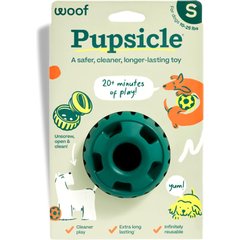
- For scavenging, sprinkle food around the backyard for your dog to scavenge. Providing your dog with a food-foraging toy, like a snuffle mat, is another wag-worthy alternative. You could also offer a treat-dispensing toy, like the BARK poopsicle chew toy, for their enrichment (and your amusement).
Recommended Product

For Attention
In some cases, dogs can learn that engaging in this behavior reinforces attention, as pet parents often react strongly when catching them in the act, Dr. Kong says.
Medical Reasons
Dogs with nutritional deficiencies may seek out the litter box for additional enzymes and macronutrients if an insufficient amount is in their daily diet. If this behavior is new or your dog is frantic about accessing the litter box, Kohanski recommends consulting your vet.
Is Cat Poop Dangerous for Dogs?
There are several health risks associated with cat poop. According to our experts, these include:
- Cat feces may contain Toxoplasma gondii or bacteria, such as Salmonella and E. coli.
- Ingestion of cat poop and clumping litter can cause stomach pains or intestinal blockages in dogs.
- Immediate risks of eating cat poop may include:
- Vomiting
- Diarrhea
- Lethargy
- Systemic infections
Certain cat diseases or parasites can be passed on to a dog who eats their waste, Kohanski says.
Another concern: If a cat is on medication, such as dewormers or antibiotics, the residues in their waste can be harmful to dogs.
5 Ways To Keep Your Dog Out of the Litter Box
Here are five ways to keep your pup out of the litter box. But before you make any changes, consider their impact on your cat. Cats can be picky about their litter box preferences, and sudden changes may inspire them to relieve themselves elsewhere—not an ideal outcome.
Make changes slowly, and if your cat starts urinating or defecating outside of their litter box, return their setup to normal and explore new tactics.
1. Train Your Dog
Training your dog to stay out of the litter box is a great way to prevent them from investigating your cat’s bathroom.
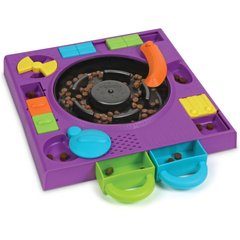
Dr. Kong recommends teaching a solid “leave it” command using high-value treats. When your dog ignores the litter area, reward them for doing so, and redirect them to a dog toy or puzzle feeder. You can also praise them for a job well done.
Recommended Products
2. Change the Litter Box Placement
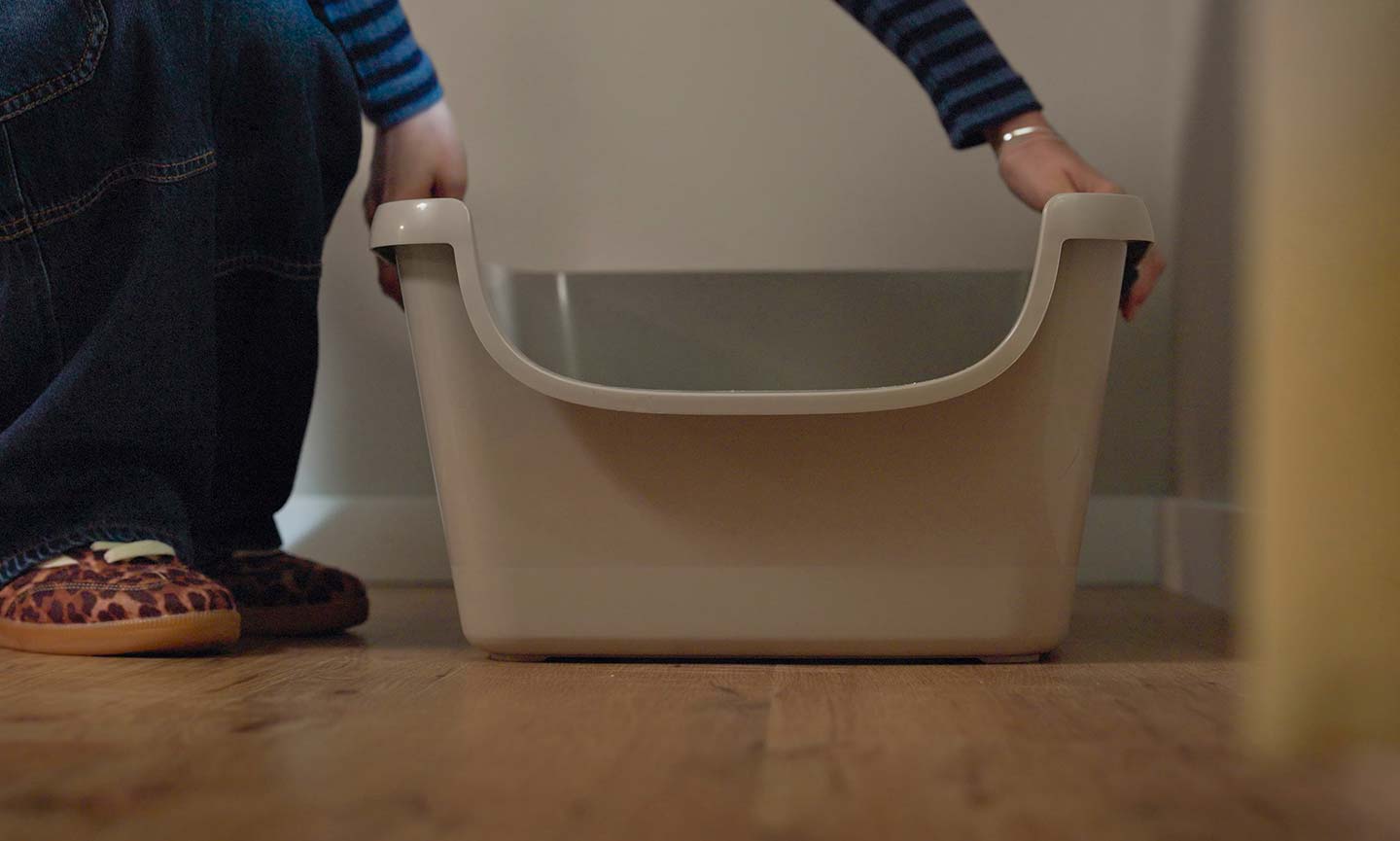
Photo by Chewy
Is the litter box in a central area of your home? Changing its placement may be key to keeping your dog out.
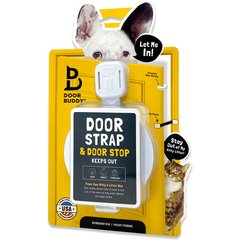
Dr. Kong recommends placing the litter box in a closet with a doorstop latch that only cats can navigate. You can also put it in an elevated location, such as on top of a sturdy shelf, to deter your pup.
Recommended Product
3. Use a Pet Gate
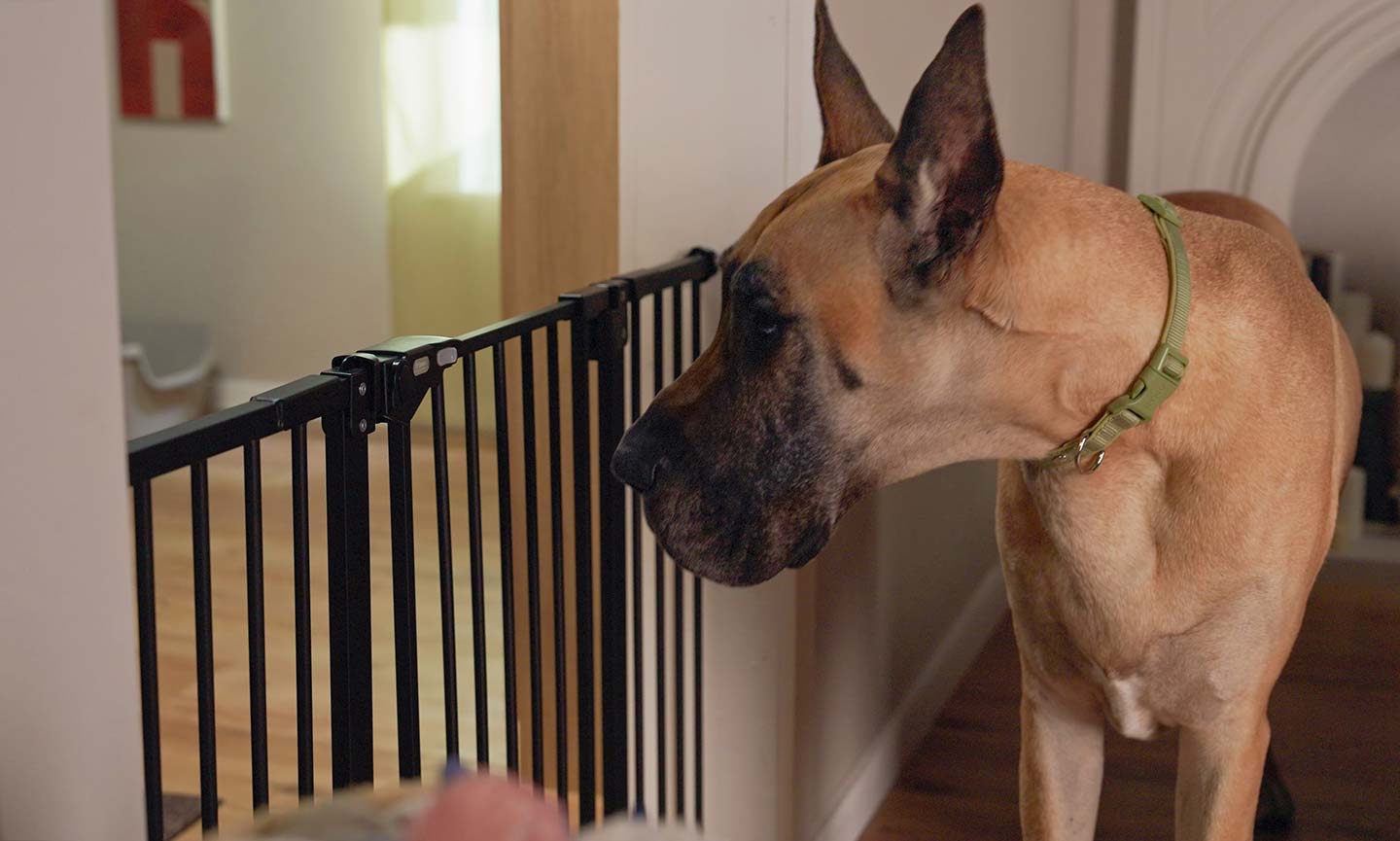
Photo by Chewy
Creating a physical barrier with a pet gate is another way to stop your curious canine from getting to your kitty’s litter box.
You can install a pet gate that has a cat-size opening, like the Carlson extra tall dog gate, to keep your dog from accessing the litter box area. After some time, your dog will refocus their attention on something more interesting, Kohanski says.
Recommended Product

4. Keep the Litter Box Clean
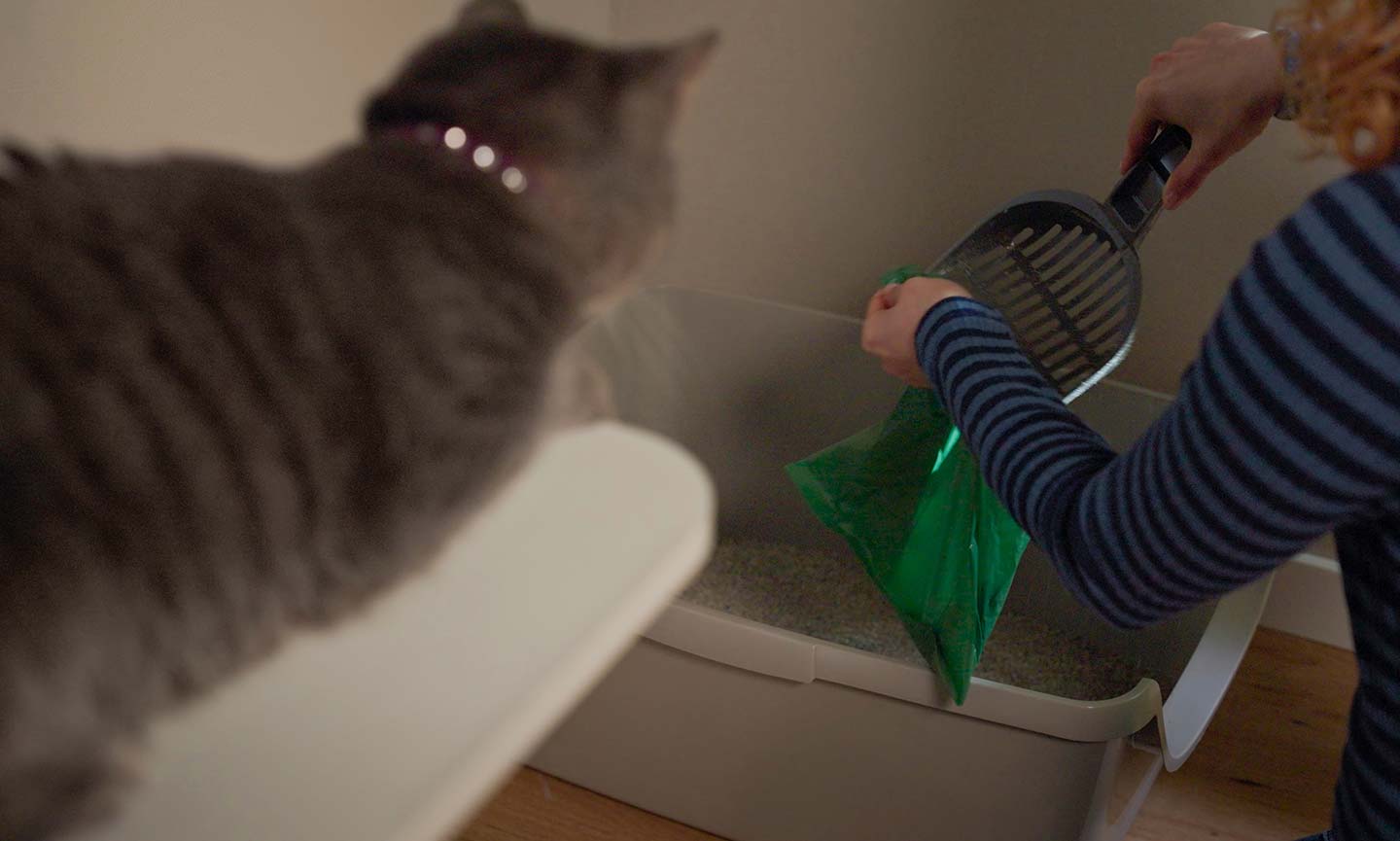
Photo by Chewy
There’s more to keeping your dog out of the litter box than preventing access, Kohanski says. The crucial second step is regularly cleaning the litter box.
“An unclean litter box has an automatic reinforcer for the behavior. Think of seeing the box or feeling a hunger pang as a cue to go find cat poop,” Kohanski says. “When the dog finds some in the box, the dog was just reinforced for the behavior, making it more likely to occur again.”
Scooping the litter box after every time your cat uses it leaves nothing for your dog to eat. Once they discover an empty litter box—and nothing to chow down on—they’ll eventually look elsewhere.
5. Try a Different Cat Litter Box

Photo by Chewy
If you have a multi-cat home or are unable to clean the box regularly, consider a self-cleaning litter box. These litter boxes isolate cat feces, leaving zero waste in sight for your dog.
While there is no 100% dog-resistant cat litter box, another option is using a covered litter box with a top-entry lid, such as the IRIS top-entry litter box. Dr. Kong recommends this kind over hooded boxes with front flaps, because it allows only your cat to use it and prevents determined dogs from prying them open.
Recommended Products

Attributions