German Pinscher vs. Doberman Pinscher: What’s the Difference?


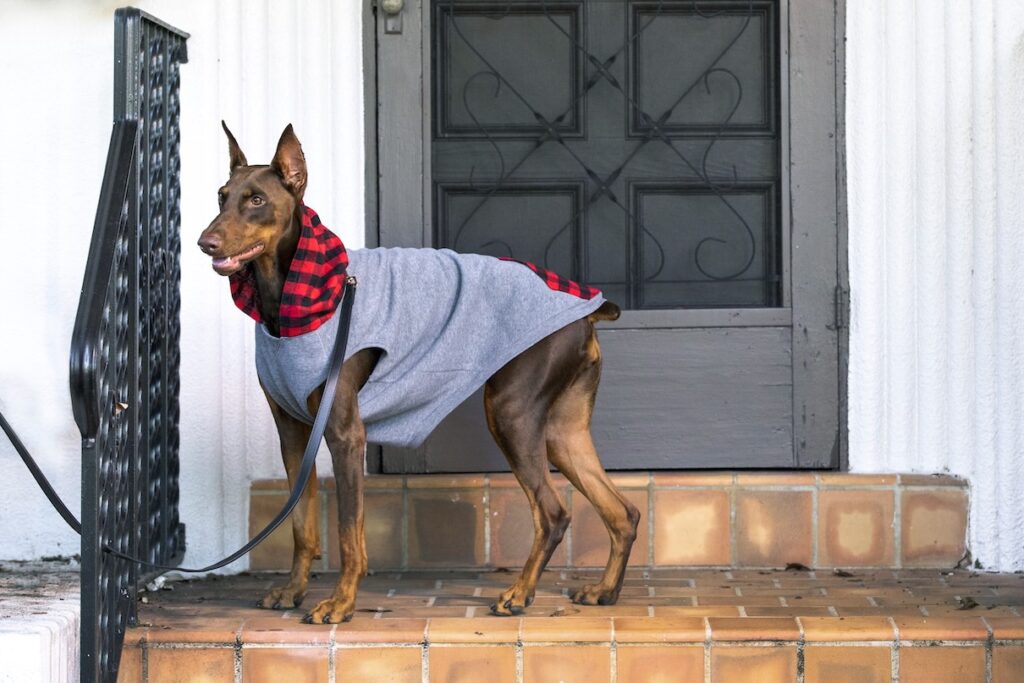
Photo by Chewy
The German Pinscher and Doberman Pinscher share a sleek, athletic look thanks to their common ancestry, so it’s easy to mistake one for the other at first glance. But while these two breeds have plenty in common, their differences are just as notable.
Here’s what to know if you’re trying to decide between a German Pinscher and a Doberman Pinscher.
Key Takeaways
- The German Pinscher is an ancestor of the Doberman Pinscher, so the breeds are related.
- A Doberman Pinscher is much larger than the medium-sized German Pinscher.
- Both dogs are extremely energetic and smart, and they need lots of daily exercise and patient training.
- Both breeds do best with active, experienced pet parents.
- Responsible breeding, preventive veterinary care, and regular exercise help support long-term health in both breeds.
History
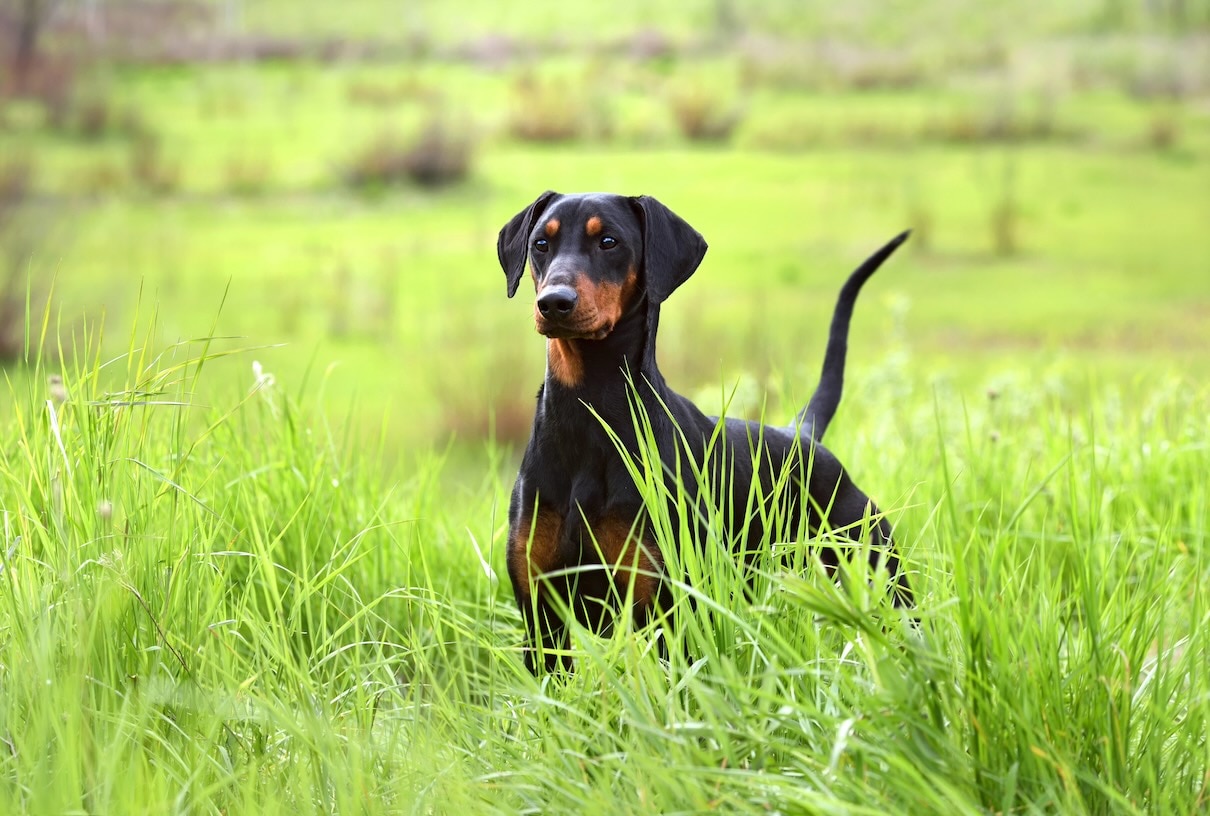
Photo by eAlisa/iStock / Getty Images Plus via Getty Images
If you think the German Pinscher and Doberman Pinscher look similar, it’s because they’re related.
The first record of the German Pinscher dates to 1885 in southern Germany, according to the breed club. At the time, there were two varieties: smooth-haired German Pinschers and wirehaired German Pinschers. Later, these varieties were split into two breeds, and the wirehaired dogs were renamed “Schnauzers.”
German Pinschers were bred from European herding and guarding breeds. They nearly went extinct after the World Wars, but the population was revived through cross-breeding a female who was smuggled out of East Germany with larger Miniature Pinschers. The breed began arriving in the U.S. in the late 1970s.
The Doberman Pinscher has long been bred for police and military work and traces its origins to the late 1800s. The breed’s exact origins are hazy, according to the breed club, but the dogs are derived from the German Pinscher and the now-extinct Old German Shepherd breeds.
Appearance
Both German and Doberman Pinschers have a short, sleek coat that can come in black, red, blue, or fawn, and they commonly have tan markings. They also share similar builds: sleek, muscular, and streamlined.
The easiest way to tell these breeds apart is by size. The German Pinscher is a medium-sized dog. They weigh 25–45 pounds and stand 17–20 inches tall. Dobermans are significantly larger, at 60–100 pounds and 24–28 inches tall.
Personality
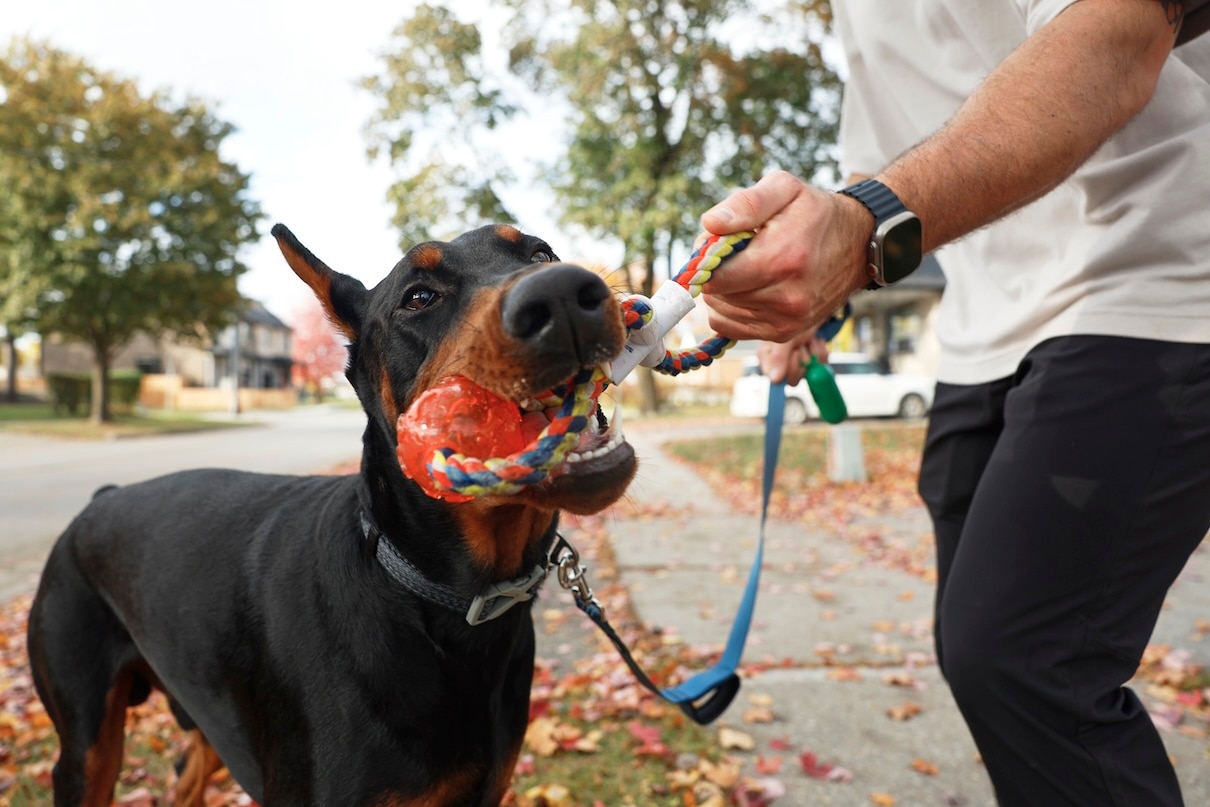
Photo by Chewy
Both breeds are very smart and very active dogs. This means both fit best with experienced pet parents who have cared for high-energy pups before. They form strong bonds with their families and generally prefer being included in daily activities rather than left alone for long periods.
With their history as working dogs, German Pinschers and Doberman Pinschers need to stay busy with daily exercise and mental stimulation. When you need downtime, offer them puzzle toys and durable chew toys to keep them occupied.
Recommended Products
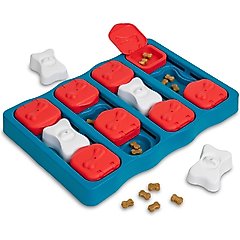
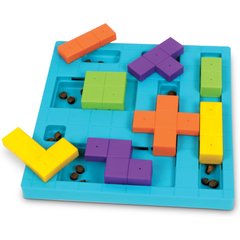

Patience, consistency, and positive reinforcement help these dogs stay engaged and motivated during training, while early socialization and ongoing training help them develop into confident, well-mannered companions.
Exercise Needs
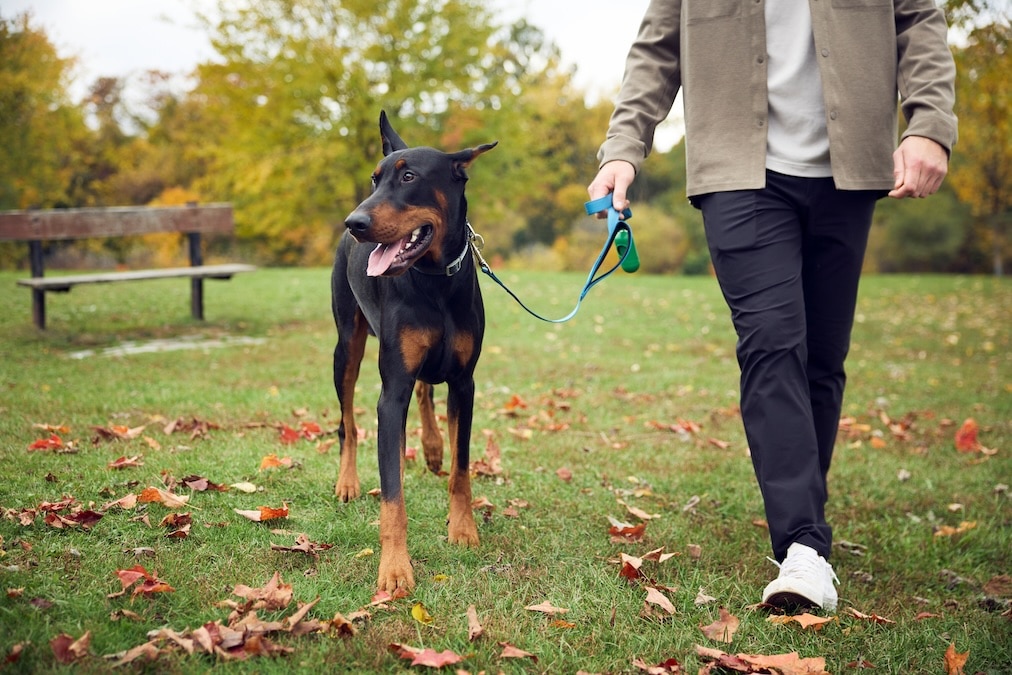
Photo by Chewy
A busy Pinscher is a happy Pinscher, whether you have a German or Doberman. Each needs at least one hour of exercise every day, but more is even better.
Many enjoy activities such as:
Without enough exercise and enrichment, your dog can become bored and develop unwanted behaviors.
Grooming
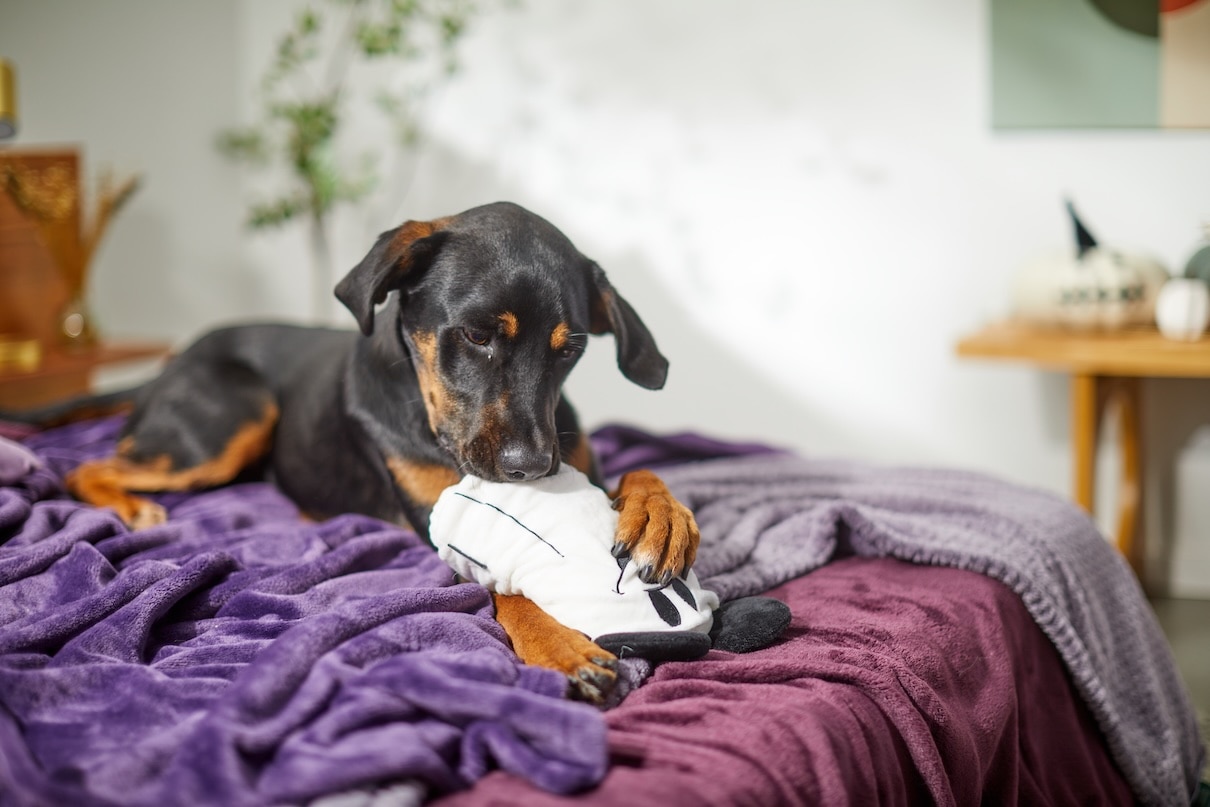
Photo by Chewy
Grooming is relatively simple for both breeds. Their short coats just need a weekly brushing with a bristle brush, rubber curry brush, or a grooming mitt to remove loose hair and distribute natural skin oils.
Recommended Products
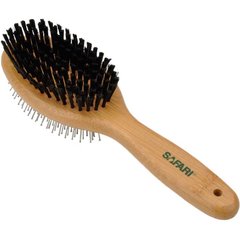
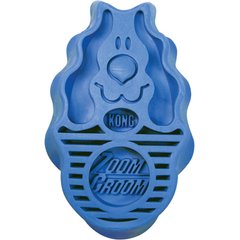
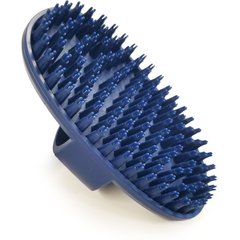

Both dogs shed regularly (Dobermans may shed a bit more than German Pinschers). Routine brushing is the best way to reduce the fur that ends up on your furniture and floor.
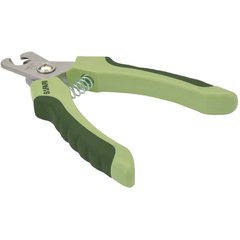
Aside from coat care, both dogs need:
Recommended Product
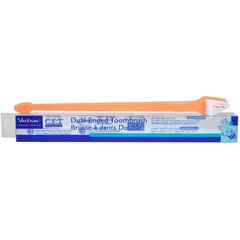
- Daily toothbrushing with a dog-safe toothpaste and brush
Recommended Products

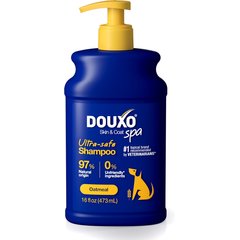
- Occasional baths when they get dirty
Recommended Product
- Regular ear cleaning, if recommended by your veterinarian
Recommended Product

Health
Because smaller dogs typically live longer, the German Pinscher’s lifespan is usually 12–14 years compared to the Doberman’s 10–12. German Pinschers have a reputation for being healthier than Dobermans, but both breeds can be predisposed to certain inherited conditions.
Shared health considerations between the breeds include:
- Hip dysplasia: Hip dysplasia occurs when the ball and socket of the hip joint don’t properly fit together, leading to pain and eventually arthritis. Treatment depends on severity.
- Von Willebrand disease: Von Willebrand disease is a bleeding disorder where the blood doesn’t clot properly.
- Eye problems: Both breeds can develop progressive retinal atrophy, an incurable condition that leads to blindness. German Pinschers are also at risk for corneal dystrophy and cataracts.
Dobermans are susceptible to some other health conditions as well, including:
- Bloat and gastric dilatation-volvulus: Bloat is a life-threatening condition in which the stomach distends with food and/or gas, sometimes progressing to GDV by twisting and cutting off blood flow. This is a medical emergency.
- Dilated cardiomyopathy: Dilated cardiomyopathy is a genetic condition where the heart enlarges and doesn’t pump blood effectively, which can lead to heart failure.
- Wobbler syndrome: Wobbler syndrome is a painful neurologic condition that affects the spinal cord and can lead to wobbly walking and other serious symptoms.
- Hypothyroidism: Hypothyroidism includes symptoms like lethargy, hair loss, skin infections, ear infections, and weight gain. It’s treated with daily medication.
For both breeds, feeding a balanced diet, maintaining a healthy weight, providing routine veterinary care, and working with a reputable breeder who performs recommended health testing can help support lifelong wellness for your dog.
German Pinscher vs. Doberman Pinscher: Which Is the Breed for You?
| Breed | Size | Lifespan | Exercise Needs | Grooming Needs | Health Considerations |
|---|---|---|---|---|---|
| German Pinscher | 25–45 pounds | 12–14 years | At least one hour daily | Weekly brushing | Average |
| Doberman Pinscher | 60–100 pounds | 10–12 years | At least one hour daily | Weekly brushing | Higher than average |
No matter which breed you choose, both German Pinschers and Doberman Pinschers flourish when they receive consistent positive reinforcement training, regular veterinary care, daily exercise, and plenty of quality time with the people they love. Both need lots of exercise and mental stimulation, making them an ideal fit for an active home with experienced pet parents.
Attributions
This article was created with assistance from AI tools. The content has been reviewed for accuracy and edited by a veterinarian.