How to Put On a Dog Harness: A Simple, Step-By-Step Guide

The right way to put on a dog harness depends on the harness style. Most harnesses either slip over your dog’s head, fasten around the body, or let your dog step into the leg openings. If you’re in the market for a new harness, we’re covering everything you need to know, from measuring tips to get the perfect fit to choosing the best style for your pooch.
While dog harnesses were once considered equipment only for working dogs who pulled carts or sleds, they’re now considered an essential dog training. tool. Dog harnesses can help to reduce pulling, jumping, and lunging behaviors, and can minimize injury risk and maximize your dog’s comfort on both easy walks and adventurous runs.
Key Takeaways
- Dog harnesses come in back-clip, front-clip, step-in, and head collar designs.
- Getting a dog harness that's the right size and fit is key to keeping your pooch secure on walks.
- Introduce your dog's harness gradually, letting them sniff and see it before putting it on.
- Be sure to give your pup plenty of treats, praise, and practice indoors to help them get used to their new harness.
Dog harnesses were once considered equipment only for working dogs who pulled carts or sleds, but today the harness is a valuable resource that everyday pups and pet parents can benefit from using. This simple addition can minimize injury risk; maximize comfort on both easy walks and adventurous runs; and help with dog training. Harnesses provide more control and can reduce pulling, jumping and lunging behaviors.
If you’re in the market for a new harness, we’re covering everything you need to know, from measuring tips to choosing the best style for your pooch.
Choosing the Right Harness: 4 Types To Know
Lots of different types of dog harnesses exist, so dog parents should familiarize themselves with each to determine which is best for their furry friend. Here are some of the most common options.
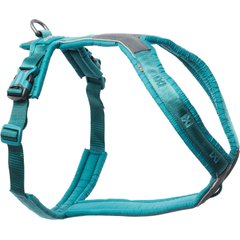
- Front-clip harness: Also known as a no-pull harness, a front-clip body harness has a place to clip on the leash in the front, at the dog’s chest. Attaching the leash in front, instead of by your dog’s neck or back, can discourage pulling by guiding the dog’s body back toward the handler, explains professional dog trainer Bradley Phifer, CBCC-KA, CPDT-KSA, CCPDT, of Bradley Phifer Dog Training in Indianapolis, Indiana.
- Back-clip harness: This harness with a back-clip leash attachment is less robust than a front-clip or no-pull option, making it better for small dogs and calmer pups. However, Phifer says the design offers minimal additional support to a dog parent because it encourages dogs’ natural tendency to pull against pressure.
- Step-in harness: This type of dog harness requires dogs to participate a bit more in the putting-on process, because it has holes where they need to insert their legs rather than straps that a pet parent can buckle around the legs. It typically covers more of the dog’s body compared to traditional dog harnesses, and sometimes includes a padded chest, which is nice for pups with sensitive skin or pulling tendencies.
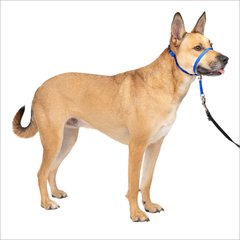
- Head collar harness: Also known as a head halter, this option provides control by guiding a dog’s head rather than their body, discouraging pulling on the leash. It’s adjustable and padded for comfort, serving as a training aid for leash manners. However, proper introduction and training are crucial to ensure safety and effectiveness in managing a dog’s behavior during walks.
Recommended Products
Choose the Right Size Harness
Along with choosing the right type of harness for your pup, Phifer says it’s crucial to ensure they’re wearing the right size. Ill-fitting equipment can compromise your dog’s health, comfort and safety. It can also lead to frustration and ultimately impact your training plan.
To ensure a well-fitted harness, measure your pup. This requires a soft measuring tape and a helping hand. Some tasty dog treats can help keep your pup from squirming around too much while you measure, and they’re a nice treat afterward for some positive reinforcement. Follow our step-by-step guide on how to measure for a dog harness to ensure your pup’s harness fits.
How To Put on a Dog Harness
How you put on a harness ultimately depends on the type of dog harness, and there can be differences even among harnesses of the same style. Refer to the product instructions for your particular harness, but generally speaking, this is how most harnesses of each type are put on.
Chewy Studios
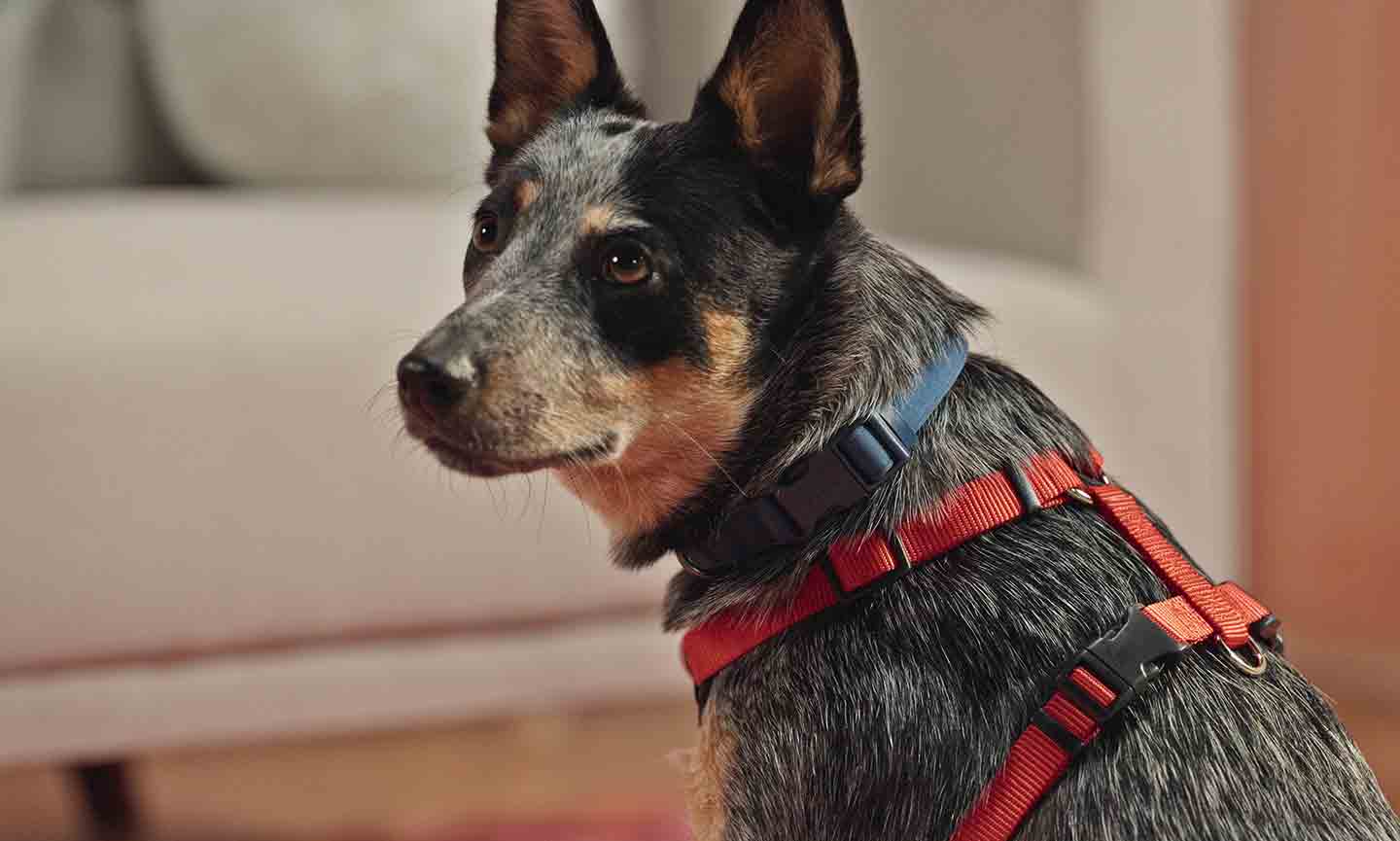
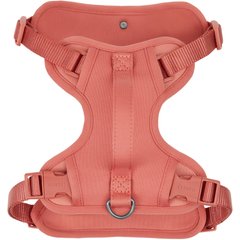
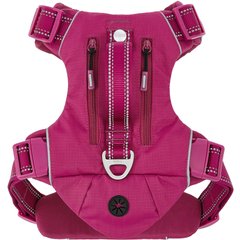
How To Put On a Back-Clip Dog Harness
- Unbuckle the straps.
- Hold the harness so the D-ring is facing up.
- Slip the harness over your dog’s head. The chest loop (the wider loop) should go on first, then the neck loop (the narrower one).
- Slip your dog’s leg through one leg hole of the harness. That leg should now be between the chest loop and neck loop.
- Buckle the harness so your dog’s other leg is also between the chest loop and the neck loop.
- Adjust the straps to ensure a good fit.
Attach the leash to the D-ring at your dog’s back when it’s time for a walk.
Recommended Products

Chewy Studios
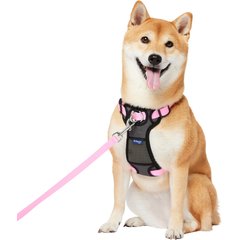
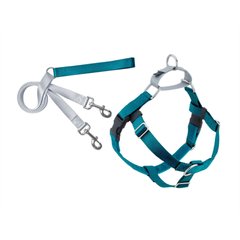
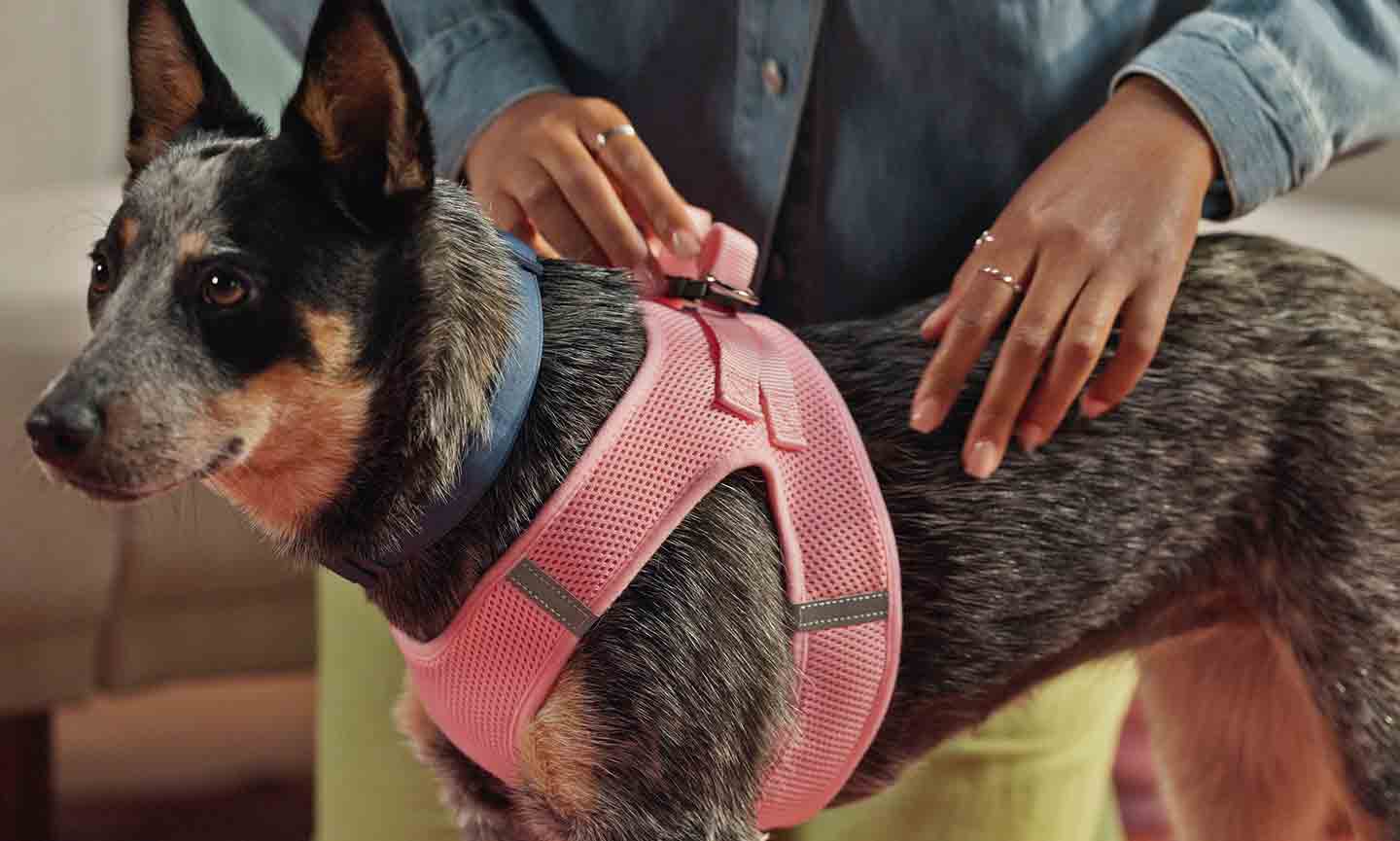
How To Put On a Front-Clip/No-Pull Harness
- Unbuckle the straps.
- Place the harness over your pup’s head.
- Drape the buckles over your dog’s body and around your dog’s chest/midsection.
- Reach for the other side of the buckles under your dog’s front legs and buckle into place.
- Adjust the harness straps as needed to ensure a good fit.
You’ll attach your leash to the designated front clip.
Recommended Products
Chewy Studios
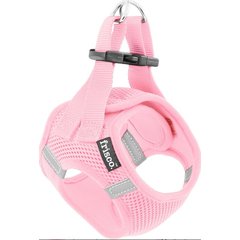
How To Put On a Step-In Harness
As you might have guessed, your pup will step into this harness, as opposed to you pulling it over their head.
- Lay the harness flat on the ground, and have your dog step into the loops with their front legs.
- Lift the harness so it’s pulled around your dog’s belly.
- Fasten the buckles securely.
- Adjust the straps as necessary for a perfect fit.
With this style, you’ll attach the leash to the D-ring on the back of the harness. Make sure to regularly inspect the harness fit to alleviate chafing or discomfort.
Recommended Products

Chewy Studios
A dog harness is an excellent tool for pet parents that can help improve training and maximize your pup’s safety and comfort. Phifer says, however, that harnesses don’t replace effective leash training. Investing the time and energy into properly training your dog to walk on a loose leash ensures a well-mannered pooch and easier outings.
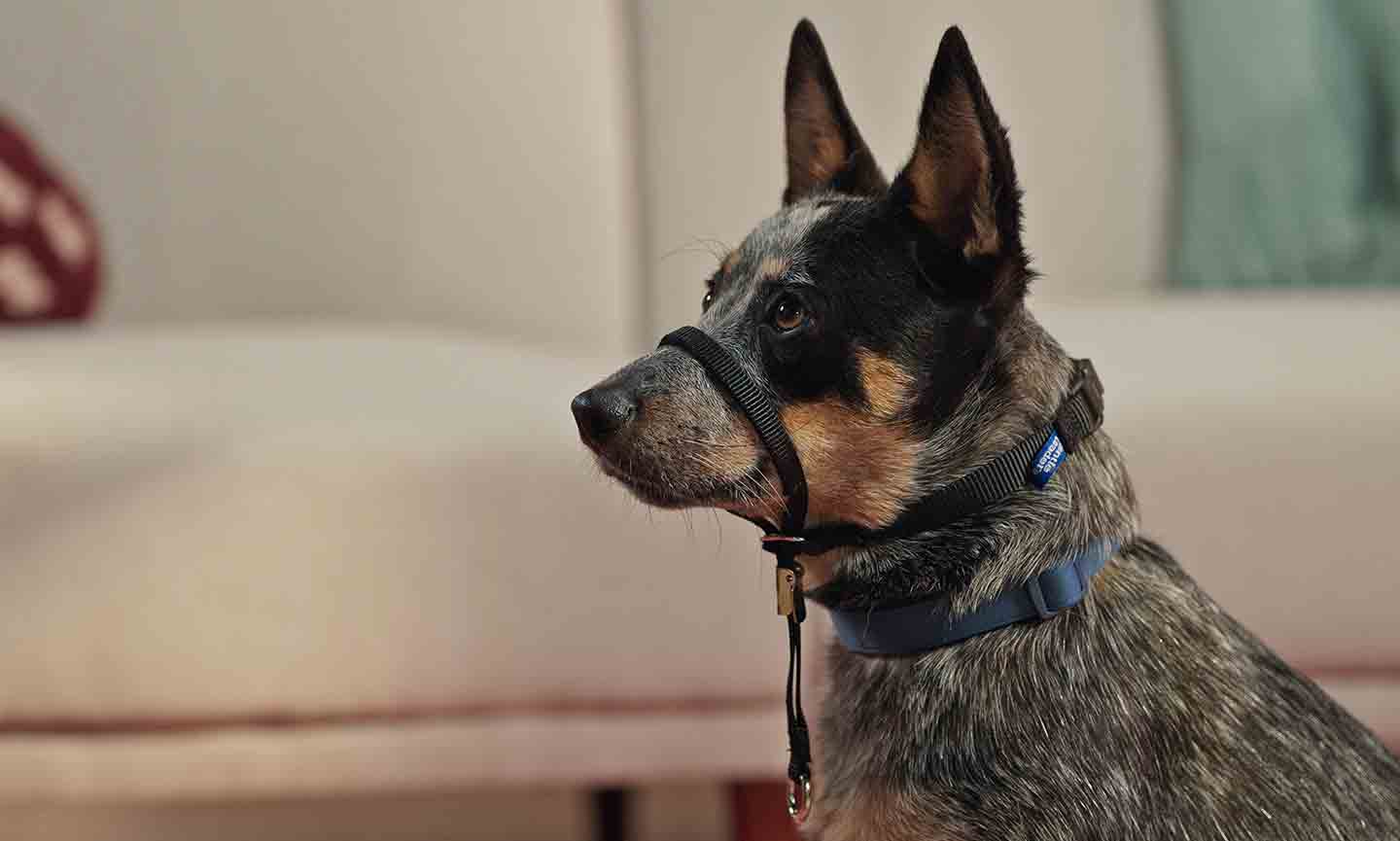
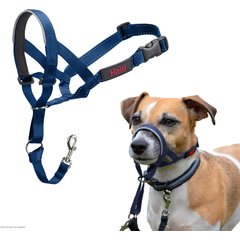
How To Put On a Head Collar Harness
- Start by holding it open and slipping it over your dog’s nose, ensuring the straps aren’t too tight or loose. You can use the two-finger rule here; you should be able to slip two fingers underneath the straps, but no more than that.
- Guide the straps behind your pup’s ears, and fasten the buckle securely.
Clip the leash to the D-ring, which is located under their chin.
Recommended Products
FAQs About Dog Harnesses
How do dog harnesses help dog training?
Dog harnesses can discourage behaviors like pulling, lunging and jumping. For the dog parent, they can provide better control, redirect pulling behavior, and help guide a dog’s movement. A dog harness can support leash training, but they are not a replacement for proper dog training.
What is the correct way to attach a leash to a dog harness?
Attach the leash to the D-ring on your dog’s harness; back-clip and many step-in harnesses attach along the dog’s back, front-clip harnesses attach at the chest, and head collar harnesses attach under the chin.
How do you get a dog to let you put a harness on?
Some dogs may be resistant to using a harness because it feels or looks strange to them. Let your dog smell and observe the harness before putting it on. Move slowly, avoid forcing the process, make sure the harness fits correctly, use positive reinforcement, and practice indoors before heading outside.
Attributions
Expert input provided by Bradley Phifer, CBCC-KA, CPDT-KSA, CCPDT, executive director of the Certification Council for Professional Dog Trainers and owner of Bradley Phifer Dog Training in Indianapolis.