Deworming Puppies: What To Expect, Symptoms, and Schedule


Photo by FatCamera/iStock/Getty Images Plus
Puppy deworming is an important part of early vet care because puppies are more vulnerable to dehydration and have developing immune systems. While intestinal parasites can affect dogs of any age, puppies are at greater risk for serious illness due to fluid loss from vomiting and diarrhea.
Here’s what to expect from your puppy deworming schedule, how vets prevent and treat parasites, common side effects, and the parasites and symptoms every pet parent should know.
Key Takeaways
- Symptoms of worms in puppies are wide-ranging, but may include poor appetite, vomiting, or diarrhea.
- Vets often use blood tests or fecal exams to diagnose parasitic infections.
- Dewormers are available as prescription and over-the-counter (OTC) medications.
- Puppy dewormers are generally safe, but pet parents should watch for side effects.
- The same drugs used to treat parasitic infections in puppies will also prevent them.
What Parasites Are Most Common in Puppies?
There are five main groups of parasites that commonly infect puppies:
- Ascarids (roundworms)
- Nematodes (hookworms, heartworms, whipworms)
- Cestodes (tapeworms)
- Coccidia (Isospora, Cryptosporidium)
- Protozoa (Toxoplasma and Giardia)
Only a few of these parasites can be easily seen: tapeworms, whipworms and roundworms. The rest are microscopic, and they are identified primarily in the feces. So, if your puppy has diarrhea but you don’t see any worms, that doesn’t mean parasites are not the cause!
The Companion Animal Parasite Council is a fantastic resource for pet parents and vets, and they have reviewed nationwide data about the prevalence of common intestinal parasites in dogs.
| Parasite | Prevalence |
|---|---|
| Hookworms | Approximately 20% in the entire U.S.; higher (36%) in the Southeast |
| Roundworms | 30–100% in puppies |
| Tapeworms | Up to 60% |
| Whipworms | 10–14.3% |
Symptoms of Specific Parasites in Puppies
| Scientific Name | Common Name | How It’s Contracted | Symptoms |
|---|---|---|---|
| Ancylostoma caninum | Hookworm | Puppies are most commonly infected while nursing from their mom who may have had a dormant hookworm infection. Puppies may also contract the larvae directly from the environment (like eating dirt that contains hookworm larvae). Larval penetration of the skin; hookworms have the unique ability to burrow through skin tissues to get to their preferred living area, the intestines. Ingestion of parasite hosts like rodents or cockroaches that are infected with larvae. | Weakness, pale gums, diarrhea, weight loss, stunted growth, a distended belly, vomiting |
| Toxocara canis | Roundworm | Puppies may become infected with roundworms from ingesting eggs from a contaminated environment. Ingestion of parasite hosts (like rodents, birds, worms, or insects) that have larvae in their tissues. Direct infection from their mom while they are still in the womb, called transplacental transmission, or through nursing. | Lack of energy, stunted growth, vomiting, diarrhea, coughing, distended belly |
| Dipylidium caninum | Tapeworm | Ingestion of infected fleas. It is important to note that ingestion of both dead or live fleas can cause a tapeworm infection. | Loose stool, scooting, mostly no symptoms but seen as “grains of rice” around the hindquarters and anus, rarely vomiting and low energy levels |
| Toxoplasma gondii | Toxoplasmosis | Ingestion of the parasite in rodent or bird hosts or ingestion of water or soil contaminated by cat feces. Rarely directly from mom in the womb or from mother’s milk. | Nervous system problems (seizures, tremors, altered behavior), diarrhea, weight loss, fever, lack of appetite, internal eye inflammation |
| Giardia duodenalis | Giardiasis | Ingestion of food, water or surfaces contaminated by infected feces. | Diarrhea, decreased energy levels, decreased appetite, weight loss or tender belly. Some pets may have minimal symptoms. |
| Trichuris vulpis | Whipworm | Ingestion of eggs from the environment or soil. | Diarrhea, blood in stool; in extreme cases: weight loss, dehydration, anemia, death. Some pets may have minimal symptoms. |
| Cystoisospora/Isospora sp. | Coccidiosis | Ingestion of the parasite from contaminated environment, or ingestion of infected hosts (mice, rabbits, etc.). | Diarrhea, weight loss, dehydration, decreased appetite; severe cases: vomiting, lethargy, blood in stool, death. Some pets may have minimal symptoms. |
Diagnosis of Worms and Other Parasites in Puppies
Some puppy parasites are large enough to see and can be found in the feces or on the areas around the anus.
One of the most common parasites is the tapeworm. Tapeworms are made up of segments (proglottids) where their eggs are contained. They shed these segments in the stool, and many puppy owners see these segments in the stool, on their puppy’s fur or on the ground. They look like small maggots or cooked rice grains that move—yuck!
Even if you see parasites in your puppy’s stool, a veterinarian should still examine them to determine exactly what is infecting your puppy.
Choosing the treatment, knowing if the parasite is a danger to you, other pets or your family, and the need for environmental/home cleaning all depend on the type of parasite causing the infection. In addition, your pet may have more than one parasite present, which could mean they need more than one type of treatment.
Have you ever been asked by your veterinarian to “bring in a stool sample”? Well, that’s what we examine to search for parasite eggs and microscopic parasites. This is the most common method to diagnose roundworms, hookworms, whipworms and coccidia. Other parasites, namely whipworms and Toxoplasma, don’t shed their eggs routinely in the stool.
There are other tests of the blood for those parasites whose eggs are not readily found in feces; these are mostly used for Giardia.
Treating Worms and Other Parasites in Puppies
Many treatments are available for control of parasitic infections, and these come in many different forms: pills, chewable dog treats, liquid, powder, granules added to dog food, pastes and injections.
Types of Deworming Treatments
Anthelmintics (anti-parasite drugs) are used to treat roundworms, tapeworms, hookworms and whipworms, this includes medications like fenbendazole, mebendazole and albendazole.
Other parasite treatments include:
- Praziquantel, used for flukes and tapeworms
- Pyrantel pamoate, for roundworms and other nematodes
- Macrocyclic lactones, like ivermectin and milbemycin found in heartworm preventives
Ultimately, your vet will determine the best treatment for your dog based on the type and severity of infection they have.
Treatment Protocol
Treatment is highly dependent on the type of infection that your pup has.
It may require your pet to be on medication for several days to weeks and then for another round of medication to be given two to three weeks later. The repeat dosing is used to kill the parasites that were not adults (eggs, larvae) during the first treatment but have now “grown up.” Most life cycles of puppy parasites are around three weeks long.
Dewormers are available as prescription and over-the-counter (OTC) medications:
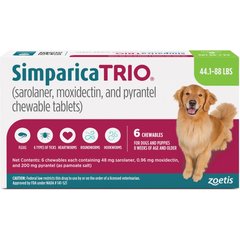
- Prescription: By using a monthly heartworm preventive, you can also help treat and prevent intestinal parasites. Monthly heartworm preventives that include prescription dewormers, such as Simparica Trio™ and Sentinel® Spectrum®, require a vet’s approval.
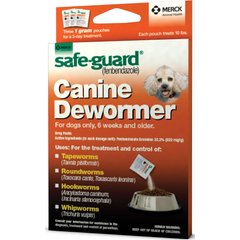
- OTC: There are some OTC dewormers, such as Elanco™ Tapeworm Dewormer and Safe-Guard® Canine Dewormer, which are suitable for treating certain uncomplicated, mild worm infections and can be purchased without a prescription.
Recommended Products


Side Effects of Deworming Puppies
For the most part, many anti-parasite drugs (fenbendazole, pyrantel, praziquantel) have a very high margin of safety, meaning that giving a bit too much is unlikely to cause problems. That being said, always follow your veterinarian’s recommendations for deworming.
While most dogs won’t experience side effects from deworming medications, side effects are possible with giving any medication, and side effects from deworming medications are rare but may include:
- Diarrhea, vomiting and lack of appetite: Puppies with a large number of parasites (high worm burden) may become ill after treatment. Imagine all of the parasites in the intestines all dying at once, the lining of the intestines becomes inflamed, causing diarrhea, vomiting and lack of appetite. This is usually a self-limiting problem, and puppies are back to normal within a day or so.
- Coma, tremors and death: Use of heartworm prevention (ivermectin) is very effective against most parasites; however, some breeds cannot tolerate the higher dose. This relates to a mutation in a gene called MDR-1, which codes for proteins that protect the brain (blood-brain barrier). When dogs with MDR-1 mutation get large amounts of drugs like ivermectin, opiates (morphine-like painkillers) and chemotherapy, they can have serious problems like lapsing into a coma, tremors and death.
Puppy Worming Schedule: Prevention and Protection
Using many of the same drugs for treating parasitic infections will also prevent them.
Current recommendations from the CDC and the American Association of Veterinary Parasitologists are to provide deworming medications against roundworms and hookworms at 2 weeks of age, repeating the dewormer every 2 weeks until the pups are 2 months old.
Ideally, treat monthly from 2–6 months of age to eliminate different developing stages of the intestinal parasites.
Puppies should be dewormed using this protocol even if they have “negative” fecal exam results, meaning that no parasite or parasite eggs were seen on examining the stool sample. Puppies may have infections where the worms are not mature enough for eggs to be found in their feces.
Housing conditions and location are also important factors related to parasitic infection.
Puppies housed together, with frequent exposure to new dogs and puppies, are more likely to become infected.
Unclean conditions, exposure to other animals’ feces, and transmission from other creatures—like fleas, mosquitoes and cockroaches—increase the chance of infection too.
So, keep your home clean. That includes:
- Regularly cleaning up feces from your dog’s environment
- Washing your dog’s bedding
- Sanitizing any areas they frequent.
As you’re training your puppy, it’s best to avoid pottying in areas where there are large numbers of dogs. So, keep your pup away from dog parks and stick to potty training pads or your own backyard until their immune system is a bit more mature, usually around 4–5 months, when they have finished their puppy vaccine series.
Puppy Parasite Danger to Humans
Not only do many of these parasites cause illness in puppies, but some can infect people and other species like cats.
Contagious agents that infect multiple species and spread from animals to humans are called “zoonotic,” and they include hookworms, roundworms, Toxoplasma, coccidia, Giardia and cryptosporidium.
Hookworms and Roundworms
Hookworms and roundworms can invade broken skin, causing “larva migrans,” which are parasites that migrate through an unsuitable host.
Parasites need their hosts to not only get food, but also to complete their life cycle and reproduce.
When puppy parasites like hookworms, roundworms and Toxoplasma infect people, those parasites cannot complete their life cycle. However, they will cause problems!
For example, say you are playing catch in the dog park and bend down to tie your shoelace. Then you wipe your brow, unsuspectingly infecting your eye with a dog roundworm. Well, that worm can cause ocular larva migrans. It will actually grow and move around inside your eye, and could cause blindness.
Visceral larva migrans occurs when roundworms migrate through the inside of the abdomen, causing damage to internal organs. Canine roundworms are the leading cause of visceral and ocular larva migrans.
Hookworms cause cutaneous larva migrans; they penetrate the skin and live under the surface, creating red, irritated marks.
Coccidia and Giardia
Coccidia and Giardia are also zoonotic, and many dogs will have a few of these parasites but not have illness associated with them.
For some dogs, coccidia and Giardia are commensal organisms, like the bacteria that live in your mouth.
Many vets recommend only treating for these parasites if symptoms of vomiting, diarrhea and such are present.
Certain types of coccidia and Giardia can be transmitted to other animals, so discuss with your veterinarian who may be susceptible if your pet is diagnosed with one of these parasites.
Cryptosporidium
Cryptosporidium is a major problem in some farm animals like cows and sheep.
Dogs are rarely affected, but puppies and dogs with compromised immune systems can get sick, typically with vomiting and diarrhea.
Luckily the strain that infects cows and people rarely is found in puppies.
Remember, all puppies should be preventively treated for intestinal parasites every few weeks from 2–8 weeks of age, and then monthly for the next several months.
Every pup is different, so speak to your veterinarian about what parasite prevention program is best for them.
Next, learn about deworming in dogs, including when adult dogs are typically dewormed.
This content was medically reviewed by Chewy vets.
FAQs About Puppy Deworming
How often should you deworm puppies?
Both the CDC and the American Association of Veterinary Parasitologists recommend that puppies be dewormed beginining at two weeks of age, with a repeating schedule every two weeks until they are 2 months old—followed by monthly treatments until they are 6 months old.
Your vet may also recommend ongoing parasite prevention as your puppy grows.
What should I expect after giving my puppy dewormer?
After deworming, follow your veterinarian’s instructions and monitor your puppy for any side effect or ongoing symptoms. If your puppy has vomiting, diarrhea, poor appetite, or seems unwell, contact your vet for guidance.
Can I deworm my puppy without going to the vet?
While there are over-the-counter (OTC) medications suitable for treating certain uncomplicated, mild worm infections, it’s best to work with a veterinarian before deworming a puppy. Different parasites require different treatments, and your vet can diagnose the parasite and choose a dewormer that is appropriate for your puppy.
What are the signs a puppy needs deworming?
Signs and symptoms that may point to worms or other parasites in puppies are wide-ranging, but may include poor appetite, diarrhea and vomiting (see the full list and chart in this article for a more complete list). Because different parasites can cause different symptoms, a veterinarian should examine your puppy and perform testing if parasites are suspected.
Attributions