What Size Fish Tank Do I Need?



Photo by JackF via Getty Images
When selecting a tank, consider the needs of your fish, as well as where you’ll keep it. The right tank size depends on the species you plan to keep, how many fish you’ll have, and where the aquarium will go. Smaller tanks may seem easier, but larger tanks are often better for beginners.
Key Takeaways
- When selecting a fish tank, consider the species of fish and how many the tank will house. A fish's size and behavior are important factors.
- Your budget affects the size you can choose, while the tank’s filled weight and footprint affect placement and support.
- Smaller freshwater tanks aren’t necessarily easier to maintain than larger tanks; saltwater tanks are the opposite.
Why Does Fish Tank Size Matter?
While smaller tanks are easier to access, they are not always easier to care for than larger aquariums. Larger volumes of water can maintain stable parameters for longer than smaller ones.
A tank’s dimensions also determine its suitability for different species. Make sure to size your potential fish tank appropriately for the space. The floor underneath must support its weight, which increases significantly with size.
How Tank Size Affects Water Quality and Stability
Tank volume affects how quickly water conditions can change. Here’s how:
- Water volume and parameter fluctuations: Water parameters can change more slowly in larger tanks.
- Temperature stability: Often, the larger the water volume, the less likely fluctuations are to affect the system.
- Waste concentration: Build-up can have a larger impact in a smaller tank.
- Margin for beginner errors: A larger water volume can make some changes less abrupt, but it doesn’t replace regular testing and maintenance.
- Micro-tank management: Super-small tanks with lower water volume mean less margin for error and require more skill to maintain.
How Tank Size Affects Fish Health and Behavior
Your tank size also plays a key role in your fish’s overall health, longevity, and behavior.
- Adult fish size: A tank sized for adult fish better supports their behavior and bioload.
- Swimming room: Active swimmers need space. Without space, they can become stressed and are at risk of health issues like severe weight fluctuations.
- Territorial behavior: Tanks without enough space can lead to more territorial disputes, which can stress fish and harm community health.
- Schooling requirements: Schooling fish species do best in large groups, which require more space.
- Bottom-dwelling versus open-water species: Bottom dwellers are limited to the lower ⅓ of the tank, so they have less swimming space than open-water species, which have nearly ⅔ of the water column to swim in.
- Why gallons alone don’t tell the whole story: A tank’s size and dimensions don’t match its gallons; an ultra-long, short tank can have the same volume as a regular rectangular tank. Some species may benefit from more horizontal space while others may benefit from more vertical space.
What Determines the Tank Size I Need?
The following are some factors to keep in mind when deciding on the best tank size for your fish:
- Tank setup and maintenance requirements
- The number and species of fish (larger fish need more space)
- Available space you have for your tank (tanks vary in width, length, and height)
- Water weight per gallon
- Tank’s water volume per gallon (freshwater weighs 8.34 pounds; saltwater weighs 8.56 pounds)
- Remember the weight of the substrate, rocks, and other tank decorations
- Consider your budget for short- and long-term tank maintenance
Fish Tank Size Chart: Common Aquarium Sizes
| Tank Size | Best Suited For | Space | Beginner-Friendly? |
|---|---|---|---|
| 5 gallons | Desktop/nano setups | Very compact | No |
| 10 gallons | Small setups | Compact | Yes |
| 20 gallons (high) | Small community setups | Taller footprint | Yes |
| 20 gallons (long) | Small community setups | More horizontal room | Yes |
| 29 gallons | Community tanks | Same basic footprint as some 20 gallon tanks, but taller | Yes |
| 40-gallon breeder | Larger community tanks | Wide footprint | Yes |
| 55 gallons | Larger communities/several larger fish species | Requires substantial dedicated space | Yes |
| 75 gallons | Larger fish/communities | Large, heavy setup | Yes |
What Is the Best Fish Tank Size for Beginners?
Generally, the best fish tank size for beginners is 10 to 30 gallons. However, your fish’s exact needs will determine the correct tank size. These are often purchased as kits that include supplies such as filters, heaters, gravel, and decorations.
First, small tanks are not necessarily easier to maintain. Parameter changes impact smaller volumes of water more quickly. Although larger aquariums need more water and stronger equipment, they tend to be more stable.
However, a 10-gallon tank is a great beginner option, as long as you are mindful of the species and number you add. Aim for five to 10 hardy, peaceful community fish for success. If you want a larger population or more demanding species, you will need a larger tank.
When Should You Choose a Larger Tank?
You should choose a larger tank in the following situations:
- Fish grow large: Keep adult size in mind. Some species can grow to several times their juvenile size.
- Species need substantial swimming room: Active swimmers need larger tanks with enough space to stay healthy.
- Keeping a school or community: Smaller tanks won’t show the community dynamics of schooling or shoaling fish species.
- Territorial species need separation: More space means fewer territorial disputes and a more peaceful, healthier tank.
- You want more stocking flexibility: More space lets you keep larger populations and a wider variety of fish.
- You expect to expand the aquarium community: A larger tank makes it easier to add more fish over time.
Recommended Products

Choosing a Tank Size for Different Types of Fish
Different fish species require different tank sizes. The number of individual fish also affects the required tank size.
Betta Fish Tank Size
Although bettas are often sold in bowls, they thrive with the swimming space, heating, and filtration that larger tanks provide.
Goldfish Tank Size
Goldfish are commonly sold as beginner fish, but they are notoriously messy, eat a lot, and produce a lot of waste. Adults are significantly larger than the juveniles often sold at pet stores.
Some varieties remain relatively small in adulthood and can suit beginner tanks, while others get quite large and may need larger tanks.
Tropical Community Fish Tank Size
Community tanks include multiple species that use different areas of the water column. A community tank should allow adequate space for species that inhabit the top, middle, and bottom of the tank.
Schooling species especially need space to exhibit their natural behavior. They do best in larger groups, which can affect selection of additional tankmates. A larger school of top- or mid-water schooling species may mean only a handful of bottom-dwellers, if any.
Cichlid Tank Size
Juvenile cichlids are small enough to fit in their parents’ mouths but can grow to several inches long—or even larger. Their tank should reflect their adult size.
Many cichlid species are territorial and aggressive, so they need plenty of space to keep stress levels down. Research individual species’ needs, as they can vary greatly.
Saltwater Fish Tank Size
Consider the number, size, and behavior of species before purchasing a tank for your saltwater fish. Don’t forget the tank also needs to have enough space for live rock and any filtration equipment. Unlike freshwater tanks, bigger is often better when it comes to tank size.
If you’re keeping corals, also consider the space needed for additional filtration and any dosing equipment.
Mistakes to Avoid When Choosing a Fish Tank
Choosing a new fish tank isn’t cut and dry, even for the most experienced aquarists. Here are the most common mistakes to avoid when selecting the right-sized freshwater or saltwater tank.
- Assuming a smaller tank is easier
- Not considering dimensions/footprint
- Forgetting the weight of water, substrate, and decor
- Choosing a tank before knowing the needs of the fish
- Not considering dynamics of schooling fish
- Getting a tank for juveniles without considering adult size
- Overstocking the tank
Fish Tank Size FAQs
What size fish tank should a beginner get?
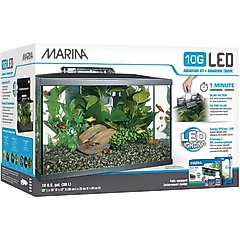
Many beginners start with 10-gallon tank kits that include a light, filter, lid, tank, heater, and sometimes decorations.
Are bigger fish tanks easier to maintain?
Bigger freshwater tanks aren’t necessarily easier to maintain, but their water parameters are easier to keep stable. However, for saltwater tanks, larger tanks are easier to maintain.
How do I calculate what size fish tank I need?
Calculate the size of the fish tank you need by deciding what fish you want to keep. The size, temperament, and number of species will determine the tank size you need.
Is a tall or long fish tank better?
It depends on the fish species. Some fish need more vertical space while others need more horizontal space.
How heavy is a fish tank when full?
A full tank’s weight depends on its size, the water, and the decorations inside. To estimate the water weight, multiply the number of gallons by 8.34, the weight per gallon of freshwater.
Attributions