Best Fish for 30 Gallon Aquariums


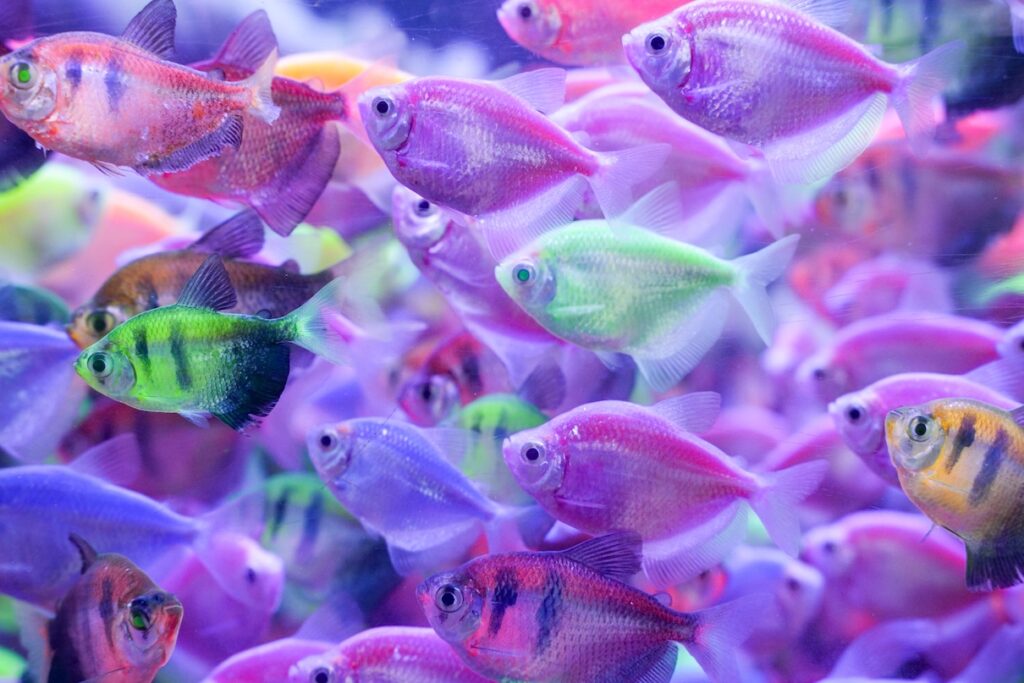
Photo by Adobe/hsinwei
The best fish for 30-gallon aquariums are peaceful community species like tetras, corydoras, certain gouramis, and livebearers. Experienced aquarists may also be able to keep select semi-aggressive species in a 30-gallon tank with careful planning.
Tanks this size offer flexibility in setup, as their volume provides enough space to be maintained as either a planted tank or a centerpiece fish setup.
Key Takeaways
- A 30-gallon tank is a great midsize option for beginners because it’s more stable than smaller aquariums while remaining manageable to maintain.
- Planted, community, and centerpiece tanks are all great setup options for a 30-gallon aquarium.
- The best fish for a 30-gallon freshwater tank are species with a peaceful temperament.
Is a 30-Gallon Aquarium a Good Size?
A 30-gallon fish tank is large enough for many freshwater community fish while remaining manageable for most beginner aquarists.
The main benefits of this tank size include:
- A larger volume of water means more stable water parameters than smaller tanks.
- Increased tank space expands the variety and number of fish species that can be kept.
Maintenance is generally manageable and less demanding than with larger aquariums.
8 Best Freshwater Fish for 30-Gallon Aquariums
Neon, Ember, Rummy-nose, and Similar Tetras
Tetras are peaceful fish that do well in groups and look especially striking in a planted tank.
- Adult size: 1–1.5 inches
- Temperament: Peaceful
- Schooling: Yes, they do best in a large group of the same species
- Minimum group size: Eight or more
- Experience level: Beginner
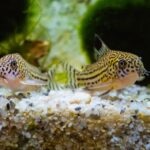
Corydoras Catfish
Corydoras catfish are a bottom-dwelling, social species that pairs well with top- and middle-dwelling species. They help clean up uneaten food that other fish miss, but they should be target-fed with sinking pellets, too.
- Adult size: 2–3 inches
- Temperament: Peaceful
- Schooling: Yes
- Minimum group size: Six or more
- Experience level: Beginner
Honey Gouramis
Often the star of the aquarium, honey gouramis make excellent centerpiece fish, especially in a thriving community tank.
- Adult size: 2–3 inches
- Temperament: Peaceful
- Schooling: No
- Minimum group size: One, but they do fine in small groups too
- Experience level: Beginner
Guppies and Endler’s Livebearers
Guppies and Endler’s livebearers are colorful, active, beginner-friendly fish that do well in planted tanks. Closely monitor their population, as they can produce large numbers of fry, which may lead to overpopulation. Keeping only males helps solve this issue.
- Adult size: 1.5–2 inches
- Temperament: Peaceful
- Schooling: No
- Minimum group size: Six or more
- Experience level: Beginner
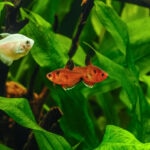
Platies and Swordtails
Platies are small, colorful, hardy fish that adapt well to many community setups, making them excellent tankmates. Like guppies, these are livebearers, so keep a male-only group if you don’t want too many fry.
- Adult size: 2–3 inches for platies, 3–5 inches for swordtails
- Temperament: Peaceful
- Schooling: No
- Minimum group size: Six or more, depending on species mix
- Experience level: Beginner
German Blue Rams
With the right level of experience and in a more mature, stable tank, German blue rams, a type of peaceful dwarf cichlid, can be an eye-catching addition to a community tank and easily become its focal point.
- Adult size: 2–3 inches
- Temperament: Peaceful but may become territorial when breeding
- Schooling: No
- Minimum group size: Single fish or a mated pair
- Experience level: Intermediate
Bristlenose Plecos
These freshwater fish are great algae eaters and a good, smaller alternative to larger pleco species. However, they still produce waste, and they aren’t a replacement for proper tank maintenance.
Bristlenose plecos come in a variety of colors, including albinos and blue-eyed lemons, and in short- and long-finned varieties.
- Adult size: 4–6 inches
- Temperament: Peaceful and nocturnal
- Schooling: No
- Minimum group size: One
- Experience level: Beginner
Kuhli Loaches
With their unique eel-like appearance, these bottom-dwelling fish are a good addition to community or planted tanks and can easily steal the show.
- Adult size: 3–4 inches
- Temperament: Peaceful, social
- Schooling: Yes
- Minimum group size: Six or more
- Experience level: Beginner
How Many Fish Can You Put in a 30-Gallon Tank?
Contrary to popular belief, the number of fish a 30-gallon tank can hold depends on their size, behavior, and your aquarium’s filtration system—not simply on inches per gallon.
While the “inches per gallon” rule was once a common guideline, it doesn’t tell the whole story. A fish’s size and mass can vary significantly between species. The rule also doesn’t account for:
- Fish behavior: Some species naturally require more space and territory, which can help reduce stress and aggression in fish.
- Adult size: Some fish grow significantly larger as they mature.
- Filtration: Certain species are messier eaters and require more robust filtration.
- Schooling needs: Schooling fish require enough room for the entire group to move around comfortably.
- Decor: Live and artificial plants, driftwood, rockwork, and other hardscape elements create visual barriers and help fish feel more secure.
Recommended Products
What Happens if There Are Too Many Fish in the Tank?
While it might be tempting to fill your tank with all your favorite fish, overstocking can create serious problems, including:
- Poor water quality: More fish produce more waste, which can quickly degrade water quality.
- Aggression: Without enough space, territorial fish are more likely to fight.
- Stress and disease: Crowded tank conditions can increase stress levels and make disease outbreaks among fish more likely.
Best Community Tank Combinations for a 30-Gallon Aquarium
A 30-gallon aquarium can support a peaceful community tank when the freshwater fish species have compatible temperaments, adult sizes, and water-parameter requirements.
Here are a few compatible combinations for each type of tank:
- Beginner community tank: Tetras, corydoras, and honey gouramis
- Livebearer tank: Guppies, platies, and corydoras
- Planted tank: Ember tetras, kuhli loaches, and German blue rams
When setting up a community aquarium, include fish from different swimming levels (top, middle, bottom) and avoid mixing species with opposite temperaments.
For beginners, it’s best to stick with a peaceful community tank. More experienced aquarists can research semi-aggressive species before mixing them.
If you’re experienced and set up a semi-aggressive community tank, barbs make a great centerpiece school, and it can also include larger gouramis, many catfish, and smaller cichlids.
Fish Species to Avoid in a 30-Gallon Tank
Not all freshwater fish species are suitable for a 30-gallon aquarium. The following species may grow too large, become aggressive, or produce excessive waste:
- Common plecos
- Oscars
- Bala sharks
- Tinfoil barbs
- Large cichlids
- Goldfish
- Koi
- Clown knives
FAQs About the Best Fish for 30-Gallon Aquariums
What fish can live in a 30-gallon tank?
Many fish species are well-suited to a 30-gallon tank, including tetras, corydoras, small gouramis, guppies, and platies.
How many fish can you keep in a 30-gallon aquarium?
There’s no single answer. The number of fish depends on the species, adult size, temperament, behavior, and filtration capacity of the aquarium.
Is a 30-gallon tank good for beginners?
Yes. A 30-gallon tank is a great option for beginners because it offers more stability than nano tanks without being difficult to maintain.
Can angelfish live in a 30-gallon tank?
A single angelfish may work in some 30-gallon setups, especially taller tanks, but tank dimensions and tankmates matter. A breeding pair may become territorial, and small fish such as neon tetras can become prey.
What is the best community setup for a 30-gallon aquarium?
The best setup is one that matches your experience level and interests. Popular options include beginner community tanks, livebearer tanks, and planted aquariums with live aquarium plants.
What mistakes should you avoid when setting up a 30-gallon tank?
Whether you’re a beginner aquarist or an experienced hobbyist, avoid these common mistakes when setting up your freshwater tank:
- Overstocking
- Little to no research
- Ignoring adult fish size
- Adding too many fish, or incompatible fish, before fully cycling the aquarium
- Skipping quarantine
Attributions