The 10 Best Tropical Fish for Beginners

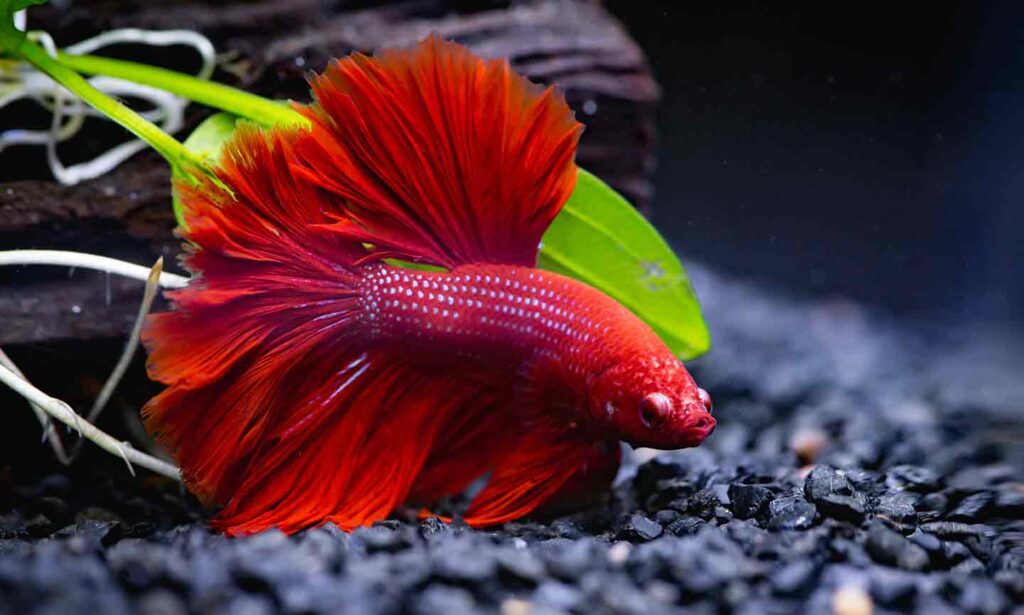
Photo by anurakpong/iStock / Getty Images Plus
If you’re planning your first fish tank setup, our experts will help you choose the best aquarium fish for beginners. The best tropical fish for beginners are ones that are easy to care for—which is why the tropical fish that made our list have very few special care requirements apart from a mature, well-maintained aquarium of suitable size and setup.
Experts also recommend choosing small, hardy fish that adapt easily to captive environments. In this guide, we explore 10 of the most beginner-friendly tropical fish species.
Key Takeaways
- Tropical fish generally need consistenly warm water; the ideal temperature varies by species but often falls around 75–80 degrees Fahrenheit.
- When choosing a mix of species, consider their social behaviors (schooling vs. pairing) and space needs to ensure compatibility your aquarium.
- Compatibility also depends on water type (freshwater or saltwater) and what consistent temperature each species needs to thrive.
The 10 Best Tropical Fish for Beginners
Found in warm aquatic environments around the world, tropical fish require a heated tank unless the ambient temperature where you live is high enough to keep the water warm. The ideal tank temperature varies from one species to another but generally ranges from 75–80 degrees Fahrenheit. Even if you live in a warm climate, installing an aquarium heater can help prevent fluctuations in water temperature that might stress your fish.
1. Guppies
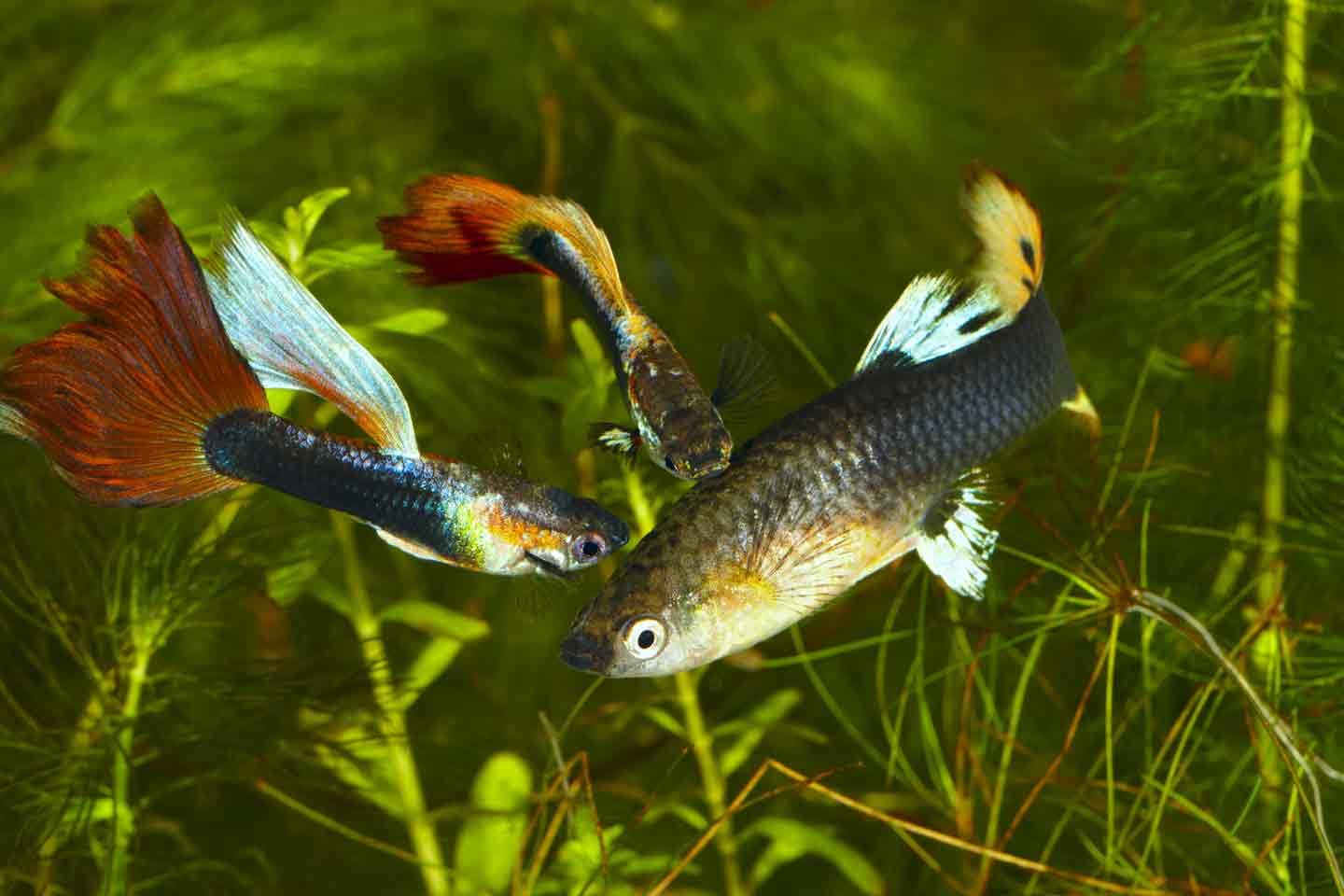
isoft/E+
- Scientific name: Poecilia reticulata
- Adult size: 1–2 inches
- Life expectancy: 3–5 years
- Best tank mates: Small, peaceful fish
Easily one of the most recognizable freshwater fish species, guppies come in a wide range of colors. Because they’re small and peaceful by nature, they’re ideal for a community fish tank. Guppies aren’t picky about food, so they’ll likely accept a wide range of commercial flakes and pellets as well as live, frozen, and freeze-dried foods.
As surface-dwellers, guppies tend to occupy the upper level of the tank; they won’t bother bottom-feeders or larger invertebrates like freshwater snails. Guppies don’t necessarily need to be kept with others of their kind—but if you do, be aware that they breed prolifically.
Recommended Products
2. Neon Tetras
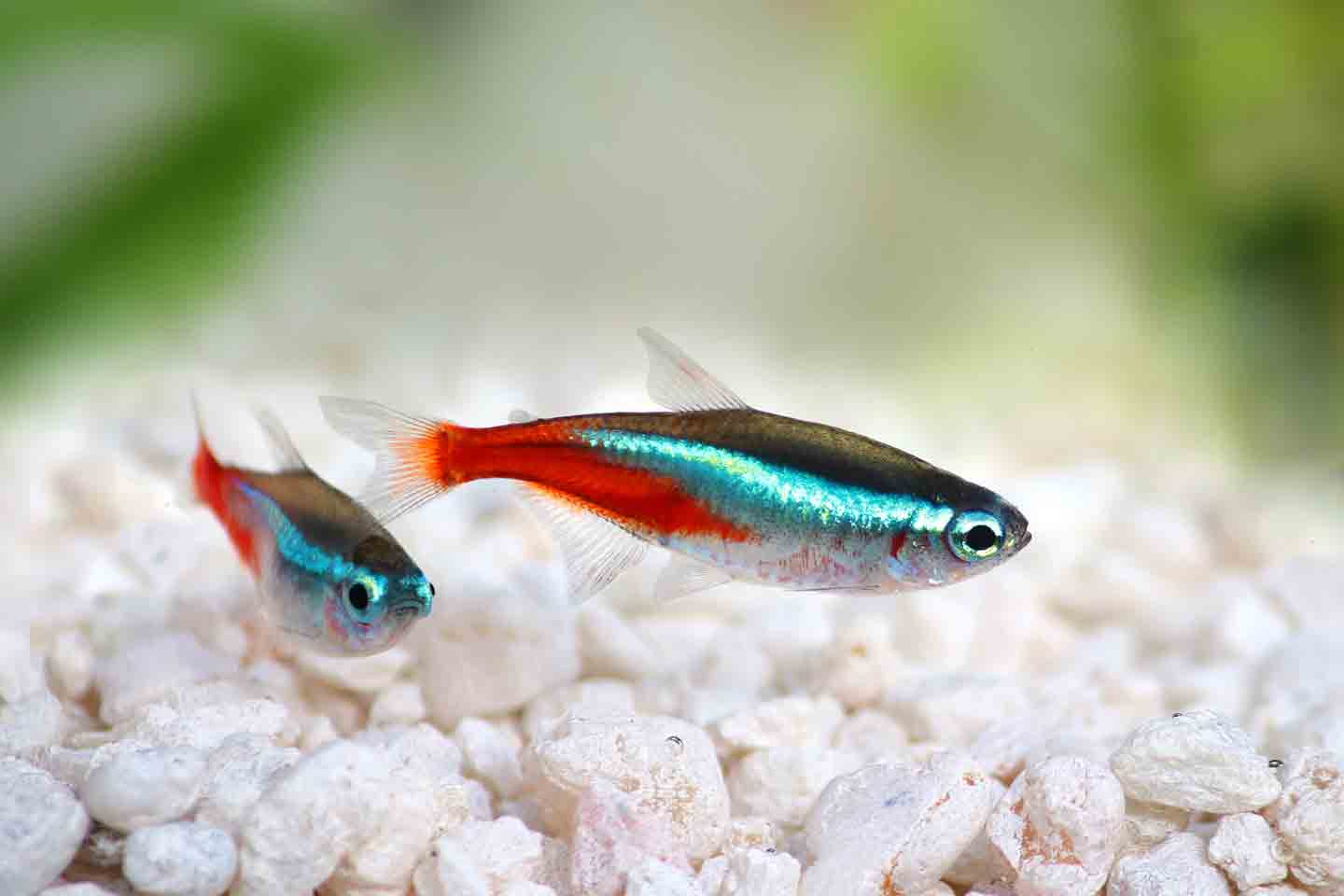
Mirko_Rosenau/iStock / Getty Images Plus
- Scientific name: Paracheirodon innesi
- Adult size: 1.5 inches
- Life expectancy: 2–5 years
- Best tank mates: Small, peaceful fish
With their iridescent blue and cardinal red coloration, a group of neon tetras makes a striking addition to the community tank. This colorful freshwater fish species stays under 2 inches in length and gets along with most freshwater tropical fish. Neon tetras do well on commercial diets formulated for tropical fish, provided the food is small enough for them to eat easily. They can be kept in tanks as small as 10 gallons, though a larger tank stocked with a school of at least six neon tetras is ideal.
3. Ocellaris Clownfish
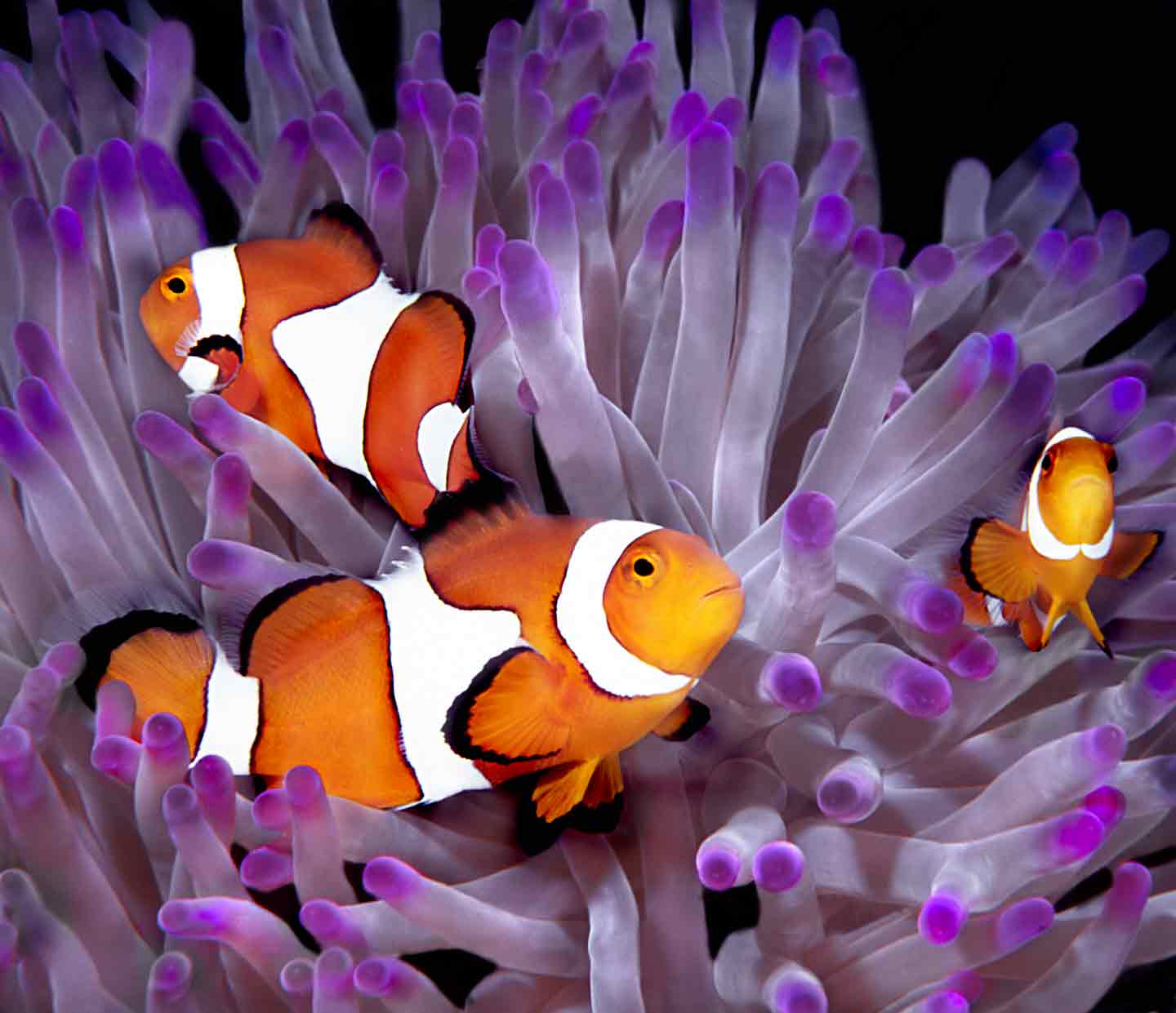
JodiJacobson/E+
- Scientific name: Amphiprion ocellaris
- Adult size: 3–4 inches
- Life expectancy: 12–20 years
- Best tank mates: Small and peaceful saltwater fish
Adaptable to both fish-only and reef tanks, ocellaris clownfish are one of the most recognizable species of saltwater tropical fish. Their small size and peaceful demeanor make them beginner-friendly. They’re also fairly hardy when kept in a mature, well-maintained tank environment.
Ocellaris clownfish can be kept singly in nano tanks as small as 10 gallons, though pairs or groups require more space. To prevent territorial aggression, it’s best not to keep two males in the same tank without sufficient space.
4. Betta Fish
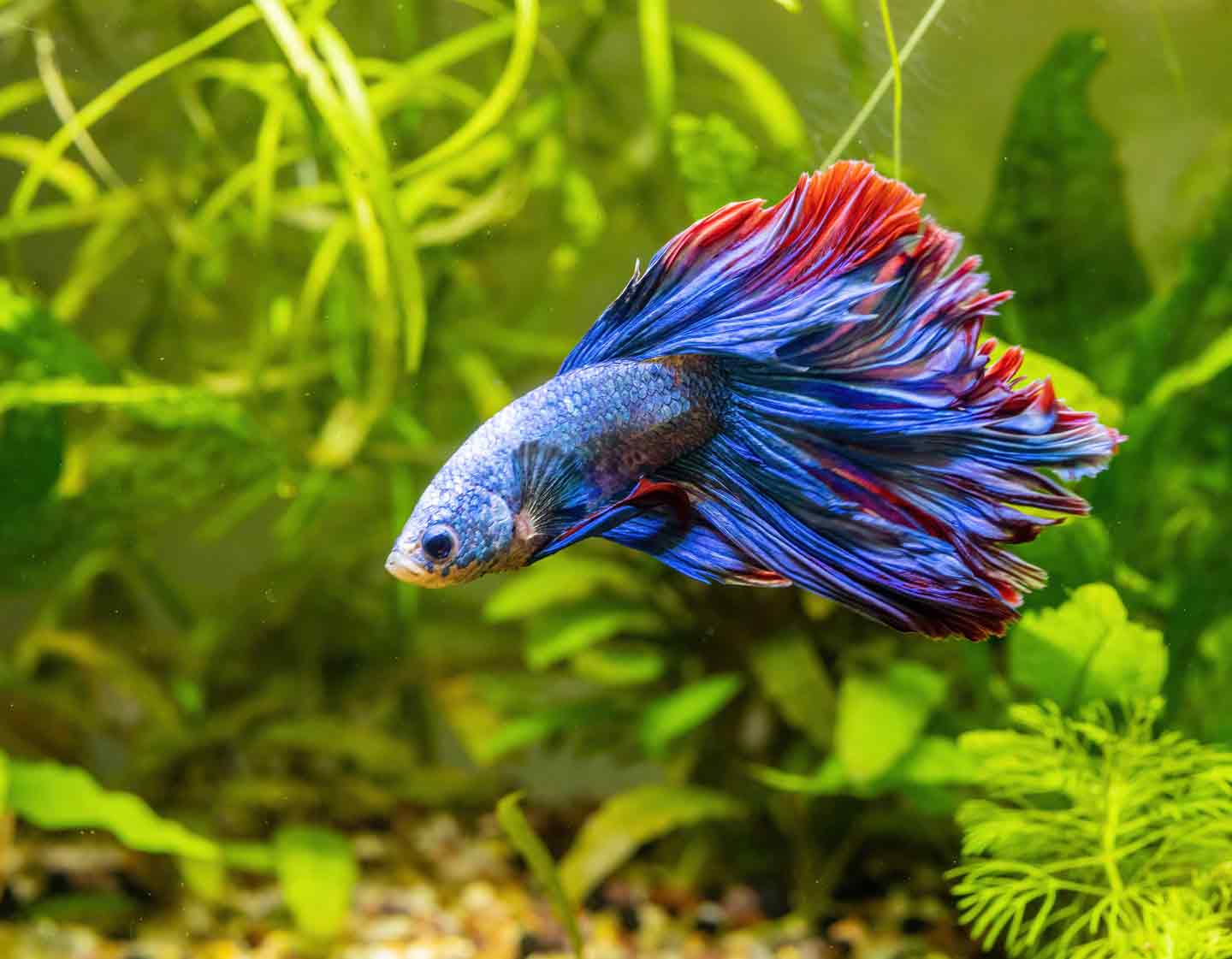
Artem Stepanov/iStock / Getty Images Plus
- Scientific name: Betta splendens
- Adult size: 3 inches
- Life expectancy: 2–5 years
- Best tank mates: Active, non-aggressive species
For many freshwater aquarium hobbyists, betta fish are the entry point to fishkeeping. They exhibit a wide array of colors, patterns, and fin types, which makes them highly attractive. A betta fish can be kept in a tank as small as 5 gallons, as long as it’s equipped with a filter and heater.
Bettas are notoriously aggressive toward other males of their species. In a large enough tank, however, betta fish tank mates can include fast-swimming, non-aggressive species like tetras and rasboras, or bottom-feeders like corydoras.
5. Danios
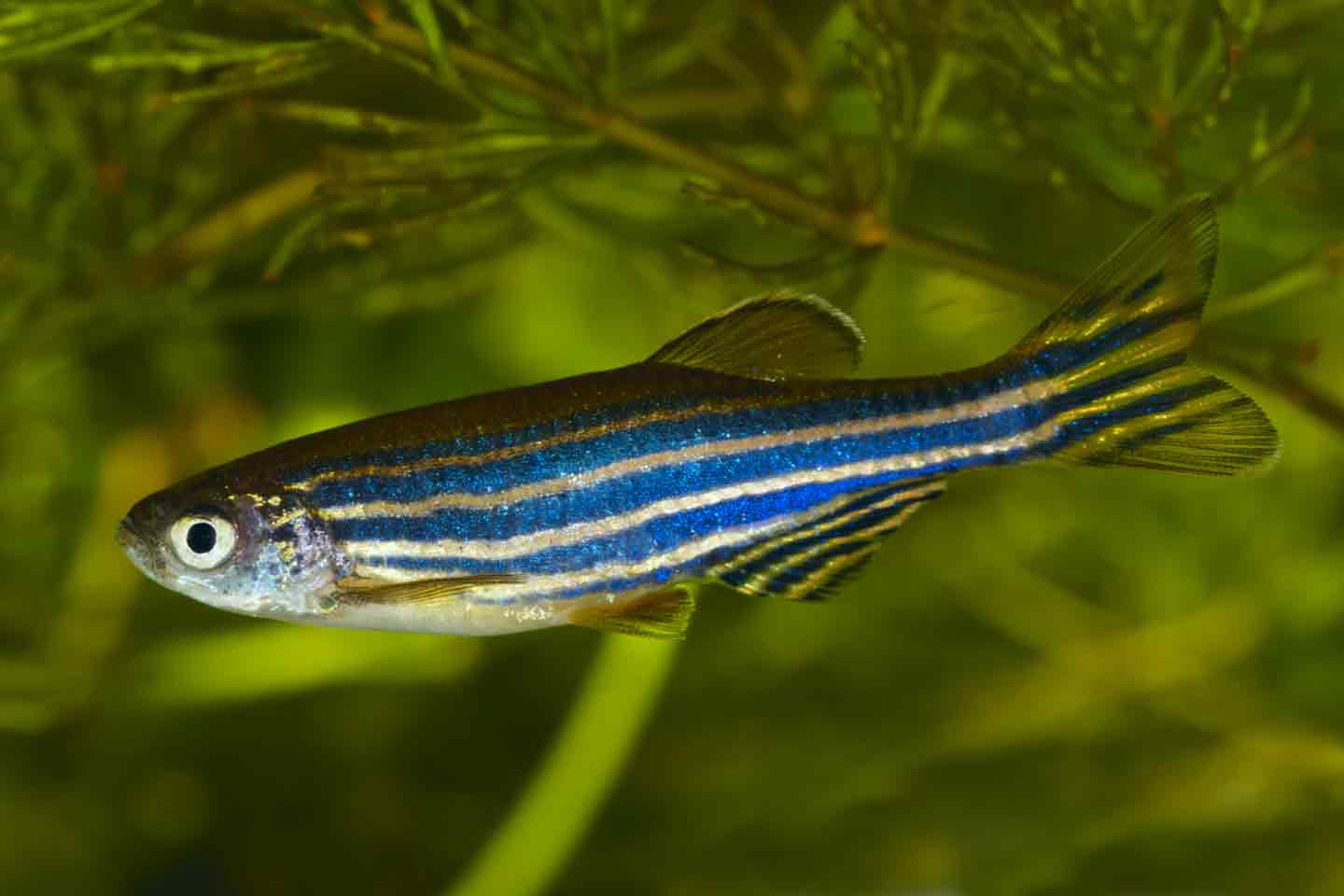
isoft/E+
- Scientific name: Danio sp.
- Adult size: 1.5–5 inches
- Life expectancy: 3–5 years
- Best tank mates: Peaceful community fish
Well-suited to the freshwater community tank, danios are generally small, peaceful, and easy to care for. There are many danio species to choose from, including long-finned and GloFish® varieties. Zebra danios are the most popular, named for their striped pattern. Glowlight danios are brightly colored and look similar to white-pearl danios, and rose danios exhibit more subtle coloration in hues of violet, pink, or yellow.
Danios get along well with most peaceful community fish, but do best when kept in groups of at least four to six of their own species or other danios. Though danios are still tropical fish, they can survive in water as cool as 64 degrees Fahrenheit.
6. Banggai Cardinalfish
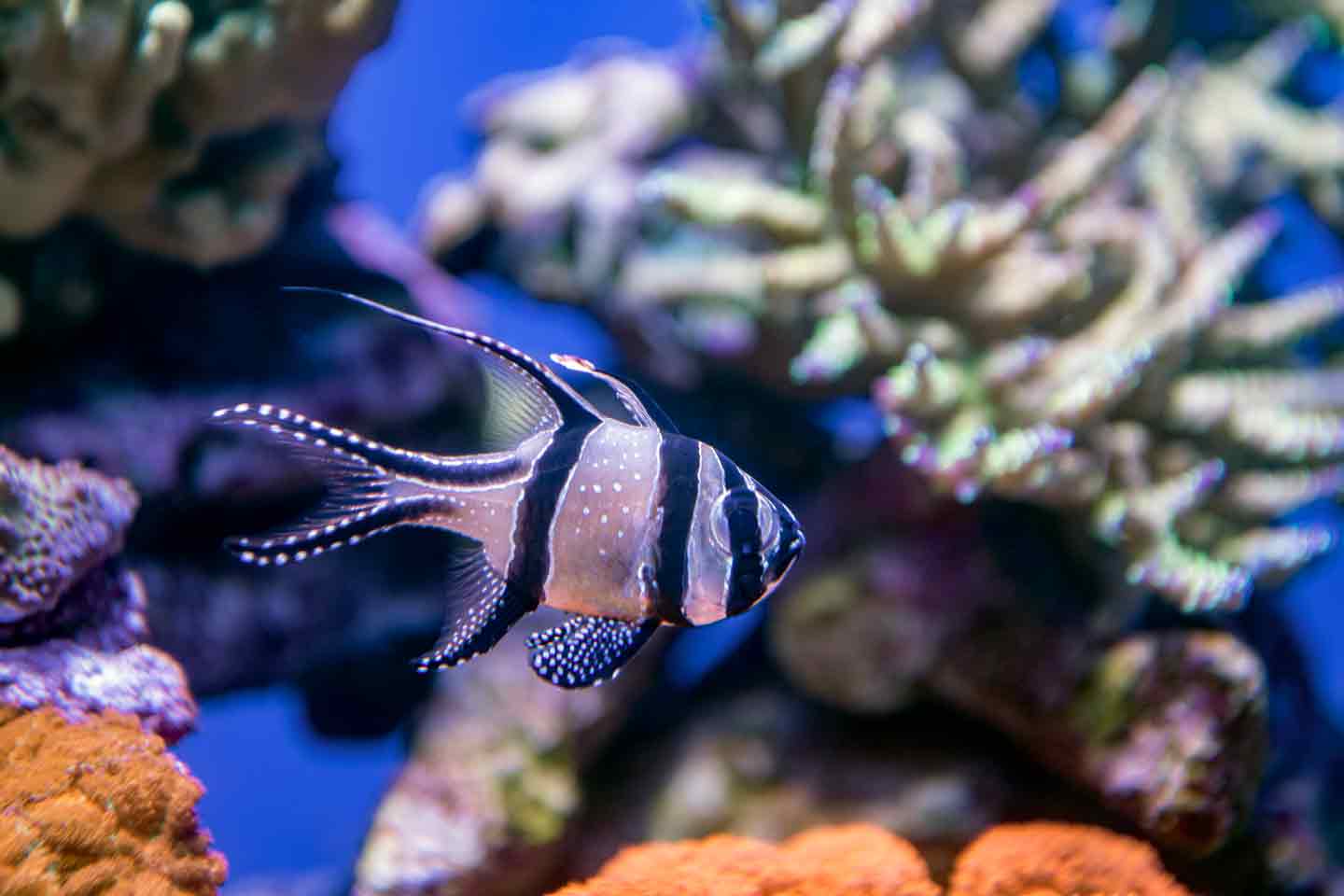
Windzepher/iStock / Getty Images Plus
- Scientific name: Pterapogon kauderni
- Adult size: 3 inches
- Life expectancy: 2.5–5 years
- Best tank mates: Peaceful community fish
Known for their black barred pattern and elongated fins, Banggai cardinalfish are a small, peaceful species of saltwater aquarium fish. Most specimens in the aquarium hobby are tank-bred, so they’re generally hardy and adaptable. Banggai cardinalfish are reef-safe and can happily coexist with other small saltwater species.
Compared to many marine species, Banggai cardinalfish are less active; they tend to stay in one place. As such, they don’t require as much swimming space as some fish but can still benefit from decor items in case they want to hide.
7. Tiger Barbs
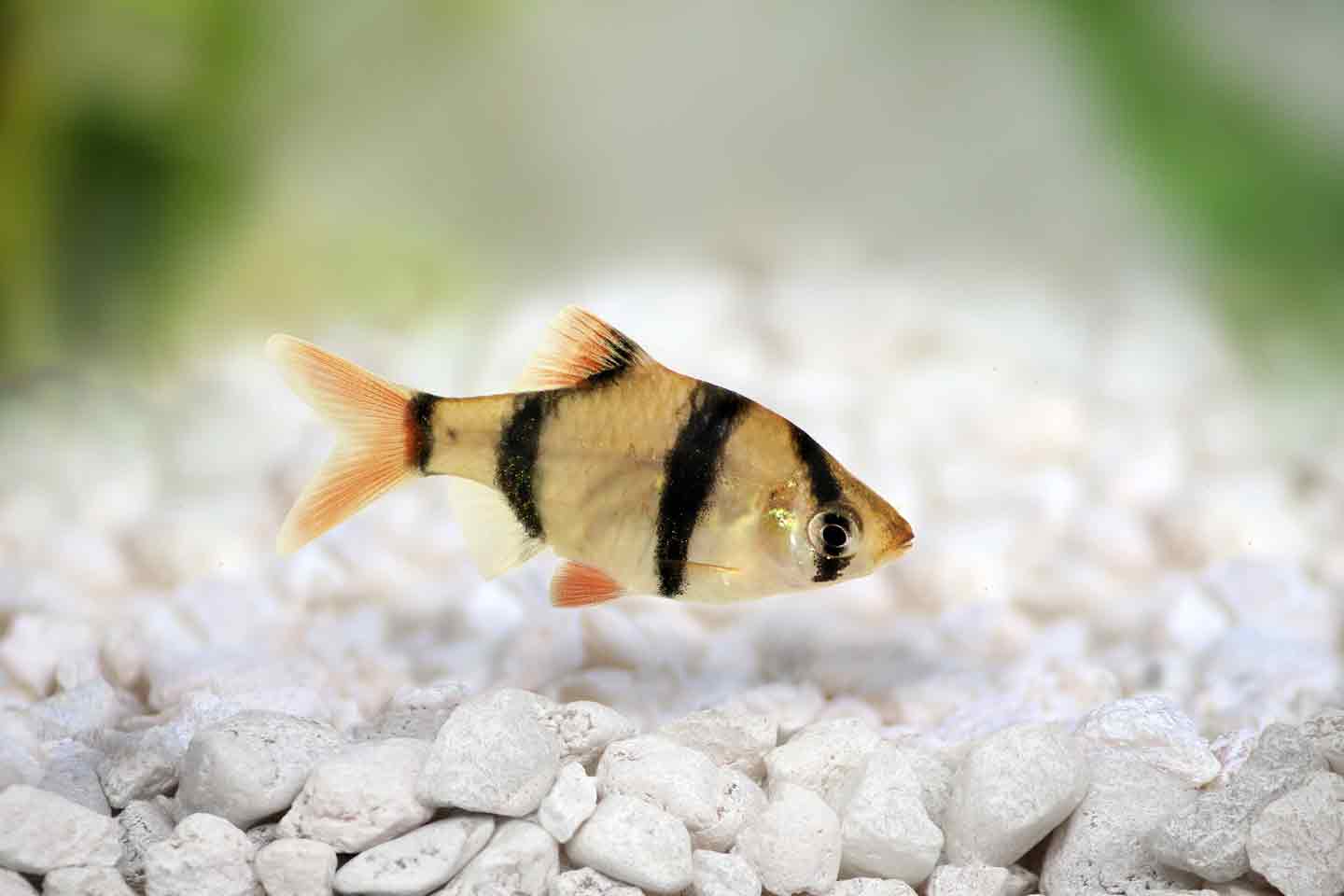
Mirko_Rosenau/iStock / Getty Images Plus
- Scientific name: Barbus tetrazona
- Adult size: 2.5–3 inches
- Life expectancy: 5–10 years
- Best tank mates: Fast-swimming community species
Known for their energetic nature and striped appearance, tiger barbs make entertaining additions to the freshwater tropical aquarium. Tiger barbs are hardy; can tolerate a temperature range of 72–82 degrees Fahrenheit; and can survive minor fluctuations in water quality. Aside from the traditional orange-and-black variety, tiger barbs also come in green, albino, GloFish, and even long-finned varieties. To prevent aggression toward other species, they’re best kept in large groups.
8. Corydoras Catfish

Mirko_Rosenau/iStock / Getty Images Plus
- Scientific name: Corydoras sp.
- Adult size: 1–4 inches
- Life expectancy: 5–10 years
- Best tank mates: Peaceful community fish
Corydoras catfish, or cories, are some of the most popular bottom-feeders for the freshwater tropical aquarium. Corydoras species range in size from the 1-inch pygmy cory (Corydoras pygmaeus) to the 4-inch barbatus cory (Scleromystax barbatus) and come in an array of patterns.
Unlike plecostomus, these catfish don’t tend to develop aggression as they mature. They don’t eat algae like plecos either, but they will help clean up uneaten fish food. Cories sift through tank substrate to find food, so it’s best to choose soft or fine-grained substrate that won’t damage their delicate barbels.
9. Blue-Green Chromis
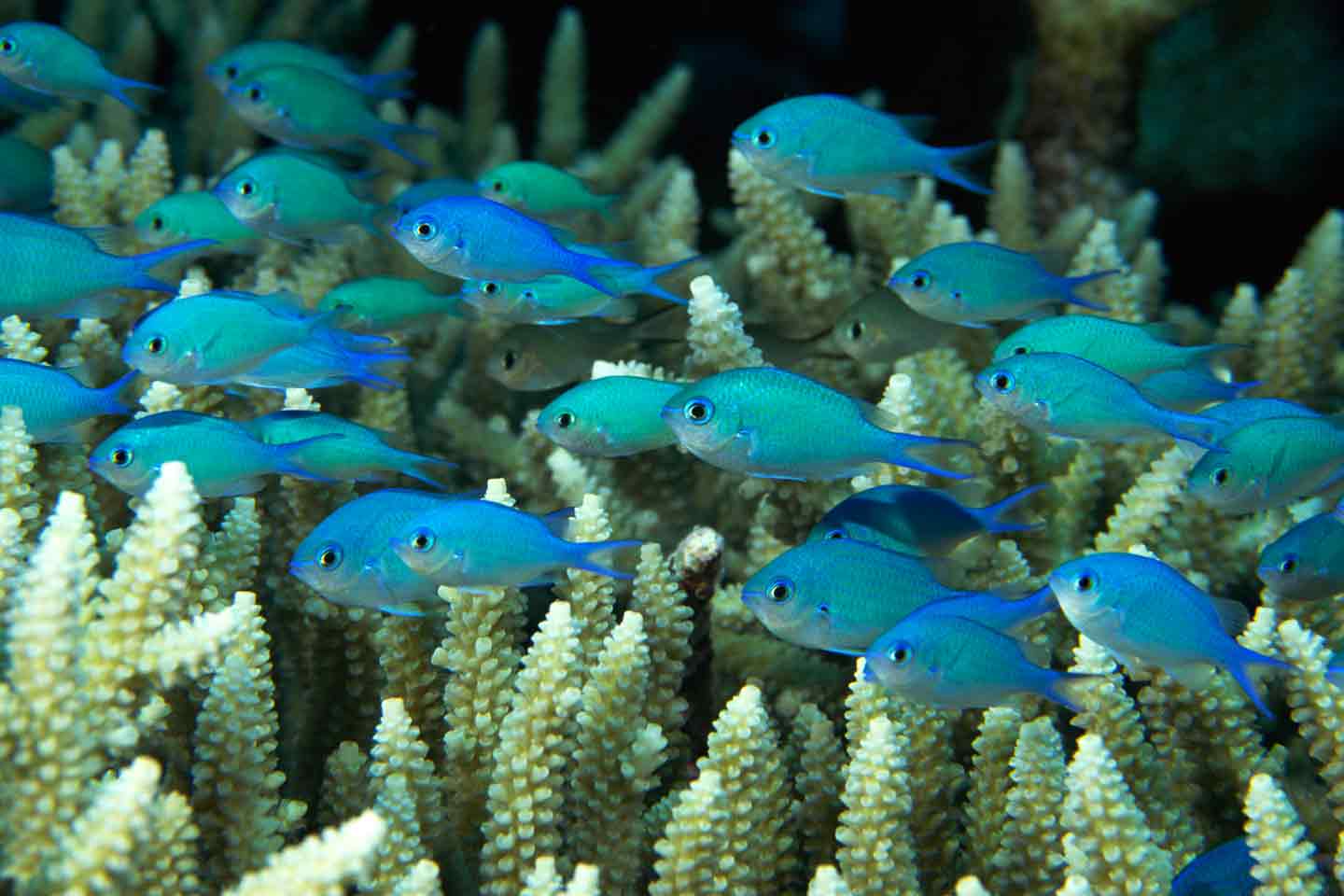
Comstock Images/Stockbyte
- Scientific name: Chromis viridis
- Adult size: 3–4 inches
- Life expectancy: 8–15 years
- Best tank mates: Peaceful community fish
Members of the damselfish family, blue-green chromis are small, hardy saltwater tropical fish. They’re easily identified by their blue-green color; they may even appear to glow under blue aquarium lighting. Blue-green chromis are ideal for beginner saltwater hobbyists, because they are adaptable to a variety of tank conditions; get along with most non-aggressive species; and readily accept commercial fish food.
10. Harlequin Rasboras
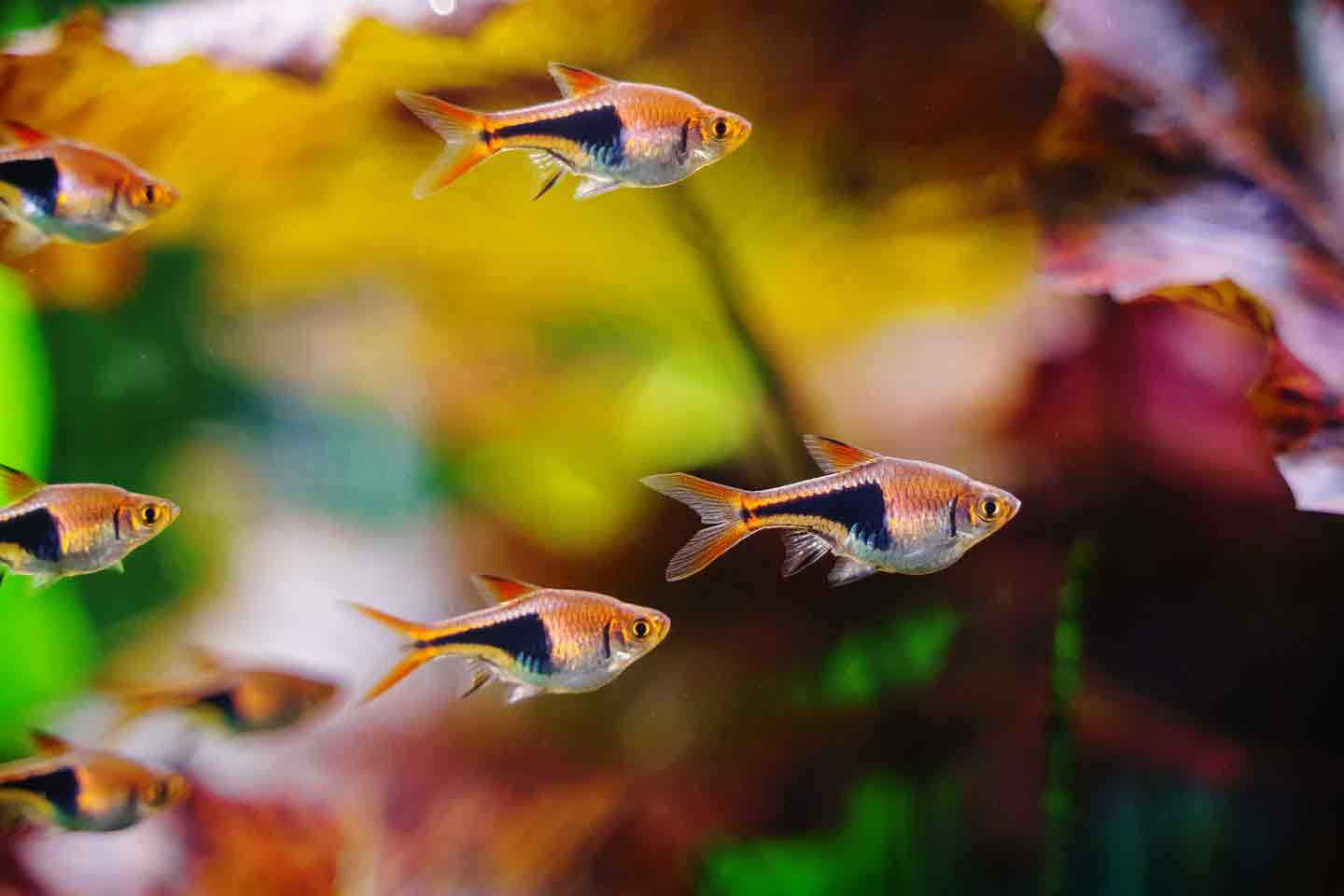
Marina Vedernikova/iStock / Getty Images Plus
- Scientific name: Trigonostigma heteromorpha
- Adult size: 1–2 inches
- Life expectancy: 4–6 years
- Best tank mates: Peaceful community fish
Harlequin rasboras are named for their dark, wedge-shaped markings. They’re a small, community-friendly freshwater species that does best in groups of their own kind combined with other small schooling fish species. Harlequin rasboras accept a wide variety of commercial foods, and they’re relatively undemanding in terms of tank conditions. They’ll look most striking against dark substrate in a tank with plenty of live aquarium plants.
FAQs About Tropical Fish for Beginners
What fish are considered tropical fish?
Tropical fish are species who live in aquatic environments near the equator that never experience frost or freezing temperatures, says Teresa Manucy, DVM, a telehealth veterinarian for Chewy in Jacksonville, Florida.
What are the most common freshwater tropical fish?
Some of the most popular freshwater tropical fish include:
What are the most common saltwater tropical fish?
Some of the most common saltwater tropical fish species include:
- Clownfish
- Chromis
- Angelfish
- Cardinalfish
- Gobies
- Dartfish
- Hawkfish
- Dottybacks
Do most tropical fish need a heated tank?
Yes. Most tropical fish need a heated tank unless the ambient room temperature is high enough to keep the water consistently warm; while the ideal temperature varies by species, a common range for tropical fish is about 75 to 80 degrees Fahrenheit.
What is the best tropical fish for a beginner?
While’s there no single best choice for every aquarium setup, our experts recommend low-maintenance, adapable fish like guppies, neon tetras, betta fish, and ocellaris clownfish.
The right mix of species of tropical fish in your new aquarium depends on whether you have a freshwater or saltwater setup, the space needs of the species you’ve chosen, the size of your fish tank, and the compatibility of the fish species based on their typical social behaviors.
Are tropical fish freshwater or saltwater?
Tropical fish can originate from freshwater habitats (like streams, freshwater pools, rivers, lakes, or coastal brackish waters) or saltwater habitats (like coral reefs, mangroves, or reef drop-offs/walls). Most tropical fish are bred in captivity.