6 Hairless Cat Breeds And How To Care for Them


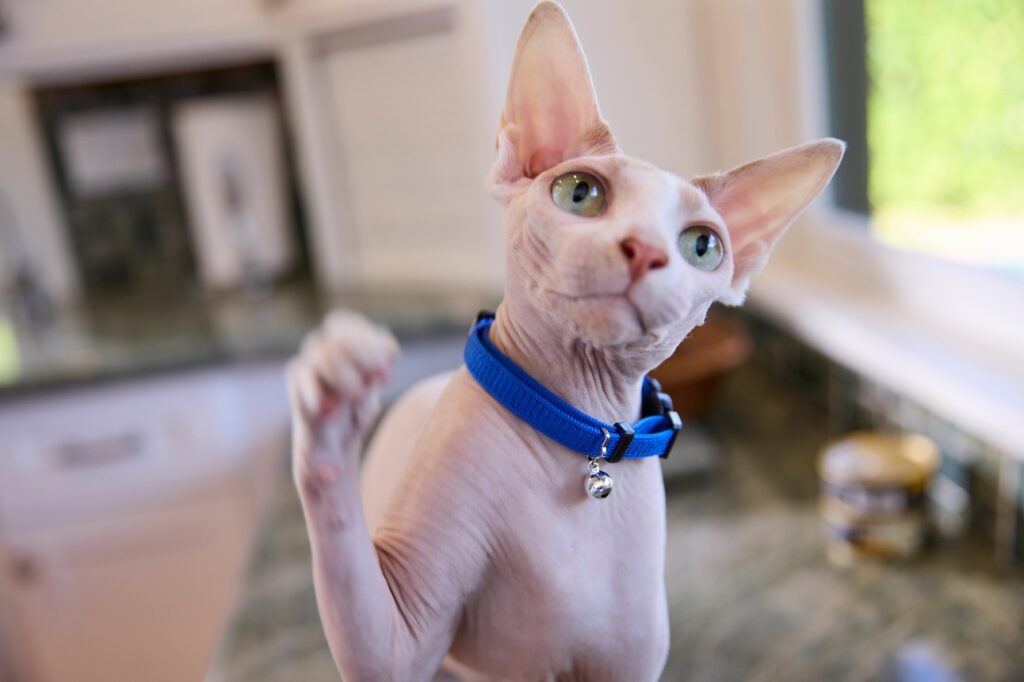
Photo by Chewy
If fluff and fur are not your thing, take a closer look at hairless cats. Prized for their unique looks and lack of shedding, hairless cats are a popular feline companion among people seeking a one-of-a-kind pet.
These naked cats do come with a few caveats—including specific grooming requirements—so make sure to read up before bringing one home.
Key Takeaways
- There are a handful of hairless cat breeds, including the Sphynx, Donskoy, and Peterbald.
- Though not 100% hypoallergenic, hairless cats can be a good choice for some people with cat allergies.
- Hairless cats require special care, including regular baths, skin care, and protection from the sun.
- Always research a cat’s care needs before bringing home a hairless kitten.
6 of the Best Hairless Cat Breeds
Though the Sphynx is arguably the most popular of the hairless cats, these “bald cats” come in many shapes and sizes.
1. Bambino
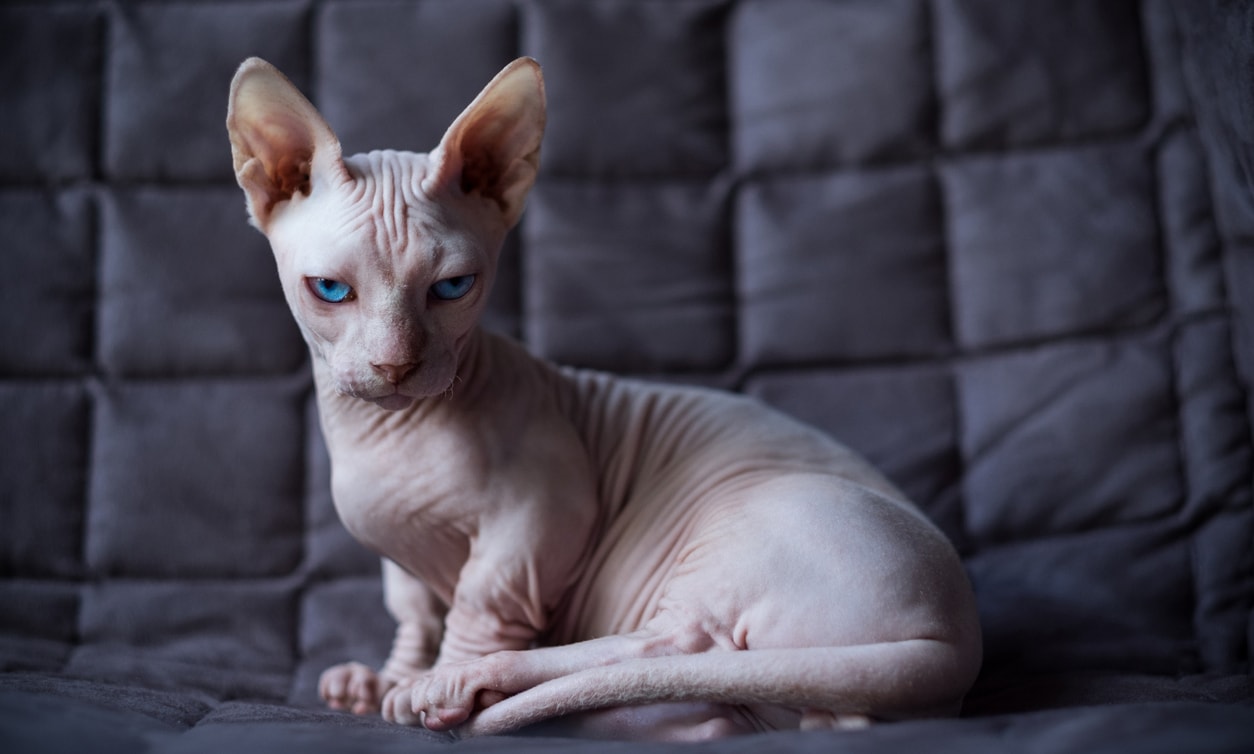
caption text
Adobe/peterpancake
- Lifespan: About 12 years
- Coat characteristics: Hairless or light fuzz
- Temperament: Affectionate, playful, loving
A cross between a Sphynx and a Munchkin cat (a genetically dwarf type of cat), the Bambino’s name is apt when you consider the breed’s petite size (bambino is Italian for “baby”).
Physically unique with the short legs of a Munchkin, big round eyes, and large ears, the Bambino is affectionate, friendly with kids and other pets, and very vocal.
However, this hairless cat breed is rather controversial due to the potential for health issues, so do your research first if you’re interested in bringing home a kitten.
2. Donskoy
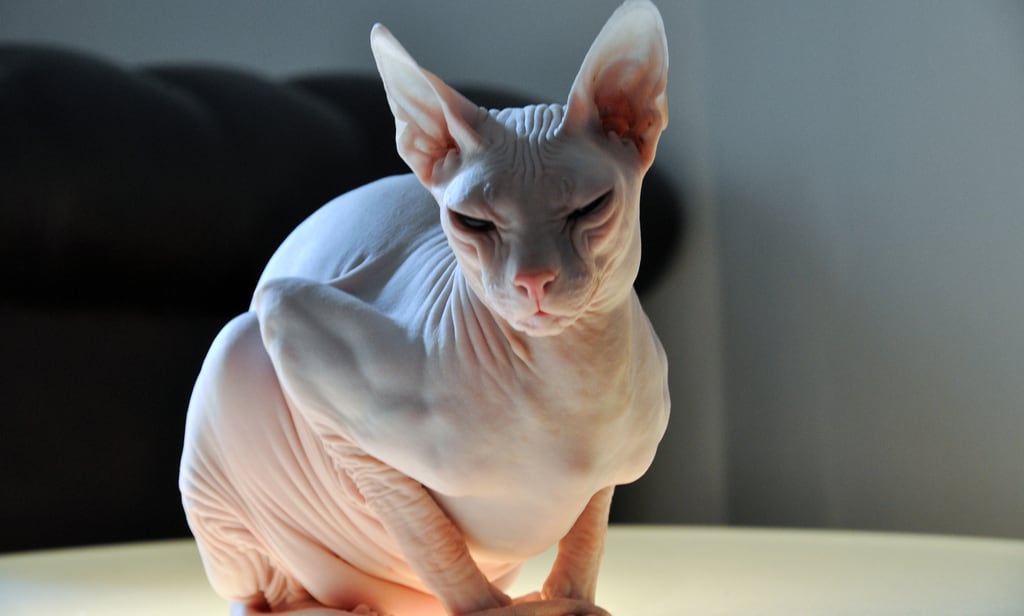
caption text
Wikimedia Commons/ooznu
- Lifespan: About 12 years
- Coat characteristics: Hairless, sometimes develops light fuzz in winter
- Temperament: Sweet, regal, playful
Those eyes! This rare Russian hairless cat breed goes by a few names, including Russian Donskoy, Russian Hairless, Don Sphynx, and Don Hairless. Medium-sized, loyal, loving, affectionate, playful, and smart are just a few of the reasons this is a much-loved breed.
Fun fact: Unlike the Sphynx, which gets their hairlessness from a recessive genetic mutation, Donskoy gets their fur-free appearance from a dominant gene.
3. Elf
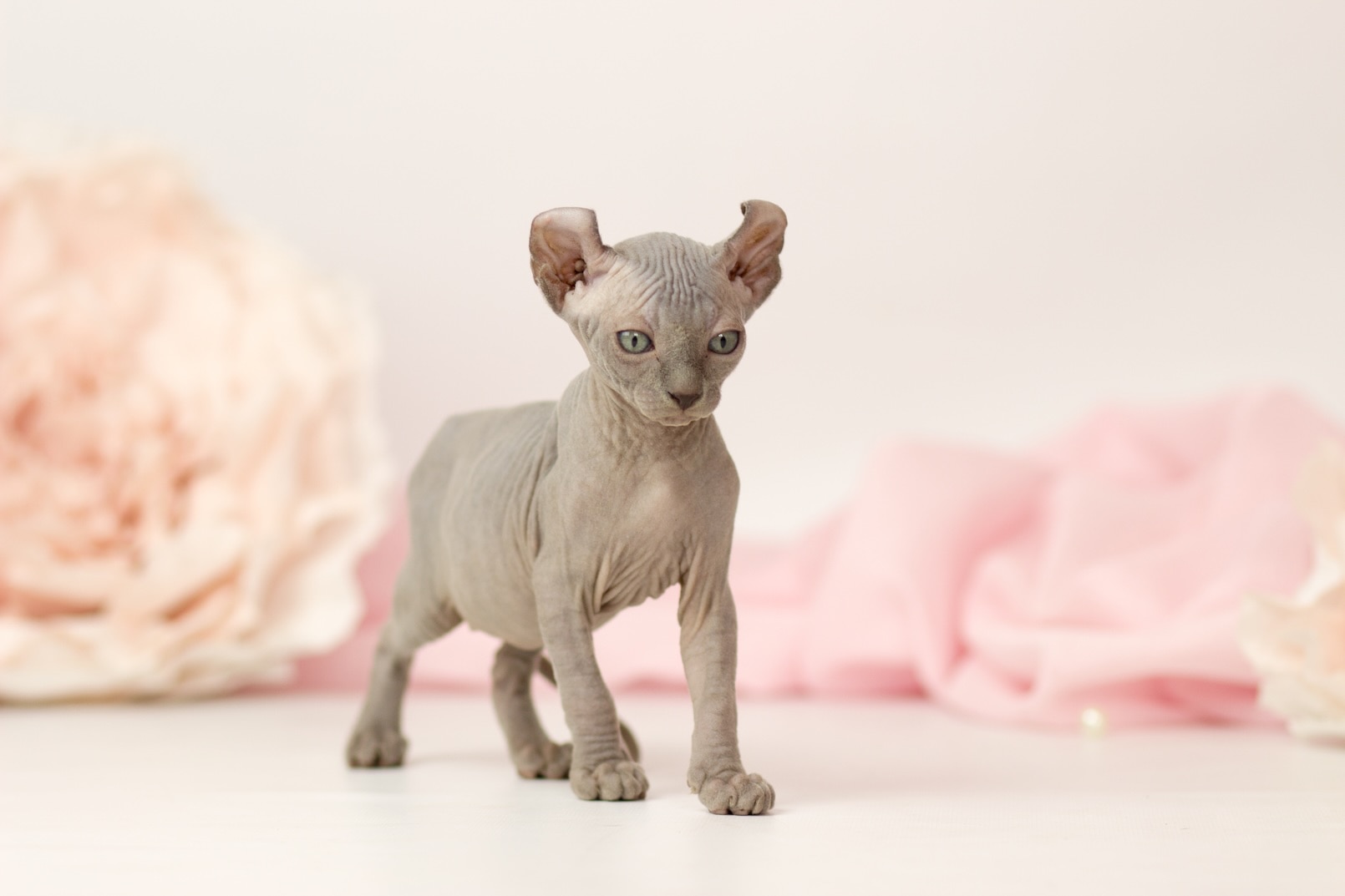
Photo by Adobe/Katrin
- Lifespan: 8–14 years
- Coat characteristics: Hairless, comes in many colors and patterns
- Temperament: Affectionate, friendly, playful
The Elf is a medium-sized naked cat breed that is quite new and therefore exceptionally rare. The breed is a mix between the Sphynx and the American Curl, which is where this breed gets their distinctive curled ears.
Elf cats are not completely hairless like the Sphynx—instead, they have a fine (sometimes hard to see) coat that resembles peach fuzz. Elf cats are highly affectionate and friendly, with moderate energy levels and a gentle disposition.
4. Lykoi
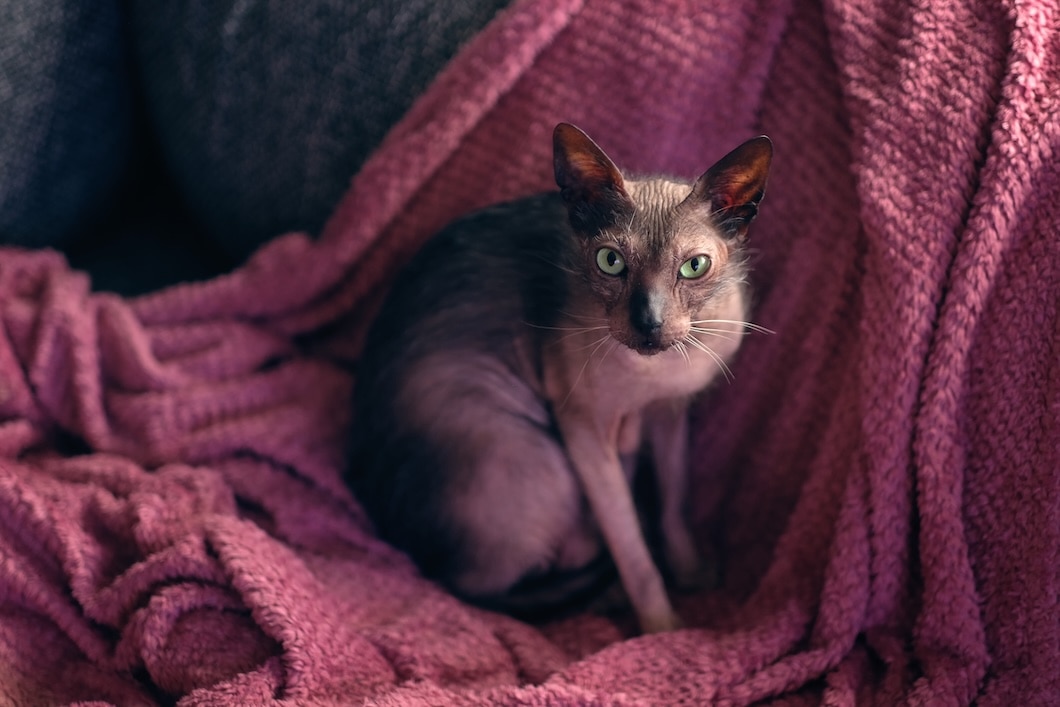
Photo by Lightspruch/iStock / Getty Images Plus via Getty Images
- Lifespan: 12–15 years
- Coat characteristics: Patchy fur with naked areas
- Temperament: Inquisitive, social, active
Also referred to as a “werewolf cat” or “wolf cat,” the Lykoi is a semi-hairless cat with a totally unique look. These kitties have sparse hair on their body, no undercoat, and fur that’s a mix of white and colored hairs.
The breed’s one-of-a-kind look comes from a natural gene mutation that occurs in domestic shorthair cats.
5. Peterbald
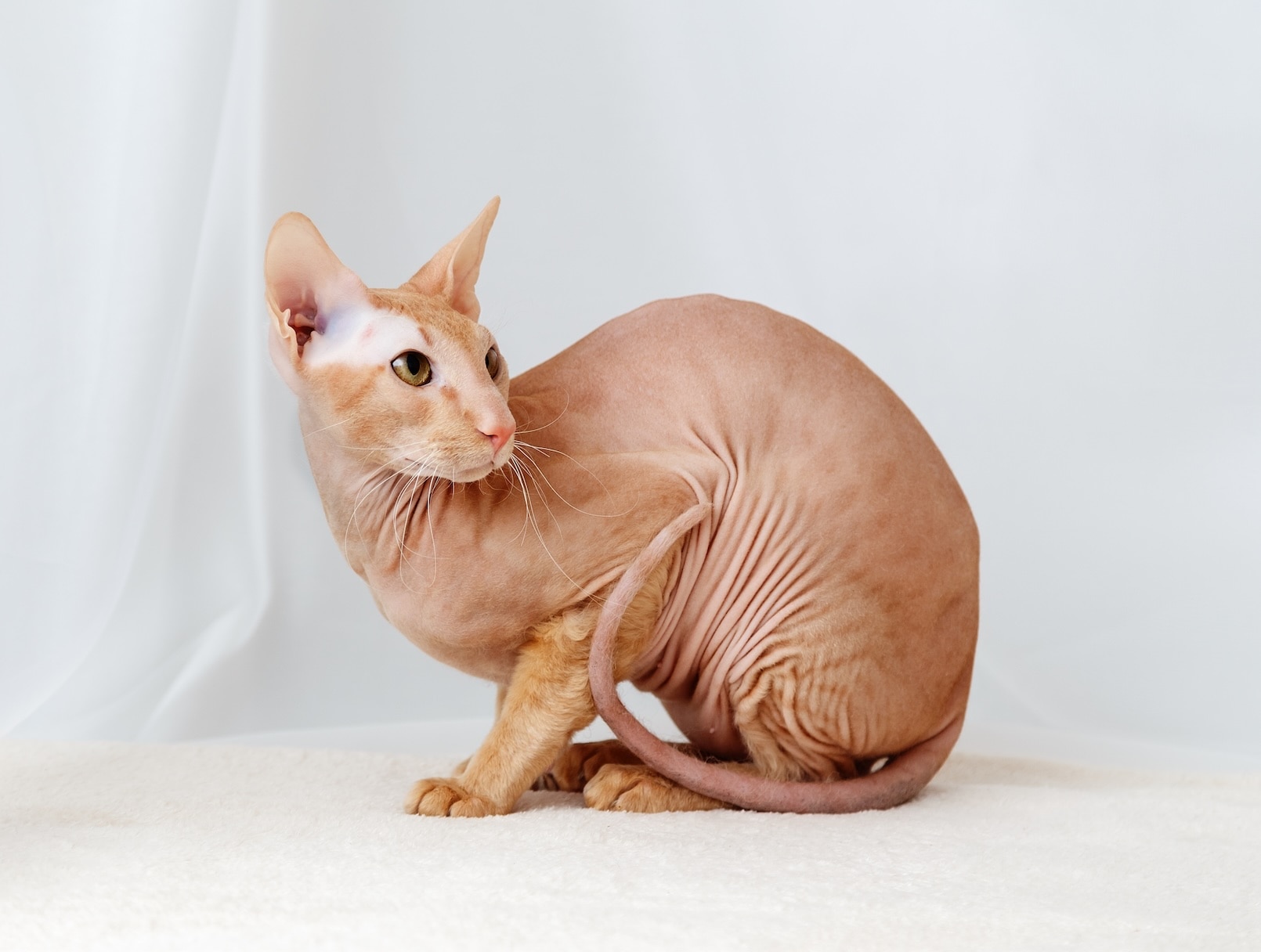
Photo by Adobe/ires007
- Lifespan: 12–15 years
- Coat characteristics: Can be hairless or have a coat
- Temperament: Sweet, curious, playful
A rare cat breed, the Peterbald isn’t always completely hairless. Sometimes this breed is born with a typical fur coat, and other times the cats have a soft, fine, velour-like coat. In some cases, cats born with this downy coat shed it with age.
No matter their coat type, the Peterbald has a long body, broad ears, and oblong head shape. They’re known for being loyal, friendly and intelligent.
6. Sphynx
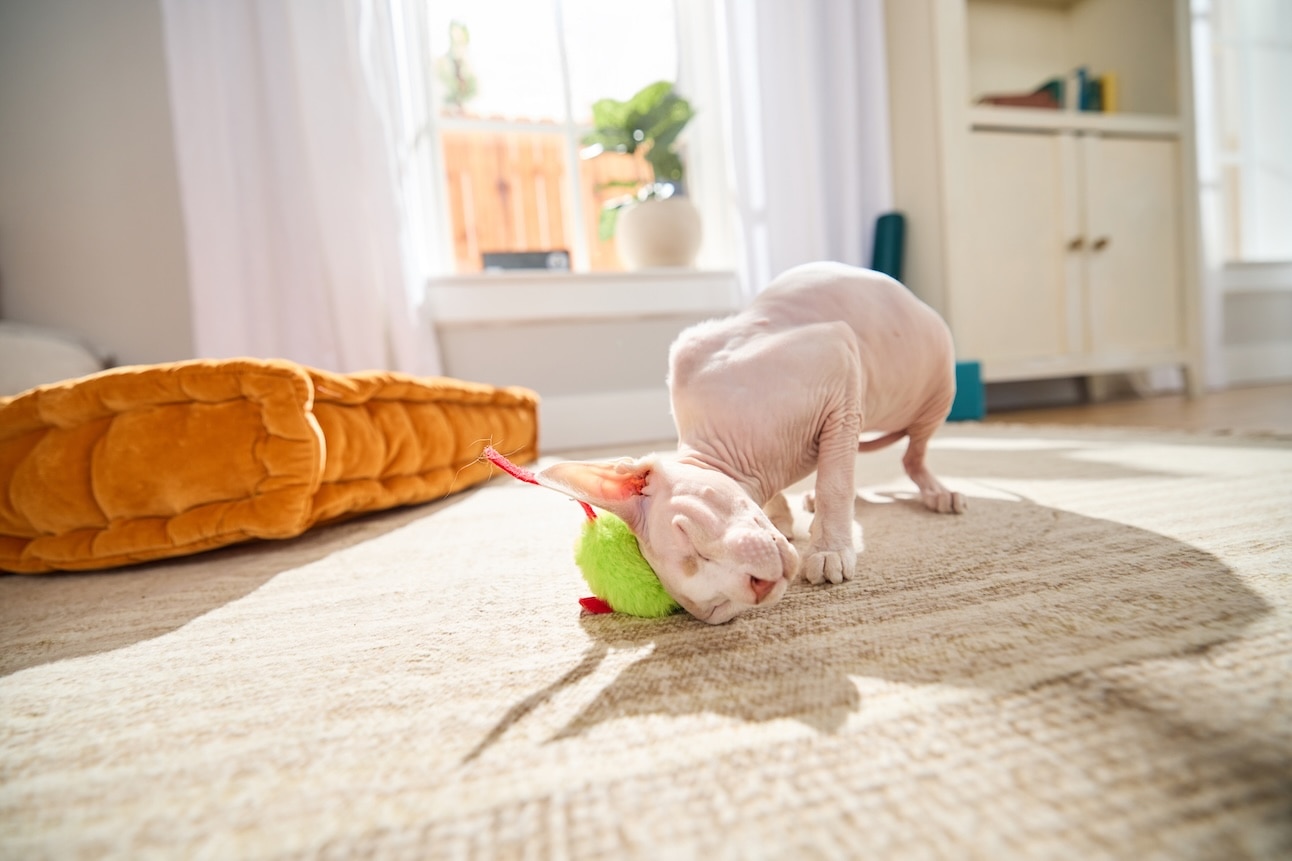
Photo by Chewy
- Lifespan: 7–14 years
- Coat characteristics: Hairless, wrinkled head, lean body
- Temperament: Affectionate, playful, inquisitive
Arguably the most famous of all naked cat breeds, the Sphynx is a beautiful, small- to medium-sized feline with a truly regal appearance. It’s believed that the Sphynx’s hairlessness is the result of a genetic mutation.
But that’s not their only unique trait. This cat breed also has exceptionally broad, perky ears and striking wide eyes along with a lean, elongated body with prominent wrinkles. Though Sphynxes sometimes have small patches of fur, they’re typically mostly hairless.
How To Care for Hairless Cats
Naked cat breeds are more prone to developing skin conditions, getting sunburns, and becoming cold easily, so extra care is important. Here’s how to best care for hairless cats:
1. Groom and Bathe Often
It’s true that hairless cats don’t shed like their furry counterparts, but they also require more grooming than other breeds.
“In these cats, the oil glands are still present and open directly into rudimentary hair follicles, and apocrine ducts open onto the skin surface,” explains Dana Varble, chief veterinary officer of the North American Veterinary Community (NAVC). “This causes their skin to become very greasy or oily.”
Shari Brown, DVM, a veterinarian in Pittsburgh, recommends using a mild hydrating shampoo on your hairless cat about once per week. You can also wipe them down daily with a soft, warm, damp cloth, making sure to clean between deep wrinkles where oil, dirt and debris can accumulate.
Recommended Product
“Also get into a routine of regular ear cleanings to help with the wax buildup,” says Dr. Brown. “Sometimes it can be difficult to determine wax build-up from infection. If other signs are occurring, a consult with a vet should be performed.”
Dr. Varble adds that some of her clients also notice that their hairless cats have black-stained teeth, tongues, and toenails. She says this is also caused by an increase in oil on the skin, though sometimes yeast infections are the culprit.
Your veterinarian can help decide if diagnostic tests and treatment are necessary. You should also speak to your veterinarian about special shampoos, topical or oral medications, and dietary needs for your hairless cat.
2. Protect Them from the Sun
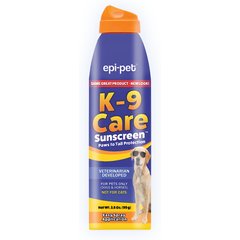
Hairless cats don’t have a layer of fur to protect them from the elements. So it’s extra important that you keep these felines safe from the sun’s harmful rays.
“This is a real issue with these cats, and I recommend that they have limited exposure to the sun, even when they are indoors,” says Dr. Varble. “The concern with most sunscreens is the cats licking it off, so I believe keeping their sun time limited works best.”
If your cat does have supervised outdoor access (such as via a catio or leashed walk), or you find that your hairless cat enjoys basking in the window or sunlight, then apply a pet-safe SPF daily.
Recommended Products

3. Help Them Stay Warm
“Hairless cats are heat-seeking missiles,” says Maria Drechsel, owner of Fabulous Feline Grooming in Calgary, Canada. “They are constantly looking for a lap to snuggle on or blankets to crawl under.”
Recommended Products


She adds that because of their oily skin, hairless cats may stain your blankets and sheets. “Wherever they prefer to curl up, place a blanket or towel there so you can wash it, as their body oils can build up there,” she says.
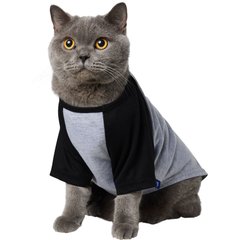
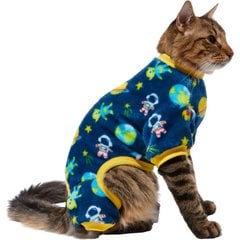
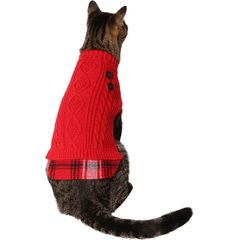
You can protect your surfaces while keeping your cat warm via pet clothing as well. Depending on the season or time of day, you can have your hairless cat wear a simple T-shirt, a cozy pair of pajamas, or a sweater.
Recommended Products
FAQs About Hairless Cats
Are hairless cats hypoallergenic?
Most hairless cats are often called hypoallergenic, but in reality no cat is 100% allergen-free.
In addition to their dander, cat allergies in people can be caused by the proteins in a cat’s urine and saliva—specifically the Fel d 1 protein. As a result, hairless cat breeds may still cause allergies in people that encounter them, but they are often a better option for people with allergies.
How much do hairless cats cost?
The cost of a hairless cat depends on the specific breed, where you live, the cat’s bloodlines, and the breeder you work with. But in general, you can expect to pay $1,000 or more.
Are hairless cats easy to take care of?
Compared to other breeds, hairless cats actually require more care, such as regular bathing and skin care.
Do hairless cats have dander?
Yes, hairless cats do have dander. If you are allergic to cat dander, then you will likely experience that same allergic reaction whether a cat is with or without fur.
Do hairless cats have whiskers?
Some hairless cats do have whiskers, while others do not.
Attributions