Lykoi
Updated September 8, 2026
Lykoi
Updated September 8, 2026
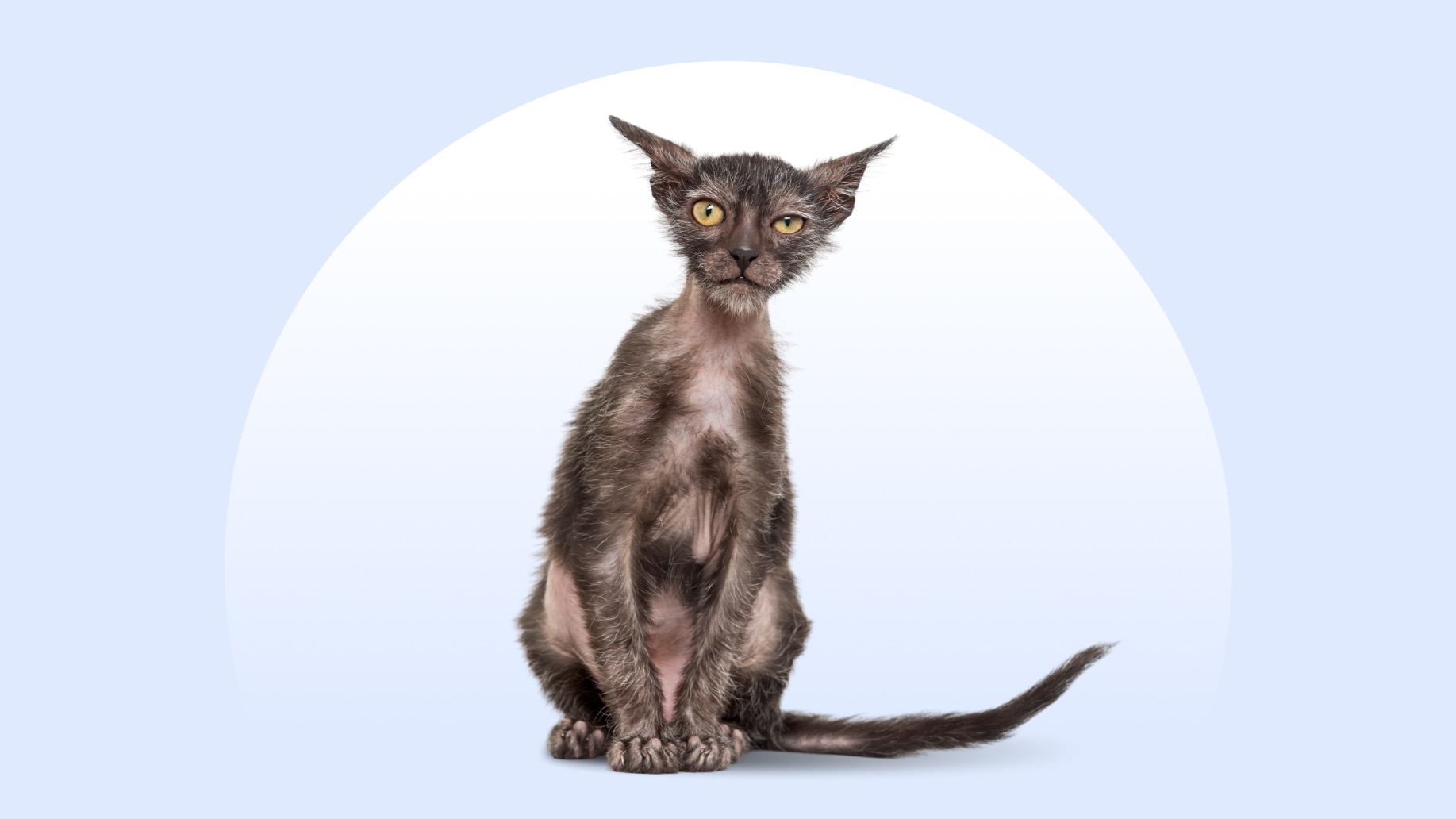
The Lykoi is a rare cat breed with well-known nicknames: the wolf cat and werewolf cat. A genetic variance gives these cats a coat that is both light and dark with sparse, wiry guard hairs and no undercoat. And while these cats are lively and active, they’re much better house companions than their nickname suggests.
Inquisitive, Sociable, Active
6–12 pounds
12–15 years
Lykoi (meaning “wolf cat” in Greek) look a little like a, well, wolf, or maybe even a werewolf. Thankfully, their personalities are anything but.
These cats are generally very friendly and sociable—though they are known to make a beeline for anything that moves, including your feet. Plenty of enrichment and interactive toy play can help redirect that prey drive elsewhere, so guests’ feet don’t become the target.
Lykoi Characteristics
Lykoi Appearance
Lykois are immediately recognized by their unique coat, which comes from a natural gene mutation that occurs in domestic shorthair cats.
According to the breed standard, three features are specific to Lykoi cats: A lack of undercoat; sparse hair on the ears, face, legs, and feet; and a mix of white and colored hairs (known as roaning).
A Lykoi’s appearance also changes depending on the cat’s life stage and whether they are molting—what Lykoi enthusiasts call “wolfing out” when the cat sheds their coat. Otherwise, Lykoi are similar in size and characteristics to other Domestic Shorthair cats.
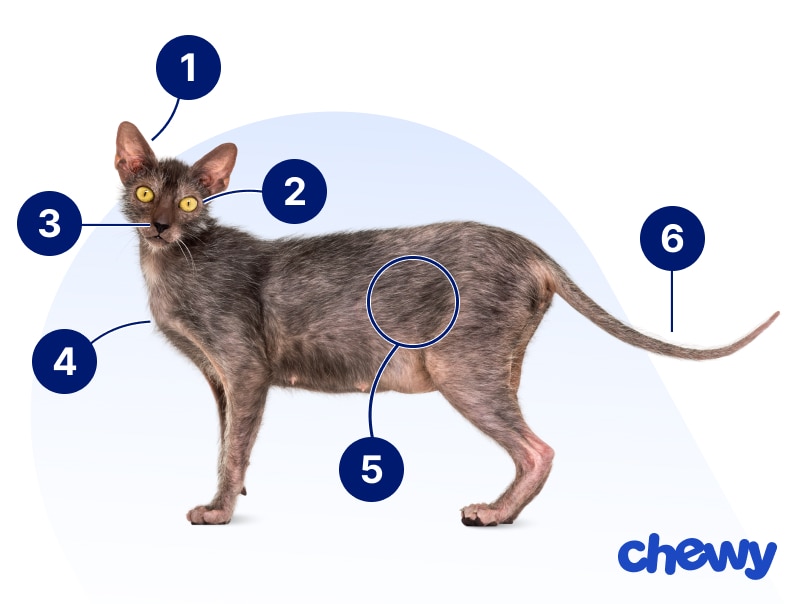
- Ears
The high-set ears are large and triangular, with pointed tips.
- Eyes
Lykoi cats have large, oval to round eyes that are usually gold, yellow, or green. The skin surrounding the eye is hairless, giving these cats an especially wide-eyed look.
- Nose
The nose is leathery and matches the coat color. The bridge of the nose is hairless.
- Coat Length
The breed standard allows for a short- to medium-length coat, but longhair Lykoi cats are possible, too. The coat is sparse, especially on the face, ears, legs, and feet.
- Coat Color
A black roan coat is the only accepted color for showing under The International Cat Association (TICA) breed standard, but The Cat Fanciers’ Association (CFA) breed standard allows for a coat in any color with a roaning pattern.
- Tail
These cats have a tapering tail that comes to a point.
Lykoi Temperament
For most people, their first brush with a Lykoi is seeing photos of the breed. But spending time with one makes a long-lasting impression.
“Their appearance gets people’s attention, but it is usually their personality that wins them over,” says Brandi Sellick, a Lykoi breeder at LegendNLore cattery. The Lykoi cat has proven to be more than a curiosity, earning a reputation as a sociable and smart companion.
These cats are typically outgoing and vocal. Connie Hurley, a veterinarian and breeder at Faolan Lykoi, sums up their typical personality as “intelligent and curious, agile and exploratory.” She adds that these cats will vocalize with chirps, trills, growls, and meows for your attention (or food).
And while some cats can be aloof, a Lykoi won’t hang out in the shadows—unless that shadow is yours. They bond closely with human family members and tend to follow you around the house, much like a dog.
While they often enjoy being in your company, they’re a bit more finicky about cuddling. “In general, they enjoy attention, but don’t like to be smothered,” Hurley says. “Some prefer to be near you but not hugged tight.”
Related Breeds




How to Care for a Lykoi
Lykoi cats thrive when they receive your daily attention and affection. These cats are playful, and frequently enjoy a game of fetch or other interactive game with their favorite human. Lykois may need to be bathed more than other cat breeds, but their coat is low-shedding for most of the year (when they are not molting).
Grooming
Diet
Exercise
Environment
Lykoi Health
Lykoi cats are generally healthy and have a lifespan of 12–15 years, although some may live into their late teens or beyond.
Genetic health problems are not widely known in Lykois, but their unique coat does make their skin more vulnerable to several conditions—so pet parents should be especially vigilant about cleaning and protecting a Lykoi’s skin.
- Cysts: Lykoi cats have shallow hair follicles, which causes the hair to fall out more easily. These hairs can become trapped in the follicle, sometimes leading to cysts. A good bathing routine and regular brushing while your Lykoi is molting can help remove loose hair. Use a brush with soft bristles that won’t scratch your cat’s skin. For a quick check, run the bristles against the skin of your forearm: If it’s uncomfortable to you, it’s too rough for your cat.
- Lymphocytic mural folliculitis: An immune-mediated condition seen in Lykois that can cause itchiness and scabby or crusty skin. Treatment may involve medications to suppress the immune response and antibiotics if an infection is involved. A separate condition, tentatively named cutaneous adnexal polycystic syndrome, has also been recently recognized.
- Skin sensitivities: Because the Lykoi’s coat is characteristically sparse, these cats have skin that is more exposed and therefore more prone to irritation—similar to what a hairless cat like a Sphynx would experience. Sun exposure can cause freckles, sunspots, sunburn, or changes to the skin pigmentation. “It’s best to keep them out of the sun when possible, though they do love a good sunny window,” Hurley says. You can help prevent your Lykoi from getting sunburned by applying UV film to windows, outfitting your cat with UV clothing, applying a pet-safe sunscreen, and providing them with warm spots to rest away from the sun.
Lykoi History
The Lykoi breed is a relatively new breed that has grown rapidly, thanks to intense interest in the breed’s unique appearance and personable demeanor.
In 2010, a Domestic Shorthair cat gave birth to a litter that included two kittens with a sparse, wiry-looking roan coat. The kittens were given to Dr. Johnny Gobble, a Tennessee veterinarian. In short order, more kittens with a similar appearance were found in Tennessee. Genetic testing confirmed the kittens weren’t a hairless breed—like the Sphynx—but instead carried a distinct mutation. After also ruling out medical issues, the first planned Lykoi litter was bred in 2011.
Since then, Lykoi cat breeders have been refining and preserving the breed with dedicated breeding programs. The Lykoi cat breed was registered with TICA in 2012 and received full Championship status in 2017. The following year, the breed gained registration status with CFA, and full Championship status followed in 2023.