Be a Cat Language Expert: How To Talk to Your Cat


Photo by Chewy
There’s a common misperception that cats are independent creatures who don’t really need much care and are generally aloof with humans. But any cat parent can tell you that’s not the case.
It’s important to know how your cat communicates so you can communicate back to them. This can not only increase your bond with them but also ensure they are getting everything they need to live a happy, full life.
Here’s how to talk to your cat.
Key Takeaways
- Cats communicate through body language, vocalizations, and behavior.
- Learning “cat language” helps you know what your cat needs and desires.
- Talk to your cat by responding to the communication cues they give you.
1. Observe Their Body Language
One of the most important ways to communicate effectively with your cat is to watch their body language and respond appropriately.
Positive Body Language
For example, signs your cat is happy, relaxed, and likely to want to interact with you include:
- Upright ears facing forward
- Tail pointed up and curled at the tip
- A generally soft face, with open eyes and whiskers curled down
A cat who wants to interact with you will also usually approach you on their own for petting, and they may rub their cheeks and hips against you to mark you with their scent.
They may also roll over onto their back with their belly exposed. This is not usually an invitation for a belly rub; they are just showing that they feel safe and secure with you, and this is usually a good time to interact with your cat.
Your cat may also start kneading you when they are feeling happy and open to socializing.
Negative Body Language
At other times, cats may show through their body language that they are upset or scared. It’s important to pay attention to these signals as well:
- Flattened “airplane” ears
- Tail held close to the body, thrashing, or puffed up
- Dilated pupils
- Body held low to the ground
These body language cues should be monitored because cats can also act this way when they are sick or in pain and may need vet care. As such, negative body language signals almost always mean your cat needs help in some way.
When in doubt, it’s best to err on the side of caution and respect your cat’s signals if they seem agitated or overexcited in any way. Always seek vet care if your cat’s body language has changed suddenly.
2. Slow Blink
Slow blinking is a great way for your cat to communicate with you—and for you to communicate back to your cat.
The slow blink is a gentle, rhythmic eyelid movement where a cat may partially close their eyes and then open them again when looking in your direction. Because cats are both predators and prey and are at risk of larger animals attacking them in the wild, they do not willingly close their eyes unless they feel safe enough to do so.
A cat slow blinking at you means they trust you deeply and consider you part of their social group. It’s a sign of affection that you can repeat back to your cat, so they know you love and trust them, too.
3. Use a Soft Tone
Because cats are sensitive to threats, any loud, sudden noises can startle them.
Using a soft, slightly higher-pitched tone when you speak to your cat helps calm them and lets them know you are safe and that they can trust you not to hurt them. It also mimics some of the higher-pitched vocalizations cats use, such as meows, chirps, and trills.
4. Headbutt
Headbutting is a cat behavior where they push their head gently into other cats, humans, and objects in their environment to greet them, ask for attention, and mark them with scent. It’s also known as “bunting” and is performed when a cat feels safe and relaxed.
You can gently “bunt” your cat back if they have initiated this behavior with you to say hello and show them that you feel safe and relaxed around them, too.
5. Initiate Play
Play is important for cats for many reasons, such as allowing them to express normal hunting behaviors and get physical and mental exercise. It also helps your cat create positive associations with you and strengthens your bond with them by building familiarity and trust.
Play allows you to observe your cat’s body language closely so you can get better at determining their moods and become more acquainted with them as an individual, which in turn helps you talk to your cat more easily and better understand and meet their needs.
Play can happen at any time throughout the day and is best in two or three sessions lasting five to 20 minutes long.
Recommended Products



6. Respond to Your Cat
One way to talk to your cat is simply by responding when they talk to you. For example, if your cat meows or chirps hello when they walk into the room, you can say hello back and even get down to their level to greet them by holding out your hand.
A 2023 study in the journal Animals found that cats may respond faster to visual cues like a hand held out to them or a combination of visual cues and voice than voice alone or no interaction at all. So interacting back with your cat is a great way to get them to communicate more with you.
7. Provide a Calm Environment
Perhaps the best way to talk to your cat is to make sure they’re in a calm environment and have all their needs met before interacting with them. This can mean things like keeping noise to a minimum, using softer lighting, and sticking to a predictable routine to help your cat feel secure and confident in the home.
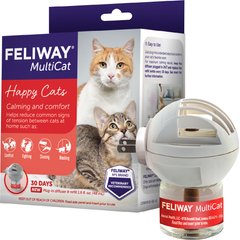
You can improve their feelings of relaxation and well-being with calming products, too, such as Purina Pro Plan Calming Care probiotic powder and Feliway Multicat pheromone diffusers.
Recommended Products