German Spitz
Updated September 9, 2026

German Spitz
Updated September 9, 2026
With glowing reviews for their pep and personality, the German Spitz is a lively companion. Pick your size: These pooches come in large, medium, or small varieties—and, luckily, that fluffy double coat of fur isn’t as demanding as it looks. They also have a sharp mind, so exercise and training are a must.
Perky, Affectionate, Smarty Pants
Small: 10–11 pounds
Medium: 15–25 pounds
Large: 30–50 pounds
Small: 8–11 inches
Medium: 12–15 inches
Large: 16–20 inches
15–17 years
Black, Black and Tan, Brown, Cream, Orange, Red, White, Wolfgray, Gray, Parti-Color, Sable
Looking for a polite pup to join you for shopping, errands, or dinner al fresco? The German Spitz has the resume for the job. These eye-catching dogs look like little foxes—and with consistent, positive training, they can be adaptable, well-mannered companions ready for wherever you take them.
They love to play the part of the doting, loyal companion, and these intelligent dogs are often alert to what’s happening around them. Time spent training can go a long way in curbing excessive barking, whether you’re home or away.
German Spitz Characteristics
German Spitz Appearance
“Spitz” comes from the German word for “pointed,” and when you look at these dogs, it’s easy to see why the name stuck. The German Spitz is perhaps most easily recognized by their pointy ears and wedge-shaped muzzle.
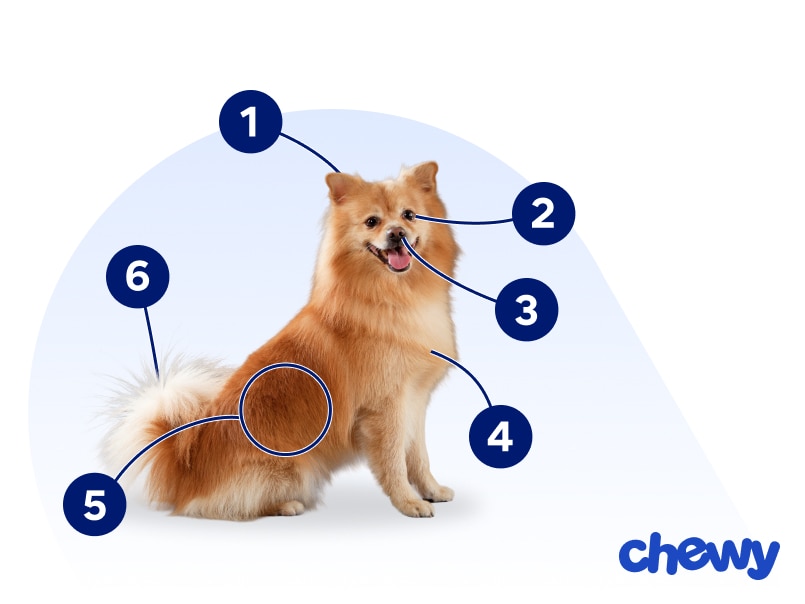
- Ears
German Spitz dogs have small, triangular ears that sit erect on top of the head.
- Eyes
The almond-shaped eyes are light to dark brown in color.
- Nose
The wedge-shaped muzzle ends in a small nose that is typically black, although brown German Spitz dogs will have a brown nose.
- Coat Length
A short and thick undercoat is covered by a long, straight outercoat of fur.
- Coat Color
Accepted coat colors for large German Spitz include white, black, brown, and parti-color. Medium and small Spitz share all of the same coat colors, along with the possibility of orange, grey-shaded, cream, black and tan, black and silver, or sable coats (in shades of cream or orange).
- Tail
The medium-length tail is characteristically fluffy and curls over the back.
German Spitz Temperament
The German Spitz has roots as a guardian dog and vermin hunter, but these dogs have found their calling as personable companions.
While every dog is an individual, a well-trained Spitz is known for having good manners and an affectionate, loyal demeanor with family members, including children. With strangers, they may be wary at first, but tend to warm up once they’ve had a chance to get to know you.
“My favorite explanation of their temperament came from a German who said, ‘Well, he has a very nice restaurant temperament,’” says Patrea Pabst, breeder and president of the German Spitz Club of America.
That restaurant-ready mannerism doesn’t come naturally to a German Spitz—they’re known for their big, vocal personalities. But with positive reinforcement training and a good bond with their people, many learn (and love) to tag along for a quiet meal out.
Related Breeds




How to Care for a German Spitz
A German Spitz is not an especially high-maintenance dog breed, but you will need to devote time each day for exercise, coat care, and fun, interactive training exercises. In return, you’ll have a polite and polished pup who will attract attention wherever you go.
Grooming
Training
Diet
Exercise
Environment
German Spitz Health
Health issues are not especially common within the German Spitz breed, and these dogs usually live 15–17 years.
To preserve the breed’s vitality, the German Spitz Club of America recommends breeding dogs undergo health screenings of their hips, knees, eyes, and elbows, alongside genetic testing for hereditary diseases.
- Von Willebrand disease (vWD): This bleeding disorder prevents normal blood clotting because of protein abnormalities. Since this is an inherited condition, genetic screening of parent dogs is highly recommended. Dogs who are affected by the disease or carriers should not be bred.
- Progressive retinal atrophy (PRA): This condition affects the light receptor cells in the retina. Some dogs experience early-onset PRA, which means the light receptor cells fail to form properly from birth. Late-onset PRA happens to adult dogs and occurs because the light receptor cells begin to deteriorate. There is no cure for PRA, and it will cause eventual blindness.
- Patellar luxation: This joint condition causes the kneecap to slip out of place. Dogs of many different breeds can be predisposed to the condition, but testing can rule out existing problems in parent dogs. Mild cases of patellar luxation are typically managed with weight management, a joint-healthy diet, rest, and anti-inflammatory medicines. More severe cases may require surgery.
German Spitz History
Spitz dogs trace their origin back to Nordic countries like Denmark, Sweden, and Norway. Vikings who traveled far and wide throughout Europe brought the compact, foxlike dogs with them from their homeland. These Spitz dogs were known for being self-assured and intelligent, and were widely adopted in Germany as guardian dogs and small vermin hunters.
Initially, they were known as German Lace, and a breed registry was established in 1899, around the same time that German immigrants brought these dogs to the United States. Over time, the breed came to be known as the German Spitz.
Today, the German Spitz is recognized by several international breed registries, with some differences in size classifications. For instance, the Fédération Cynologique Internationale (FCI) recognizes four sizes for the German Spitz, including the Gross Spitz (Keeshond) and the Zwergspitz (Pomeranian). The AKC classifies the Keeshond and Pomeranian as individual breeds separate from the German Spitz.
The German Spitz was entered into the AKC’s Foundation Stock Service in 1996 and entered the Miscellaneous Class in 2024.