Wire Fox Terrier
Updated June 8, 2026

Wire Fox Terrier
Updated June 8, 2026
The Wire Fox Terrier is a bold, energetic companion with a wiry coat and a big personality. Curious and confident, they thrive in active homes that provide attention, exercise, and consistent training. With the right environment, these pups make lively, engaging additions to the family.
Spirited, Friendly, Active
15–18 pounds
14–15.5 inches
12–15 years
White and Black, White and Tan, White and Black and Tan
If you’re looking for a dog with personality, the Wire Fox Terrier delivers. This bold, curious breed brings non-stop energy, a playful spirit, and just enough mischief to keep things interesting.
Expect a companion who wants to explore everything, meet everyone, and stay involved in your daily routine. They love attention and thrive on ample mental stimulation and physical activity. Smart and entertaining, Wire Fox Terriers can test your patience if they grow bored, but life with one of these pups is always engaging and full of fun.
Wire Fox Terrier Characteristics
Wire Fox Terrier Appearance
The Wire Fox Terrier is a small, compact terrier dog breed with an athletic build and confident, alert posture. Bred for action, they are quick on their feet and always ready to go.
Wire Fox Terriers look a lot like their cousin, the Smooth Fox Terrier, with one major difference: They have a signature wiry coat and long beard.
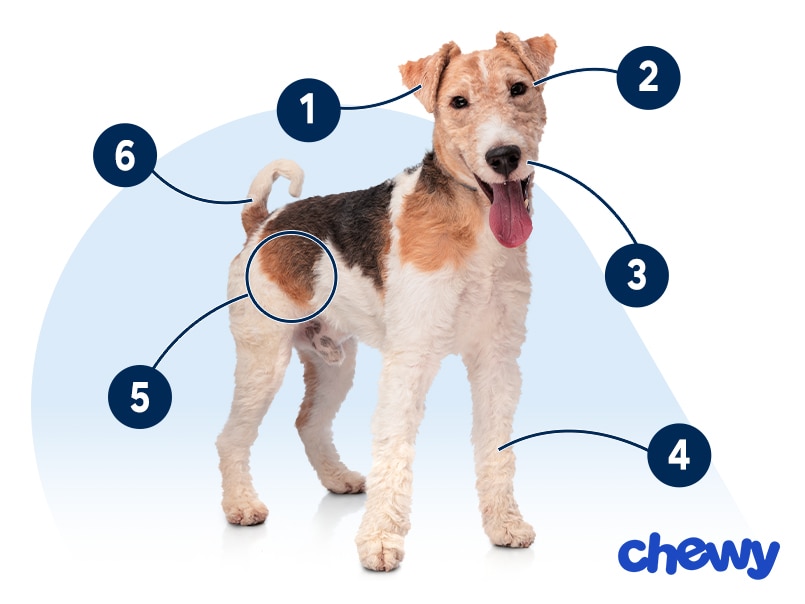
- Ears
The ears are small, V-shaped, and folded forward at the top of the head, giving the breed an alert appearance.
- Eyes
Their eyes are small, dark, and round.
- Nose
A Wire Fox Terrier has a well-defined black nose perfect for sniffing out adventure.
- Coat Length
Their coat is short with a dense, wiry texture that is rough to the touch, designed to protect them while working outdoors. They often have a long, scruffy beard.
- Coat Color
Their coat color can be white with black markings, white with tan markings, or white with both black and tan markings.
- Tail
Typically carried upright, their tail is set high and adds to their confident stance.
Wire Fox Terrier Temperament
Wire Fox Terriers are bold dogs with an energy level that rivals the Energizer Bunny.
Originally bred for fox hunting, they still carry many of those tenacious terrier instincts today, including a strong prey drive, a love of digging, and a propensity for barking. Because of these inherited traits, Wire Fox Terriers do best with active and experienced pet parents.
At home, this breed is often playful, people-oriented, and eager to be part of the action. Wire Fox Terriers tend to form strong bonds with their families and love attention, often taking on the role of household entertainer. They can do well with children who understand how to respect a dog’s space and boundaries, but interactions should always be supervised.
Because of their hunting background, Wire Fox Terriers may not be the best match for homes with small pets like rabbits, hamsters, or even cats or smaller dogs. Early socialization, proper introductions, and consistent training with positive reinforcement are essential parts of their care. Don’t hesitate to call in a certified dog trainer to help if needed.
As independent and smart dogs, Wire Fox Terriers might test boundaries during training sessions. But they shine when given jobs to focus on, so try activities like agility, obedience, and Earthdog trials.
Related Breeds






How to Care for a Wire Fox Terrier
When caring for a Wire Fox Terrier, pet parents should be prepared to meet the breed’s needs for mental and physical engagement. This is not a low-maintenance breed—Wire Fox Terriers require consistency and a structured daily routine. Regular grooming is also essential to maintain their unique wiry coat.
Grooming
Training
Diet
Exercise
Environment
Wire Fox Terrier Health
The typical Wire Fox Terrier lifespan is 12–15 years. Like all breeds, they are prone to certain health conditions, including:
- Patellar luxation: A common issue for small, active dogs, this condition occurs when the kneecap moves out of place, causing limping or discomfort. Treatment depends on severity and ranges from medications and joint supplements to surgery.
- Primary lens luxation: A serious eye condition in which the lens of the eye shifts out of place, potentially causing pain or vision loss if not treated.
- Deafness: This is a congenital condition in some Wire Fox Terrier puppies. With some adjustments, deaf dogs can live a long, normal life.
- Dental disease: While dental chews and water additives can help reduce the risk, the best prevention against dental disease is daily toothbrushing.
According to the Wire Fox Terrier Club of the Central States, pet parents should take the time to research and choose a responsible breeder who performs health screenings through organizations like the Orthopedic Foundation for Animals and the Canine Health Information Center (CHIC) to help reduce the risk of inherited conditions.
Wire Fox Terrier History
Wire Fox Terriers got their start in England in the 18th and 19th centuries, where the breed developed alongside the Smooth Fox Terrier.
These dogs were bred for fox hunting and played a very specific role: They would follow the hunt, then go underground to flush foxes out of their dens so hounds and hunters could keep the chase going. According to the Wire Fox Terrier Association, their mostly white coat was intentionally bred to help hunters easily tell them apart from foxes in the field.
Over time, people began to appreciate more than just their working ability. Their bold personality, sharp intelligence, and distinctive wiry coat made them popular beyond hunting. The American Kennel Club officially recognized the Wire Fox Terrier in 1885.
Today, Wire Fox Terriers are more commonly found as companion dogs rather than hunting partners, but those original instincts are still there. Many still thrive in activities like agility, obedience, and Earthdog trials, where they get to put their natural drive and energy to good use.