How Often To Feed a Puppy: A Guide To Your Puppy’s Feeding Schedule

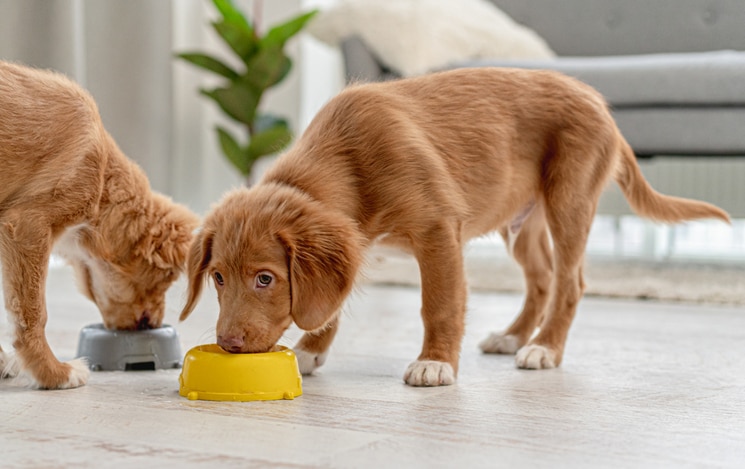
Photo by VYCHEGZHANINA/iStock/Getty Images Plus
You’ve just adopted an adorable puppy—congrats!
It can be a joy to bring home a new family member, but you also probably have questions about how often to feed them.
There’s no easy answer, as you’ll need to take their age, size, activity level, and health status into consideration. Here’s how to determine the best feeding schedule for your puppy.
Key Takeaways
- How often you feed your puppy depends on their age, size, activity level, and health.
- Most puppies do best with three meals a day once they’re weaned, transitioning to two meals a day as they grow.
- Tiny breed puppies often need more frequent meals to help prevent low blood sugar.
- Feeding your puppy on a consistent schedule supports healthy growth, digestion, and potty training.
- Your veterinarian can help you fine-tune a feeding schedule and portion size that’s just right for your pup.

How Often To Feed a Puppy
How often do puppies need to eat? There’s no one-size-fits-all answer.
The right feeding schedule depends on several factors:
- Age: Younger puppies have small stomachs, can’t store energy well, and have high energy demands due to their rapid growth and development, which means they need to eat more often.
- Size: Toy breed puppies are prone to hypoglycemia (low blood sugar) and need more frequent meals to help prevent this condition.
- Activity level: Very active puppies may need to eat more frequently throughout the day.
- Health status: Your veterinarian may recommend a different feeding schedule if your puppy has a particular health issue. For example, puppies recovering from a bout of vomiting may benefit from small, frequent meals.
Puppy Feeding Schedule by Age
Puppies are generally weaned around 6–8 weeks of age, which is when they start eating solid food (wet or dry) and drinking water. As they mature, they can start eating bigger meals less frequently.
These charts offer general guidelines for healthy puppies who are already weaned. Always speak to your vet about your puppy’s diet and nutritional needs.
| Age | Feeding Schedule |
|---|---|
| 6–8 weeks old to 4 months old | 3 meals per day |
| Around 4 months old | 2–3 meals per day |
| 6 months to adult | 2 meals per day |
Tiny puppies (those who are expected to be less than 10 pounds when they’re fully grown, like some Chihuahuas or Yorkshire Terriers) should eat more often, especially when they’re very young.
| Age | Feeding Schedule |
|---|---|
| 6–8 weeks old to 4 months old | 4–5 meals per day |
| Around 4 months old | 3 meals per day |
| 6 months to adult | 2 meals per day |
Every dog is unique. Talk to your veterinarian about the right feeding schedule for your puppy. This is especially true if your puppy:
- Is extremely active
- Has trouble maintaining their weight
- Is diagnosed with or at risk for certain health problems (for example, gastric dilatation-volvulus, common in deep-chested breeds)
- Doesn’t seem to be thriving
You can create a customized feeding schedule for your puppy using this downloadable Chewy chart.
Why Following a Puppy Feeding Schedule Matters
Feeding your puppy on the correct schedule supports their health, development, and well-being. Aim to feed your puppy at roughly the same times each day.
A good feeding schedule can make a difference because it:
- Supports a healthy weight: Measured, scheduled meals allow you to keep track of how much your puppy is eating, which helps avoid both underfeeding and overfeeding.
- Prevents low blood sugar: Going too long between meals can cause hypoglycemia, especially for toy breed puppies. A consistent schedule helps keep glucose levels stable throughout the day.
- Supports healthy digestion: A puppy’s digestive system is still developing. Smaller, evenly spaced meals are easier on the gastrointestinal tract and can help reduce the chance of digestive upset.
- Helps with potty training: Puppies typically need to go to the bathroom 15–30 minutes after eating. When meals happen at predictable times, you can anticipate when your pup will need to go outside or use a pee pad.
Recommended Product

- Promotes good behavior: Puppies can get stressed when they don’t know what to expect. If your pup has learned that they’re going to eat on a set schedule, they’re also less likely to beg at other times.
- Allows you to monitor behavior: When you offer meals at certain times, it’s much easier to notice when your puppy isn’t eating normally, which can be an early sign of illness.
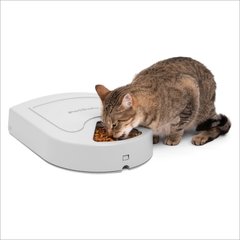
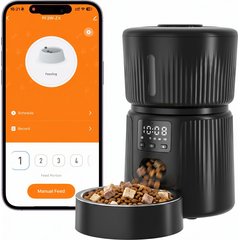
Once you do figure out a consistent schedule, an automatic feeder can help you stick to it.
Recommended Products
How Much To Feed a Puppy
After you have a feeding schedule in place, the next step is knowing the amount to feed. The right portion size will depend on your puppy’s weight, age, and the specific food.
Generally, you’ll use the puppy food chart on the label as a starting point, then adjust based on your puppy’s body condition and your veterinarian’s guidance.
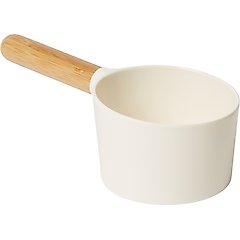
A handy dog food scoop that helps measure out portions can help you feed about the same amount every day.
Recommended Product
FAQs About How Often To Feed a Puppy
How often do puppies need to eat?
Most puppies between the ages of 6–8 weeks and 4 months need to eat every eight hours. However, tiny dogs may need to eat more often+ and older puppies will usually need to eat less often.
How long should you feed puppy food?
How long to feed puppy food depends on a dog’s size. They’re usually ready to make the transition when they reach their full adult height, which is about 10 months old for toy breeds, 12 months old for small and medium-sized dogs, and 18–24 months for large or giant breeds.
Do small-breed puppies need to eat more often
Yes. Puppies expected to weigh less than 10 pounds fully grown need to eat four to five times a day between the ages of 6–8 weeks and 4 months, and they need to eat three times a day until they’re about 6 months old.
How often should an 8-week-old puppy eat?
An 8-week-old puppy should generally eat three times a day. However, toy breeds need to eat four to five times a day to reduce the risk of hypoglycemia
When can you switch a puppy to two meals a day?
Most puppies can transition to two meals a day when they are between 4–6 months old. Larger dogs can often make the switch earlier than smaller dogs.