Doberman Pinscher vs. Rottweiler

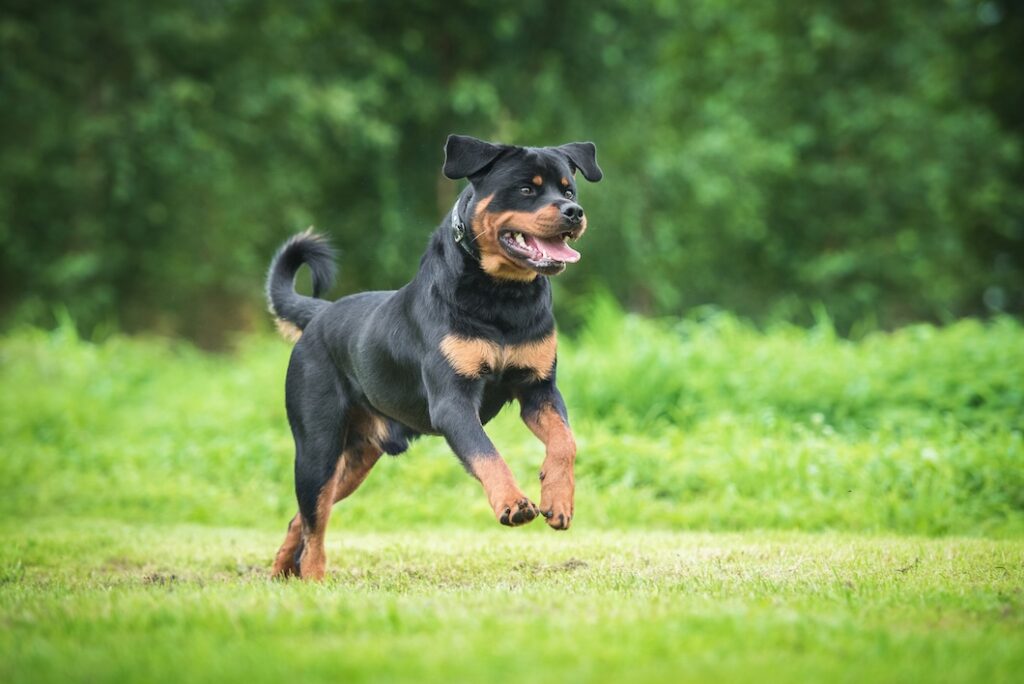
Photo by Rita Kochmarjova/Adobe
If you’re drawn to large, intelligent dogs with a strong presence and deep devotion to their families, both the Doberman Pinscher and the Rottweiler have likely caught your eye. These working breeds share some similarities, but their differences can make one a better fit for your lifestyle.
Here’s how Doberman Pinschers and Rottweilers compare.
Key Takeaways
- Doberman Pinschers are typically sleek and agile, while Rottweilers are stockier.
- Both breeds are highly intelligent and thrive with consistent, positive reinforcement training.
- Dobermans usually need slightly more daily exercise compared to Rottweilers.
- Both breeds can be prone to inherited health conditions, making regular vet care essential.
History

Photo by Svetlana Belkina/iStock via Getty Images Plus
The Doberman Pinscher originated in Germany in the late 1800s. The breed was developed by a tax collector named Karl Friedrich Louis Dobermann, who wanted a loyal, alert companion to accompany him on his rounds. Dobermans were refined to be athletic and deeply bonded to their people.
Rottweilers have a much older lineage, descending from ancient Roman dogs who helped herd cattle. They later became known in the German town of Rottweil, where they worked as cattle-driving and cart-pulling dogs. Over time, the breed transitioned into versatile working dogs known for their strength and dependability.
The Doberman Pinscher originated in Germany in the late 1800s. The breed was developed by a tax collector named Karl Friedrich Louis Dobermann, who wanted a loyal, alert companion to accompany him on his rounds. Dobermans were refined to be athletic and deeply bonded to their people.
Rottweilers have a much older lineage, descending from ancient Roman dogs who helped herd cattle. They later became known in the German town of Rottweil, where they worked as cattle-driving and cart-pulling dogs. Over time, the breed transitioned into versatile working dogs known for their strength and dependability.
Appearance
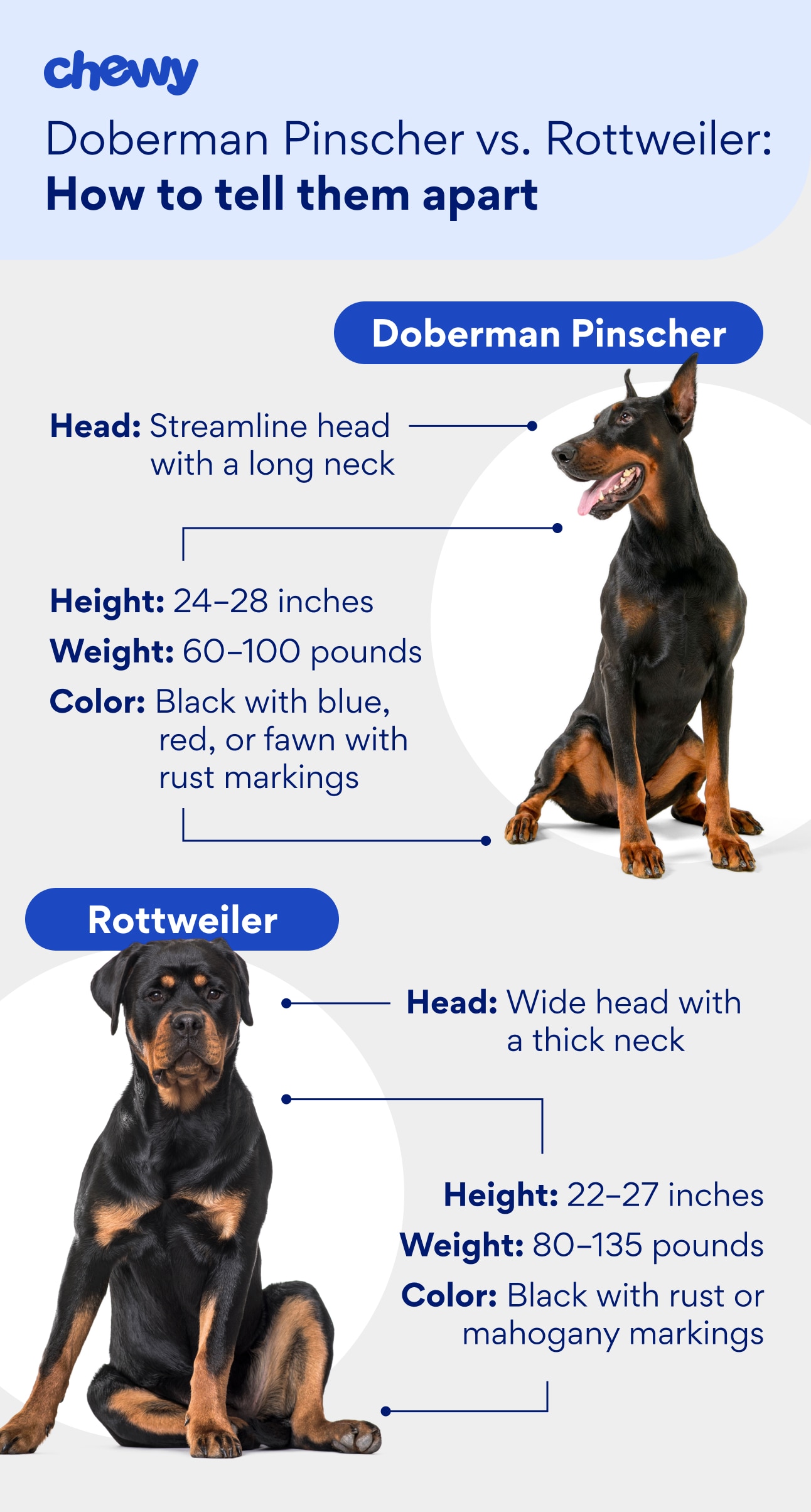
Photo by Chewy
While both are striking large dogs with similar coloring, their silhouettes are quite different.
Size and Build
Doberman Pinschers are muscular yet lean and elegant with a square frame. They typically stand 24–28 inches tall and weigh 60–100 pounds.
Rottweilers are broad and sturdy. They usually stand 22–27 inches tall and weigh 80–135 pounds.
Coat and Color
Both breeds have a short coat, with the Doberman’s being a bit sleeker and the Rottweiler’s coarser. While Rottweilers are always black with rust or mahogany markings, Dobermans have a little more variation: They can have black, blue, red, or fawn fur with rust markings.
Head, Neck, and Ears
Dobermans have a more streamlined head and long neck. Their ears are often cropped to stand erect, though this is a controversial practice many veterinary groups, including the American Veterinary Medical Association, oppose. Natural Doberman ears are triangular and folded.
Rottweilers have a wider head, a thicker neck, and heavier bone structure overall. Their ears are triangle-shaped and folded.
Personality

Photo by Pedro Senso/iStock via Getty Images Plus
Doberman Pinschers are energetic, alert, and people-oriented. They tend to stay close to their pet parents and enjoy being involved in daily activities. Their intelligence makes them quick learners, especially when training is consistent, engaging and done using positive reinforcement.
Rottweilers are typically calmer, confident, and steady. They’re just as devoted to their families but may have a more relaxed demeanor when in the comfort of their own home.
Both breeds need early socialization to grow into a well-mannered and confident dog.
Exercise Needs
Photo by KalypsoWorldPhotography/iStock via Getty Images Plus
Doberman Pinschers need one to two hours of daily exercise. They thrive with activities like running, agility training, obedience work, and interactive play.
Because they’re so energetic and quick-thinking, it helps to rotate in a mix of toys that challenge both their body and brain. Think tug toys, fetch favorites, and anything that keeps them moving and engaged.
You can also keep things interesting with puzzle toys or treat-dispensing games—these give Dobermans a job to do and help prevent boredom on days when you can’t fit in as much physical activity.
Rottweilers typically need 60–90 minutes of daily exercise, including walks and play sessions, and can excel at dog sports. Many Rottweilers also have a goofy side that can be engaged with fun games for dogs.
Daily walks must be part of both dogs’ routine, so having a durable leash that feels comfortable in your hand and holds up to regular use makes a difference—especially with strong, large breeds like these.
Grooming

Photo by JamesBrey/E+ via Getty Images
Doberman Pinschers and Rottweilers are both relatively low maintenance when it comes to grooming, which is good news for busy pet parents. Their short coats don’t require frequent trips to the groomer, but a consistent at-home routine will keep their skin and coat in top shape.
Doberman Pinschers have a sleek, single-layer coat that benefits from a quick weekly brushing to remove loose hair and maintain shine. A soft-bristle brush or grooming mitt works well for their short hair.
Recommended Products
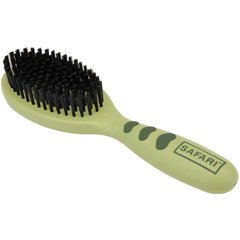
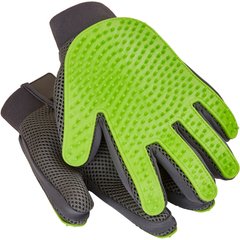
Rottweilers, on the other hand, have a coarser coat and tend to shed more—especially during seasonal changes in the spring and fall. During these times, you may find yourself needing to use a slicker brush or a de–shedding tool a few times a week to keep the fur from flying.
Recommended Products
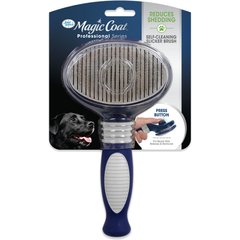
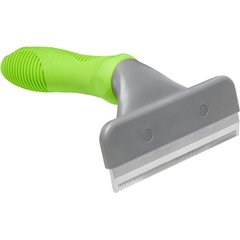
No matter which breed you choose, routine nail trims are an essential part of grooming. You can learn to do this at home or take them to a trusted groomer for the quick snip. Keeping their nails short helps support proper posture and comfortable movement.
Recommended Product

Dental care is just as important. Regular brushing and dental chews can help support healthy teeth and gums over time.
Recommended Products



Health

Photo by Lunja/iStock via Getty Images Plus
Both Doberman Pinschers and Rottweilers can live long, healthy lives with thoughtful care, but like many large breeds, they’re more prone to certain genetic and orthopedic conditions. Staying proactive—especially with proper nutrition, joint support, weight management, and regular vet visits—can make all the difference in their lifelong wellness.
A strong foundation starts with what’s in their bowl: Diets formulated for large breeds and large-breed puppies are designed to support steady growth, maintain a healthy weight, and reduce strain on joints.
Doberman Pinschers are at higher-than-average risk for:
- Dilated cardiomyopathy (DCM), a heart condition
- Von Willebrand disease, which affects blood clotting
- Gastric dilatation-volvulus, a potentially fatal twisting of the stomach
- Hypothyroidism, a hormonal disorder that can lead to weight gain and other problems
- Chronic active hepatitis, which can lead to liver failure
- Cervical vertebral instability, which results in pain and neurologic problems
- Hip dysplasia, a common cause of hip arthritis
- Some types of cancer
Rottweilers are prone to:
- Hip and elbow dysplasia
- Subaortic stenosis and other heart conditions
- Osteosarcoma and other types of cancer
- Degenerative myelopathy, a progressive neurologic disease
- Cruciate ligament ruptures, which lead to pain and lameness
- Gastric dilatation-volvulus
This is not a complete list of all health problems these breeds can develop. Knowing what to watch for—and working with a veterinarian who understands breed-specific risks—can help you catch concerns early and partner with you to support your dog’s long-term health.
Joint health becomes even more important as these dogs become older. Because both can be prone to conditions like hip dysplasia, some pet parents add supplements to help support mobility and comfort—especially in their dog’s senior years or if recommended by a veterinarian.
Supplements can play a role in filling nutritional gaps and supporting overall wellness, from skin and coat health to immune function. It’s also worth thinking beyond day-to-day care: Even with the best prevention, health issues can come up in any dog.
Because planning ahead can make those moments a little less stressful, consider pet insurance to help cover unexpected vet bills; it also can include wellness plans for routine care.
Which Is the Breed for You?
| Breed | Size | Lifespan | Exercise Needs | Grooming Needs | Health Considerations |
|---|---|---|---|---|---|
| Doberman Pinscher | 24–28 inches; 60–100 pounds | 10–12 years | 1–2 hours/day; high mental stimulation | Low; weekly brushing | Higher than average |
| Rottweiler | 22–27 inches; 80–135 pounds | 9–10 years | 60–90 minutes/day | Low; seasonal shedding | Higher than average |
Choosing between a Doberman Pinscher and a Rottweiler ultimately comes down to what you’re looking for in a companion. Both breeds are devoted, intelligent dogs who will thrive on your gentle guidance, structure, and plenty of quality time. Whichever you choose, you’ll be gaining a loyal partner for years to come.
Attributions
This article was created with assistance from AI tools. The content has been reviewed for accuracy and edited by a veterinarian.